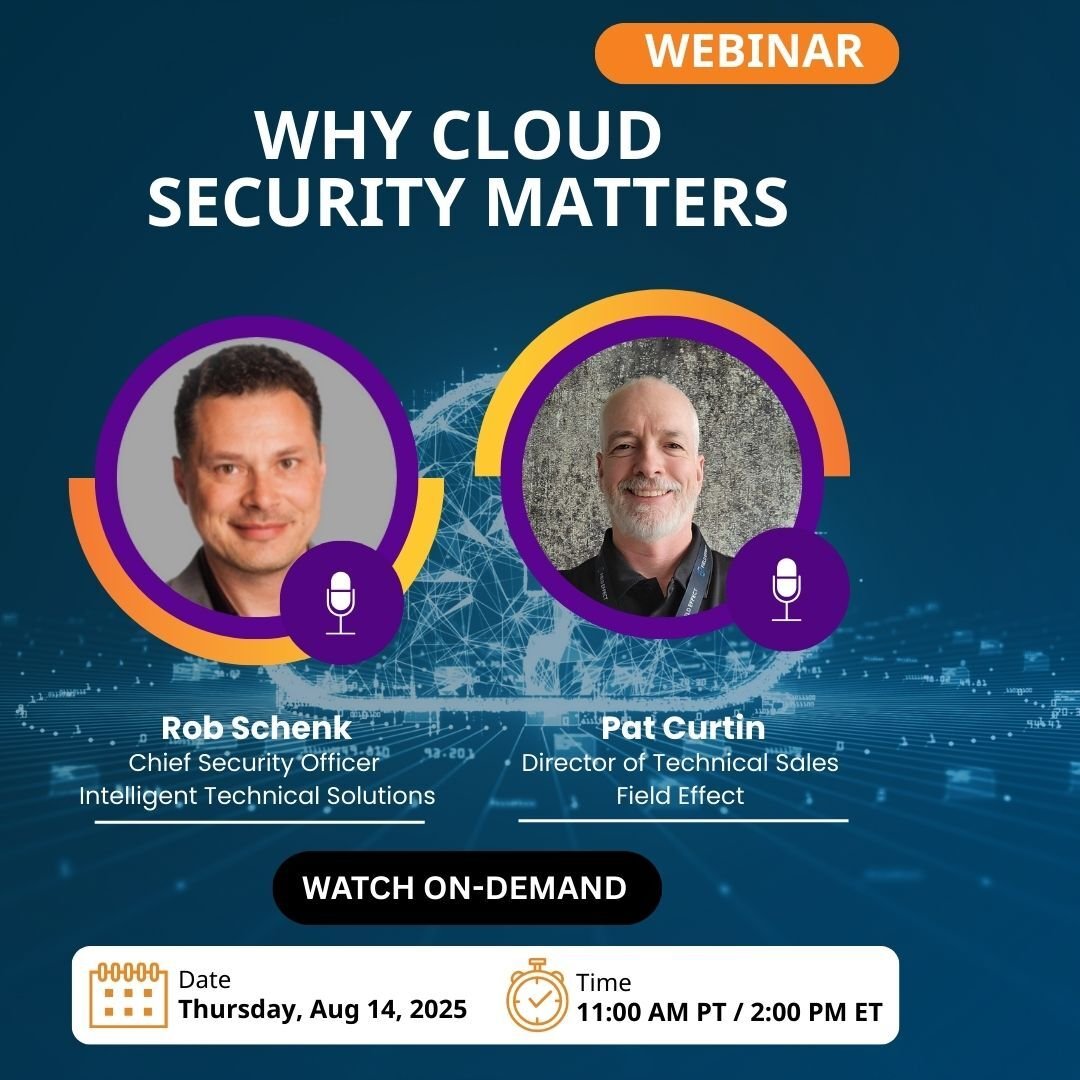
Why Cloud Security XDR Matters for Modern Campuses
Modern educational and enterprise campuses operate distributed computing environments that combine open Wi-Fi networks, unmanaged student and faculty devices, multi-cloud workloads, and critical administrative databases. Cloud Security...
Modern educational and enterprise campuses operate distributed computing environments that combine open Wi-Fi networks, unmanaged student and faculty devices, multi-cloud workloads, and critical administrative databases. Cloud Security Extended Detection and Response (XDR) unifies telemetry across endpoints, cloud services, networks, and identity systems into a centralized analytics pipeline. This provides security teams with automated threat correlation, real-time visibility, and rapid containment capabilities required to safeguard open campus architectures against complex cyber threats.
Contents
The Evolving Cybersecurity Architecture of Modern Campuses
Higher education institutions and corporate enterprise campuses have historically relied on defined network perimeters guarded by next-generation firewalls (NGFW) and intrusion prevention systems (IPS). However, the migration toward cloud-hosted learning management systems (LMS), research computing clusters in public clouds (such as AWS, Azure, and Google Cloud), and hybrid remote learning models has rendered perimeter-based defenses insufficient.
Today’s campus network functions less like a secure corporate office and more like a small municipality. Thousands of transient users connect daily using personal smartphones, laptops, and tablets alongside campus-owned assets, physical security cameras, HVAC Internet of Things (IoT) sensors, and high-performance research laboratories.
- Modern Campus Ecosystem
- Campus Infrastructure
- BYOD Devices & IoT/OT
- Research Labs & Servers
- Cloud Infrastructure
- SaaS LMS (Canvas, Moodle)
- Multi-Cloud (AWS, Azure)
- User Community
- Students & Guests
- Faculty & Admin
- Campus Infrastructure
- Cloud Security XDR Platform
- Correlation & Threat Analytics
- Cross-Domain Telemetry Ingestion
- Automated Playbook Response
- Identity & Zero Trust Enforcement
This decentralized infrastructure broadens the attack surface dramatically. Attackers frequently exploit compromised student credentials or unsecured IoT endpoints to gain an initial foothold, subsequently moving laterally into sensitive administrative databases or proprietary research systems. Cloud Security XDR bridges the visibility gaps inherent in these multi-tenant environments by collecting and analyzing threat signals across all IT domains simultaneously.
Core Security Challenges Facing Campus IT Infrastructure
Securing a campus environment presents operational constraints distinct from conventional corporate settings. Security operations center (SOC) teams must navigate several structural challenges:
- Fragmented Visibility Across Cloud and On-Premises Assets: Campus infrastructure relies on a hybrid blend of legacy on-premises servers and modern SaaS apps. Traditional monitoring tools often create isolated silos, leaving analysts unable to trace an attack that begins on a personal mobile device and pivots into a cloud-hosted cloud database.
- Proliferation of Unmanaged BYOD and IoT/OT Devices: University security teams cannot mandate strict software agent installations on personal student devices. Simultaneously, thousands of headless IoT devices—ranging from smart door locks to laboratory equipment—cannot run standard Endpoint Detection and Response (EDR) agents.
- High-Value Targets and Ransomware Vulnerabilities: Educational institutions store vast arrays of high-value data, including protected health information (PHI) in university hospitals, student financial records, intellectual property, and defense-sponsored research data. Ransomware operators frequently target academic networks due to the operational disruptions caused by encrypted administrative networks.
- Resource Constraints and SOC Staffing Deficits: Higher education IT departments rarely match the cybersecurity staffing budgets of enterprise finance or tech sectors. Small security teams must monitor tens of thousands of active IP addresses, resulting in severe alert fatigue and extended response times.
- Regulatory and Compliance Obligations: Campuses must satisfy overlapping regulatory mandates, including the Family Educational Rights and Privacy Act (FERPA), the Health Insurance Portability and Accountability Act (HIPAA), the Payment Card Industry Data Security Standard (PCI DSS), and federal research standards such as CMMC (Cybersecurity Maturity Model Certification).
What Is Cloud Security XDR and How Does It Function?
Extended Detection and Response (XDR) represents the evolution of standalone security software. While EDR focuses exclusively on host endpoints and Network Detection and Response (NDR) focuses on network traffic, Cloud Security XDR integrates telemetry from endpoints, network sensors, cloud workloads, identity providers (IdP), and email gateways into a cloud-native platform.
- Telemetry Sources:
- Endpoints & BYOD
- Network & Wi-Fi
- Identity / IdP
- Cloud Workloads
- SaaS Applications
- Cloud XDR Engine (AI/ML Correlation)
- Outcomes & Response:
- Automated Containment
- Unified SOC Console
Key Components of Cloud XDR Architecture
- Multi-Vector Telemetry Ingestion: The platform continuously ingests log files, network flow data, API calls, process trees, and authentication events from across the campus ecosystem.
- Cloud-Native Analytics Engine: Leveraging cloud-based machine learning models, the XDR engine normalizes data formats and evaluates activity against behavioral baselines, threat intelligence feeds, and framework mappings such as MITRE ATT&CK.
- Cross-Domain Incident Correlation: Rather than generating disparate alerts for a single suspicious event, XDR links related signals together. For instance, a failed multi-factor authentication (MFA) attempt, followed by an unusual API call in Azure and a lateral SMB scan on campus Wi-Fi, is automatically grouped into a single unified incident dossier.
- Automated Playbook Response: Cloud XDR enables automated or semi-automated remediation actions across different infrastructure layers, such as revoking compromised OAuth tokens, isolating an infected campus server, or blocking malicious IP addresses at the cloud edge.
Critical Reasons Why Cloud Security XDR Matters for Campuses
Implementing a Cloud Security XDR solution addresses the foundational vulnerabilities of modern campus networks. The primary benefits include:
1. Eliminating Security Silos Across Hybrid Cloud and Campus Physical Infrastructure
Campuses operate multiple departmental IT teams across colleges, libraries, and administrative units. Traditional security approaches result in departmental data silos. Cloud XDR correlates signals across all units, ensuring that a threat detected in the medical school's cloud environment immediately informs access control decisions across the main academic network.
2. Accelerating Detection and Incident Remediation (MTTD / MTTR)
In a campus setting, threat propagation can occur rapidly across open Wi-Fi segments. By automating correlation, XDR reduces Mean Time to Detect (MTTD) from days to minutes. Similarly, automated playbooks allow security teams to reduce Mean Time to Respond (MTTR) by taking instantaneous containment actions—such as isolating an endpoint or suspending a compromised directory account—without waiting for manual analyst intervention during off-hours.
3. Securing Identity as the Primary Network Perimeter
With students and faculty accessing university resources from off-campus locations and personal devices, identity has become the operational perimeter. Cloud XDR deeply integrates with identity solutions (such as Microsoft Entra ID, Okta, or Shibboleth/Ping Identity) to detect identity-based attacks, including credential stuffing, password spraying, and session token theft.
4. Supporting Zero Trust Architecture Implementations
Modern cybersecurity standards dictate a Zero Trust model: "never trust, always verify." Cloud Security XDR provides the continuous diagnostic and monitoring capabilities needed for Zero Trust. By continually scoring host health, user behavioral risk, and cloud environment configuration, XDR allows policy decision points to dynamically step up authentication or restrict network access when risk scores elevate.
5. Optimizing Small Security Operations Teams
By converting thousands of low-level alerts into a prioritized list of contextualized incidents, Cloud XDR mitigates alert fatigue. Analysts spend less time performing manual log searches across separate SIEM, firewall, and antivirus consoles, allowing higher education institutions to maintain robust security postures without proportionally inflating operational headcount.
Comparing Campus Security Operations Approaches
The table below outlines how traditional security management compares to specialized point solutions and modern Cloud Security XDR across key campus operational parameters:
| Operational Parameter | Legacy SIEM & Perimeter Firewalls | Standalone EDR / NDR Point Solutions | Cloud Security XDR Platform |
|---|---|---|---|
| Telemetry Integration | Manual ingestion via log parsers; high storage costs and delayed indexing. | Limited strictly to host endpoints (EDR) or network traffic (NDR). | Native ingestion across endpoints, network, identity, SaaS, and multi-cloud. |
| Incident Correlation | Rule-based correlation requiring extensive custom script writing. | Domain-specific correlation only; misses cross-vector attacks. | Automated ML-driven cross-domain correlation across all vectors. |
| BYOD & IoT Coverage | Indirect network visibility via firewall logs; no device-level context. | Low/None on unmanaged BYOD; requires agent installation. | High; combines network telemetry, API integrations, and identity tracking. |
| Response Capabilities | Manual execution across individual management dashboards. | Endpoint-only isolation or network-only port blocking. | Orchestrated response across network, cloud infrastructure, and user identities. |
| Deployment & Maintenance | Heavy on-premises hardware maintenance and storage tuning. | Moderate agent management; fragmented operational consoles. | Cloud-native deployment; central management console; reduced infrastructure overhead. |
| Compliance Readiness | Requires manual report generation across multiple data logs. | Partial evidence gathering focused on specific regulatory controls. | Centralized audit logging, automated reporting for FERPA, HIPAA, and CMMC. |
Implementation Framework: Deploying Cloud XDR on Campus
Successfully integrating Cloud Security XDR into a higher education or enterprise campus requires a phased methodology to ensure minimal disruption to academic and operational activities.
- Phase 1: Asset & Telemetry Audit (Inventory BYOD, cloud workloads, and identity)
- Phase 2: Identity & Access Standardization (Enforce SSO, MFA, and IdP APIs)
- Phase 3: Sensor & Connector Integration (Deploy cloud APIs, network, & agents)
- Phase 4: Rules & Playbook Configuration (Establish containment & alert baselines)
- Phase 5: Continuous Tuning & Incident Exercises (Refine ML models & test playbooks)
Phase 1: Asset and Telemetry Audit
Map all digital assets across physical campus locations, remote users, public cloud tenancies (AWS, Azure, GCP), and enterprise SaaS applications. Identify central identity providers, authoritative database locations, and critical compliance zones (e.g., payment processing or health centers).
Phase 2: Identity Integration and Access Control
Integrate the XDR system with central Identity and Access Management (IAM) infrastructure. Ensure single sign-on (SSO) logs, multi-factor authentication events, and federated access mechanisms continuously stream event data into the XDR ingestion engine.
Phase 3: Sensor and Connector Deployment
- Managed Devices: Deploy lightweight endpoint agents to university-owned devices (faculty laptops, administrative workstations, lab computers).
- Unmanaged BYOD / IoT: Deploy agentless collectors, API integrations, and network telemetry probes (NDR layer) to inspect traffic passing through campus wireless controllers and routers.
- Cloud & SaaS: Connect cloud provider APIs (such as AWS CloudTrail or Azure Activity Logs) and SaaS connectors (such as Microsoft 365 or Google Workspace) to feed workload security data into the engine.
Phase 4: Rule Configuration and Playbook Automation
Establish operational baselines. Configure threat detection rules tailored to academic operational rhythms—such as accounting for large surges in authentication attempts at the beginning of academic semesters. Define automated response playbooks with clear boundaries:
- Low-risk automated action: Block confirmed malicious external IP addresses at the perimeter.
- Medium-risk automated action: Quarantine a managed workstation exhibiting ransomware behavior.
- High-risk governed action: Require analyst confirmation before isolating key administrative domain controllers or cloud database instances.
Phase 5: Incident Response Exercises and Continuous Tuning
Conduct tabletop exercises simulating ransomware deployment, credential theft, and unauthorized access to research data. Validate that the XDR system accurately aggregates related events into a single incident card and executes playbooks correctly. Continually adjust machine learning thresholds to eliminate false positives.
Frequently Asked Questions
How does Cloud XDR differ from a traditional SIEM in a campus setting?
A Security Information and Event Management (SIEM) system primarily collects, aggregates, and stores log data for auditing, compliance, and manual query analysis. Cloud XDR goes beyond log aggregation by performing native cross-domain telemetry correlation, leveraging built-in machine learning analytics, and providing direct automated response capabilities across endpoints, network devices, cloud services, and user accounts from a single interface.
Can Cloud XDR protect unmanaged student devices (BYOD) connected to campus Wi-Fi?
Yes. While unmanaged BYOD personal devices cannot run mandatory software agents, Cloud Security XDR integrates Network Detection and Response (NDR) probes and wireless controller telemetry. By combining network behavioral analysis with identity management authentication logs, XDR detects malicious activity originating from BYOD endpoints—such as scanning for open vulnerabilities—and can automatically trigger dynamic network access control (NAC) policies to isolate the personal device from the rest of the network.
How does Cloud XDR help higher education institutions maintain compliance with FERPA and HIPAA?
Cloud XDR provides continuous monitoring, identity tracking, and audit logging across environments where sensitive student records (FERPA) or medical data (HIPAA) reside. It alerts security teams to unauthorized data access, abnormal file exfiltration attempts, or misconfigured cloud buckets containing protected data. Furthermore, centralized reporting simplifies proving compliance to external auditors by demonstrating active monitoring and automated threat containment controls.
Is Cloud XDR operational for institutions with small IT security teams?
Cloud XDR is particularly advantageous for smaller IT security teams. By automating threat correlation, suppressing duplicate alerts, and handling routine containment tasks through playbooks, XDR acts as a force multiplier. Small security teams can focus on strategic risk management and complex investigations rather than manually sifting through thousands of unverified alerts every day.
How does a cloud-managed XDR platform handle campus internet connectivity disruptions?
Modern Cloud XDR architectures utilize local caching on endpoint agents and local network probes. If the campus connection to the internet or cloud infrastructure suffers an outage, local agents continue enforcing protection rules and logging events locally. Once network connectivity is restored, accumulated telemetry automatically synchronizes back to the cloud analytics engine without loss of coverage.
Strategic Next Steps for Campus Security Leaders
Securing modern campuses requires moving away from fragmented security tools and embracing unified, cloud-native architectures. Security leaders preparing to implement or upgrade to Cloud Security XDR should execute the following actions:
- Conduct a Telemetry Gap Analysis: Inventory your existing security tools (firewalls, EDR, SIEM, identity managers) and identify blind spots across your multi-cloud workloads, SaaS applications, and BYOD campus networks.
- Evaluate Vendor XDR Integrations: Prioritize XDR platforms that feature native API connectors for your specific cloud ecosystems, network infrastructure vendors, and campus identity providers.
- Establish Incident Response Playbooks: Define clear operational boundaries for automated containment actions versus analyst-approved workflows, ensuring that critical university operations remain undisturbed during threat responses.
- Engage Key Institutional Stakeholders: Collaborate with campus network engineering teams, academic research leadership, and privacy officers to align security automation with institutional policies and compliance requirements.
Image Gallery