Why Bacteria Levels Drive Beach Closures: Public Health, Testing, and Environmental Impacts
Public health agencies mandate beach closures and swimming advisories when water samples reveal elevated concentrations of fecal indicator bacteria, primarily Enterococcus and Escherichia coli (E. coli). Although these indicator bacter...
Public health agencies mandate beach closures and swimming advisories when water samples reveal elevated concentrations of fecal indicator bacteria, primarily Enterococcus and Escherichia coli (E. coli). Although these indicator bacteria are generally harmless to humans, their presence signals fecal contamination and an increased probability of pathogenic viruses, bacteria, and parasites that cause illness.
Contents
- Heavy Rainfall & Runoff / Sewer Overflow / Septic Leakage
- Fecal Contamination Enters Water Body
- Fecal Indicator Bacteria (FIB) Concentration Increases
- Marine Water: Enterococcus > 60 CFU/100 mL
- Freshwater: E. coli > 235 CFU/100 mL
- Regulatory Threshold Exceeded / High Health Risk
- Public Health Agency Issues Beach Closure
When local health departments monitor coastal waters, lakes, and rivers, they rely on established microbial benchmarks to evaluate safety. Understanding how bacteria enter recreational waters, how scientists measure contamination, and how regulators establish safety thresholds explains why water quality testing directly determines whether a beach remains open or closed.
Public Health Risks of Contaminated Recreational Water
Recreational water illness (RWI) occurs when swimmers swallow, inhale, or come into direct contact with water contaminated by pathogens. Direct testing for every harmful micro-organism in a water sample is technically difficult and time-consuming because disease-causing agents occur in low concentrations relative to overall microbial populations. Public health monitoring relies on indicator organisms to estimate pathogen prevalence and disease risk.
Pathogens present in fecal-contaminated water fall into three main categories:
- Enteric Bacteria: Pathogenic strains such as Salmonella enterica, Shigella species, Campylobacter jejuni, and pathogenic E. coli (such as strain O157:H7) cause severe stomach cramps, diarrhea, fever, and vomiting.
- Viruses: Norovirus, Adenovirus, Enterovirus, and Hepatitis A are common waterborne viruses. Viruses require very low infectious doses to cause gastroenteritis, respiratory issues, or eye and ear infections.
- Protozoan Parasites: Microscopic parasites like Cryptosporidium hominis and Giardia duodenalis form protective outer shells (oocysts and cysts) that allow them to survive in open water for extended periods, causing persistent gastrointestinal disease.
Swallowing small amounts of contaminated water is the primary route of exposure leading to acute gastroenteritis (AGE). Contact with polluted water can also cause otitis externa (swimmer's ear), conjunctivitis, skin rashes, wound infections, and upper respiratory tract infections. For vulnerable populations—including young children, elderly individuals, and immunocompromised persons—these infections can produce severe complications requiring hospitalization.
Disclaimer: This article provides environmental science and public health information. It does not constitute formal medical advice. Individuals experiencing symptoms after swimming in open water should consult a qualified healthcare professional.
Indicator Organisms: Why Testing Focuses on Enterococcus and E. coli
Testing every gallon of beach water for hundreds of specific viruses, bacteria, and protozoa is economically and logistically impractical. Instead, water quality management programs rely on Fecal Indicator Bacteria (FIB). An ideal indicator organism lives in the intestines of warm-blooded animals, occurs in high numbers in fecal matter, correlates with human health risks, and can be measured efficiently in a laboratory.
| Enterococcus | Escherichia coli |
|---|---|
| • Primary indicator for marine and coastal waters• High salt tolerance• Strong correlation with GI illness in saltwater | • Primary indicator for freshwater lakes, ponds, and rivers• Moderate survival in fresh water• Correlates with gastroenteritis rates in freshwater swimmers |
Enterococcus Species
Enterococcus bacteria (including E. faecalis and E. faecium) serve as the primary indicator for marine and coastal waters, as well as freshwater lakes. Enterococcus species tolerate high salinity levels, surviving longer in saltwater than most other enteric bacteria. Epimiological studies conducted by environmental protection agencies show a direct correlation between elevated Enterococcus counts in ocean water and higher rates of swimming-associated gastroenteritis.
Escherichia coli (E. coli)
E. coli is a subgroup of coliform bacteria found exclusively in the digestive tracts of humans and warm-blooded animals. It serves as the standard indicator for freshwater environments such as rivers, streams, and inland lakes. Because E. coli dies off rapidly when exposed to ocean salinity, it is less reliable for marine testing but provides an accurate benchmark for freshwater purity.
Regulatory Standards and Action Thresholds
In the United States, beach water monitoring guidelines are established under the Clean Water Act and the BEACH (Beaches Environmental Assessment and Coastal Health) Act. The U.S. Environmental Protection Agency (EPA) defines Recreational Water Quality Criteria (RWQC) based on acceptable risk rates for illness.
EPA guidelines target an illness rate of no more than 32 to 36 illnesses per 1,000 swimmers. To maintain this protection level, regulatory bodies establish two distinct statistical thresholds:
- Geometric Mean (GM): Represents the central tendency of water quality over a 30-day sampling period.
- Statistical Threshold Value (STV) / Beach Action Value (BAV): Represents single-sample maximum thresholds used for immediate public notification and beach closure decisions.
| Target Environment | Indicator Organism | Beach Action Value (BAV Limit) |
|---|---|---|
| Marine / Coastal | Enterococcus | 60 CFU/100 mL |
| Freshwater | E. coli | 235 CFU/100 mL |
| Freshwater (Alternate) | Enterococcus | 70 CFU/100 mL |
Note: Measurement units are expressed in Colony Forming Units (CFU) or Most Probable Number (MPN) per 100 milliliters of water.
When a single water sample exceeds the established Beach Action Value, local environmental health officials issue a swimming advisory or physically close the beach. The warning remains in effect until subsequent resampling confirms that indicator bacteria levels have fallen back below regulatory limits.
Primary Sources of Coastal and Inland Water Contamination
Bacterial contamination in recreational waters increases following weather events or system failures. Contaminants move through watersheds via surface runoff, drainage systems, and direct discharges.
- Sources of Pollution
- Urban Runoff & Stormwater
- Sewage System Overflows
- Agriculture & Livestock
- Wildlife & Domestic
1. Urban Stormwater Runoff
During rainstorm events, water flows over impermeable surfaces—such as concrete streets, parking lots, and rooftops—picking up animal feces, litter, sediment, and urban waste. This unfiltered runoff travels through storm drains directly into rivers, bays, and ocean beaches without receiving treatment at wastewater plants.
2. Sewage System Overflows
- Combined Sewer Overflows (CSOs): In older municipal systems, domestic sewage and stormwater collection share the same pipes. Heavy rain can overwhelm plant capacity, triggering intentional, untreated discharges of raw sewage directly into nearby waterways to prevent system backups into homes.
- Sanitary Sewer Overflows (SSOs): Sanitary sewer lines carrying human waste can leak or rupture due to aging infrastructure, tree root intrusion, blockages, or power outages at pumping stations.
3. Agricultural Runoff and Livestock Operations
In rural watersheds, rain washes manure from livestock pastures, feedlots, and field applications into rivers and coastal estuaries. Farm animal manure harbors high concentrations of E. coli, Salmonella, and Cryptosporidium.
4. Failing Onsite Wastewater Systems (Septic Tanks)
Residential areas relying on private septic systems can contribute to shoreline pollution if systems are poorly maintained, improperly sited, or damaged. Effluent from failing septic leach fields moves through coastal groundwater tables and discharges directly into marine or lake environments.
5. Wildlife and Domestic Pets
High concentrations of waterfowl (such as gulls, geese, and ducks) roosting near popular beaches deposit significant bacterial loads directly onto sands and shallow waters. Uncollected waste from pet dogs in beach communities further elevates microbial counts during high tides and rain events.
Water Quality Testing Methods and Operational Challenges
Managing public beach health requires balancing sample turnaround times with testing accuracy. Environmental agencies utilize several testing methodologies, each with distinct operational trade-offs.
| Testing Methodology | Processing Time | Primary Mechanism | Advantages | Key Limitations |
|---|---|---|---|---|
| Culture-Based Assays (e.g., Membrane Filtration, Enterolert) | 18 to 24 Hours | Incubating samples in nutrient media to count viable bacterial colonies (CFU/MPN). | Industry gold standard; low cost; measures only living, viable bacteria. | Delays public notification by 24 hours; water quality may change before results arrive. |
| Quantitative PCR (qPCR) | 2 to 4 Hours | Amplification and measurement of target bacterial DNA sequences. | Rapid, same-day results; enables morning decisions on beach status. | Measures total DNA, including dead bacteria; requires high-end equipment and skilled technicians. |
| Predictive Modeling (Statistical / AI) | Real-Time / Instant | Uses real-time data (rainfall, wave height, solar radiation, wind, flow rates) to estimate risk. | Zero laboratory delay; immediate public warnings; cost-effective. | Requires extensive historical calibration data; risk of false positives or false negatives. |
The "Sample Lag Time" Challenge
Traditional culture testing requires 18 to 24 hours of incubation. This delay creates a logistical disconnect known as sample lag time. Water collected on a sunny afternoon is reported on the following day.
If a brief contamination event occurs, health officials may close a beach when the water has already cleared. Conversely, if a contamination event occurs overnight, swimmers may enter polluted water for hours before laboratory results confirm elevated risk.
To address this challenge, coastal health agencies increasingly use rapid qPCR methods alongside predictive modeling tools, such as the EPA's Virtual Beach software, to estimate daily bacteria risks in real time.
Environmental Factors Influencing Bacteria Persistence
Once bacteria enter open water, their survival and transport depend on local environmental conditions:
- Sunlight Exposure (Solar Irradiation): Ultraviolet (UV) radiation from sunlight is the natural sanitizer for surface water. UV rays destroy bacterial cell membranes and nucleic acids, leading to rapid die-off in clear, shallow waters on sunny days.
- Water Temperature: Warm water temperatures accelerate bacterial growth and prolong survival in coastal sediments, whereas cold water slows bacterial metabolism.
- Turbidity and Sediment Resuspension: Fine sediments, silt, and organic matter protect bacteria from UV exposure. Wave action from high winds or heavy boating resuspends bottom sediments, reintroducing settled indicator bacteria into the water column.
- Tidal Dynamics and Water Circulation: Enclosed bays, coves, and shallow inland lakes with poor water circulation retain bacterial pollution longer than open coastlines exposed to strong ocean currents and wave action.
Practical Actions for Swimmers and Coastal Communities
Minimizing health risks requires direct actions from beachgoers and long-term infrastructure improvements from coastal municipalities.
- Observe the 48-Hour Rain Rule: Avoid swimming after heavy rain.
- Check Official Water Quality Portals: Look up daily beach advisories.
- Avoid Turbid, Stagnant Water: Stay out of cloudy water near pipes.
- Practice Personal Hygiene: Shower after swimming and wash hands.
- Protect Wounds: Cover open cuts with waterproof bandages.
Best Practices for Swimmers
- Observe the 48-Hour Rain Rule: Avoid swimming in ocean or lake waters for 48 to 72 hours following heavy rainfall, particularly near storm drains, river mouths, and urban runoff outlets.
- Check Local Advisory Portals: Review state and county health department monitoring websites or local beach apps before visiting coastal waters.
- Avoid Turbid, Stagnant Water: Stay out of water that appears unusually cloudy or green, or sits near storm outflow pipes.
- Maintain Personal Hygiene: Shower with clean water and soap immediately after exiting open water, and rinse off pets that swam in coastal waters.
- Protect Open Cuts: Do not enter open water with unhealed wounds or skin abrasions unless covered by a completely waterproof dressing.
Infrastructure Solutions for Local Communities
Municipalities reduce bacteria-driven beach closures by investing in watershed management projects:
- Green Stormwater Infrastructure (GSI): Constructing bioswales, rain gardens, and permeable pavements reduces urban runoff volumes by capturing rainwater where it falls.
- Sewer Line Separation: Updating legacy combined sewer networks into separate stormwater and sanitary sewer systems prevents raw sewage overflows during major storms.
- Microbial Source Tracking (MST): Utilizing DNA-based tracking techniques allows water managers to determine whether elevated bacteria originate from human sewage, livestock, or native birds, ensuring targeted infrastructure spending.
Frequently Asked Questions
Why does a beach close when the water looks clean and clear?
Water clarity is not a reliable indicator of microscopic biological safety. Bacteria, viruses, and parasites are invisible to the naked eye. Water can appear clear while carrying elevated concentrations of Enterococcus or E. coli following a recent pollution event or sewer leak.
Is it safe to walk on the sand when a beach is closed due to high bacteria levels?
Walking on dry sand is generally safe, but wet sand near the tide line and shallow tidal pools can harbor elevated levels of fecal bacteria. Wash hands thoroughly after touching sand, especially before eating, and prevent young children from placing moist sand or beach objects in their mouths.
What is the difference between a beach advisory and a beach closure?
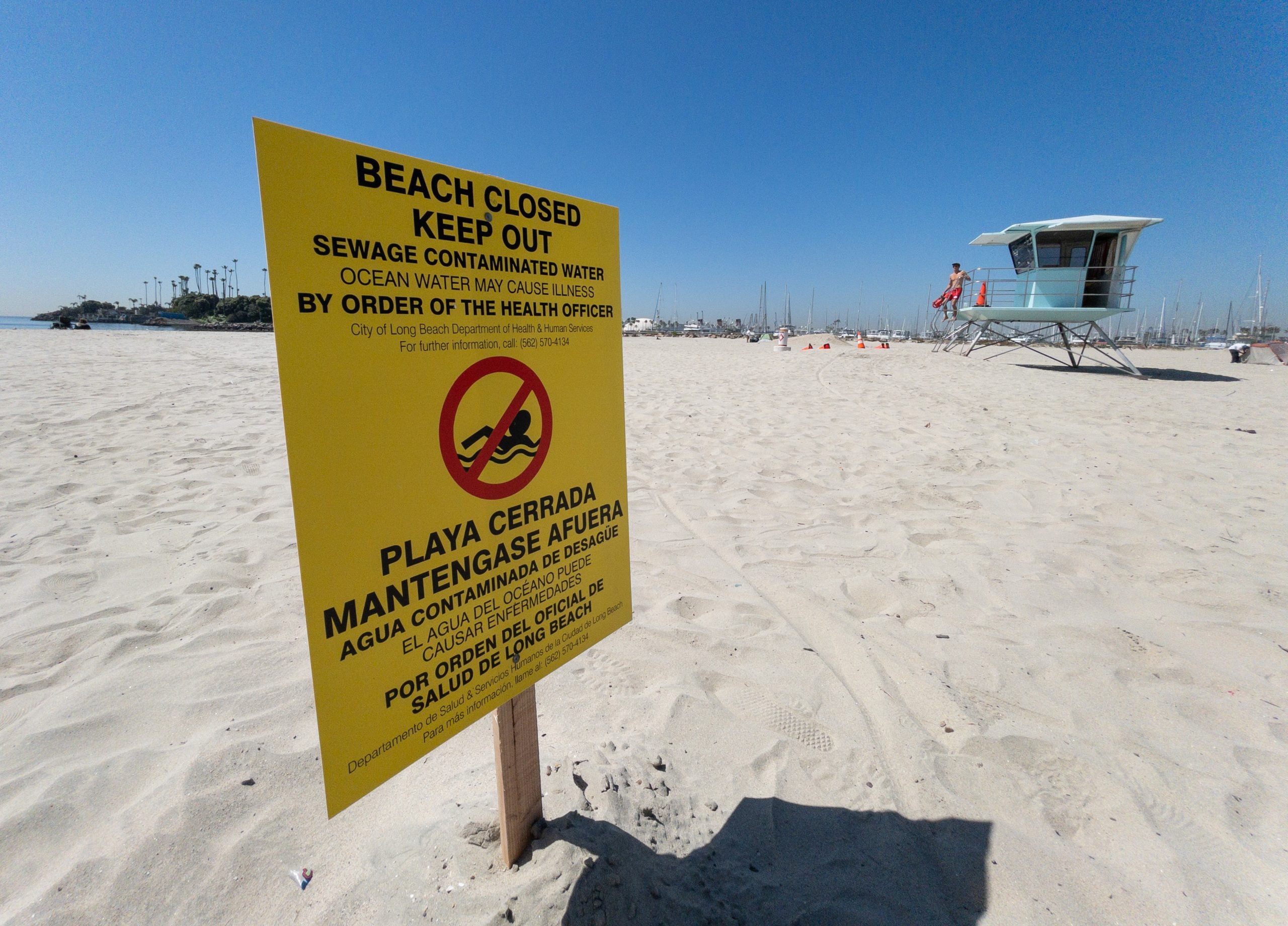
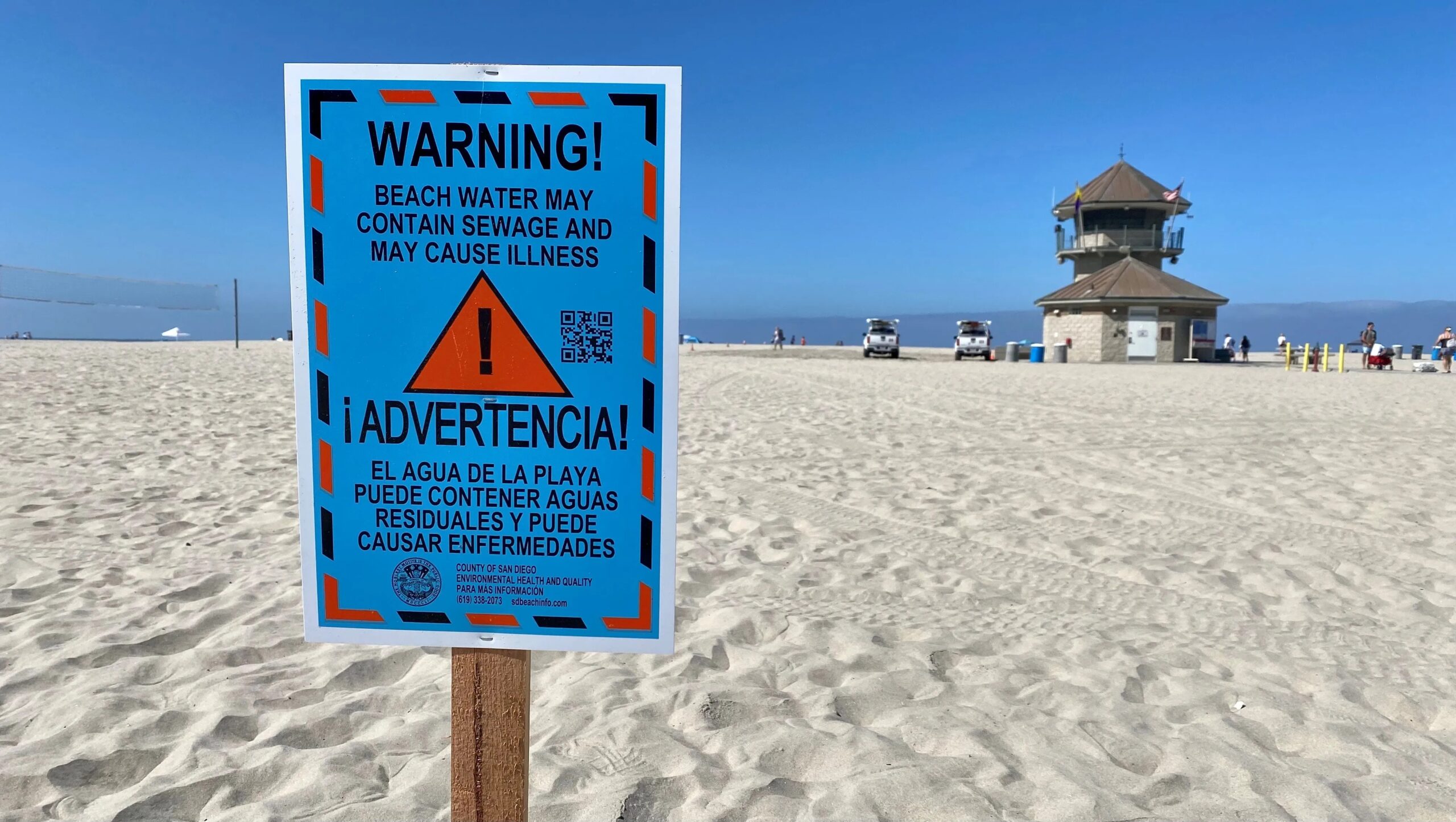
A beach advisory is an official health warning indicating that bacterial levels exceed recommended safety criteria, advising high-risk individuals and swimmers to avoid water contact. A beach closure is a mandatory prohibition issued by public health authorities that completely restricts public access to the water, typically triggered by raw sewage spills or severe public health threats.
How long does it take for bacteria levels to drop after a storm?
In most marine coastal environments, bacteria levels typically return to safe baseline criteria within 48 to 72 hours after heavy precipitation ends. Direct sunlight, wave dispersion, and salt salinity accelerate die-off, though enclosed bays, estuaries, and calm lakes can take significantly longer to clear.
Action Plan for Safe Swimming
To enjoy recreational waters safely, verify local water quality before visiting the beach. Visit your local health department or state environmental agency portal to review current water quality sampling data.
If a beach alert or swimming advisory is active, choose an alternate beach situated away from urban outlets, or reschedule your trip until follow-up sampling confirms that indicator bacteria counts have returned to safe regulatory levels.
Image Gallery