The Detroit Repertory Theatre History: A Legacy of Diversity, Community, and Professional Stagecraft
The Detroit Repertory Theatre history spans over six decades of pioneering professional stagecraft, radical community commitment, and groundbreaking equity practices. Established in 1957 as the Millan Theatre Company, the institution e...
The Detroit Repertory Theatre history spans over six decades of pioneering professional stagecraft, radical community commitment, and groundbreaking equity practices. Established in 1957 as the Millan Theatre Company, the institution evolved into Michigan's oldest continuously operating professional union theatre, championing non-traditional casting, accessibility, and new play development from its historic home on Woodrow Wilson Street.
Contents
Founding and Early Beginnings: The Millan Theatre Company (1957–1964)
The origin of the Detroit Repertory Theatre traces back to 1957, when visionary theatre director Bruce E. Millan, along with co-founder Barbara Busby and a small collective of dedicated artists, established the Millan Theatre Company. Operating initially as a touring troupe, the company focused on bringing high-quality professional theatre to local schools, community centers, and underserved audiences across Greater Detroit. During this foundational period, the company recognized that professional performing arts in the region were largely inaccessible to working-class residents and geographically segregated from the city’s heart.
The original mission centered on establishing an "indigenous professional theatre"—a company rooted directly in the socio-cultural fabric of Detroit rather than one relying on touring broadway roadshows or suburban transplants. Millan and Busby sought to establish a sustainable model where local actors, directors, and technicians could earn professional wages while serving the immediate neighborhood. To achieve this, the company worked toward securing affiliation with the Actors’ Equity Association (AEA), the national labor union representing professional stage actors and stage managers.
Between 1957 and 1964, the Millan Theatre Company refined its repertoire, transitioning from primarily educational and children's programming toward challenging contemporary drama and socially relevant works. However, operating without a permanent physical venue presented severe logistical and financial constraints. Transporting sets, lighting instruments, and sound gear across temporary venues highlighted the critical need for an established resident space inside Detroit's city limits.
Settling on Woodrow Wilson Street: Anchoring in Central Detroit (1965–1970s)
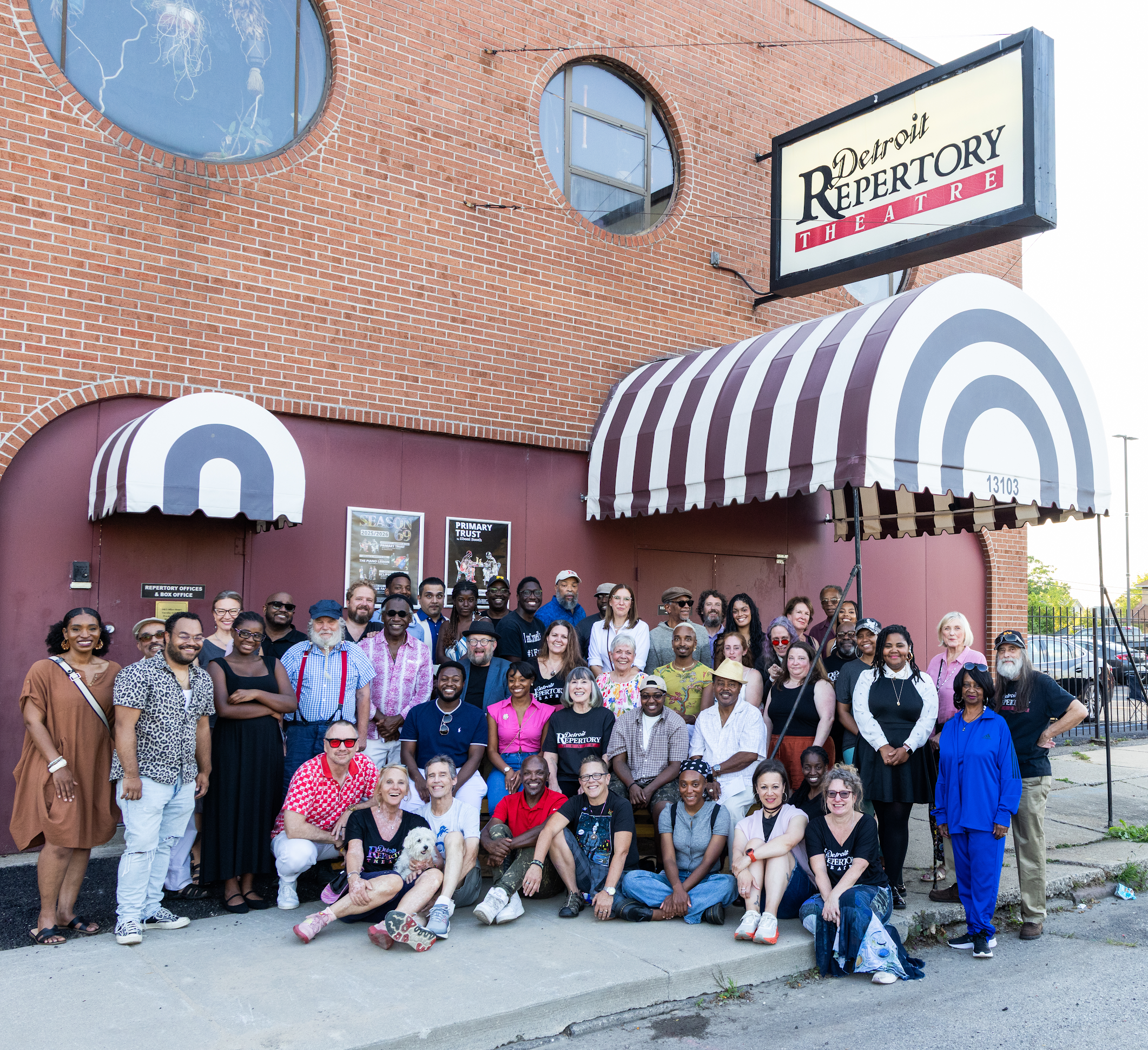
In 1965, the company made a monumental decision that defined its permanent identity: purchasing a commercial building located at 13103 Woodrow Wilson Street in central Detroit. The site—a former storefront and residential structure—was transformed through grassroots labor and modest capital into an intimate 194-seat proscenium theatre. Re-dubbed the Detroit Repertory Theatre (DRT), the institution firmly established its permanent headquarters in the heart of an urban residential neighborhood.
| Detroit Repertory Theatre Key Facts | Details |
|---|---|
| Original Founding Year | 1957 (as Millan Theatre Company) |
| Permanent Location Established | 1965 (13103 Woodrow Wilson St) |
| Seating Capacity | 194 seats (intimate proscenium) |
| Union Affiliation | Actors' Equity Association (AEA) |
| Primary Casting Philosophy | Non-traditional / Blind Casting |
| Key Founders | Bruce E. Millan, Barbara Busby |
This geographic choice was put to an immediate historic test during the 1967 Detroit civil unrest. While numerous arts institutions and businesses fled the municipal core during the era of suburban migration, the leadership of the Detroit Repertory Theatre made an explicit commitment to stay. The theatre did not suffer damage during the events of July 1967, a fact the founders attributed to their deep-rooted community relationships and transparent neighborhood integration.
Throughout the late 1960s and 1970s, the physical plant underwent continuous physical upgrades. The founders converted adjoining spaces into an expanded lobby, an art gallery showcasing local visual artists, and a fully licensed cocktail lounge where patrons could interact with performers following shows. This layout reinforced the theatre’s operational philosophy: stagecraft should be an egalitarian, welcoming, and communal experience rather than an elitist commodity.
Pioneering Non-Traditional Casting and Equitable Union Practices
Long before mainstream American regional theatres adopted diversity guidelines or equitable casting frameworks, the Detroit Repertory Theatre instituted a rigorous policy of non-traditional (often referred to as blind) casting. Beginning in the early 1960s, roles were assigned based on talent and artistic interpretation rather than race, ethnicity, or traditional physical expectations, unless race was explicitly central to the playwright's script narrative.
This practice had profound legal, social, and structural implications for the regional theatre ecosystem:
- Equal Professional Access: African American actors and minority performers in the Midwest were routinely granted access to classic roles, modern dramas, and union contracts that were denied to them in traditional venues.
- Audience Integration: By reflecting the demographic reality of Detroit on stage, the theatre built one of the most racially integrated audiences in American regional theatre history.
- Union Standards: The DRT maintained a Small Professional Theatre contract with Actors' Equity Association, demonstrating that small-budget neighborhood venues could operate fully under union rules, paying fair wages and benefits without sacrificing economic accessibility.
The commitment to equity extended beyond casting into playwright selection. The theatre prioritized unproduced works, world premieres, and plays addressing labor rights, civil rights, gender equality, and urban political dynamics.
Major Historical Eras of the Detroit Repertory Theatre
The historical development of the Detroit Repertory Theatre can be examined across distinct operational eras:
| Decade / Era | Primary Strategic Focus | Key Achievements & Cultural Impact |
|---|---|---|
| 1957–1964 | Founding & Mobile Operations | Established the Millan Theatre Company; toured schools and regional spaces; built foundational union partnerships. |
| 1965–1979 | Spatial Anchoring & Civil Rights | Secured 13103 Woodrow Wilson St; pioneered non-traditional casting; remained in central Detroit through urban crises. |
| 1980–1999 | New Play Advocacy & Capital Expansion | Expanded national playwright competitions; upgraded auditorium acoustics, seating, and lobby art gallery spaces. |
| 2000–2017 | Institutional Longevity & Legacy | Founder Bruce E. Millan completed 60 years of artistic direction; sustained barrier-free ticket pricing initiatives. |
| 2018–2026+ | Executive Succession & Modernizing | Transitioned leadership to long-term company leaders; modernized digital box office; preserved classic repertory values post-pandemic. |
New Play Development and the National Playwriting Competition
In addition to its historic casting practices, the Detroit Repertory Theatre established itself as a vital incubator for modern American dramatists. Recognizing that regional theatres frequently relied on safe, over-produced Broadway revivals, the DRT dedicated a substantial portion of every mainstage season to world premieres and regional debuts.
To formalize this pipeline, the theatre instituted an annual novel playwriting initiative. Playwrights from across North America submitted unproduced scripts, which were vetted by an internal reading committee. Winning scripts received full mainstage productions, complete with professional union cast members, set design, and royalties.
Impact on Emerging Dramatists
For many playwrights, a production at the Detroit Repertory Theatre served as the critical bridge between initial draft readings and national recognition. The theatre provided:
- Full Production Development: Authors worked directly with directors and resident actors during rehearsals to refine dialogue and structural pacing.
- Critical Equity Reviews: Union productions generated official critical reviews, helping playwrights secure future licensing agreements and regional transfers.
- Diverse Audience Feedback: The unique demographics of the DRT audience provided dramatists with authentic, varied responses to complex social themes.
Physical Adaptations, Accessibility, and Financial Viability
Operating an intimate theatre in an urban neighborhood for over six decades required continuous physical maintenance and inventive financial management. The Detroit Repertory Theatre achieved financial stability through a diversified revenue model combining box office receipts, individual donors, foundation grants, and ticket-subsidization initiatives.
- Detroit Repertory Theatre Business Revenue Model
- Ticket Sales & Subscriptions (Low-Cost)
- Subscription Group Bookings & Fundraisers
- Foundation & Arts Grants
- Fundraising Galas & Donations
Barrier-Free Access and Low-Cost Pricing
A central pillar of the DRT philosophy was removing physical and financial barriers to live theatre. The facility underwent architectural modifications to ensure full compliance with accessibility standards, including wheelchair-accessible seating, street-level entrance access, and modified rest facilities.
On the financial side, ticket prices were deliberately kept among the lowest for any professional union theatre in North America. The theatre developed group-booking programs used extensively by local churches, alumni groups, labor unions, and charitable non-profits to host community fundraisers. Under this model, community organizations purchased block tickets at discounted wholesale rates and resold them to raise funds for local causes, simultaneously filling the audience seats and supporting municipal charities.
Leadership Transition and Contemporary Era
For over six decades, the Detroit Repertory Theatre was synonymous with its founders, particularly Bruce E. Millan, who served as Artistic Director from 1957 until his retirement in the late 2010s. Millan’s 60-year tenure represented one of the longest continuous leadership runs in the history of American professional theatre. Co-founder Barbara Busby similarly dedicated her life’s work to managing the company’s business operations, casting systems, and administrative governance.
Following Millan’s retirement, leadership transitioned to internal veteran artists trained within the company's operational philosophy. Longtime company members, including Executive Artistic Director Leah Smith and Director of Operations Michael Joseph Barnes, assumed management responsibility. This internal succession plan ensured that the underlying tenets of the theatre—diversity, affordability, union standards, and community orientation—remained intact while introducing modern management technologies.
Navigating shifts in urban demographics, economic fluctuations, and the global disruption of the live performing arts in the early 2020s, the theatre maintained its commitment to its physical home on Woodrow Wilson Street. As of 2026, the Detroit Repertory Theatre continues its mission, remaining a cultural anchor in central Detroit and a historic model for sustainable, equity-focused neighborhood theatre.
Frequently Asked Questions About Detroit Repertory Theatre History
When was the Detroit Repertory Theatre founded, and by whom?
The Detroit Repertory Theatre was originally founded in 1957 under the name Millan Theatre Company by director Bruce E. Millan, Barbara Busby, and a small group of local theatrical artists. It adopted its current name after purchasing its permanent venue on Woodrow Wilson Street in 1965.
Where is the Detroit Repertory Theatre located?
The theatre is located at 13103 Woodrow Wilson Street, Detroit, Michigan 48238. It operates out of an intimate, renovated 194-seat proscenium venue situated directly inside a historic central Detroit neighborhood.
What is "non-traditional casting," and how did the DRT pioneer it?
Non-traditional casting (also known as blind casting) is the practice of casting actors in roles without regard to race, ethnicity, gender, or physical capability, unless such traits are essential to the script. The Detroit Repertory Theatre implemented this approach in the early 1960s, decades before major national theatrical institutions formally adopted equitable casting policies.
Is the Detroit Repertory Theatre a union theatre?
Yes. The Detroit Repertory Theatre operates under an agreement with the Actors' Equity Association (AEA), the union representing professional actors and stage managers in the United States. It holds the distinction of being Michigan's oldest operating professional union theatre.
How did the Detroit Repertory Theatre survive the 1967 Detroit unrest?
While many businesses relocated away from central Detroit during and after July 1967, the DRT leadership remained dedicated to its neighborhood location. Due to its established community presence, local integration, and accessible programming, the physical facility remained undamaged, allowing the theatre to continuously serve the local population.
How does the theatre support emerging playwrights?
The DRT has historically dedicated a large portion of its seasonal programming to world premieres and regional debuts. Through script submissions, playwright competitions, and developmental staging, the theatre provides emerging authors with professional union productions and audience exposure.
Planning a Visit: Experiencing the Historical Legacy
To experience the historical legacy of the Detroit Repertory Theatre in person, theatergoers, artists, and historians can engage directly with the venue's seasonal offerings:
- Attend a Mainstage Production: Review the current performance schedule at the box office or online. Productions typically run from autumn through late spring, featuring four mainstage plays per season.
- Explore the Art Gallery and Lounge: Arrive prior to showtime to view the lobby art gallery, which showcases visual works by Detroit-area artists, and visit the historical theatre lounge.
- Coordinate Group Events: Charitable organizations and educational groups can book block tickets for fundraising events, continuing a multi-decade Detroit tradition of community-supported theatre.
- Submit Play Scripts: Playwrights seeking professional staging for unproduced works can check seasonal submission guidelines provided by the literary committee.
Image Gallery