How the Truck Tire Size Explained Changes Your Fleet
Understanding truck tire size is the cornerstone of fleet optimization, directly influencing fuel economy, load-carrying capacity, and total cost of ownership. By mastering tire dimensions and ratings, fleet managers can reduce rolling...
Understanding truck tire size is the cornerstone of fleet optimization, directly influencing fuel economy, load-carrying capacity, and total cost of ownership. By mastering tire dimensions and ratings, fleet managers can reduce rolling resistance, ensure regulatory compliance, and extend vehicle life cycles through precise spec selection tailored to specific routes and loads.
Contents
Choosing the right tire for a commercial vehicle is no longer just about finding a fit for the rim. In 2026, the intersection of telematics, fuel efficiency standards, and payload demands makes tire sizing a strategic financial decision. When a fleet manager looks at the string of numbers on a sidewall, they are looking at the operational DNA of the vehicle. Misinterpreting these figures can lead to increased fuel spend, premature suspension wear, and potential safety violations. Conversely, an optimized tire strategy can save a large fleet hundreds of thousands of dollars annually.
Decoding the Sidewall: More Than Just Measurements
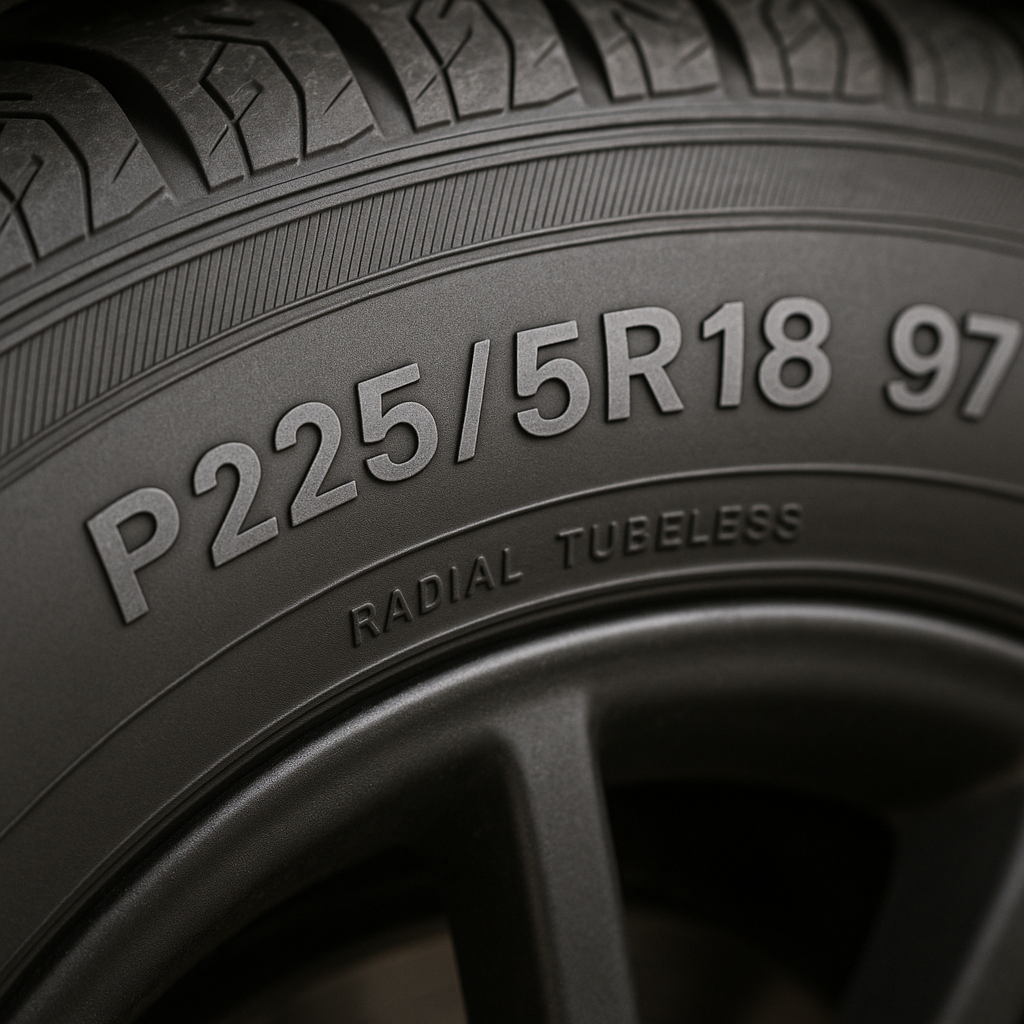
Commercial truck tires primarily use two sizing systems: Metric (e.g., 295/75R22.5) and Numeric (e.g., 11R22.5). Understanding the transition between these two and what each digit represents is the first step in managing a modern fleet.
The Metric System Explained
The metric system is the most common for modern, low-profile tires. Using 295/75R22.5 as an example:
- 295 (Section Width): This is the width of the tire in millimeters from sidewall to sidewall. A wider tire generally offers better traction but may increase rolling resistance.
- 75 (Aspect Ratio): This represents the height of the sidewall as a percentage of the section width. In this case, the sidewall height is 75% of 295mm. Lower aspect ratios (65-75) indicate "low-profile" tires, which are standard for long-haul fuel efficiency.
- R (Construction): This stands for Radial. In 2026, radial construction is the industry standard for on-highway use due to its heat dissipation and fuel-saving properties.
- 22.5 (Wheel Diameter): This is the diameter of the wheel rim in inches.
The Numeric System
Commonly found on vocational or older equipment, the numeric system (e.g., 11R24.5) is simpler but less descriptive regarding the aspect ratio. In these tires, the aspect ratio is generally assumed to be around 88%. Switching from a numeric 11R22.5 to a metric 295/75R22.5 changes the diameter of the tire, which has immediate effects on the truck's gearing and speedometer accuracy.
How Tire Size Impacts Fuel Economy
For a fleet, fuel is typically the second-largest operating expense after labor. Tire size and "revolutions per mile" (RPM) are the primary mechanical factors in how much energy is required to move the vehicle.
Rolling Resistance and the Low-Profile Advantage
Low-profile tires, characterized by lower aspect ratios, have shorter sidewalls. Shorter sidewalls are stiffer, which means they flex less under load. Less flex results in less heat generation and lower rolling resistance. According to the Technology & Maintenance Council (TMC), a 3% reduction in rolling resistance can translate to a 1% improvement in fuel economy. For a truck traveling 100,000 miles a year, shifting from a standard profile to an optimized low-profile size can result in significant annual savings.
Revolutions Per Mile and the ECM
Every tire size has a specific RPM rating. If you replace an 11R22.5 tire (approx. 495 RPM) with a 295/75R22.5 (approx. 512 RPM), the smaller diameter tire must spin faster to cover the same distance. If the Engine Control Module (ECM) is not recalibrated to reflect this change, the truck’s recorded mileage will be incorrect, and the engine may operate outside its ideal "sweet spot" for fuel mapping, leading to inefficiency.
Load Capacity and Safety Compliance
The tire size is inextricably linked to the Load Index and Load Range. In the commercial sector, exceeding these limits is not only a safety risk but a major Department of Transportation (DOT) violation.
Load Range vs. Ply Rating
While the term "ply rating" is still used colloquially, modern tires use Load Range letters (G, H, J, L). These letters indicate the maximum air pressure the tire can hold and the weight it can support. A tire size like 295/75R22.5 Load Range G is rated for a different weight capacity than a Load Range H of the same size.
When choosing a tire size, fleet managers must ensure the Gross Axle Weight Rating (GAWR) of the vehicle does not exceed the combined load capacity of the tires. Using an undersized or under-rated tire leads to "sidewall bruising" and rapid heat buildup, which are the primary causes of catastrophic blowouts.
Dual Spacing Requirements
Tire size also dictates the minimum distance required between tires in a dual configuration. If the section width is too wide for the rim offset, the tires may touch at the bottom (where the weight causes the sidewall to bulge). This is known as "dual kissing," which generates immense heat and can cause a fire or a dual-tire failure within a few hundred miles.
Maintenance, Retreadability, and Cost Per Mile
The decision on tire size changes the long-term maintenance lifecycle of the fleet. It isn't just about the initial purchase price; it’s about the Cost Per Mile (CPM).
Casing Integrity and Retreading
Standard profile tires (like 11R22.5) often have more "rubber" to work with and can sometimes withstand more retread cycles than ultra-low-profile tires. However, low-profile tires are often built with more advanced compounds to compensate. Fleet managers must evaluate if their priority is the fuel savings of a 65-series tire or the durability and retreadability of a 75-series or 80-series tire.
Inventory Standardization
A significant hidden cost in fleet management is inventory complexity. If a fleet runs three different tire sizes across its tractors and trailers, it must stock replacements for all three. Standardizing a fleet to a single size—for example, moving the entire fleet to 295/75R22.5—simplifies procurement, allows for better volume pricing, and reduces the downtime associated with waiting for a specific size during a roadside breakdown.
Technical Comparison of Common Fleet Tire Sizes
| Tire Size | Overall Diameter | Revolutions Per Mile | Max Load (Single) | Typical Application |
|---|---|---|---|---|
| 11R22.5 | 41.5 inches | 501 | 6,175 lbs (G) | Vocational, Regional |
| 295/75R22.5 | 40.4 inches | 515 | 6,175 lbs (G) | Long-haul, Fuel Efficiency |
| 11R24.5 | 43.5 inches | 478 | 6,610 lbs (G) | Heavy Haul, Logging |
| 285/75R24.5 | 41.3 inches | 504 | 6,175 lbs (G) | Long-haul (Taller profile) |
Note: RPM and diameter data are averages; specific measurements vary slightly by manufacturer.
The Impact of Size on Vehicle Handling and Stability
The physical dimensions of the tire change the vehicle's center of gravity and footprint. A lower aspect ratio tire provides a wider footprint and a shorter, stiffer sidewall. This translates to:
- Improved Stability: Less "sway" or lateral movement when cornering or in high winds.
- Braking Performance: A wider footprint increases the contact patch with the road, which can marginally improve stopping distances, provided the tire is properly inflated.
- Ride Quality: The trade-off for stability is often a firmer ride. Taller sidewalls (numeric sizes) act as additional "springs," absorbing more road vibration, which can reduce driver fatigue on poorly maintained regional roads.
Practical Steps for Fleet Optimization
To implement a tire size strategy that actually improves fleet performance, managers should follow a systematic approach:
- Audit Current Specs: Document every tire size and load range currently in use. Identify "outlier" vehicles that require unique inventory.
- Analyze Duty Cycles: Are your trucks mostly on the interstate at high speeds (low profile/lower rolling resistance) or in "stop-and-go" urban environments (standard profile/higher durability)?
- Consult Manufacturer Rolling Resistance Charts: Most major manufacturers (Michelin, Bridgestone, Goodyear) provide SmartWay-verified data. Compare the fuel savings of a size change against the potentially shorter tread life.
- Recalibrate ECMs: If changing sizes, ensure the shop is equipped to update the engine's RPM settings. Failure to do this will invalidate your fuel economy data and could lead to legal issues regarding odometer fraud if the variance is high enough.
- Train Maintenance Staff: Ensure technicians understand the importance of matching duals. Even a 1/4-inch difference in diameter between two tires on the same hub can cause the larger tire to carry the majority of the load, leading to rapid wear.
Frequently Asked Questions
What is the difference between 22.5 and 24.5 inch tires for a fleet?
The 24.5-inch tires are taller, providing more ground clearance and typically a higher load capacity, which is why they are favored in heavy-haul or off-road vocational applications. However, 22.5-inch tires are the industry standard for long-haul trucking because they are lighter, more aerodynamic, and easier to source during roadside emergencies.
Can I switch from 11R22.5 to 295/75R22.5 without changing rims?
Yes, in most cases. Both tires are designed for a 22.5-inch rim. However, the 295/75R22.5 is slightly shorter. You must check your rim width; while both usually fit an 8.25-inch wide rim, you must ensure your specific rim is rated for the pressures required by the new tire's load range.
Why does aspect ratio matter for fleet safety?
Aspect ratio affects the stiffness of the sidewall. A lower aspect ratio reduces "sidewall flex," which keeps the tire cooler during long high-speed hauls. Heat is the number one enemy of commercial tires; by managing aspect ratio, you are essentially managing the thermal stability of your fleet’s rubber.
How does changing tire size affect my speedometer?
Since the speedometer calculates speed based on axle revolutions, a smaller tire (higher RPM) will make the speedometer read faster than the truck is actually moving. Conversely, a larger tire will make the speedometer read slower. This can lead to speeding tickets or inaccuracies in logbook data if the ECM is not recalibrated.
Does tire size affect the "Retreadability" of a casing?
Indirectly, yes. Some ultra-low-profile sizes (like 65-series) are built with thinner casings to save weight and improve fuel economy. These may be limited to one or two retreads. Standard 75-series or numeric sizes often have "beefier" casings designed to be retreaded three or even four times, depending on the fleet's maintenance standards.
Final Recommendation
For fleets looking to maximize profitability in 2026, the transition to standardized low-profile metric sizes (such as 295/75R22.5) remains the most effective balance of fuel economy, availability, and load capacity. Before making a fleet-wide switch, perform a pilot test on a small group of vehicles to measure the actual impact on your specific routes. Always prioritize Load Range H or higher for drive axles to ensure a margin of safety against overloading.
Image Gallery