The Contested Legacy of Doctor Linda Hazzard: The "Starvation Doctor" of Olalla
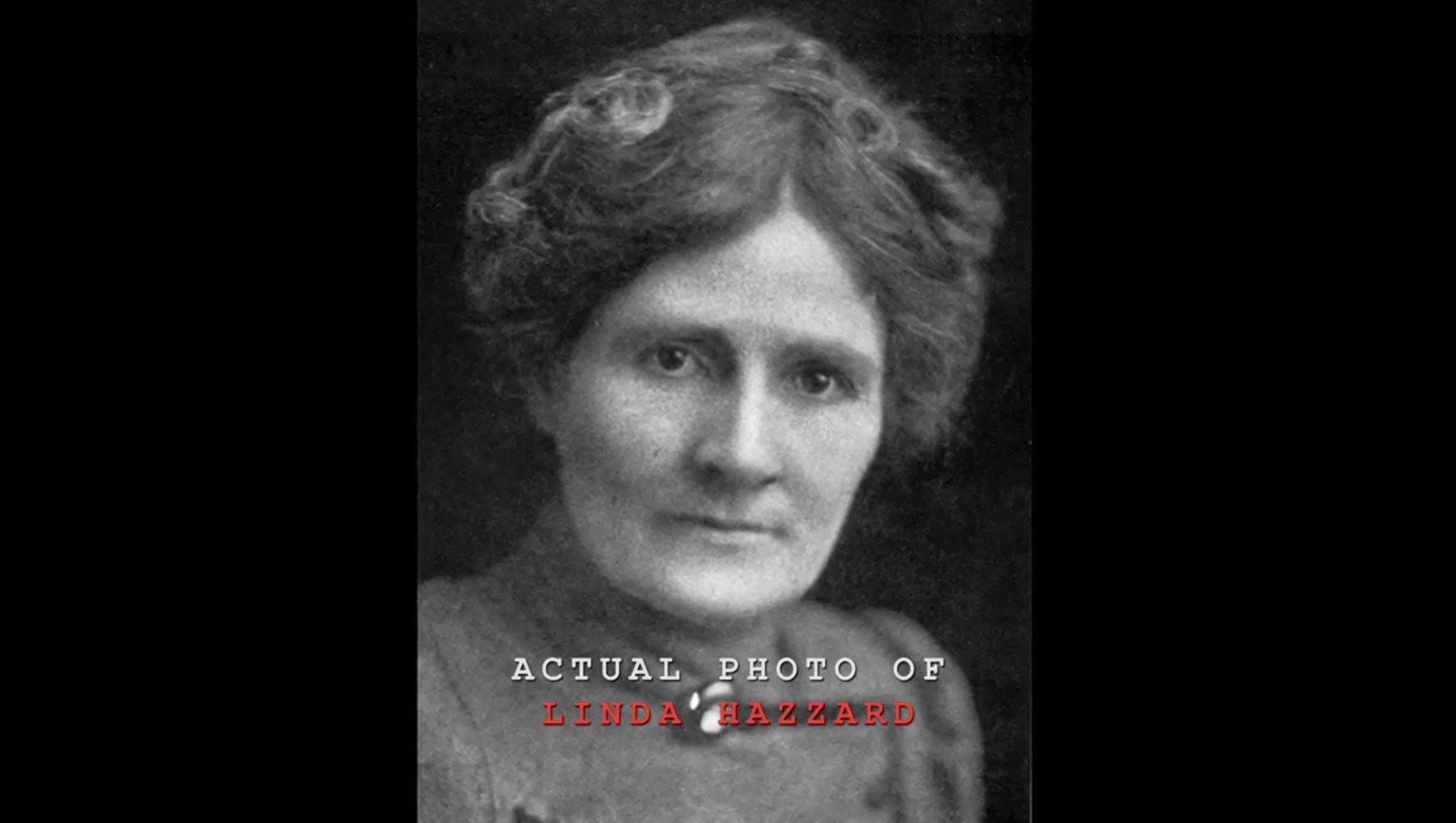
The legacy of Linda Burfield Hazzard remains a chilling focal point in medical history, representing a lethal intersection of alternative medicine and criminal exploitation. Known as the "Starvation Doctor," Hazzard’s practice in Olall...
The legacy of Linda Burfield Hazzard remains a chilling focal point in medical history, representing a lethal intersection of alternative medicine and criminal exploitation. Known as the "Starvation Doctor," Hazzard’s practice in Olalla, Washington, resulted in at least a dozen documented deaths—and potentially dozens more—under her "fasting cure" during the early 20th century. While she claimed to be a pioneer of natural healing, historical records and court testimonies establish a legacy of systematic neglect, financial manipulation, and medical malpractice.
Contents
The Philosophical Foundations of the Fasting Cure
To understand the contested legacy of Linda Burfield Hazzard, one must first examine the medical landscape of the late 19th and early 20th centuries. This was an era where the "Nature Cure" movement gained significant traction, fueled by a growing distrust of traditional "heroic medicine," which often involved toxic mercury treatments and invasive bloodletting.
Hazzard was not a medical doctor in the traditional sense; she held no MD. Instead, she was licensed to practice "suggestive therapeutics" in Washington state through a legal loophole that grandfathered in practitioners of alternative medicine. Her philosophy was rooted in the work of Edward Hooker Dewey, who championed fasting as a means to allow the body’s "vital force" to focus on healing rather than digestion.
Hazzard took Dewey’s theories to an extreme. She posited that all diseases, from cancer to minor infections, were caused by "impurities" in the blood resulting from overeating. Her solution was a regimen of total starvation, punctuated only by small amounts of tomato or orange juice, massive internal enemas that lasted for hours, and physical "massages" so violent that witnesses often described them as beatings. In her 1908 book, Fasting for the Cure of Disease, she argued that the hunger felt by a starving person was merely a symptom of "cravings" for toxins, rather than a biological necessity for survival.
Wilderness Heights: The Sanitarium of Olalla
In the rural community of Olalla, Washington, Hazzard established her sanitarium, which she ironically named "Wilderness Heights." Locals, however, quickly dubbed it "Starvation Heights." The facility was designed as a secluded retreat where patients could undergo the fasting cure away from the interference of worried relatives or skeptical physicians.
The isolation of Wilderness Heights was central to Hazzard’s operation. Patients were often in a state of extreme physical and mental depletion, making them easy targets for coercion. Reports from the time indicate that Hazzard frequently took control of her patients' finances, securing power of attorney and becoming the beneficiary of their estates as they grew closer to death.
The physical conditions at the sanitarium were harrowing. Patients were seen wandering the grounds like living skeletons, occasionally attempting to steal food from neighbors or forage for scraps in the woods. Despite the mounting death toll, Hazzard maintained a veneer of professional authority, attributing the fatalities not to starvation, but to the "advanced stage of disease" the patients supposedly suffered from before arrival.
The Case of the Williamson Sisters
The most significant turning point in Hazzard’s career and the primary reason for her lasting infamy was the case of Dorothea and Edith Williamson. The sisters were wealthy British heiresses who, lured by Hazzard's advertisements, traveled to Olalla in 1911 to seek a "purification" treatment.
The Williamsons were subjected to the standard Hazzard regimen. By the time their childhood nurse, Margaret Conway, received a cryptic telegram and traveled from Australia to find them, the sisters were unrecognizable. Dorothea had died, weighing less than 50 pounds, and Edith was a skeletal figure near death.
The Williamson case provided the first concrete evidence of Hazzard’s criminal intent. Investigation revealed that Hazzard had forged Dorothea’s will and had stolen a significant amount of jewelry and personal property from the sisters. Unlike previous victims, the Williamsons had international connections and the financial means to trigger a massive legal response. The British Vice-Consul in Tacoma eventually intervened, leading to Hazzard’s arrest and trial for manslaughter.
Legal Proceedings and the Trial of 1912
The 1912 trial of Linda Hazzard was a sensation that captivated the Pacific Northwest and the international press. The prosecution argued that Hazzard had intentionally starved Dorothea Williamson to death to seize her assets.
The defense attempted to frame Hazzard as a misunderstood medical pioneer whose "natural" methods were being persecuted by the medical establishment. However, the testimony of survivors and medical experts was damning. Evidence showed that Hazzard had performed her own autopsies on victims, likely to hide the physical evidence of starvation and to convince authorities that the deaths were due to natural causes like cirrhosis or intestinal blockages.
Hazzard was convicted of manslaughter and sentenced to 2 to 20 years at the Washington State Penitentiary in Walla Walla. However, her influence was not entirely extinguished. After serving only two years, she was pardoned by Governor Ernest Lister in 1915, on the condition that she leave the United States.
The Return to Olalla and Final Years
Hazzard moved to New Zealand, where she continued to practice as a "dietitian" and "fasting specialist," once again facing legal trouble and fines for practicing medicine without a license. By 1920, she had returned to Olalla, despite the conditions of her pardon.
She attempted to rebuild Wilderness Heights, constructing a new, large sanitarium building. Though her license had been revoked, she continued to see "pupils" and "students," a semantic shift used to bypass medical regulations. In 1935, the new sanitarium burned down, a loss from which she never financially recovered.
The ultimate irony of Linda Hazzard’s life occurred in 1938. At the age of 70, she fell ill and attempted to use her own fasting cure to restore her health. She died of starvation on June 24, 1938.
Historical Documentation of Victims and Key Events
The following table summarizes the confirmed and highly probable incidents associated with the Hazzard sanitarium during its peak years of operation.
| Patient Name | Year of Death | Documented Cause/Circumstance | Reported Asset Loss |
|---|---|---|---|
| Daisy Maud Haglund | 1908 | Starvation; died after 50 days of fasting. | Unknown |
| Ida Anderson | 1910 | Starvation; Hazzard claimed "cancer of the stomach." | Significant estate funds |
| B.J. Cosgrove | 1910 | Found dead in Olalla; Hazzard performed autopsy. | Personal property |
| Dorothea Williamson | 1911 | Manslaughter conviction case; weighed <50 lbs. | Jewelry, real estate, cash |
| Lewis Ellsworth Rader | 1911 | Former state senator; died under Hazzard's care. | Political/Social influence |
| Ivan Flux | 1911 | Traveled from London; died after 53 days. | Entirety of travel funds |
The Enduring Controversy: Medicine or Murder?
Even in 2026, the discussion surrounding Linda Hazzard is polarized between those who view her as a serial killer hiding behind a medical mask and those who see her as a tragic figure in the history of alternative health.
- The Serial Killer Theory: Modern criminologists often categorize Hazzard as a "medical serial killer." Unlike traditional healers who might make mistakes, Hazzard demonstrated a pattern of targeting wealthy, isolated individuals, exerting total control over their environment, and systematically stripping them of their assets while they were too weak to resist. The use of forged documents and the suspicious nature of her autopsies point to a predatory motive.
- The "Nature Cure" Apologists: A small minority of alternative health enthusiasts occasionally cite Hazzard as a martyr for "natural" medicine. They argue that her failures were the result of the patients' existing conditions and that modern intermittent fasting has validated some of her core (if extreme) ideas. However, medical professionals emphasize that there is a vast difference between controlled nutritional therapy and the lethal starvation practiced at Wilderness Heights.
- The Feminist Perspective: Some historians examine Hazzard through the lens of early 20th-century gender roles. As a woman practicing in a male-dominated field, she faced significant scrutiny. While this does not excuse her crimes, it provides context for why she may have been so aggressive in asserting her authority and why the medical establishment was so eager to see her discredited.
Modern Medical Ethics and Legacy
The Hazzard case was a landmark in the development of medical regulation in Washington state. It highlighted the dangers of the "grandfather clause" and led to stricter licensing requirements for all healthcare practitioners.
Today, the site of Wilderness Heights in Olalla is a private residence, but it remains a site of "dark tourism." The story was popularized in the modern era by true crime author Gregg Olsen in his book Starvation Heights, which brought the horrific details of the Williamson case to a new generation of readers. The legacy of Linda Hazzard serves as a permanent cautionary tale regarding the lack of oversight in alternative medicine and the potential for domestic extremism within "wellness" cults.
Frequently Asked Questions
Did Linda Hazzard actually have a medical degree?
No. Linda Hazzard never attended medical school or earned an MD. She was a "fasting specialist" who obtained a license to practice in Washington through a loophole that allowed practitioners already in business to continue without formal education. Her lack of medical training is often cited as the reason she failed to recognize the point at which starvation became irreversible.
How many people died at Starvation Heights?
While Hazzard was only convicted of one death (Dorothea Williamson), researchers and historians estimate the actual death toll was at least 15, with some estimates reaching as high as 40. Many deaths were likely unreported or attributed to natural causes because Hazzard herself performed the autopsies and signed the death certificates before local authorities could intervene.
Was the "Fasting Cure" based on any real science?
The idea that the body can benefit from periods of rest (digestion-wise) exists in many cultures, but Hazzard’s "cure" had no basis in human physiology. The body requires essential nutrients and electrolytes to function; prolonged starvation leads to organ failure, muscle atrophy, and cognitive impairment. Hazzard ignored these medical realities, claiming that the physical symptoms of starvation were actually signs that "toxins" were leaving the body.
Why didn't the patients just leave?
By the time patients realized the treatment was killing them, they were usually too weak to walk more than a few steps. Hazzard also used psychological manipulation, telling patients that their pain was a sign they were "almost cured" and that leaving would result in immediate death. Furthermore, she controlled their mail and visitors, effectively cutting them off from the outside world.
What happened to the sanitarium after Hazzard died?
The original wooden sanitarium burned down in 1935. A second, more modern structure was built but was eventually converted into a private residence. The land in Olalla remains privately owned, and while the "Starvation Heights" moniker persists in local lore, there is no public museum or memorial at the site.
Final Recommendation for Researchers
For those studying the contested legacy of Doctor Linda Hazzard, it is essential to consult the primary court records from the 1912 trial held in Kitsap County, Washington. These documents provide the most objective view of the financial crimes and physical abuse that occurred. While her theories on fasting are historically interesting within the context of the "Nature Cure" movement, they must be weighed against the forensic evidence of systematic starvation and the clear pattern of predatory behavior that defined her career.
Image Gallery