Understanding the Military Rank Ladder: A Comprehensive Guide to Hierarchy and Pay Grades
Understanding the military rank ladder requires recognizing the distinction between pay grades and titles across the different branches of the armed forces. The hierarchy is divided into three primary tiers: Enlisted personnel (E-1 thr...
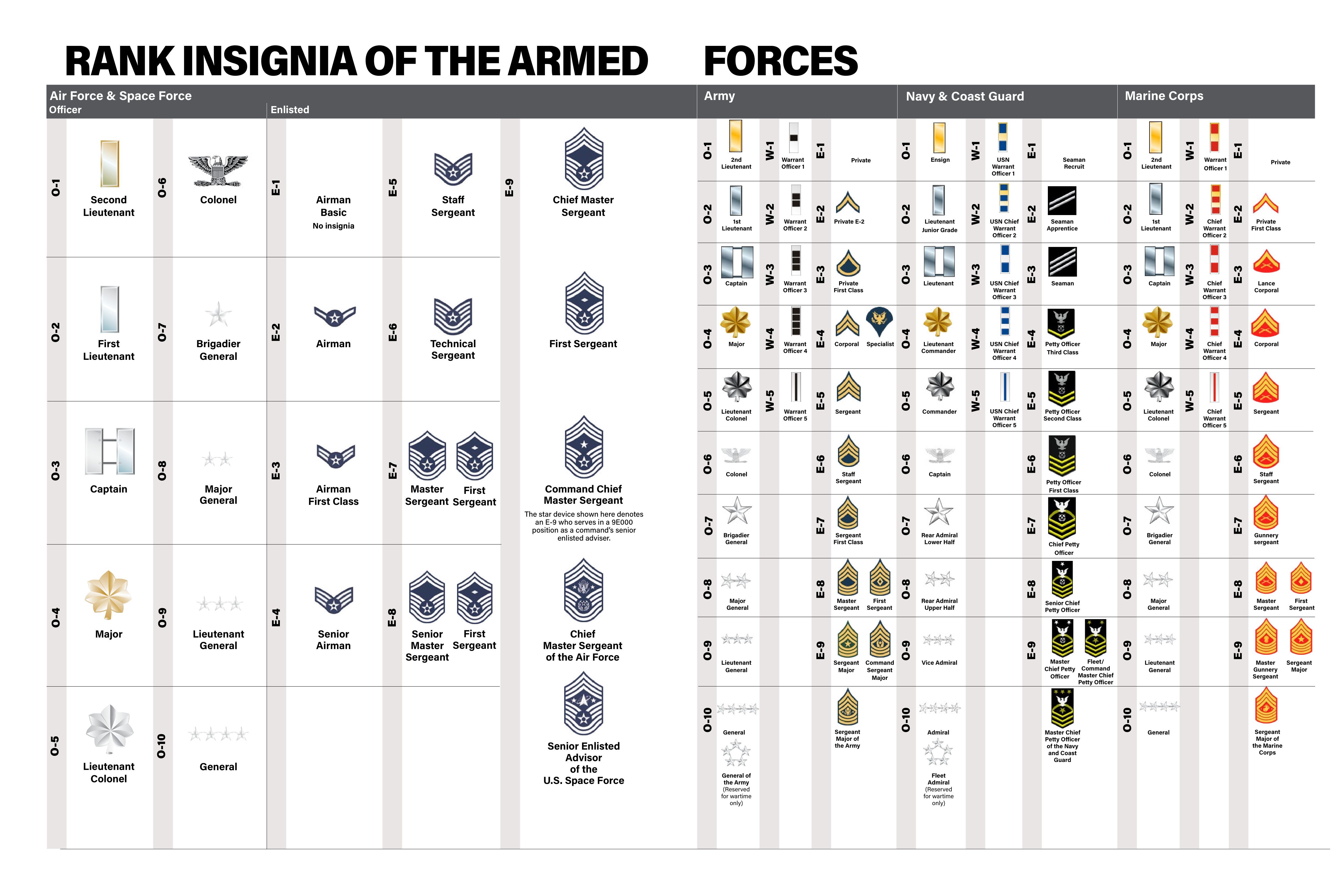
Understanding the military rank ladder requires recognizing the distinction between pay grades and titles across the different branches of the armed forces. The hierarchy is divided into three primary tiers: Enlisted personnel (E-1 through E-9), Warrant Officers (W-1 through W-5), and Commissioned Officers (O-1 through O-10), each carrying specific levels of responsibility, leadership requirements, and technical expertise.
Contents
The military hierarchy is the backbone of operational discipline and organizational structure. For those outside the service—or those just beginning their journey—the "ladder" can appear daunting due to the varying nomenclature used by the Army, Navy, Air Force, Marine Corps, Space Force, and Coast Guard. However, by 2026, the standardization of pay grades has made it easier to compare seniority across services, even when the titles themselves differ.
The Foundation of the Force: Enlisted Ranks (E-1 through E-9)
The enlisted tier represents the vast majority of military personnel. These individuals are the "doers" of the military, carrying out the day-to-day operations, maintenance, and tactical execution of missions. As a service member moves up the enlisted ladder, their role shifts from performing technical tasks to supervising others and providing high-level counsel to officers.
Junior Enlisted (E-1 to E-3)
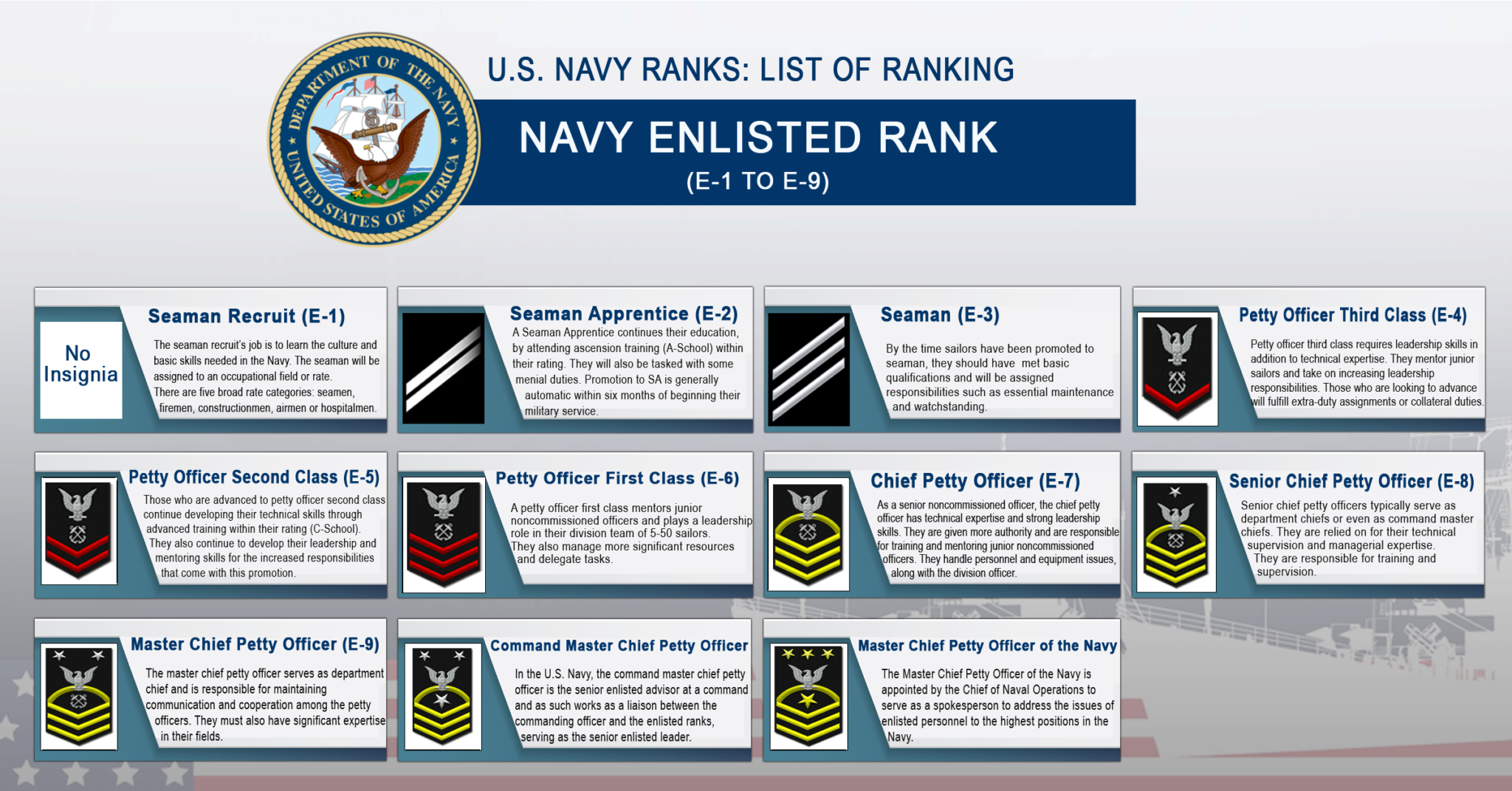
At the bottom of the ladder are the junior enlisted ranks. Personnel in these grades are typically in a "learning" phase. In the Army and Marine Corps, these are your Privates; in the Navy and Coast Guard, they are Seamen; and in the Air Force and Space Force, they are Airmen or Specialists. At this stage, the focus is on mastering basic skills, following orders, and adapting to military culture. Promotion through these ranks is often automatic based on "Time in Service" (TIS) and "Time in Grade" (TIG).
Non-Commissioned Officers (E-4 to E-6)
The transition to Non-Commissioned Officer (NCO) or Petty Officer (in the Navy and Coast Guard) status is a significant milestone. This usually occurs at the E-4 or E-5 level. At this stage, the individual is no longer just a technician; they are a leader. Corporal (Army/Marines) and Sergeant (Army/Marines/Air Force/Space Force) are the quintessential NCO ranks. They are responsible for the well-being, training, and discipline of small teams or squads. This is often described as the "backbone of the military" because these leaders bridge the gap between the senior command's vision and the junior enlisted's execution.
Senior Non-Commissioned Officers (E-7 to E-9)
The top of the enlisted ladder consists of Senior NCOs. These individuals, such as Master Sergeants, Chief Petty Officers, and Sergeant Majors, possess decades of experience. Their primary role is administrative and advisory. They manage large units, oversee complex logistics, and serve as the primary advisors to commissioned officers. The highest enlisted rank in each branch—such as the Sergeant Major of the Army or the Master Chief Petty Officer of the Navy—serves as a direct advisor to the branch's highest-ranking general or admiral and the Secretary of the Defense.
The Technical Experts: Warrant Officers (W-1 to W-5)
Warrant Officers occupy a unique space in the military rank ladder. They are highly specialized experts in specific technical fields, such as aviation, intelligence, or cyber security. Unlike commissioned officers, who are generalist leaders who move between different types of units, Warrant Officers typically stay within their specialty for their entire careers.
In 2026, the use of Warrant Officers remains most prominent in the Army, Marine Corps, and Navy. The Air Force and Space Force have historically relied on senior enlisted personnel for technical expertise, though various pilot programs and specialized tracks often mimic the Warrant Officer's career progression.
Warrant Officers are appointed by a warrant from the Secretary of the service branch at the W-1 level and then commissioned by the President upon reaching the grade of Chief Warrant Officer Two (W-2). This tier is essential for maintaining "institutional memory" in highly technical roles where frequent rotations of commissioned officers would be disruptive to operational readiness.
The Command Tier: Commissioned Officers (O-1 through O-10)
Commissioned Officers hold the highest levels of authority in the military. Their commissions are confirmed by the Senate and signed by the President. While enlisted personnel focus on "how" to do a job, commissioned officers focus on "what" needs to be done and "why."
Company Grade Officers (O-1 to O-3)
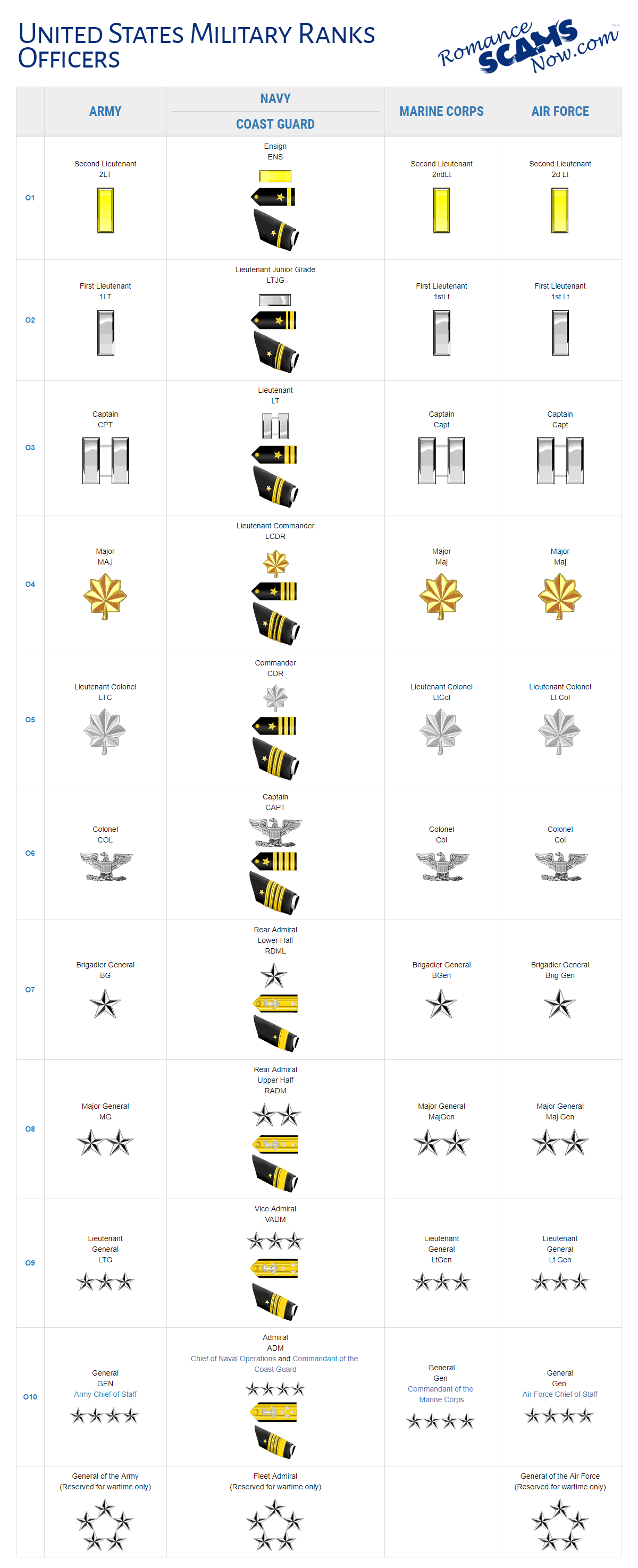
Junior officers, including Second Lieutenants (Ensigns in the Navy) and Captains (Lieutenants in the Navy), are the frontline managers of the officer corps. They lead platoons, flights, or shipboard divisions. Most officers enter the service with a four-year college degree and receive their commissions through Service Academies, Reserve Officers' Training Corps (ROTC), or Officer Candidate School (OCS).
Field Grade Officers (O-4 to O-6)
Middle-management officers include Majors, Lieutenant Colonels, and Colonels (or Lieutenant Commanders, Commanders, and Captains in the Navy). These individuals command battalions, squadrons, or ships. Their responsibilities shift toward strategic planning, resource management, and multi-unit coordination. Reaching the rank of Colonel or Navy Captain is a major career achievement, representing roughly 20 to 22 years of service.
General and Flag Officers (O-7 to O-10)
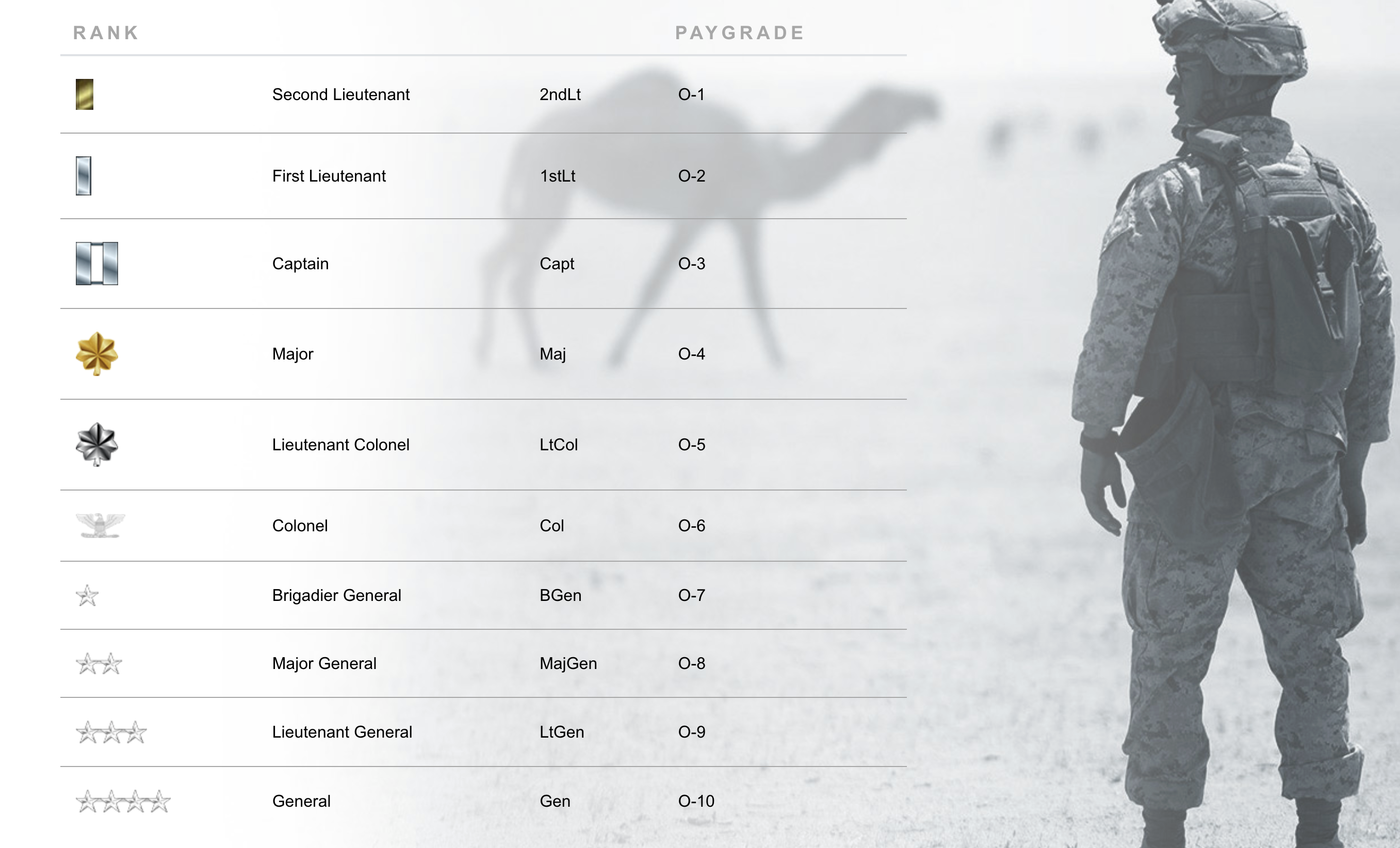
At the top of the military rank ladder are the Generals (Army, Air Force, Marine Corps, Space Force) and Admirals (Navy, Coast Guard). These officers are responsible for the strategic direction of the entire military. An O-7 is a Brigadier General (Rear Admiral Lower Half), while an O-10 is a four-star General or Admiral. Promotion to these ranks requires a presidential nomination and Senate confirmation. These leaders work closely with civilian government officials to shape national defense policy.
Comparing Ranks Across Branches
Because each branch uses different names for the same pay grade, a cross-branch comparison is the most effective way to understand the hierarchy. The table below outlines the 2026 rank structure for the four largest branches.
| Pay Grade | Army | Navy / Coast Guard | Air Force | Marine Corps |
|---|---|---|---|---|
| E-1 | Private | Seaman Recruit | Airman Basic | Private |
| E-4 | Corporal / Specialist | Petty Officer 3rd Class | Senior Airman | Corporal |
| E-7 | Sergeant First Class | Chief Petty Officer | Master Sergeant | Gunnery Sergeant |
| E-9 | Sergeant Major | Master Chief Petty Officer | Chief Master Sergeant | Master Gunnery Sergeant |
| W-1 | Warrant Officer 1 | Warrant Officer 1 | N/A | Warrant Officer 1 |
| O-1 | Second Lieutenant | Ensign | Second Lieutenant | Second Lieutenant |
| O-4 | Major | Lieutenant Commander | Major | Major |
| O-6 | Colonel | Captain | Colonel | Colonel |
| O-10 | General | Admiral | General | General |
The Mechanics of Promotion and Advancement
Climbing the military rank ladder is not solely a matter of time; it is a competitive process based on merit, performance evaluations, and education.
- Promotion Boards: For higher enlisted and officer ranks, promotion boards review a service member's entire file. This includes their Physical Fitness Test (PFT) scores, awards, "FitReps" (Fitness Reports), and completion of Professional Military Education (PME).
- Up or Out Policy: The military operates under a "high-year tenure" system. If a service member does not promote within a certain timeframe, they may be required to separate from the service. This ensures the ladder remains fluid and that leadership positions are filled by those deemed most capable.
- Specialty Pay and Tiers: While the pay grade (e.g., E-5) determines the base salary, certain ranks within that grade carry more prestige. For example, in the Army, an E-4 can be a Specialist (technical focus) or a Corporal (leadership focus). While they earn the same base pay, the Corporal is an NCO and outranks the Specialist.
Common Misconceptions About Military Rank
One of the most frequent points of confusion for civilians is the distinction between Rank and Rating. In the Navy and Coast Guard, "Rating" refers to a person's job (e.g., Boatswain's Mate), while "Rate" refers to their pay grade.
Another area of confusion is the "Five-Star General." While the ladder technically goes up to O-11 (General of the Army or Fleet Admiral), these ranks are only authorized during times of massive, multi-theater war. There have been no five-star officers in the U.S. military since the mid-20th century.
Frequently Asked Questions
What is the difference between a pay grade and a rank?
A pay grade (like E-5 or O-3) is an administrative code used by the Department of Defense to determine salary and benefits across all branches. A rank is the specific title associated with that pay grade within a specific branch, such as "Sergeant" in the Army or "Petty Officer Second Class" in the Navy. While the pay grade is the same, the responsibilities and customs associated with the rank can vary.
Can an enlisted person become a commissioned officer?
Yes, this is a common career path often referred to as becoming a "Mustang." Enlisted personnel can earn a commission through programs like the Green to Gold program, Officer Candidate School (OCS), or by applying to a service academy if they meet age and service requirements. Mustangs are highly respected for their practical, "boots-on-the-ground" experience.
Do all branches have Warrant Officers?
No. Currently, the Army, Navy, Marine Corps, and Coast Guard utilize the Warrant Officer track. The Air Force and Space Force traditionally do not use Warrant Officers, instead utilizing senior enlisted personnel (E-7 through E-9) or specialized commissioned officer tracks to fill technical expert roles. However, organizational needs are reviewed periodically by the Department of Defense.
Which rank is considered the start of leadership?
While leadership is expected at all levels, the formal transition typically occurs at the E-4 (Corporal) or E-5 (Sergeant/Petty Officer) level for enlisted personnel, where they become Non-Commissioned Officers. For the officer corps, leadership begins immediately at O-1 (Second Lieutenant/Ensign), as they are charged with leading units right out of training.
How long does it take to reach the top of the ladder?
Reaching the top enlisted rank (E-9) typically takes 18 to 22 years of service. Reaching the rank of a senior commissioned officer (O-6) usually takes a similar timeframe. General and Flag officers (O-7 and above) often have 25 to 30+ years of service. Promotion timelines are governed by Title 10 of the U.S. Code, which sets legal limits on the number of personnel allowed in senior grades.
Final Recommendation
For those looking to navigate or join the military hierarchy, the best first step is to identify whether your strengths lie in technical execution (Enlisted), technical expertise (Warrant Officer), or broad organizational leadership (Commissioned Officer). Each path offers a distinct "ladder" with different prerequisites. Prospective recruits should consult official branch portals such as GoArmy or Navy.com to understand the current requirements for 2026, as entry standards and promotion quotas fluctuate based on national security needs.
Image Gallery