Understanding the Loss of Contact with the MAVEN Mars Orbiter: A Technical Analysis
On December 6, 2025, NASA experienced a critical interruption in communication with the Mars Atmosphere and Volatile Evolution (MAVEN) orbiter. This event effectively severed the primary downlink of telemetry and scientific data from t...
On December 6, 2025, NASA experienced a critical interruption in communication with the Mars Atmosphere and Volatile Evolution (MAVEN) orbiter. This event effectively severed the primary downlink of telemetry and scientific data from the spacecraft, leaving mission control to initiate emergency recovery protocols while the orbiter remained in its established Martian elliptical orbit.
Contents
The MAVEN Mission and Operational Context
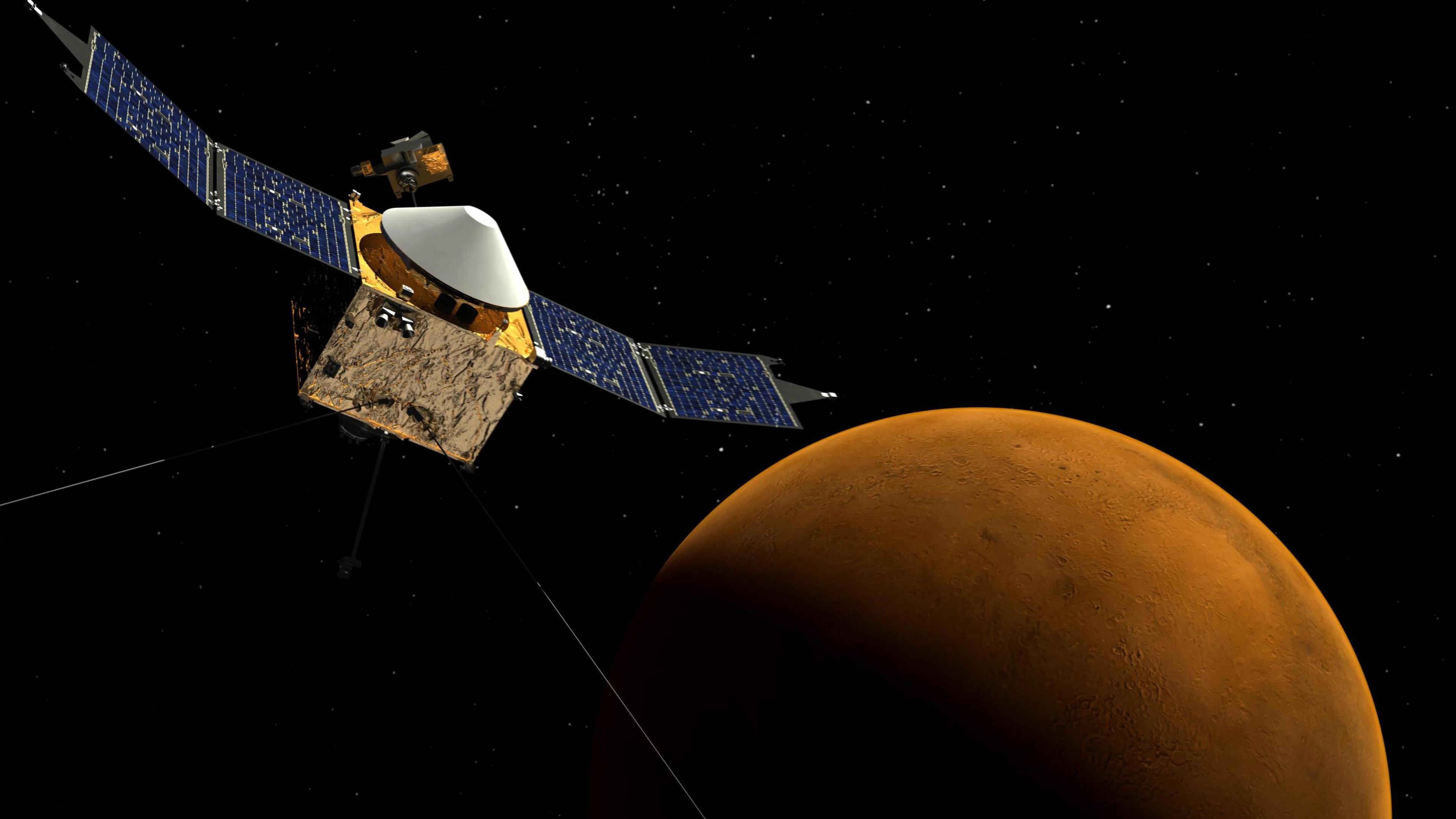
The MAVEN mission was launched in November 2013 with the primary scientific objective of exploring the Martian upper atmosphere, ionosphere, and interactions with the solar wind. By studying these factors, the mission aimed to provide critical insights into the loss of Mars' volatile compounds—such as water and carbon dioxide—over billions of years.
The spacecraft operates in a highly elliptical orbit, typically swinging from a periapsis of approximately 150 kilometers to an apoapsis of roughly 6,200 kilometers. This unique orbital configuration allows MAVEN to sample the transition region between the lower atmosphere and the vacuum of space. Because the spacecraft relies on high-gain and low-gain antennas to communicate with the Deep Space Network (DSN) on Earth, a loss of contact implies a failure in one of three segments: the spacecraft’s onboard transponder, the pointing mechanism required for the high-gain antenna, or the propagation path of the X-band signal through the Martian or terrestrial environment.
Chronology of the December 6 Incident
When NASA lost contact with the MAVEN Mars orbiter on December 6, 2025, the operations team was in the middle of a routine mission phase. Unlike mission-critical maneuvers such as orbital insertion or aerobraking, this period involved standard data harvesting. The loss of signal was identified when the expected downlink window at a DSN ground station failed to register the carrier signal.
Immediately following the loss of the carrier signal, the Deep Space Network transitioned into "search mode," scanning the expected frequency bands for any anomalous signals that might suggest the spacecraft had entered a "safe mode." A spacecraft in safe mode typically reorients itself to point its solar panels toward the Sun and its low-gain antenna toward Earth, broadcasting a simplified "heartbeat" signal at a very low data rate. The absence of this heartbeat in the initial hours suggested a more complex issue, potentially involving a power distribution fault or a software hang that prevented the autonomous recovery sequence from executing as designed.
Technical Challenges of Deep Space Communication
Communication with Mars is governed by the laws of physics that dictate signal attenuation over vast distances. At an average distance of 225 million kilometers, the round-trip light time (RTLT) can range from 8 to 40 minutes. This physical constraint prevents real-time "joysticking" of the spacecraft. Consequently, MAVEN was designed to be highly autonomous.
| Communication Component | Function | Risk Factor in Failure |
|---|---|---|
| High-Gain Antenna (HGA) | Primary data transmission | Mechanical gimbal failure |
| X-band Transponder | Signal modulation/demodulation | Electronic component radiation degradation |
| Solid State Power Amplifier | Signal amplification | Thermal fatigue from constant cycling |
| Onboard Flight Computer | Command processing and autonomy | Single-event upset (SEU) from solar particles |
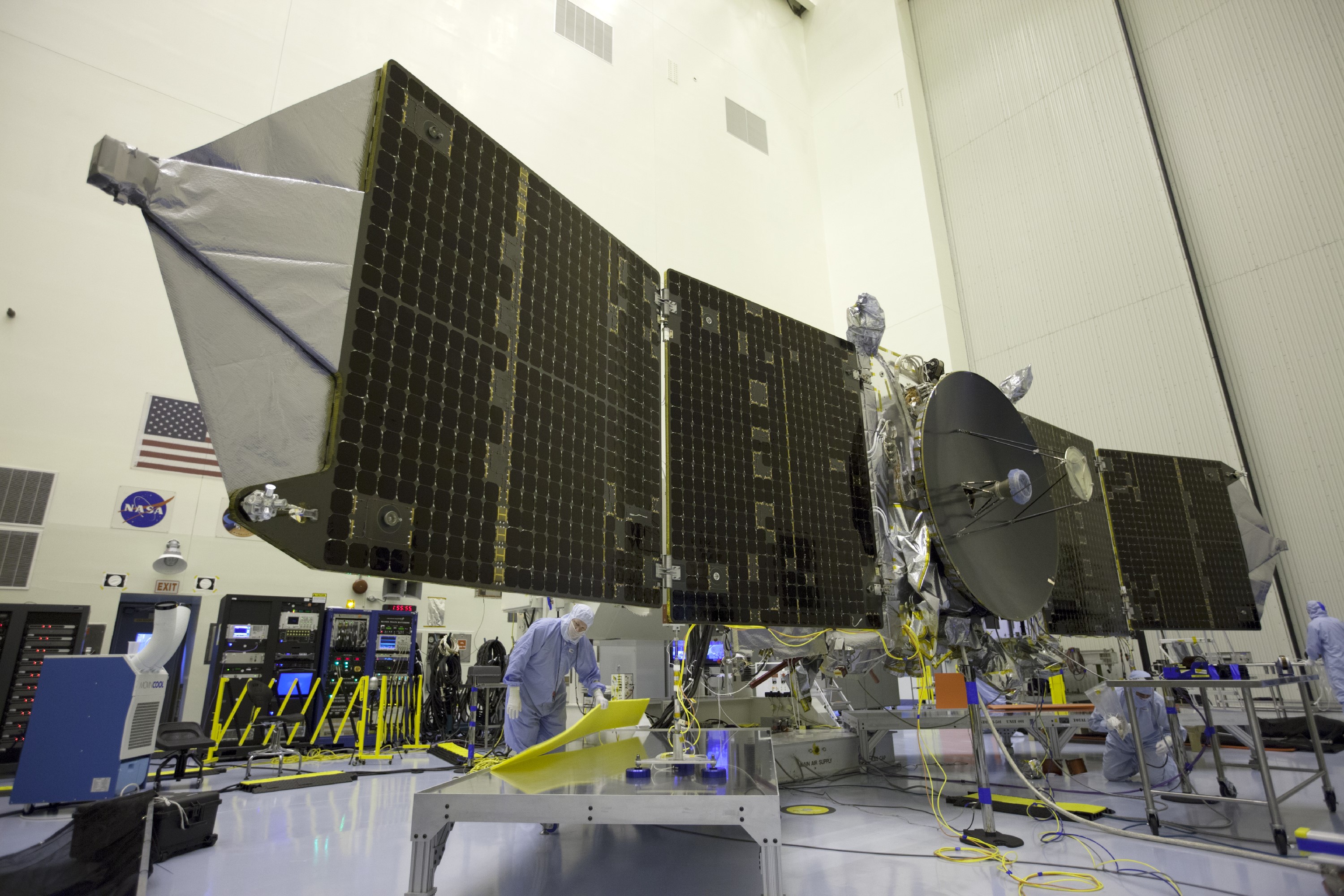
The reliance on these systems over an extended mission duration—MAVEN having operated far beyond its primary mission life—exposes the hardware to cumulative degradation. Spacecraft longevity is often challenged by the depletion of propellant or the failure of aging electronic components subjected to constant cosmic ray bombardment.
Troubleshooting and Recovery Protocols
When contact is lost, NASA’s Jet Propulsion Laboratory (JPL) follows a standardized, multi-step recovery process. This protocol is designed to eliminate common variables before assuming a permanent hardware loss.
- DSN Verification: The first step involves verifying that the ground station equipment is fully operational and configured to the correct frequency and polarization. Engineers cross-reference the expected spacecraft ephemeris—the calculated position of the orbiter—against the telescope pointing data to ensure the antenna was aimed correctly.
- Signal Sweeping: The DSN performs a "blind sweep" of the frequency range around the expected X-band carrier. This accounts for potential frequency shifts caused by the Doppler effect or thermal fluctuations in the spacecraft's local oscillator.
- Safe Mode Analysis: If the spacecraft is suspected to be in safe mode, commands are sent using higher power and broader beam-width transmission (typically through the low-gain antenna) to "ping" the orbiter. These commands are formatted to be as simple as possible to ensure the spacecraft's basic command-decoding logic can interpret them.
- Autonomous Reset: If the spacecraft remains unresponsive, engineers monitor for any automated "reboot" signals that occur when the onboard watchdog timer expires and triggers a cold restart of the computer systems.
Impact on Scientific Data Continuity
The MAVEN orbiter is a vital relay node for other surface assets. If the orbiter remains silent, the primary impact is the interruption of the MAVEN science payload, including the Imaging UltraViolet Spectrograph (IUVS) and the Neutral Gas and Ion Mass Spectrometer (NGIMS).
Furthermore, MAVEN serves as a data relay for surface rovers like Perseverance and Curiosity. While these rovers have multiple relay options, the temporary loss of the MAVEN link increases the latency of data return for ground operations. Scientific continuity is threatened when long-term atmospheric trends are disrupted by a gap in the observation record, making it difficult for researchers to correlate solar events with Martian atmospheric responses during that specific timeframe.
Risk Assessment and Mitigation
The age of the hardware is the most significant variable in the MAVEN mission. Operating in the harsh radiation environment of Mars, electronic components undergo slow, progressive damage. When a "dead" spacecraft scenario arises, engineers must weigh the cost of recovery against the remaining scientific value.
In most cases, NASA prioritizes the preservation of the spacecraft's health over the immediate retrieval of data. If the fault is in the power management system, pushing the battery to operate while the spacecraft is "cold" could lead to a permanent loss of the battery's ability to hold a charge. Thus, the recovery process is often slow, methodical, and conservative.
Frequently Asked Questions
Why did MAVEN lose contact? The exact cause remains under investigation. Typical causes for such events include software glitches resulting from radiation hits, mechanical failures in the antenna positioning system, or power distribution faults that force the spacecraft into a dormant state.
Is the mission over? Not necessarily. Losing contact is a known operational risk. NASA has successfully recovered numerous spacecraft from similar situations by sending updated sequences to trigger autonomous resets or alternate hardware paths.
How does NASA reach a spacecraft millions of miles away? NASA uses the Deep Space Network (DSN), a global array of massive radio antennas in California, Spain, and Australia. These antennas allow for continuous coverage of the sky as the Earth rotates, ensuring that the spacecraft is always in view of at least one antenna.
Can the public see the data from MAVEN? Yes. MAVEN data is processed and made available through the Planetary Data System (PDS). However, the loss of contact halts the flow of new data, creating a gap in the archives that will be noted by the science team if the mission is eventually declared inactive.
What happens to the orbiter if it is never recovered? If the spacecraft remains silent, it will continue to drift in its stable orbit around Mars. Due to the high altitude of its orbit, it is not at immediate risk of crashing into the planet, but it will eventually lose orbital stability over many years due to atmospheric drag and gravitational perturbations.
Moving Forward
For mission controllers, the period following the December 6, 2025 event is one of intense data review. Every packet of telemetry received—or the absolute silence recorded—is analyzed to determine the state of the onboard systems. Future updates from NASA regarding the orbiter will likely focus on whether a successful "handshake" has been established with the spacecraft or if the mission has reached its operational end. The loss of such a capable asset would be significant, but the mission has already provided an unprecedented amount of data regarding the Martian climate and its history as a once-habitable world.
Image Gallery