Understanding the Resident Evil Genre: Evolution, Mechanics, and Cultural Impact
The Resident Evil genre, popularized by Capcom’s seminal 1996 survival horror franchise, defines a style of video game centered on resource scarcity, tactical puzzle-solving, menacing atmospheres, and combat against biological threats...
The Resident Evil genre, popularized by Capcom’s seminal 1996 survival horror franchise, defines a style of video game centered on resource scarcity, tactical puzzle-solving, menacing atmospheres, and combat against biological threats where avoiding or managing conflict takes precedence over aggressive action.
Contents
The Origins and Core Definition of Survival Horror
To understand the Resident Evil genre, one must look at how it crystallized the "survival horror" classification. While earlier titles like Alone in the Dark (1992) laid foundational conceptual bricks, Resident Evil (known as Biohazard in Japan) codified the mechanics, pacing, and tone that would influence generations of developers. The term "survival horror" was coined specifically by Capcom's marketing team to distinguish the game from traditional first-person shooters and action titles.
At its heart, the genre forces players into vulnerable positions. Unlike action games where the player character acts as an overpowered apex predator, the Resident Evil genre treats protagonists as ordinary humans thrust into extraordinary, terrifying circumstances. Resources such as ammunition, healing items, and save opportunities are strictly finite. This scarcity shifts the player's mindset from elimination to preservation. Every encounter with an enemy becomes a calculated risk assessment: Should I spend three precious shotgun shells to clear this hallway, or should I attempt to juke and dodge the creature to save resources for a future boss encounter?
Defining Mechanics of the Classic Resident Evil Formula
The traditional Resident Evil genre relies on a tightly knit web of mechanical pillars designed to induce tension and claustrophobia. These foundational systems governed the franchise through its early installments and continue to inspire modern indie horror titles.
Fixed Camera Angles and Tank Controls
Early entries utilized pre-rendered background environments paired with fixed camera angles. This cinematic approach restricted the player’s field of view, deliberately hiding threats just around a corner or at the end of a long hallway. Combined with "tank controls"—where pressing up moves the character forward relative to their own facing direction rather than the screen—movement felt rigid and deliberate, amplifying panic during sudden ambushes.
Inventory Management and Item Boxes
Inventory space is rigorously restricted, often limited to a fixed number of slots (e.g., six to ten slots depending on the character). Key items like puzzle pieces, weapons, ammunition, and healing herbs all compete for the same limited inventory space. To manage this, developers introduced interconnected Item Boxes scattered across safe rooms, allowing players to store and retrieve items across vast distances. Deciding what to carry and what to leave behind is a core strategic puzzle.
Environmental Puzzles and Key-Card Metroidvania Design
Progression in the Resident Evil genre rarely follows a straight line. Players frequently encounter locked doors, sealed gates, and cryptic riddles requiring specific items—such as an emblem, a specific key, or a crank—found elsewhere in the environment. This design creates a looping exploration loop reminiscent of Metroidvania titles, where gaining a new tool opens up previously inaccessible areas of a mansion, police station, or underground laboratory.
Evolution of the Genre: From Fixed Angles to Over-the-Shoulder and First-Person
Over three decades, the Resident Evil genre has undergone significant structural transformations, adapting to technological advancements and shifting player expectations.
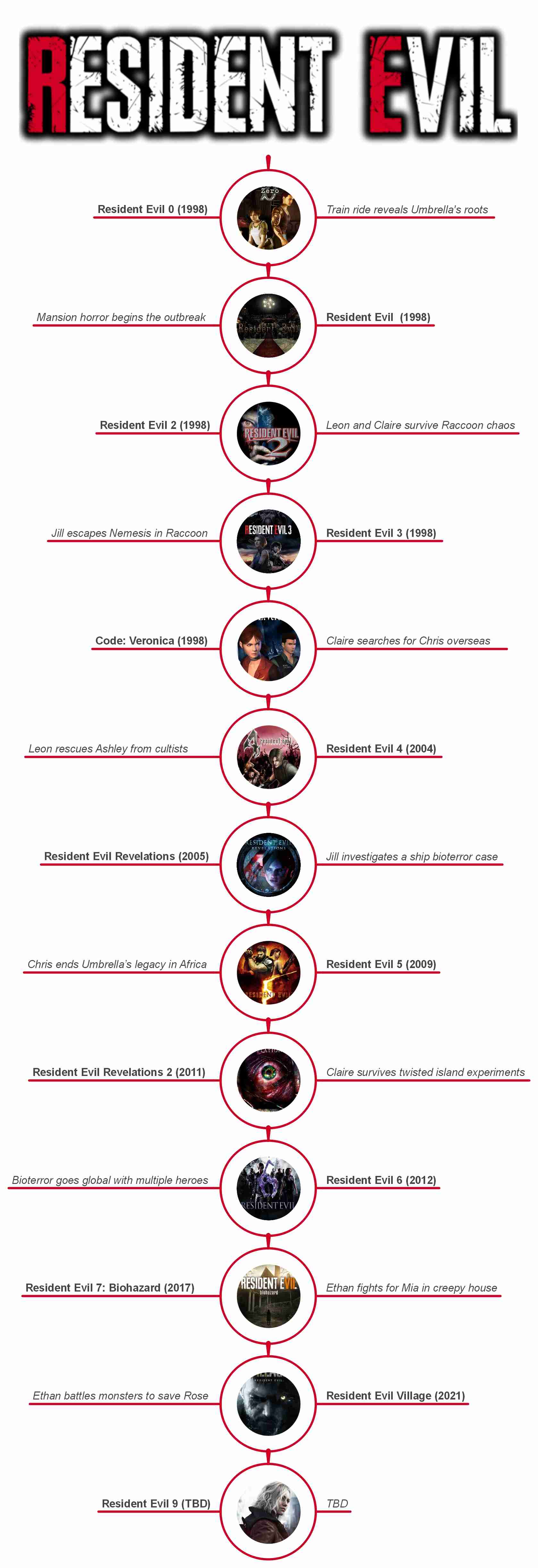
| Era / Style | Notable Titles | Primary Camera Perspective | Core Mechanical Focus |
|---|---|---|---|
| Classic Era | Resident Evil (1996), Resident Evil 2 (1998), Resident Evil Code: Veronica | Fixed Camera / Pre-rendered Backgrounds | Resource scarcity, tank controls, inventory management, cryptic puzzles. |
| Action-Horror Transition | Resident Evil 4 (2005), Resident Evil 5, Resident Evil 6 | Over-the-Shoulder (Third-Person) | Action-oriented combat, quick-time events, reduced puzzle density, cooperative play. |
| Modern Survival Revival | Resident Evil 7: Biohazard, Resident Evil 2 Remake (2019), Resident Evil Village | First-Person or Over-the-Shoulder | Return to atmospheric dread, tighter inventory limits, terrifying stalker enemies, high-fidelity photorealism via the RE Engine. |
The release of Resident Evil 4 in 2005 revolutionized not only the franchise but the entire video game industry by popularizing the over-the-shoulder third-person perspective. While it leaned heavily into action and streamlined inventory mechanics, it preserved tension through aggressive enemy design and tight aiming constraints. Later, Resident Evil 7: Biohazard pivoted the franchise into an immersive first-person perspective, proving that the genre could successfully reinvent itself while returning to its terrifying, slow-paced survival roots.
Narrative Themes and Tropes
The narrative architecture of the Resident Evil genre borrows heavily from B-movie horror, pulp fiction, and biological sci-fi thrillers. Understanding these tropes helps categorize what belongs within the genre space versus general horror.
- The Corrupt Megacorporation: Entities like Umbrella Corporation serve as the institutional antagonists, blending unchecked corporate greed with unethical scientific experimentation.
- Biological Weapons (B.O.W.s): Zombies, mutated humans, Lickers, Nemesis, and various engineered monstrosities replace supernatural ghosts or demons with science-fiction explanations, typically involving viruses, parasites, or fungal spores.
- The Safe Room Oasis: A staple of the genre, safe rooms feature distinct, calming musical compositions and provide a momentary sanctuary where players can save their game (often via ink ribbons in classic titles), manage inventory, and catch their breath before re-entering danger.
- The Desperate Escape: Narratives almost universally culminate in a race against time, featuring self-destruct sequences, helicopter extractions, or military intervention just as the protagonist destroys the source of the outbreak.
Common Misconceptions and Subgenre Distinctions
Players and media outlets frequently mislabel horror subgenres. To maintain analytical clarity, it is helpful to distinguish the Resident Evil genre from adjacent horror categories.
- Resident Evil Genre vs. Pure Action Shooters: While later entries like Resident Evil 6 crossed into action territory, the underlying DNA demands inventory management and vulnerability. Games like Call of Duty or Gears of War feature constant firepower and regenerative health, which run counter to survival horror design.
- Resident Evil Genre vs. Psychological Horror: Games like Silent Hill focus on psychological trauma, shifting realities, and metaphysical symbolism. The Resident Evil genre, by contrast, remains firmly rooted in biological horror, virology, and tangible corporate conspiracies.
- Resident Evil Genre vs. Walking Simulators / Hide-and-Seek Horror: Titles like Amnesia: The Dark Descent or Outlast strip the player of all combat capabilities, forcing them entirely into stealth and flight. The Resident Evil genre preserves combat and resource management, allowing players to fight back, provided they have managed their ammunition effectively.
Frequently Asked Questions
What makes a game part of the Resident Evil genre?
A game belongs to the Resident Evil genre if it combines survival horror elements—such as strict inventory management, resource scarcity, backtracking exploration, and puzzle-solving—with combat against biological or scientific monstrosities, rather than pure action or supernatural entities.
Did Resident Evil invent survival horror?
No. While Capcom coined the term "survival horror," games like Sweet Home (1989) and Alone in the Dark (1992) established earlier templates. However, Resident Evil popularized and refined the mechanics into a cohesive formula that defined the modern genre.
Are all Resident Evil games purely survival horror?
No. The franchise has evolved. While early titles and recent remakes/sequels (Resident Evil 7, Village, RE2 Remake) focus heavily on survival horror, mid-era titles like Resident Evil 4, 5, and 6 leaned significantly more into action-adventure and third-person shooter mechanics.
How does resource management affect gameplay tension?
Resource scarcity forces players to weigh the cost of every action. Knowing that ammunition and healing items are extremely limited creates psychological pressure, turning standard hallway navigation into a high-stakes tactical decision.
Why do Resident Evil games feature backtracking?
Backtracking tied with puzzle items creates a Metroidvania-style exploration loop. As players acquire new keys, tools, or weapons, previously locked doors open up, encouraging thorough investigation of the game's atmospheric environments.
Conclusion and Next Steps
The Resident Evil genre stands as one of the most influential pillars of video game history, proving that tension, vulnerability, and strategic resource management create enduring engagement. Whether exploring the classic fixed-angle horrors of the 1990s or experiencing modern photorealistic terror, understanding its mechanical framework enriches the player's appreciation of game design. For those looking to dive deeper into the genre, starting with the critically acclaimed Resident Evil 2 Remake (2019) or the original Resident Evil (HD Remaster) provides the definitive introduction to survival horror mechanics.
Image Gallery