The Difference Between the Sun and a Star: A Clear Comparison
The Sun is a star, but not all stars are the Sun. The primary difference between the Sun and other stars is proximity: the Sun is the central G-type main-sequence star of our solar system, located just 93 million miles from Earth, wher...
The Sun is a star, but not all stars are the Sun. The primary difference between the Sun and other stars is proximity: the Sun is the central G-type main-sequence star of our solar system, located just 93 million miles from Earth, whereas other stars are distant suns located light-years away across the galaxy.
Contents
Because the Sun sits at the center of our planetary system, its gravitational pull holds Earth and the other planets in orbit, and its electromagnetic radiation provides the heat and light that drive Earth's climate, weather, and biological life. Every other twinkling point of light in the night sky is also a star—a massive, self-luminous sphere of plasma held together by its own gravity, producing energy through internal nuclear fusion.
Understanding how our local host star compares to the billions of other stars in the Milky Way requires examining distance, physical dimensions, spectral classifications, and evolutionary lifecycles.
Fundamental Relationship: Is the Sun a Star?
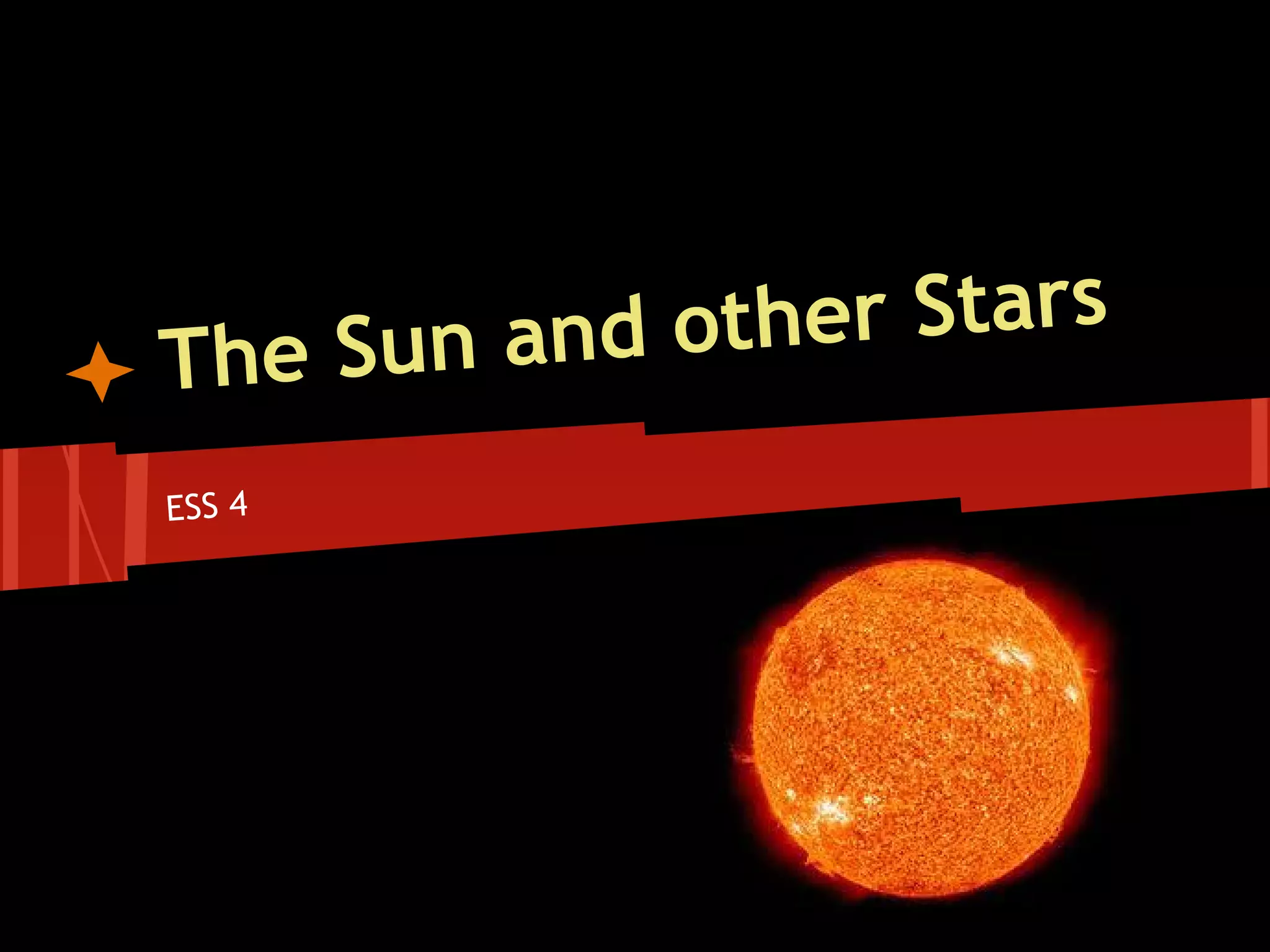
To understand the difference between the Sun and a star, it helps to resolve a common semantic confusion. Astrophysically, the Sun is a textbook star. It operates on the exact same physical principles as the stellar bodies observed across the universe: a massive sphere of ionized gas (plasma) composed predominantly of hydrogen and helium, generating energy via nuclear fusion at its core.
The word "Sun" (capitalized) is the proper name for our specific host star—also known historically as Sol. Conversely, the term "star" is an overarching astrophysical category that encompasses billions of luminous objects throughout the cosmos.
When astronomers speak of other planetary systems, they often refer colloquially to a system's central star as its "sun" (lowercase). However, in formal astronomical nomenclature, the Sun is simply the closest star to Earth. Its proximity provides scientists with a unique laboratory to study stellar phenomena—such as solar flares, coronal mass ejections, and magnetic field generation—at a level of detail impossible for stars located light-years away.
Sun vs. Other Stars: Primary Differences at a Glance
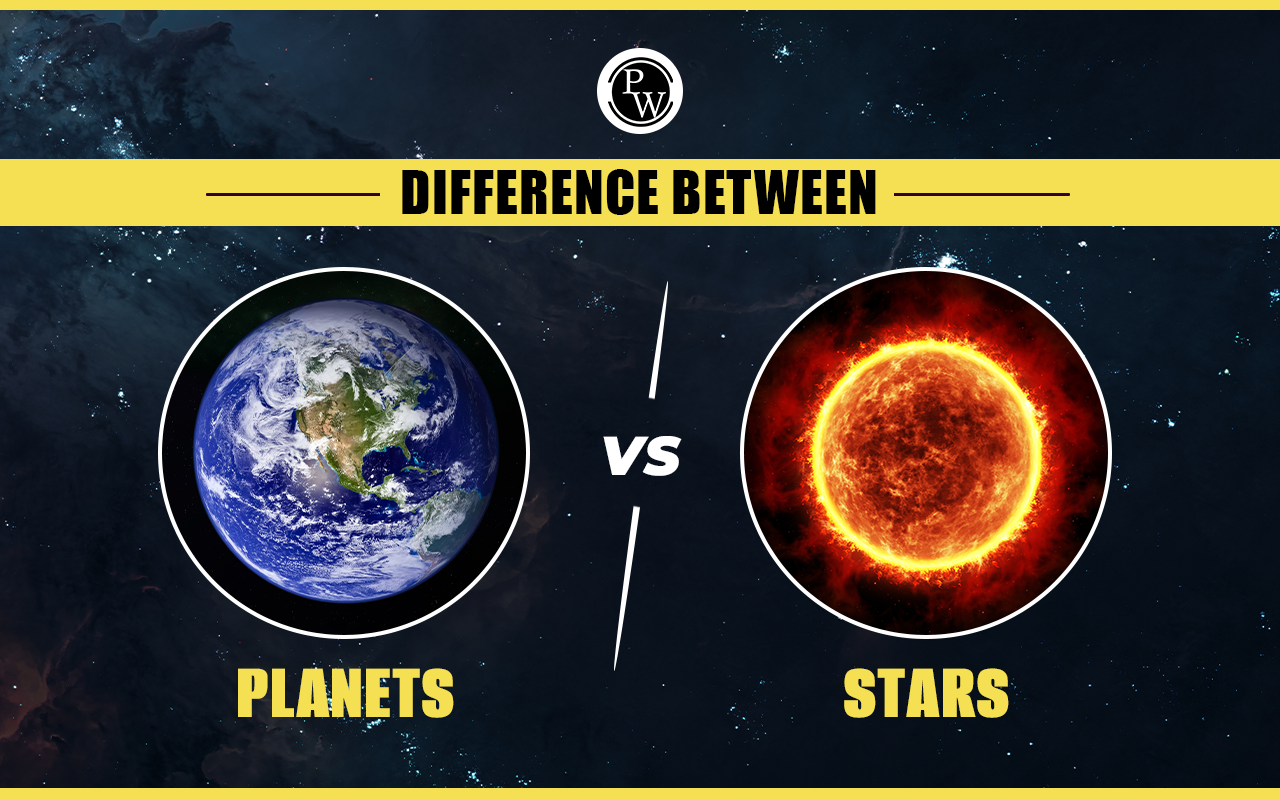
While the Sun shares its fundamental physics with other stars, its apparent characteristics differ dramatically due to its location relative to Earth. The following comparison table highlights how the Sun compares across key astronomical properties against the broader population of stars.
| Property / Feature | The Sun (Sol) | Other Stars (General Universe) |
|---|---|---|
| Scientific Classification | G2V Main-Sequence Star (Yellow Dwarf) | Ranges from O-type (Blue Supergiants) to M-type (Red Dwarfs) |
| Distance from Earth | ~1 Astronomical Unit (149.6 million km / 93 million miles) | 4.24 light-years (nearest: Proxima Centauri) to billions of light-years |
| Apparent Visual Magnitude | -26.74 (Extremely bright, illuminates day sky) | +6.0 (faintest visible to naked eye) to +30+ (deep space telescopes) |
| Light Travel Time to Earth | ~8 minutes and 20 seconds | ~4.2 years to billions of years |
| Apparent Angular Size | ~0.5 degrees (visible disk) | Points of light (resolvable only with specialized interferometry) |
| Mass Relative to Average | ~1 Solar Mass ($1 M_\odot$)—larger than ~85% of stars | Ranges from 0.08 $M_\odot$ (red dwarf limit) to over 150-200 $M_\odot$ |
| Lifespan | ~10 billion years total (~4.6 billion years current age) | Few million years (massive stars) to trillions of years (red dwarfs) |
| Role in Solar System | Gravitational anchor; primary light/energy source for Earth | Background light sources; gravitational anchors of exoplanetary systems |
Key Distinctions in Detail
1. Proximity, Apparent Brightness, and Distance Scales
The most striking difference between the Sun and all other stars is how bright and large it appears to human observers. This difference is entirely an illusion created by distance, governed by the inverse-square law of light. This physics principle dictates that the apparent brightness of a light source is inversely proportional to the square of the distance from the observer.
- Distance to the Sun: The Sun resides at an average distance of roughly 149.6 million kilometers (93 million miles), a distance defined as 1 Astronomical Unit (AU). Sunlight takes approximately 8 minutes and 20 seconds to reach Earth.
- Distance to Other Stars: The next nearest star to Earth, Proxima Centauri, is located approximately 4.24 light-years away. One light-year equals roughly 9.46 trillion kilometers (5.88 trillion miles) or about 63,241 AU. Light from Proxima Centauri takes over four years to reach Earth's surface.
Because the Sun is more than 268,000 times closer to Earth than the next nearest star, it dominates our sky. The Sun delivers an irradiance of about 1,361 Watts per square meter at the top of Earth's atmosphere, blindingly outshining all other celestial bodies combined and scattering light through our atmosphere to create daytime. In contrast, even the brightest night-sky star, Sirius A, appears only as a pinpoint of light because it is located 8.6 light-years away.
Earth <--- 8.3 light-minutes ---> Sun (Apparent Magnitude: -26.74) Earth <--- 4.24 light-years ----> Proxima Centauri (Apparent Magnitude: +11.05) Earth <--- 8.60 light-years ----> Sirius A (Apparent Magnitude: -1.46)
2. Spectral Classification and Stellar Types
Astronomers classify stars using the Morgan-Keenan (MK) system, which categorizes stars based on their surface temperature and spectral absorption features. The main spectral types are ordered from hottest to coolest: O, B, A, F, G, K, and M.
[Hottest / Most Massive] O - B - A - F - G - K - M [Coolest / Least Massive] ^ The Sun (G2V)
- The Sun's Spectral Type: The Sun is classified as a G2V star. The "G2" indicates a surface effective temperature of approximately 5,778 Kelvin (5,505°C or 9,941°F), giving it a peak emission in the green-yellow portion of the spectrum (though atmospheric scattering and human vision make it appear white to light yellow). The "V" (Roman numeral five) designates it as a main-sequence star, meaning it derives its energy by fusing hydrogen into helium in its core.
- Other Stellar Classes: The universe contains stars vastly different from the Sun across the MK spectrum:
- O-type stars: Extremely hot (above 30,000 K), luminous, blue giant stars with masses up to 100 times that of the Sun. They burn through their fuel in a few million years.
- M-type stars (Red Dwarfs): Cool (below 3,700 K), dim, low-mass stars (0.08 to 0.6 solar masses). Red dwarfs represent roughly 70% to 75% of all stars in our galaxy.
3. Physical Scale and Mass Spectrum
Although the Sun appears colossal to Earth's inhabitants—holding 99.86% of all mass in the Solar System and possessing a radius of about 696,340 kilometers (432,685 miles)—it occupies an intermediate position on the cosmic mass scale.
Red Dwarf (e.g., Proxima Centauri) ~0.12 Solar Masses [Radius: ~0.15 Solar Radii] The Sun (Sol) 1.00 Solar Mass [Radius: 1.00 Solar Radius] Blue Supergiant (e.g., Rigel) ~21 Solar Masses [Radius: ~79 Solar Radii] Red Hypergiant (e.g., UY Scuti) ~7-10 Solar Masses [Radius: ~1,700 Solar Radii]
- Smaller Stars: The smallest true stars, known as red dwarfs, can have masses as low as 8% of the Sun's mass ($0.08 M_\odot$). Below this threshold, object core pressures cannot achieve hydrogen fusion, resulting in substellar objects called brown dwarfs.
- Larger Stars: At the upper end of the scale, massive stars like Rigel or Betelgeuse dwarf the Sun. Betelgeuse, a red supergiant in the constellation Orion, has a radius roughly 700 to 900 times larger than the Sun. If placed at the center of our solar system, Betelgeuse's surface would extend past the orbit of Jupiter, engulfing Mercury, Venus, Earth, and Mars. Hypergiant stars like UY Scuti reach radii over 1,500 times that of the Sun.
Despite these giants, the Sun is actually larger and more massive than roughly 85% of all stars in the Milky Way galaxy, primarily because small red dwarfs make up the overwhelming majority of the stellar population.
4. Energy Generation, Fusion Rates, and Lifespans
All main-sequence stars, including the Sun, generate energy via nuclear fusion in their cores. The mass of a star dictates its internal core temperature and pressure, which in turn determines its fusion rate and total lifespan.
- The Proton-Proton Chain: In the Sun's core, where temperatures reach approximately 15 million Kelvin, hydrogen nuclei (protons) fuse to form helium via the proton-proton (p-p) chain reaction. This process converts approximately 4 million metric tons of mass into pure energy every second, according to Einstein's mass-energy equivalence equation ($E=mc^2$).
- The CNO Cycle: In stars more massive than about 1.3 solar masses, core temperatures are high enough that the Carbon-Nitrogen-Oxygen (CNO) cycle becomes the dominant fusion mechanism. The CNO cycle consumes hydrogen fuel at an exponentially higher rate than the p-p chain.
Mass vs. Stellar Lifespan Comparison: ---------------------------------------------------------------------- Massive Stars (>20 M_sun) | ~1 - 10 Million Years | Supernova outcome Solar-Mass Stars (1 M_sun) | ~10 Billion Years | White Dwarf outcome Red Dwarfs (<0.5 M_sun) | Trillions of Years | Cool White Dwarf ----------------------------------------------------------------------
Because nuclear fusion rates scale non-linearly with mass, massive stars burn through their hydrogen reserves quickly. A star with 20 times the mass of the Sun may exhaust its core fuel in under 10 million years, culminating in a catastrophic supernova explosion.
Conversely, low-mass stars burn their fuel so slowly that red dwarfs are projected to remain on the main sequence for hundreds of billions to trillions of years—far longer than the current age of the universe (roughly 13.8 billion years). The Sun sits in a balanced middle regime, with a total main-sequence lifetime of approximately 10 billion years. Having formed about 4.6 billion years ago, the Sun is currently near the midpoint of its stable hydrogen-burning phase.
The Sun's Unique Environment: The Heliosphere
While all stars emit radiation and stellar winds, the Sun's magnetic activity directly defines the space environment of Earth and our neighboring planets.
The Sun continuously expels a stream of charged particles (protons and electrons) known as the solar wind. This supersonic stream creates a vast bubble in interstellar space called the heliosphere, which extends far beyond the orbit of Pluto. The heliosphere acts as a protective shield for the entire solar system, deflecting a significant portion of high-energy galactic cosmic rays originating from outside our planetary neighborhood.
[ Sun ] ---> Solar Wind Stream ---> [ Earth / Magnetosphere ] ---> Boundary: Heliopause (Interstellar Medium)
Other stars possess similar plasma outflows called stellar winds, creating localized bubbles known as astrospheres. However, for life on Earth, the Sun's heliosphere is the specific boundary layer that makes our space environment habitable by blunting interstellar radiation.
Stellar Evolution: How the Sun and Other Stars Age
Stars are not static; they evolve over millions or billions of years depending on their initial mass. The Sun's ultimate fate differs substantially from both lighter and heavier stars.
Solar-Mass Evolution (The Sun): Protostar -> Main Sequence (G2V) -> Red Giant -> Planetary Nebula + White Dwarf High-Mass Evolution (>8 M_sun): Protostar -> Blue Main Sequence -> Red Supergiant -> Core-Collapse Supernova -> Neutron Star / Black Hole
The Sun's Evolutionary Path
- Current Main-Sequence Phase: The Sun steadily fuses hydrogen into helium in its core. Over its lifetime, its brightness increases by about 10% every billion years.
- Red Giant Phase: In approximately 5 billion years, core hydrogen will be exhausted. The core will contract under gravity, heating up until helium fusion begins, while the outer envelope expands dramatically. The Sun will become a Red Giant, expanding past the present-day orbits of Mercury and Venus, and likely rendering Earth uninhabitable.
- Planetary Nebula and White Dwarf: After helium fusion ceases, the Sun will shed its outer layers into space, forming a glowing shell of gas called a planetary nebula. The remaining dead core will settle as a dense, glowing white dwarf composed of carbon and oxygen, roughly the volume of Earth but with half the Sun's mass. It will slowly cool over trillions of years.
Other Stars' Evolutionary Paths
- Low-Mass Stars (<0.08 to 0.5 $M_\odot$): Never reach core conditions necessary to fuse helium. They will gradually shrink and cool directly into helium white dwarfs.
- High-Mass Stars (>8 $M_\odot$): Can fuse progressively heavier elements in their cores—carbon, neon, oxygen, and silicon—until an iron core forms. Because iron fusion absorbs energy rather than releasing it, the core collapses in seconds, triggering a Type II Supernova. The residual core collapses into an extraordinarily dense neutron star or, if the initial mass exceeds roughly 20 solar masses, a stellar-mass black hole.
Because the Sun lacks sufficient mass, it will never explode as a supernova, nor will it ever collapse into a black hole.
Frequently Asked Questions
Is the Sun larger or smaller than most stars?
The Sun is larger and more massive than roughly 85% of all stars in the Milky Way galaxy. Although giant stars like Betelgeuse and Rigel capture public imagination, low-mass M-type red dwarfs dominate the galaxy's population. Because red dwarfs are smaller and dimmer than the Sun, our star is above average in mass, radius, and luminosity relative to the total galactic population.
Why do other stars twinkle while the Sun does not?
Stars twinkle due to a phenomenon called atmospheric scintillation. Because distant stars are trillions of miles away, their light arrives at Earth as an infinitesimally tiny point. As this narrow beam of light passes through Earth's turbulent atmosphere, atmospheric temperature and density fluctuations bend (refract) the beam rapidly, causing the brightness and position to fluctuate to human eyes. The Sun (and nearby planets) has a large apparent disk size rather than a single point; light beams from different edges of the disk average out atmospheric turbulence, producing a steady light.
Will the Sun ever turn into a black hole?
No. A star must have a starting mass at least 18 to 20 times greater than the Sun to undergo a core collapse powerful enough to form a black hole. The Sun lacks the necessary mass. Instead, after its Red Giant phase, the Sun will shed its outer atmosphere and leave behind a dense remnant core known as a white dwarf.
What is the closest star to the Sun?
The closest known star system to the Sun is the Alpha Centauri triple-star system, located approximately 4.2 to 4.4 light-years away. Within this system, the small red dwarf star Proxima Centauri (Alpha Centauri C) is currently the absolute closest star to the Sun, at a distance of approximately 4.24 light-years (roughly 40 trillion kilometers or 25 trillion miles).
Are all suns in the universe identical to our Sun?
No. While people often use the word "sun" to refer to any star orbited by exoplanets, host stars vary dramatically. Planetary systems have been discovered orbiting ultra-cool red dwarfs (such as the TRAPPIST-1 system), fast-rotating F-type stars, giant stars, and even dead stellar remnants like pulsars. A planetary host star can be much colder, hotter, larger, or smaller than our Sun.
Summary and Key Takeaway
When evaluating the difference between the Sun and a star, remember that the primary distinction is locality and perspective. The Sun is our local star—a G2V yellow dwarf main-sequence star situated 1 AU from Earth. Its unique role as the central anchor of our solar system makes it the essential driver of light, energy, and life on Earth.
All stars in the night sky are powered by similar physical processes, but they display a vast diversity in mass, temperature, size, brightness, and age. While the Sun appears unique due to its overwhelming brightness in our sky, it is simply one of an estimated 100 to 400 billion stars orbiting within the Milky Way galaxy.
To learn more about stellar astrophysics and observational astronomy, explore official educational resources provided by the NASA Astrophysics Division or review academic star catalogs maintained by the International Astronomical Union (IAU).
Image Gallery