How to Build a Local Marketing Strategy: A Comprehensive Guide
To build an effective local marketing strategy, establish your target geographic service area, claim and optimize your Google Business Profile, structure localized website content, build high-intent local citations, and run targeted co...
To build an effective local marketing strategy, establish your target geographic service area, claim and optimize your Google Business Profile, structure localized website content, build high-intent local citations, and run targeted community advertising. Consistently track local pack rankings, phone calls, and foot traffic metrics to refine your tactics over time.
Contents
Phase 1: Local Market Analysis and Audience Segmentation
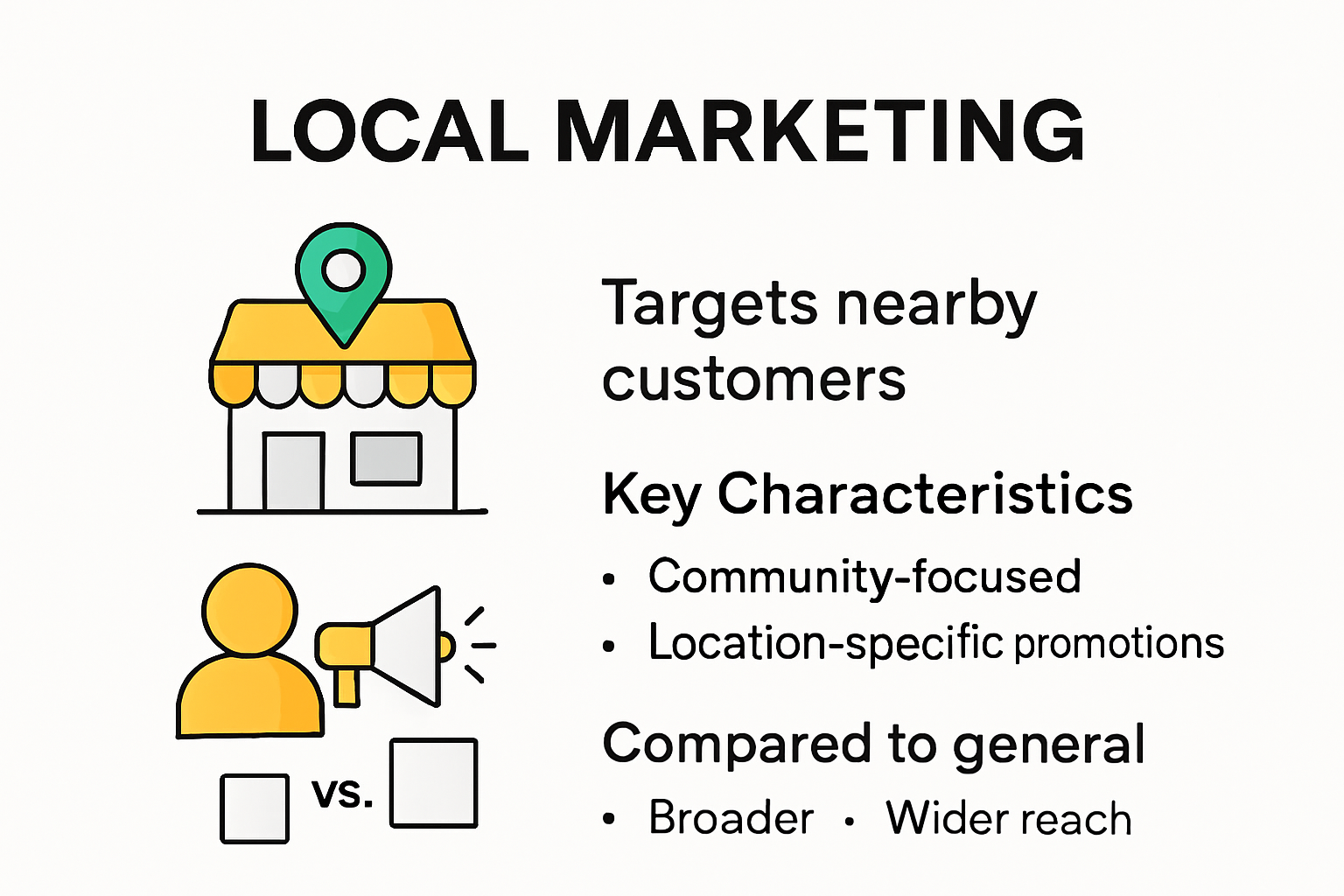
A successful local marketing strategy requires an accurate assessment of your immediate geographic footprint and target customer base. Unlike broad digital campaigns designed for national reach, local marketing relies on proximity, community relevance, and regional search behavior.
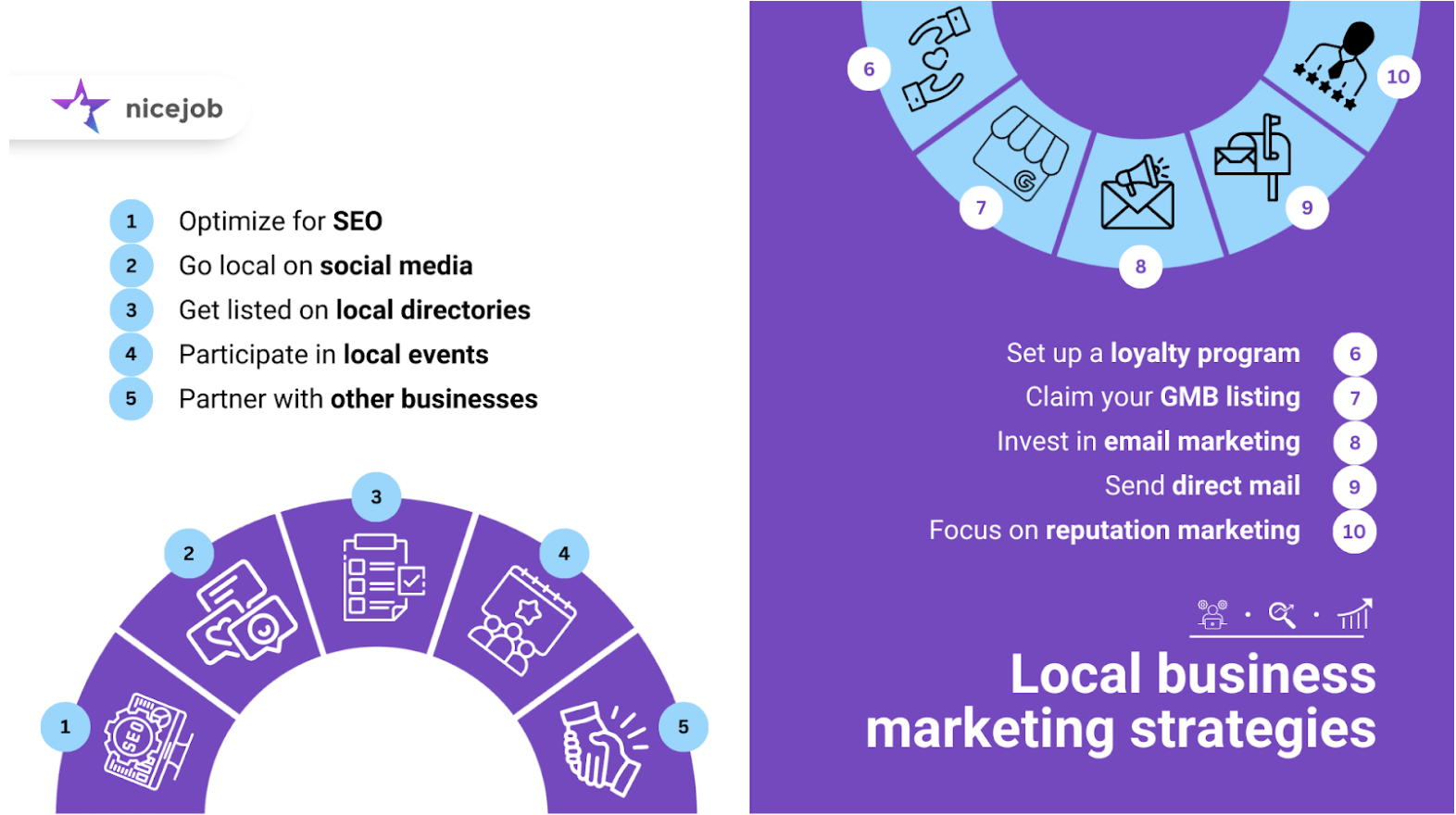
LOCAL MARKETING BLUEPRINT ENGINE:
- AUDIENCE & MARKET: Identify Service Area & Neighborhoods
- DIGITAL FOUNDATION: Google Business Profile & Local Schema
- ORGANIC SEARCH: Localized Content & Hyper-Local SEO
- PAID ACQUISITION: Local Services Ads (LSA) & Geo-Ads
- REPUTATION LOOP: Review Generation & Citation Management
Defining Your Geographic Service Area
Start by identifying your primary, secondary, and tertiary service zones.
- Primary Zone: The immediate radius (typically 1 to 5 miles for retail/restaurants, or specific ZIP codes for home services) where your existing customer density is highest.
- Secondary Zone: Adjacent communities within a reasonable driving distance (5 to 15 miles) that present expansion opportunities.
- Tertiary Zone: Outer boundary areas where you only target high-value projects or specific corporate clients.
Mapping these boundaries prevents budget waste on hyper-local pay-per-click (PPC) ads or direct mail campaigns targeted outside your operational delivery capacity.
Developing Neighborhood Buyer Personas
Demographics often shift dramatically across adjacent ZIP codes. Analyze local demographic data, income distributions, housing types, and commuter patterns. A plumbing contractor operating in an urban core will target property managers and high-rise apartment owners, whereas the same contractor operating in suburban zones will target single-family homeowners concerned with legacy pipe replacements.
Conducting a Local Competitor Audit
Inspect the top three to five competitors ranking in the Google "Local 3-Pack" for your core keywords. Audit the following elements:
- Google Business Profile Optimization: Examine primary categories, secondary categories, review counts, average star ratings, and photo frequency.
- Local Citation Volume: Check their presence on major platforms such as Apple Maps, Bing Places, Yelp, and industry-specific directories.
- On-Page Localization: Evaluate whether competitors maintain dedicated landing pages for individual service cities, include local schema markup, or embed Google Maps on their contact pages.
Phase 2: Establishing Your Digital Infrastructure
Your digital infrastructure serves as the anchor for all local customer acquisition. Search engines rely on consistent signals across the web to verify your physical presence and operational legitimacy.
Google Business Profile (GBP) Optimization
Your Google Business Profile is often the first interaction potential customers have with your business. Fully completing and maintaining this profile directly impacts your visibility in Google Maps and local search results.
- NAP Consistency: Ensure your Name, Address, and Phone number match your official business registration and website details exactly. Standardize terms (e.g., using "Street" versus "St.") across every platform.
- Primary Category Selection: Choose the most accurate primary category available on GBP. This single selection heavily influences which search queries trigger your listing.
- Secondary Categories: Add relevant secondary categories to capture long-tail local searches without diluting your primary focus.
- Attributes and Services: Complete all relevant attributes (such as "wheelchair accessible," "free Wi-Fi," or specific service menus). Add explicit descriptions and pricing indicators where applicable.
- High-Resolution Media: Upload high-quality interior, exterior, team, and project photos regularly. Profiles with updated photo libraries consistently capture higher engagement rates than static profiles.
Data Aggregators and Secondary Directory Profiles
While Google dominates local search volume, primary data aggregators supply location information to in-vehicle navigation systems, voice assistants, and secondary mobile mapping tools. Submit and verify your business details across key platform ecosystems:
- Apple Business Connect: Essential for reaching iOS users searching via Apple Maps and Siri.
- Bing Places for Business: Captures desktop search traffic from default Microsoft Edge browsers.
- Primary Data Networks: Ensure your business entity details are synchronized across major database networks such as Data Axle and Neustar Localeze.
- Vertical-Specific Directories: Claim profiles on niche platforms relevant to your industry, such as Angi or Houzz for home contractors, Avvo for legal services, or Tripadvisor for hospitality.
Localized Website Architecture and Schema Markup
Your website must structurally signal its local relevance to search engine crawlers.
- Location-Specific Landing Pages: If you operate multiple physical branches or service multiple distinct cities, create a dedicated landing page for each location. Avoid copying and pasting text across pages; each landing page must contain unique localized copy, customer testimonials from that specific area, localized project galleries, and clear NAP details.
- Technical Structured Data: Implement
LocalBusinessJSON-LD schema markup on your website. This code provides explicit data to search engines regarding your exact geographic coordinates (geoLatitudeandgeoLongitude), operating hours, payment accepted, and service coverage area.
Phase 3: Tactical Channels for Local Lead Generation
Once your core infrastructure is established, execute across channels tailored to high-intent local buyers.
LOCAL CUSTOMER ACQUISITION:
- HIGH INTENT
- GBP 3-Pack
- City Pages
- Local Schema
- REPUTATION BUILD
- Automated Review Generation
- FTC-Compliant Responses
- COMMUNITY & PAID
- Local Ads (LSA)
- Geo-Fenced PPC
- Sponsorships & Partnerships
Local Search Engine Optimization (SEO)
Local SEO focuses on capturing users actively searching for services "near me" or within a specific municipality.
- On-Page Keyword Localization: Naturally integrate city names, neighborhood identifiers, and regional terms into page titles, H1 headings,
- Automated Review Request Systems: Implement post-service SMS or email workflows that invite verified customers to leave feedback. Prompt timing—such as immediately upon job completion or retail purchase—yields the highest response rates.
- Compliance Considerations: Under federal guidelines, including the Federal Trade Commission (FTC) Rule on the Use of Consumer Reviews and Testimonials, businesses are strictly prohibited from buying fake reviews, suppressing negative reviews, or conditioning incentives on positive ratings.
- Review Response Protocols: Respond to all reviews professionally. Thank positive reviewers, and address negative complaints calmly by offering off-platform resolution avenues.
Paid Hyper-Local Advertising
Paid advertising guarantees immediate visibility while your organic local SEO authority builds.
- Google Local Services Ads (LSAs): Operating on a pay-per-lead model rather than pay-per-click, LSAs display at the very top of Google search results. Businesses undergo background checks and license verification to earn badges such as "Google Guaranteed" or "Google Screened."
- Geo-Fenced Search and Social Ads: Set up Google Search campaigns using localized radius targeting, and run targeted ad sets on platforms like Meta or Nextdoor restricted to specific ZIP codes. Tailor ad creative to incorporate local landmarks or recognizable neighborhood references.
Offline Community Engagement
Digital channels perform best when complemented by real-world community relationships. Consider targeted sponsorships of local sports teams, participation in chamber of commerce events, regional cross-promotions with non-competing businesses, and EDDM (Every Door Direct Mail) campaigns targeted at precise postal carrier routes.
Channels and Resource Allocation
Evaluating the parameters of each local channel allows business owners to allocate resources efficiently based on timeline and budget constraints.
| Marketing Channel | Primary Objective | Average Cost Structure | Timeframe for Results | Primary Success Metrics |
|---|---|---|---|---|
| Google Business Profile | High-intent lead generation & map visibility | Low (Setup/Maintenance) | 1 to 3 Months | Call volume, direction requests, website clicks |
| Local Services Ads (LSA) | Direct lead acquisition with platform verification | Moderate to High (Pay-per-lead) | Immediate | Qualified phone leads, cost per booking |
| Localized Organic SEO | Broad regional keyword visibility | Moderate (Agency/Content creation) | 3 to 6 Months | Organic local traffic, rank positioning |
| Hyper-Local Paid Social | Community awareness and promotional offers | Adjustable (Pay-per-impression/click) | Immediate to 1 Month | Ad impressions, engagement rate, offer redemptions |
| Review & Reputation Systems | Conversion rate optimization & trust building | Low to Moderate (Software costs) | Ongoing | Total review count, average rating, response time |
| Direct Mail / EDDM | Neighborhood-level blanket saturation | Fixed (Printing & Postage per piece) | 1 to 2 Weeks | Physical coupon redemptions, direct incoming calls |
Measuring Performance and Multi-Touch Attribution
Tracking local performance requires tracking both digital interactions and real-world conversions. Relying solely on standard web metrics overlooks off-site conversions like phone calls and direct store visits.
Setting Up Call Tracking Responsibly
Call tracking software assigns unique phone numbers to various marketing channels (e.g., website, Google Business Profile, print flyers) to measure which medium drives inquiries.
- Dynamic Number Insertion (DNI): When deploying call tracking on your website, use DNI tools that render tracking numbers via JavaScript while keeping your static NAP details visible to search engine crawlers in the underlying source code. This prevents search engine indexers from registering inconsistent phone numbers across the web.
Tracking Geographic Rank Progression
Standard rank-tracking tools that pull national or site-wide search data fail to capture local pack nuances. A business may rank #1 for a term when a user stands two blocks away, but drop to #8 when searched from three miles away. Utilize grid-based geo-coordinate rank-tracking platforms to visualize your business's local coverage radius across individual neighborhoods.
GEO-GRID RANK TRACKING VISUALIZATION (Sample 3x3 Mile Grid)
- Row 1: #1, #2, #4
- Row 2: #1, Business Location, #3
- Row 3: #2, #3, #6
Note: Ranking drops as geographic distance from core location increases.
Essential Local Key Performance Indicators (KPIs)
Maintain a monthly dashboard tracking the following core metrics:
- Google Maps Actions: Total phone calls, route requests, and website visits originated directly from your Google Business Profile.
- Cost Per Local Lead: Total ad spending divided by total verified inquiries generated through localized paid channels.
- Review Velocity and Sentiment Score: The volume of new reviews acquired per month alongside your net rating trajectory across all platforms.
- Local Organic Conversions: Web contact forms submitted by visitors landing on localized city pages.
Common Mistakes in Local Marketing Execution
- Inconsistent NAP Data Across Directories: Updating a business phone number or suite address on your website without updating legacy citations across yellow pages and data aggregators creates conflicting signals for search crawlers, suppressing local pack authority.
- Creating Thin Multi-Location Pages: Publishing dozens of location pages that copy identical text while simply swapping out the city name violates search engine helpful content guidelines. Every location page must feature unique local content, localized images, real customer reviews from that area, and specific team details.
- Review Gating and Incentivization: Solicit reviews using neutral language. Selecting only happy customers to leave public reviews while routing unhappy customers to private feedback forms ("review gating") violates terms of service on platforms like Google and breaches regulatory guidelines regarding deceptive endorsement practices.
- Ignoring Apple Maps Optimization: Focusing exclusively on Google causes businesses to lose out on high-intent mobile searches performed by iOS users relying on default Apple Maps and Siri voice queries.
Frequently Asked Questions
How long does it take to see results from a local marketing strategy?
Initial results from instant channels like Google Local Services Ads or geo-targeted paid social campaigns appear within days of launch. Organic local SEO initiatives—such as rank improvements in the Google Maps 3-Pack and ranking localized landing pages—typically require three to six months of consistent optimization, review generation, and local link acquisition.
What is the difference between general SEO and local SEO?
General SEO focuses on optimizing a site to rank globally or nationally for transactional and informational keywords regardless of user location. Local SEO focuses on capturing high-intent searches tied to a specific geographic area (e.g., "emergency plumber in Austin"). Local SEO relies on proximity signals, Google Business Profile data, local citations, and geo-targeted review signals alongside traditional on-page optimization.
How many separate location landing pages should a service business create?
Create separate landing pages only for communities where you maintain a physical commercial office or can demonstrate significant service volume. Building dozens of programmatic city pages for areas where you lack authentic operational history creates thin content issues that lower overall domain authority.
Are Local Services Ads (LSA) better than standard Google Ads for local businesses?
Local Services Ads often provide higher ROI for local home services, legal, and professional service categories because you pay per qualified lead rather than per click. However, standard Google Search Ads offer greater keyword control, ad creative flexibility, and landing page customization. Most local strategies benefit from running both channels concurrently depending on monthly budget caps.
How should a business handle negative local reviews?
Respond publicly, promptly, and professionally within 24 to 48 hours. Acknowledge the reviewer's concern without getting defensive, present a brief explanation if appropriate, and invite them to resolve the matter off-platform via direct phone or email. Never post personal identifiable information. A well-handled response demonstrates accountability to future prospective customers viewing your profile.
Recommended Next Steps
- Audit Your Existing Digital Presence: Conduct a complete NAP consistency audit across your Google Business Profile, Apple Maps, Bing Places, and primary data aggregators. Correct any misaligned addresses, phone numbers, or operational hours.
- Optimize Your Core Business Profile: Log into your primary Google Business Profile. Add descriptive content to your service menus, select accurate primary and secondary categories, upload updated photos, and enable message requests if operational bandwidth permits immediate replies.
- Implement Structured Local Data: Coordinate with your development team or CMS administrator to embed valid
LocalBusinessJSON-LD schema markup onto your website homepage and location-specific contact pages. - Establish an Automated Review Workflow: Implement a systematic, FTC-compliant process using email or SMS software to request authentic reviews from every customer upon invoice payment or service completion.
Image Gallery