Selecting the Right Journal for STEM Education Research
Selecting the right journal for STEM education research requires matching your manuscript's scope, methodology, and target audience with a publication's specific focus—whether integrated K–12 STEM, undergraduate Discipline-Based Educat...
Selecting the right journal for STEM education research requires matching your manuscript's scope, methodology, and target audience with a publication's specific focus—whether integrated K–12 STEM, undergraduate Discipline-Based Education Research (DBER), or single-field pedagogy. Authors must evaluate indexing in Web of Science (SSCI/SCIE), Scopus, and ERIC, review open-access requirements, and assess submission guidelines to ensure successful peer review and academic impact.
Contents
The Landscape of STEM Education Publications
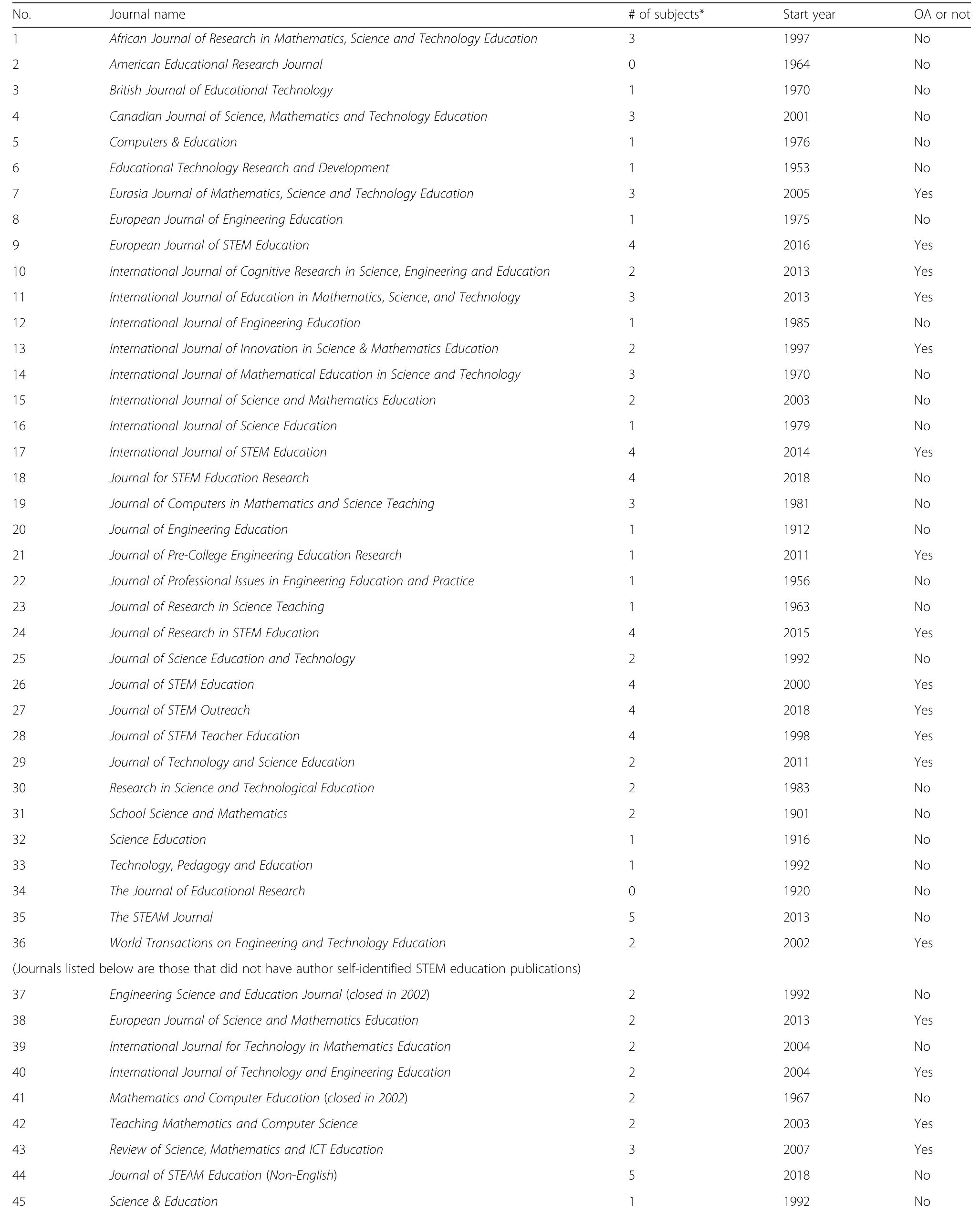
Publishing educational research across science, technology, engineering, and mathematics requires understanding how different journals position themselves. The publishing landscape in STEM education is divided primarily into two broad categories: integrated STEM education journals and Discipline-Based Education Research (DBER) journals.
- STEM Education Research Outlets
- Integrated STEM Journals (Interdisciplinary, K-12 & Tertiary)
- Int. Journal of STEM Education
- JRST (General Science/STEM)
- Journal of STEM Education Research
- DBER / Discipline Journals (Subject-Specific Pedagogy & Cognitive Science)
- CBE—Life Sciences Education (Biology)
- Journal of Chemical Education (Chemistry)
- PRPER (Physics) / JEE (Engineering)
- Integrated STEM Journals (Interdisciplinary, K-12 & Tertiary)
Integrated STEM publications focus on cross-disciplinary teaching and learning, interdisciplinary curricula, integrated problem-solving, and policy frameworks that link two or more STEM fields. These journals frequently publish research on K–12 integrated STEM initiatives, maker spaces, design-based learning, and broad educational technology applications.
Conversely, DBER journals focus on teaching and learning within a specific domain—such as physics, chemistry, biology, mathematics, or engineering. DBER studies investigate domain-specific conceptual understanding, cognitive misconceptions, laboratory instruction, student identity within a specific major, and specialized assessment instruments. Submitting a manuscript on undergraduate organic chemistry mechanisms to a general integrated STEM journal often leads to a desk rejection because the core audience lacks interest in specific chemical concepts. Conversely, submitting an integrated K–5 interdisciplinary curriculum study to a specialized engineering journal will likely face a similar outcome.
Key Criteria for Journal Selection
Choosing an appropriate venue involves evaluating quantitative metrics, database indexing, editorial scope, and publication policies.
1. Database Indexing and Searchability
For academic advancement, grant reporting, and research dissemination, indexing is a primary consideration. Ensure target journals are indexed in key academic databases:
- ERIC (Education Resources Information Center): Sponsored by the U.S. Department of Education, ERIC is the standard database for education literature. Indexing here guarantees visibility among educational researchers and practitioners.
- Web of Science (Social Sciences Citation Index - SSCI / Science Citation Index Expanded - SCIE): Inclusion in SSCI or SCIE determines whether a journal receives an official Journal Impact Factor (JIF). High-stakes tenure and promotion decisions frequently rely on Web of Science indexing.
- Scopus: Elsevier’s Scopus database provides broad international coverage, tracking metrics like CiteScore and SJR (SCImago Journal Rank).
2. Methodological Alignment
Journals differ in their methodological preferences. Some prioritize empirical quantitative designs—such as randomized controlled trials (RCTs), quasi-experimental studies, and psychometric validation—while others emphasize qualitative methods, including phenomenology, grounded theory, narrative inquiry, or ethnography. Design-Based Research (DBR) and mixed-methods approaches are widely accepted, but authors must review recent issues to confirm that a journal regularly publishes their research design.
3. Audience and Educational Context
Identify whether the target journal serves researchers, practitioners, or both.
- Research-Focused Journals: Expect rigorous theoretical frameworks, formal literature reviews, comprehensive methodology sections, and advanced statistical or qualitative analysis.
- Practitioner-Focused Journals: Prioritize actionable classroom strategies, lesson plans, unit designs, and teacher reflections. While empirical evidence is required, the emphasis is on classroom implementation rather than theoretical extension.
Top Peer-Reviewed STEM Education Journals
The following table compares leading peer-reviewed journals in STEM education research across core disciplines, indexing, and publication models.
| Journal Name | Primary Discipline / Scope | Core Indexing | Publishing Model | Typical Target Audience |
|---|---|---|---|---|
| Journal of Research in Science Teaching (JRST) | Science & Integrated STEM Education | Web of Science (SSCI), Scopus, ERIC | Hybrid (Subscription / OA option) | Science Education Researchers, Teacher Educators |
| International Journal of STEM Education | Integrated STEM, Interdisciplinary Pedagogy | Web of Science (SSCI/SCIE), Scopus, ERIC | Gold Open Access | STEM Researchers, Policy Makers, Higher Ed Faculty |
| Journal of Engineering Education (JEE) | Engineering Education Research (EER) | Web of Science (SSCI), Scopus, ERIC | Hybrid (Subscription / OA option) | Engineering Educators, DBER Scholars |
| CBE—Life Sciences Education (LSE) | Life Sciences / Biology Education | Web of Science (SCIE/SSCI), PubMed, ERIC | Gold Open Access (No APC for authors) | Biology Faculty, Undergraduate Educators |
| Journal of Chemical Education (JCE) | Chemistry Pedagogy & DBER | Web of Science (SCIE), Scopus, ERIC | Hybrid (Subscription / OA option) | Chemistry Educators, Laboratory Instructors |
| Physical Review Physics Education Research (PRPER) | Physics Education Research (PER) | Web of Science (SSCI/SCIE), Scopus, ERIC | Gold Open Access | Physics Researchers, DBER Specialists |
| Journal for Research in Mathematics Education (JRME) | Mathematics Education | Web of Science (SSCI), Scopus, ERIC | Hybrid (Subscription / OA option) | Mathematics Education Researchers, Cognitive Scientists |
Detailed Profiles of Key STEM Education Journals
Journal of Research in Science Teaching (JRST)
Official journal of the National Association for Research in Science Teaching (NARST), JRST is one of the highest-impact journals in science education. It publishes research on science learning, science teacher education, educational policy, and equity in science settings. JRST highly values strong theoretical frameworks, methodological rigor, and broad implications for science teaching.
International Journal of STEM Education
Published by SpringerOpen, the International Journal of STEM Education focuses on the integration of STEM fields. It accepts empirical studies examining cross-disciplinary curriculum design, institutional policy, assessment of integrated STEM learning, and educational technology across K–12 and higher education contexts worldwide.
Journal of Engineering Education (JEE)
Published by the American Society for Engineering Education (ASEE), the Journal of Engineering Education is the premier journal for engineering education research (EER). JEE emphasizes rigorous scholarly inquiries into engineering learning, epistemologies, diversity in engineering, and systemic institutional change. Manuscripts must clearly articulate theoretical frameworks and rigorous methodologies tailored to engineering contexts.
CBE—Life Sciences Education (LSE)
Published by the American Society for Cell Biology (ASCB), CBE—Life Sciences Education is an open-access journal covering life sciences education at the K–12, undergraduate, and graduate levels. LSE is notable for offering Gold Open Access publishing supported by the society and grants, eliminating Article Processing Charges (APCs) for authors while maintaining high peer-review standards.
Physical Review Physics Education Research (PRPER)
Sponsored by the American Physical Society (APS), PRPER is the leading open-access journal for physics education research. It covers student conceptual understanding, problem-solving development, laboratory instruction, equity and inclusion in physics, and university-level instructional transformations.
Navigating Open Access Models, APCs, and Author Rights
Selecting a journal requires balancing visibility preferences with institutional budgets and funding mandates.
- Open Access Models in STEM Publishing
- Gold Open Access (Immediate Open Access via Publisher)
- Requires APC (Paid by author/grant)
- Immediate global availability
- CC-BY or similar permissive licensing
- Green Open Access (Self-Archiving in Institutional Repositories)
- Free publishing under subscription model
- Subject to embargo period (e.g., 6–12 months)
- Accepted Manuscript (post-print) archived
- Gold Open Access (Immediate Open Access via Publisher)
Gold Open Access
Under Gold Open Access, the published article is immediately and permanently free for anyone to read. However, Gold OA usually requires an Article Processing Charge (APC) paid by the author, their institution, or a research grant. APCs in reputable STEM education journals typically range from $1,500 to $3,500 USD.
Authors should check if their university maintains Transformative Agreements (Read & Publish deals) with major publishers like Springer, Wiley, or Elsevier, which often cover Gold OA APCs automatically.
Green Open Access and Self-Archiving
Under a hybrid subscription model, authors can publish at no direct cost. Authors retain the right to self-archive the accepted, peer-reviewed version of their manuscript (the "post-print") in an institutional repository or subject repository (such as ERIC) after an embargo period (typically 6 to 12 months).
Evaluating Journal Legitimacy
With the rise of open-access publishing, authors must protect themselves against predatory journals. Verify that open-access journals are listed in the Directory of Open Access Journals (DOAJ) and that the publisher belongs to the Open Access Scholarly Publishing Association (OASPA) or the Committee on Publication Ethics (COPE).
Aligning Your Manuscript to Avoid Desk Rejection
Desk rejections occur when an editor rejects a manuscript without sending it out for external peer review. The most common causes are scope mismatch, weak theoretical framing, and inappropriate manuscript structure.
Manuscript Submission Workflow
- Select Target Journal
- Review Scope & Guidelines
- Align Manuscript & References
- Submit with Tailored Cover Letter
1. Match the "Aims and Scope" Precisely
Read the journal's official "Aims and Scope" page carefully. Review the table of contents for the last three to four issues. If your paper does not cite recent articles from the target journal or related journals in that specific discipline, editors may assume the work falls outside their community's focus.
2. Clearly Articulate Theoretical and Conceptual Frameworks
Education research journals place significant weight on the explicit use of theoretical, conceptual, or analytical frameworks. Whether using Social Cognitive Career Theory (SCCT), Constructivism, Self-Determination Theory, or Community of Practice frameworks, clearly state how the framework informs your research questions, data collection tools, and analysis.
3. Adhere to Discipline-Specific Formatting and Style Guidelines
- Citation Style: Most education journals rely on APA style (7th edition), but discipline-based journals affiliated with scientific societies (such as the American Chemical Society or IEEE) may require ACS or IEEE style guidelines.
- Word Count Limits: Respect word count limits strictly. Research journals typically enforce limits between 7,000 and 10,000 words, including references and tables.
- Human Subjects Approvals: Ensure that institutional review board (IRB) approval (or ethical waiver statements) for research involving human participants is explicitly stated in the methods section.
Frequently Asked Questions
What is the difference between DBER and general STEM education journals?
DBER (Discipline-Based Education Research) journals focus on teaching and learning within a specific scientific domain, such as physics, chemistry, or biology, often targeting university-level education. General STEM education journals publish research on interdisciplinary teaching, integrated K–12 curricula, broad educational policies, and cross-cutting learning theories.
How do I know if my paper is better suited for a practitioner journal versus a research journal?
If your manuscript focuses primarily on step-by-step classroom activities, practical lesson plans, and anecdotal reflections, it is best suited for a practitioner journal (such as NSTA's The Science Teacher or NCTM's Mathematics Teacher: Learning and Teaching PK–12). If your paper investigates research questions, utilizes systematic qualitative or quantitative methodologies, and contributes to educational theory, target a peer-reviewed research journal.
Why is ERIC indexing important for STEM education research?
ERIC is the primary search engine and database used by education researchers, librarians, and institutions worldwide. Articles indexed in ERIC achieve substantially higher visibility among educational scholars, increasing citation potential and practical reach across institutions.
How can I determine if an open-access journal's APC is legitimate?
Legitimate open-access journals display transparent editorial boards, clear peer-review procedures, explicit APC structures, and affiliation with recognized indexing bodies (such as DOAJ, Scopus, or Web of Science). Predatory journals often request manuscript submission via email, promise overly rapid peer review (e.g., under 48 hours), hide APC fees until acceptance, or lack verified institutional board members.
What should I do if my research spans multiple STEM fields?
If your study examines an integrated curriculum (e.g., combining coding, robotics, and mathematics), select an integrated STEM journal such as the International Journal of STEM Education or the Journal of STEM Education Research. If your study uses a specific field (such as computer science) purely as a tool to teach another discipline (such as biology), consider a DBER journal within the primary learning context.
Strategic Next Steps for Authors
- Draft a Shortlist of 3 Journals: Identify one primary reach journal, one strong target journal, and one solid backup journal based on scope, impact factor, and historical acceptance rates.
- Audit Recent Journal Issues: Read 3–5 recently published articles in your target journal that use similar research methods. Note their structure, tone, theoretical framing, and citation density.
- Cross-Check References: Ensure your reference list includes relevant, recently published research from your selected target journal to demonstrate active engagement with its ongoing academic conversations.
- Confirm Open-Access Funding: Check whether your institution holds a transformative agreement with the publisher or if grant funds cover Gold Open Access APCs before final submission.
- Prepare Manuscript and Ethics Disclosures: Format all tables, figures, and references to match the target journal's submission portal requirements, confirming that IRB/ethics review statements are prominently disclosed.
EDITORIAL CATEGORY METADATA:
Image Gallery