The Meaning of Pseudorandom in Tech: Algorithms, Security, and Determinism
In the context of modern technology, pseudorandom refers to a sequence of numbers or values that appear to be random but are actually generated by a deterministic mathematical process. Unlike true randomness, which relies on unpredicta...
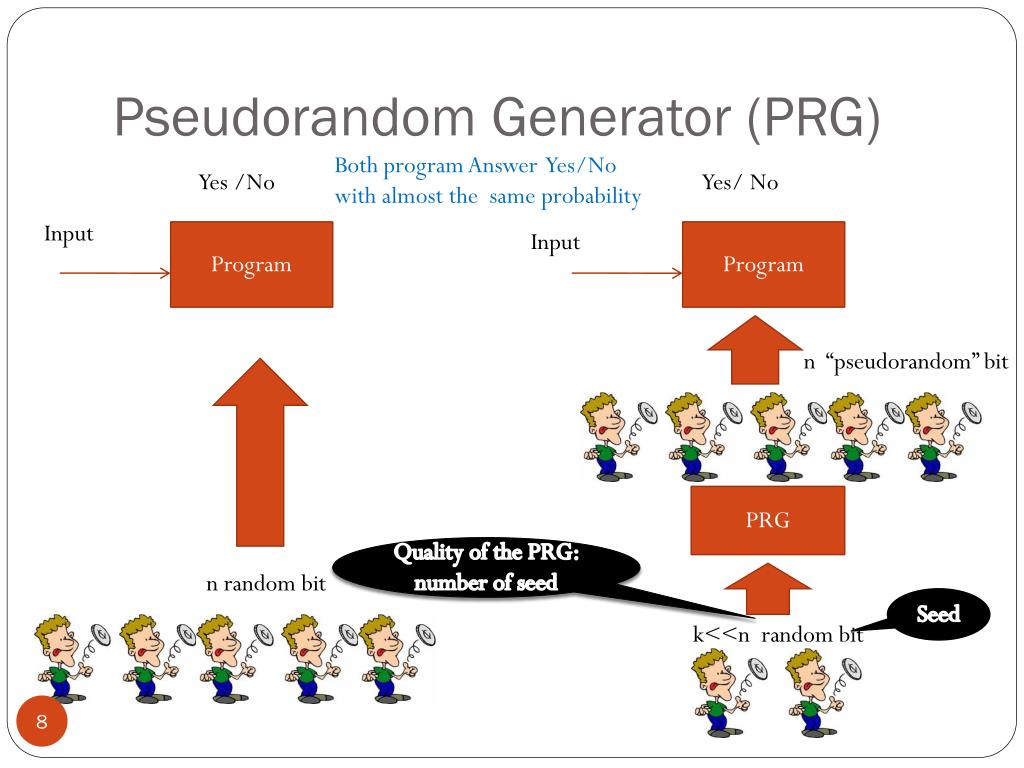
In the context of modern technology, pseudorandom refers to a sequence of numbers or values that appear to be random but are actually generated by a deterministic mathematical process. Unlike true randomness, which relies on unpredictable physical phenomena, pseudorandomness depends on an initial value called a "seed" to produce a repeatable sequence.
Contents
Computer systems are inherently logical and deterministic; they are designed to produce the same output every time they are given the same input. This creates a fundamental paradox: how can a machine governed by rigid logic generate a "random" number? The answer lies in Pseudorandom Number Generators (PRNGs). As of 2026, these algorithms remain the backbone of everything from procedural generation in video games to the initialization of weights in massive artificial intelligence models.
The Core Distinction: Pseudorandom vs. True Random
To understand the meaning of pseudorandom in tech, one must first distinguish it from True Random Number Generation (TRNG).
True Randomness (TRNG)
True randomness is derived from physical processes that are considered fundamentally unpredictable. These are often hardware-based (HRNGs) and capture "entropy" from the real world. Examples include:
- Thermal noise: The microscopic fluctuations in electrical current within a circuit.
- Radioactive decay: Measuring the intervals between particles emitted by a source.
- Atmospheric noise: Capturing radio static or lightning discharges.
- Photonic behavior: Measuring the path of a photon through a semi-transparent mirror.
Because these sources are external to the computer's logic, the resulting numbers are non-deterministic and impossible to recreate, even with the same starting conditions.
Pseudorandomness (PRNG)
Pseudorandomness is a simulation of randomness. A PRNG uses a mathematical formula (an algorithm) to take a starting number—the seed—and perform a series of complex operations on it to produce a new number. That result then becomes the input for the next iteration.
If you know the algorithm and the seed, you can predict every single number that will ever be generated. This predictability is why they are called "pseudo" (false) random. However, for most applications, the sequence is sufficiently complex that it passes statistical tests for randomness, meaning no obvious patterns or biases are visible to the naked eye or standard analytical tools.
How Pseudorandom Generators Work: Seeds and State
The heart of any pseudorandom system is the seed. This is a starting value that kicks off the sequence. In many non-critical applications, programmers use the current system time (measured in milliseconds) as a seed. Since the time is always changing, the program appears to produce different results every time it runs.
Once the seed is provided, the PRNG maintains an internal state. Every time the system requests a random number, the PRNG:
- Applies a mathematical function to the current state.
- Updates the state to a new value.
- Transforms that state into an output (the random number).
The "period" of a PRNG is the number of steps it can take before the state returns to its original value and the entire sequence begins to repeat. Modern algorithms, such as the Mersenne Twister, have incredibly long periods—specifically $2^{19937}-1$—which is a number so large that the sequence would not repeat within the lifetime of the universe, even at trillions of operations per second.
Common Pseudorandom Algorithms in Tech
Different tasks require different types of pseudorandomness. Some prioritize speed, while others prioritize statistical "flatness" (ensuring every number has an equal chance of appearing).
Linear Congruential Generator (LCG)
This is one of the oldest and simplest PRNG methods. It follows a basic formula: $X_{n+1} = (aX_n + c) \pmod m$. While extremely fast and easy to implement, LCGs are often "non-random" in higher dimensions. If you use an LCG to plot points in a 3D space, the points often align into visible planes, a phenomenon known as the Marsaglia effect.
Mersenne Twister (MT19937)
Until recently, the Mersenne Twister was the industry standard for general-purpose programming languages like Python, Ruby, and R. It is highly efficient and has excellent statistical properties. However, it is not suitable for security because observing a small portion of its output allows an attacker to reconstruct the internal state and predict future numbers.
PCG (Permuted Congruential Generator)
Developed to address the flaws of both LCGs and the Mersenne Twister, PCG is faster, more difficult to predict, and requires less memory. Many modern development environments have shifted toward PCG or similar "Xoshiro" algorithms for general-purpose tasks like shuffling lists or generating game loot.
Cryptographically Secure PRNGs (CSPRNGs)
In the realm of cybersecurity, standard pseudorandomness is a liability. If a hacker can predict the "random" key used to encrypt your data, the encryption is useless. This is where Cryptographically Secure Pseudorandom Number Generators (CSPRNGs) come into play.
A CSPRNG must meet two strict requirements that general PRNGs do not:
- Next-Bit Test: Given the first $K$ bits of a sequence, there is no polynomial-time algorithm that can predict the $(K+1)$th bit with a probability higher than 50%.
- State Compromise Extensions: If an attacker learns the current internal state of the generator, they should not be able to figure out what the previous numbers were (forward secrecy).
To achieve this, CSPRNGs often "harvest" entropy from the OS—such as the timing of keystrokes, mouse movements, or disk I/O—and mix it into the algorithm continuously to ensure the state remains unpredictable. On Linux systems, /dev/urandom serves as the primary interface for this high-quality pseudorandom data.
Practical Applications of Pseudorandomness
The tech industry relies on pseudorandomness for various essential functions. Its determinism is often its greatest strength, rather than a weakness.
1. Simulation and Modeling
In scientific research and financial modeling (Monte Carlo simulations), researchers need to run millions of scenarios. Because PRNGs are deterministic, a researcher can share their seed with a colleague. That colleague can then run the same simulation and get the exact same "random" results, allowing for peer verification and debugging.
2. Video Games and Procedural Generation
Games like Minecraft or No Man’s Sky use pseudorandomness to generate vast worlds. When you enter a "World Seed," the game uses that number to determine the placement of every mountain, river, and tree. Because the algorithm is deterministic, two players using the same seed will explore identical worlds, despite the landscape being "randomly" generated.
3. Artificial Intelligence Training
When a neural network is first created, its "weights" (the internal values that determine how it processes data) are initialized to small, pseudorandom values. If every weight started at zero, the network would struggle to learn. By using a seed, researchers can ensure that their AI training runs are reproducible.
Comparison: PRNG vs. CSPRNG vs. TRNG
| Feature | PRNG (General) | CSPRNG (Secure) | TRNG (True) |
|---|---|---|---|
| Source | Mathematical Formula | Formula + Entropy | Physical Phenomena |
| Speed | Extremely Fast | Moderate | Slow |
| Determinism | Fully Deterministic | Non-Deterministic (Reseeded) | Non-Deterministic |
| Predictability | High (if seed is known) | Virtually Impossible | Impossible |
| Primary Use | Games, Simulations | Cryptography, Keys | High-Stakes Security, Gambling |
| Repeatability | Yes (via seed) | Generally No | No |
Challenges and Security Risks
The "pseudo" nature of these numbers has led to significant real-world failures. One of the most famous examples was the 1990s vulnerability in the Netscape browser. The browser used the current time and process ID as a seed for its encryption keys. Because hackers could guess the time and the process ID within a narrow range, they could regenerate the "random" key and decrypt sensitive traffic.
Even in 2026, developers occasionally make the mistake of using a standard PRNG for security-sensitive tasks. For instance, using a default random() function in a web framework to generate "unique" password reset tokens can allow an attacker to predict future tokens if they can observe a few previous ones.
Frequently Asked Questions
Is "pseudorandom" good enough for data encryption?
Only if you use a CSPRNG. Standard PRNGs, like the ones used for game mechanics or basic math functions, are too predictable for encryption. For securing data, your software should use libraries specifically designed for cryptography, such as OpenSSL or the built-in crypto modules in modern programming languages.
How do I get a truly random seed?
In modern operating systems, you rarely need to provide your own seed. Systems like Windows (via BCryptGenRandom) and Linux (via getrandom) manage an "entropy pool." This pool collects tiny bits of unpredictability from hardware interrupts and user activity, providing a seed that is, for all practical purposes, truly random.
Can a PRNG ever be "truly" random?
No. By definition, a PRNG is a sequence of calculations. If you follow the same steps twice, you get the same result. It can pass all the statistical tests of randomness, but it will always be a simulation. Only a hardware-based TRNG can produce true randomness.
Why not use TRNG for everything?
True randomness is computationally expensive. Hardware RNGs are slow and can "run out" of entropy if requested too frequently. If a high-traffic server tried to use atmospheric noise for every single packet of data it sent, it would crawl to a halt. PRNGs provide the speed necessary for high-performance computing.
Final Recommendation for Tech Professionals
When working with randomness in tech, the most important rule is to match the tool to the threat model.
- If you are building a game, a simulation, or a UI element, use a fast, standard PRNG like PCG or Xoshiro.
- If you are building a password reset system, generating API keys, or encrypting files, you must use a CSPRNG provided by your operating system or a verified cryptographic library.
- Never attempt to "roll your own" random algorithm for security purposes, as even small mathematical biases can be exploited by modern cryptanalysis.
Image Gallery