Understanding the Qualified Deferred Life Annuity Pure Insurance Play
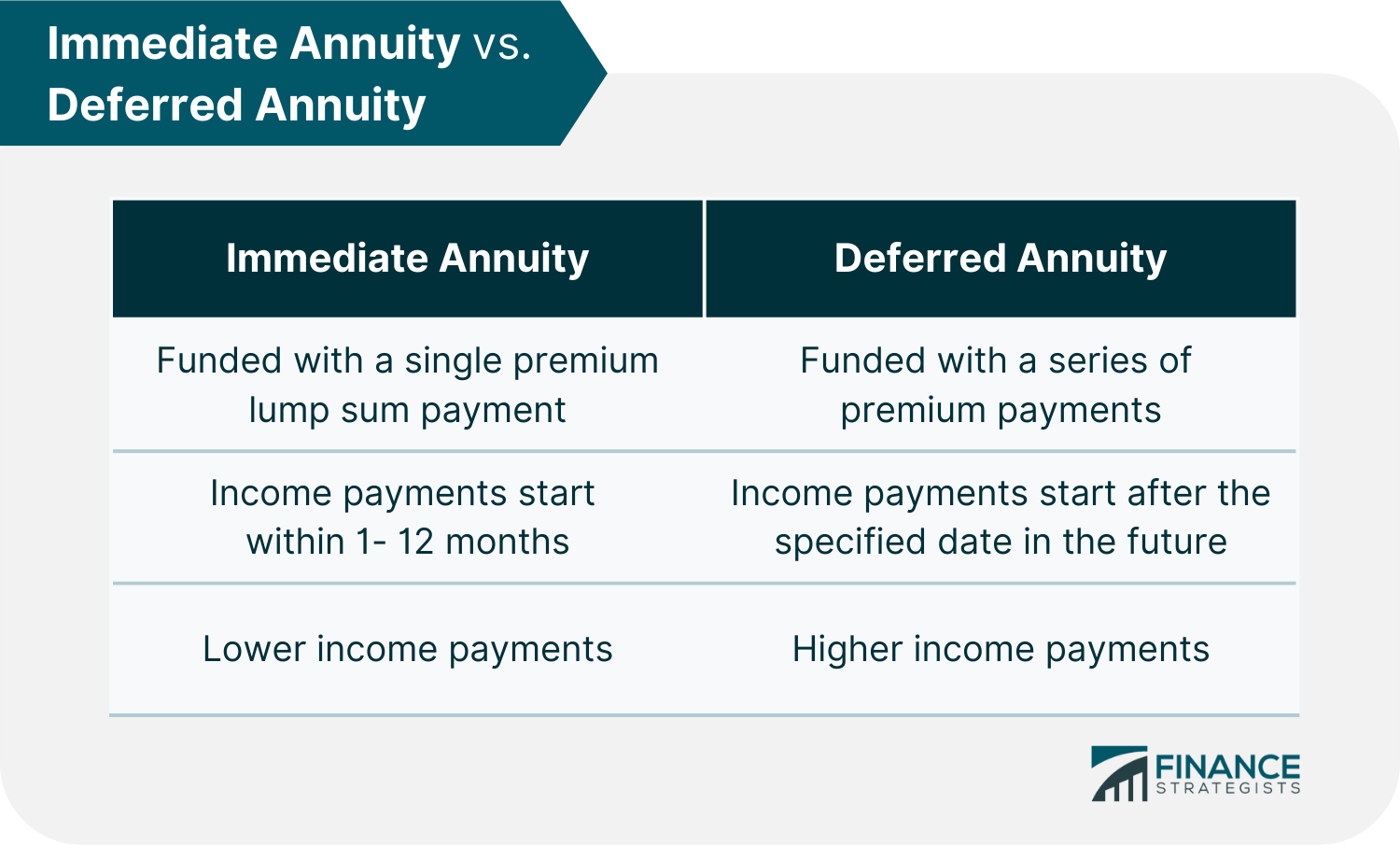
A qualified deferred life annuity pure insurance play is a strategic financial move using a Qualified Longevity Annuity Contract (QLAC) to hedge against outliving one’s savings. By moving pre-tax retirement funds into this specific ins...
A qualified deferred life annuity pure insurance play is a strategic financial move using a Qualified Longevity Annuity Contract (QLAC) to hedge against outliving one’s savings. By moving pre-tax retirement funds into this specific insurance vehicle, investors defer Required Minimum Distributions (RMDs) and secure guaranteed lifetime income starting as late as age 85.
Contents
The concept of a "pure insurance play" in the world of retirement planning often confuses investors who are accustomed to viewing their IRAs and 401(k)s strictly as investment portfolios. However, as we navigate the financial landscape of 2026, the transition from "accumulation" to "decumulation" has made longevity risk—the risk of living longer than your money lasts—a primary concern for retirees. The qualified deferred life annuity, specifically the version known as the Qualified Longevity Annuity Contract (QLAC), serves as the ultimate tool for transferring this risk to an insurance company.
The Mechanics of the Qualified Longevity Annuity Contract (QLAC)
To understand the pure insurance play, one must first understand the vehicle. A QLAC is a type of deferred income annuity purchased within a qualified retirement plan, such as a traditional IRA, 401(k), or 403(b). Unlike a standard annuity, the QLAC is specifically designed to meet IRS requirements that allow the owner to delay the start of income payments—and the associated tax obligations—well beyond the typical Required Minimum Distribution (RMD) age.
As of 2026, following the regulatory shifts initiated by the SECURE Act 2.0 and subsequent inflation adjustments, the limits for these contracts have become more flexible. The previous restriction that limited QLAC investments to 25% of an individual's total account balance has been eliminated. Currently, individuals can invest up to a fixed dollar amount—which reached $200,000 and has since been indexed for inflation—directly into a QLAC.
When you execute this play, you are essentially "carving out" a portion of your qualified assets. This portion is no longer subject to the annual RMD calculations that typically begin at age 73 or 75 (depending on your birth year). By removing these assets from the RMD pool, you reduce your taxable income during the early years of retirement, allowing the remaining portfolio to continue growing tax-deferred while ensuring a massive spike in guaranteed income during the later years.
Defining the "Pure Insurance Play"
What makes this a "pure insurance play" rather than an investment strategy? In a traditional investment, the goal is growth, liquidity, and a high rate of return. In a pure insurance play, the goal is risk transfer.
Mortality Credits and Longevity Risk
The primary engine behind a deferred life annuity is not just the interest rate environment, but mortality credits. Insurance companies pool the premiums of thousands of individuals. Statistically, some of those individuals will pass away earlier than expected, leaving their principal in the pool. This "surplus" is distributed to the survivors in the form of higher monthly payments.
This is why a QLAC can offer a "return" that no bond or dividend-paying stock can safely replicate at age 85. You are not just earning interest; you are benefiting from the actuarial reality of the pool. For the individual, the "play" is a bet on their own longevity, backed by the solvency of the insurer.
The Absence of Liquidity
A "pure" play usually implies the absence of "riders" or "frills" that dilute the core objective. Many annuities offer death benefits or cash surrender options. However, these features cost money and reduce the eventual monthly payout. A pure insurance play often involves a "Life Only" or "Life with Period Certain" structure, where the focus is entirely on maximizing the monthly check. By surrendering liquidity (you cannot typically withdraw the principal once the contract is signed), you receive the highest possible guaranteed income floor.
Strategic Benefits of Deferring to Age 85
The IRS allows QLAC payments to be deferred until the first day of the month following the month you turn 85. This specific age is the cornerstone of the strategy for several reasons:
- Tax Bracket Management: By age 85, many retirees have exhausted other taxable assets or have moved into different tax situations. Deferring the income allows for more aggressive Roth conversions or lower tax liabilities in the 70s.
- Cognitive Decline Protection: One of the greatest risks to a 90-year-old is the inability to manage a complex stock portfolio. A pure insurance play automates the highest-risk portion of a person's life. The check arrives via direct deposit regardless of market conditions or the individual's ability to execute a trade.
- Inflation Protection for Other Assets: If you know a large guaranteed income stream starts at 85, you can afford to be more aggressive with your remaining liquid portfolio in your 60s and 70s. This "permission to spend" or "permission to invest for growth" is a psychological benefit that often outweighs the mathematical IRR (Internal Rate of Return) of the annuity itself.
2026 Regulatory Landscape and Limits
In 2026, the rules governing qualified deferred annuities are more favorable than they were a decade ago. Under the guidance of Internal Revenue Code Section 401(a)(9), the QLAC remains the only way to legally circumvent RMDs on a portion of your traditional IRA assets.
| Feature | QLAC Specification (2026 Context) | Benefit to Investor |
|---|---|---|
| Maximum Investment | Indexed to Inflation (Approx. $200k - $215k) | Allows significant RMD reduction. |
| Max Deferral Age | 85 Years Old | Maximizes mortality credits and income. |
| RMD Treatment | Excluded from calculations | Lowers current tax bill. |
| Premium Source | Traditional IRA, 401(k), 403(b) | Use pre-tax "house money." |
| Death Benefit | Optional (Return of Premium) | Can protect heirs if the owner dies early. |
It is important to note that Roth IRAs do not utilize QLACs because Roth IRAs do not have RMDs for the original owner. Therefore, there is no tax-deferral incentive to use a QLAC within a Roth structure. The "pure insurance play" is almost exclusively a strategy for those with significant holdings in Traditional/Simplified Employee Pension (SEP) IRAs or employer-sponsored plans.
Common Pitfalls and Technical Limitations
While the pure insurance play offers security, it is not without risks. The most significant risk is the opportunity cost. If an investor puts $200,000 into a QLAC at age 65 and passes away at age 84 without a "Return of Premium" rider, that money is effectively lost to the insurance company. This is why it is termed a "play"—it is a calculated decision to trade principal for a lifetime guarantee.
Another technical limitation involves Inflation Erosion. A fixed annuity payment that looks substantial today may have significantly less purchasing power in twenty years. To combat this, some investors look for Cost-of-Living Adjustments (COLAs) within their annuity contracts, though adding a COLA will significantly lower the initial payment amount.
Finally, there is the Credit Risk of the insurance company. Unlike bank accounts, annuities are not FDIC-insured. They are backed by the claims-paying ability of the issuing insurer and, to a limited extent, by state guaranty associations. When executing a pure insurance play, selecting a carrier with an A+ or better rating from AM Best or Standard & Poor’s is a mandatory prerequisite.
Implementation Steps for 2026
If you are considering this strategy, the process generally follows a specific path to ensure compliance and optimal pricing:
- Audit Your RMD Impact: Calculate what your RMDs will look like at age 75. If the tax hit is significant and you don't need the money for living expenses, you are a candidate for a QLAC.
- Verify Plan Eligibility: Not all 401(k) plans allow for QLACs. You may need to roll over a portion of your 401(k) into a Traditional IRA to gain access to a wider range of QLAC providers.
- Quote Multiple Carriers: Because QLACs are commodity-like products, the "spread" between the highest and lowest payout can be 10-15%. Use an independent broker to compare the "Life Only" payout starting at age 85.
- Execute the Direct Transfer: The funds must move directly from the IRA custodian to the insurance company to avoid being classified as a taxable distribution.
- Notify Your Tax Preparer: You must report the QLAC purchase on your tax return to ensure your future RMDs are calculated correctly using the reduced account balance.
Frequently Asked Questions
Does a QLAC reduce my taxes forever?
No. A QLAC defers taxes. By reducing your RMDs between your mid-70s and age 85, you pay less tax today. However, once the annuity payments begin at age 85, those payments are 100% taxable as ordinary income. The "play" assumes either a lower tax bracket in the future or the benefit of tax-free growth in the interim.
What happens if I die before age 85?
In a "pure" insurance play (Life Only), the insurance company keeps the premium. This is how they fund the high payouts for those who live to 100. However, most modern QLACs are structured with a "Return of Premium" (ROP) death benefit. This ensures that if you die before the start date, your beneficiaries receive the original investment back, though this slightly reduces the eventual monthly income.
Can I change the start date once the contract begins?
Most QLACs allow for a one-time adjustment of the start date, provided it does not exceed the age 85 limit. For example, if you planned to start at 85 but realize at 80 that you need the income, you can often "accelerate" the payments, though the monthly amount will be lower because it is being paid out over a longer expected duration.
Is there a maximum percentage of my IRA I can use?
Prior to the SECURE Act 2.0, there was a 25% cap. Today, that cap has been removed. You are only limited by the flat dollar amount (currently $200,000, adjusted for inflation in $10,000 increments). This is particularly beneficial for those with smaller IRAs who still want to secure a significant income floor.
Can I use a QLAC for a joint life with my spouse?
Yes. You can structure a QLAC as a "Joint and Survivor" annuity. This ensures that the income continues as long as either spouse is alive. This is a common variation of the pure insurance play used to protect a surviving spouse from poverty in extreme old age.
Final Recommendation
The qualified deferred life annuity pure insurance play is most effective for investors who have "excess" qualified assets—money they do not intend to spend in early retirement—and a family history of longevity. For these individuals, the QLAC serves as a hedge against the exhaustion of liquid assets.
If you are entering your 60s with a substantial Traditional IRA, your next step should be to run a comparative RMD projection. If the projected distributions at age 75 will push you into a higher tax bracket or trigger unwanted Medicare surcharges (IRMAA), moving the maximum allowable amount into a QLAC is a mathematically sound method to gain tax control and lifetime security. Always prioritize carriers with the highest financial strength ratings to ensure the guarantee remains valid twenty or thirty years into the future.
Image Gallery