Big Piano Movers: A Comprehensive Overview and Key Considerations
Moving a large piano requires a specialized blend of heavy-lift logistics, delicate handling, and precision engineering. Professional big piano movers utilize custom equipment like skids, padded wraps, and crane systems to transport in...
Moving a large piano requires a specialized blend of heavy-lift logistics, delicate handling, and precision engineering. Professional big piano movers utilize custom equipment like skids, padded wraps, and crane systems to transport instruments that often weigh between 800 and 1,200 pounds, ensuring the structural integrity of the cast-iron plate and the delicate internal action remain intact.
Contents
Understanding the Complexity of Moving Large Pianos
When discussing "big pianos," we are typically referring to concert grands (8'11" to 9' or more), semi-concert grands, and professional-grade tall uprights. Unlike standard furniture, a piano is a high-tension machine. The interior of a grand piano contains a massive cast-iron plate that supports up to 20 tons of string tension. A sudden jar or an uneven drop can crack this plate, effectively totaling the instrument.
Professional big piano movers do not treat these instruments as bulky boxes. They understand the center of gravity, which is deceptively off-center in grand pianos due to the weight of the iron frame. If a mover attempts to lift or tilt a grand piano without accounting for this weight distribution, the instrument can easily topple, leading to catastrophic damage or severe personal injury.
In 2026, the logistics of piano moving have evolved to include more sophisticated rigging techniques. While the fundamental tools—the piano board and the dolly—remain, the methodology for navigating modern architectural challenges like high-rise apartments or narrow historic doorways has become increasingly technical.
Key Types of Pianos and Their Moving Requirements
The specific model and size of the piano dictate the strategy the movers will employ. There is no "one-size-fits-all" approach when dealing with instruments of this scale.
Concert Grand Pianos
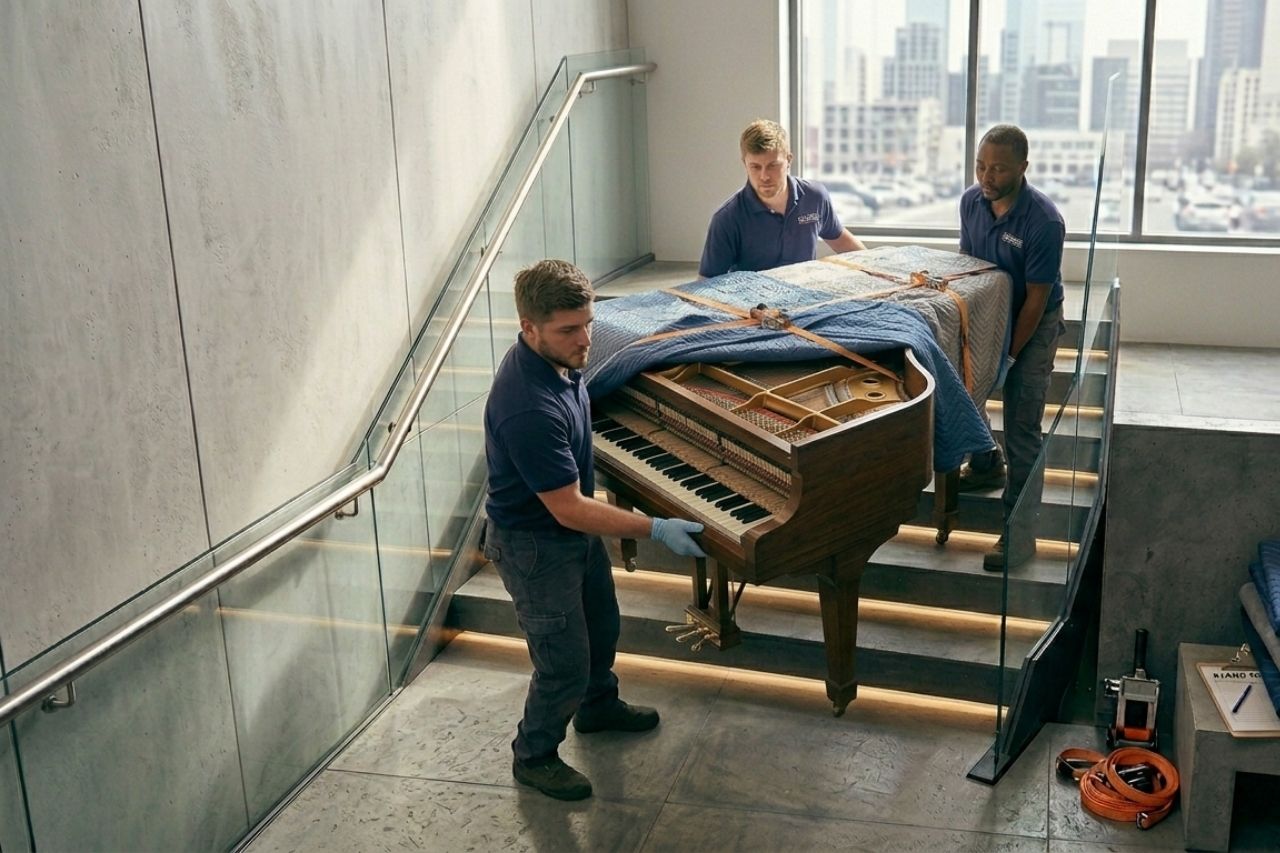
These are the titans of the piano world, often measuring 9 feet in length and weighing over 1,000 pounds. Moving a concert grand requires a minimum of three to four specialized movers. The process involves removing the "lyre" (the pedal assembly) and the legs before securing the "case" or "rim" onto a heavy-duty piano board.
Professional Upright Pianos
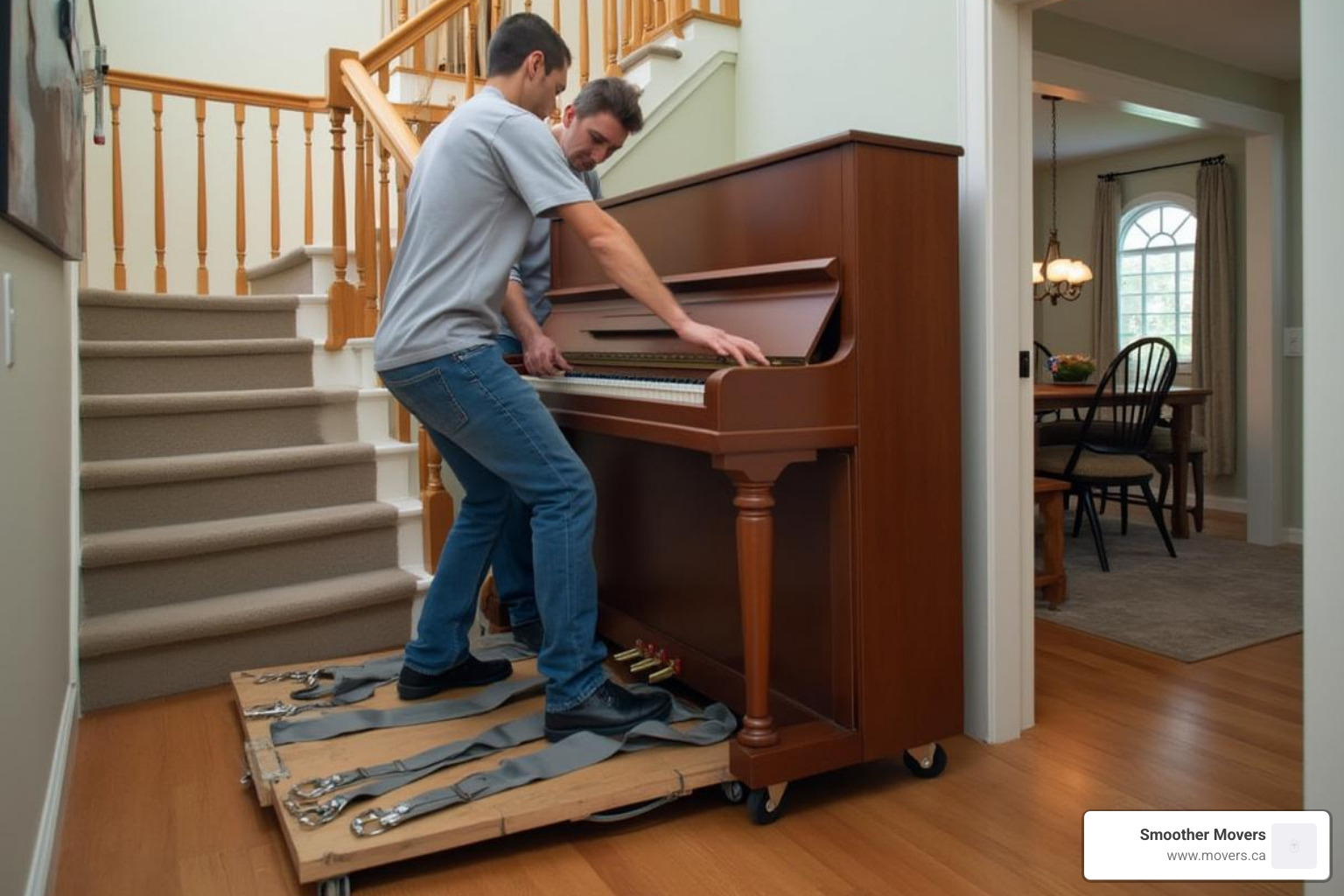
While they may have a smaller footprint than a grand, tall professional uprights (often 52 inches or taller) can be remarkably heavy and top-heavy. Because their weight is concentrated in the back where the soundboard and plate are located, they are prone to tipping backward if handled by inexperienced general movers.
Digital Hybrids and Custom Cabinets
In recent years, the market has seen an increase in "hybrid" pianos—instruments with traditional acoustic actions but digital sound engines. These often feature fragile electronic components alongside traditional heavy frames, requiring movers who understand how to protect sensitive circuitry from static and vibration.
Essential Equipment for Professional Piano Logistics
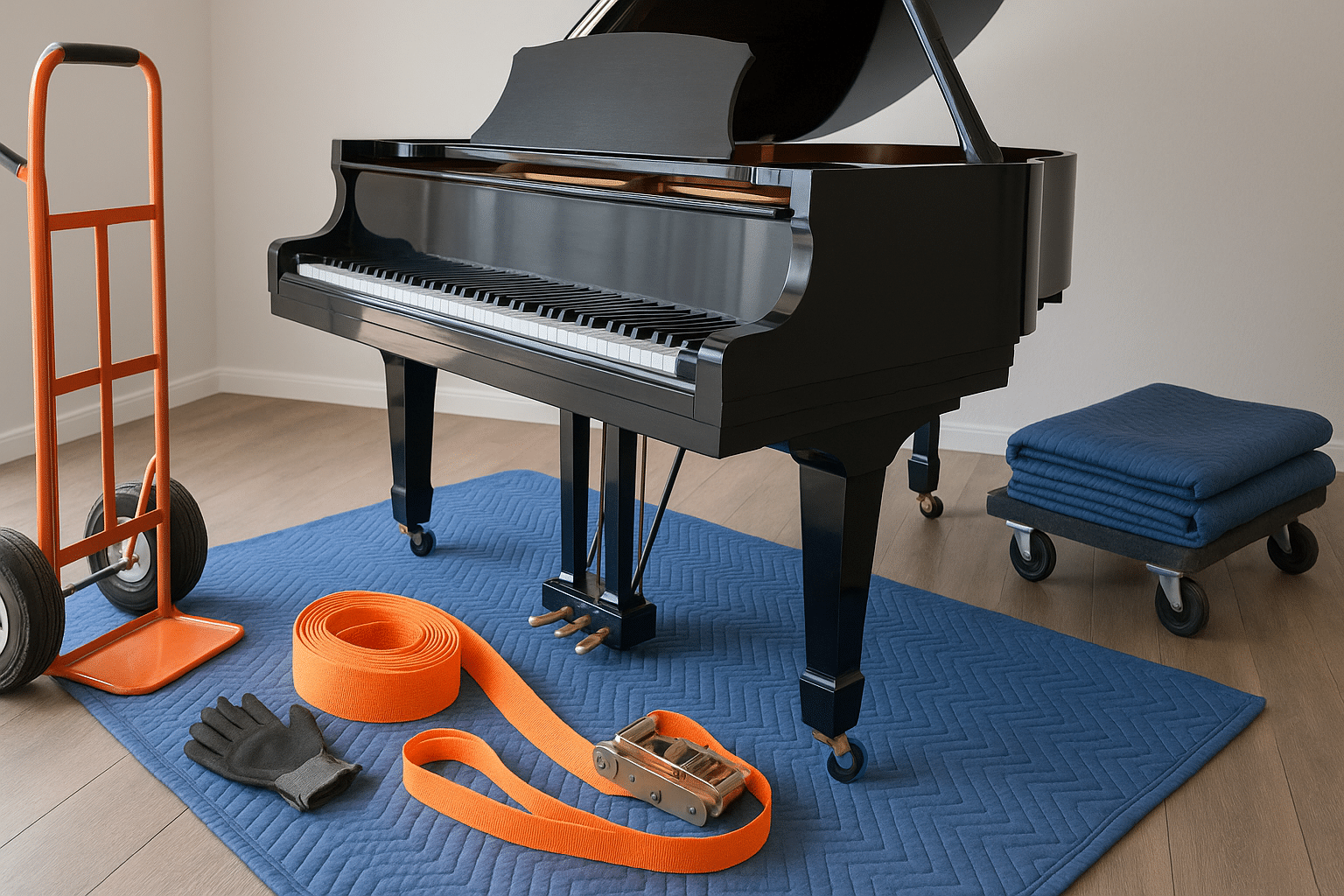
To move a big piano safely, specialized equipment is non-negotiable. General-purpose moving straps and standard dollies are insufficient for the weights and balances involved.
- The Piano Board (Skid): A long, reinforced wooden plank padded with felt. The piano body is strapped to this board once the legs are removed. The skid provides a flat, stable surface that can be slid onto a dolly or up a ramp.
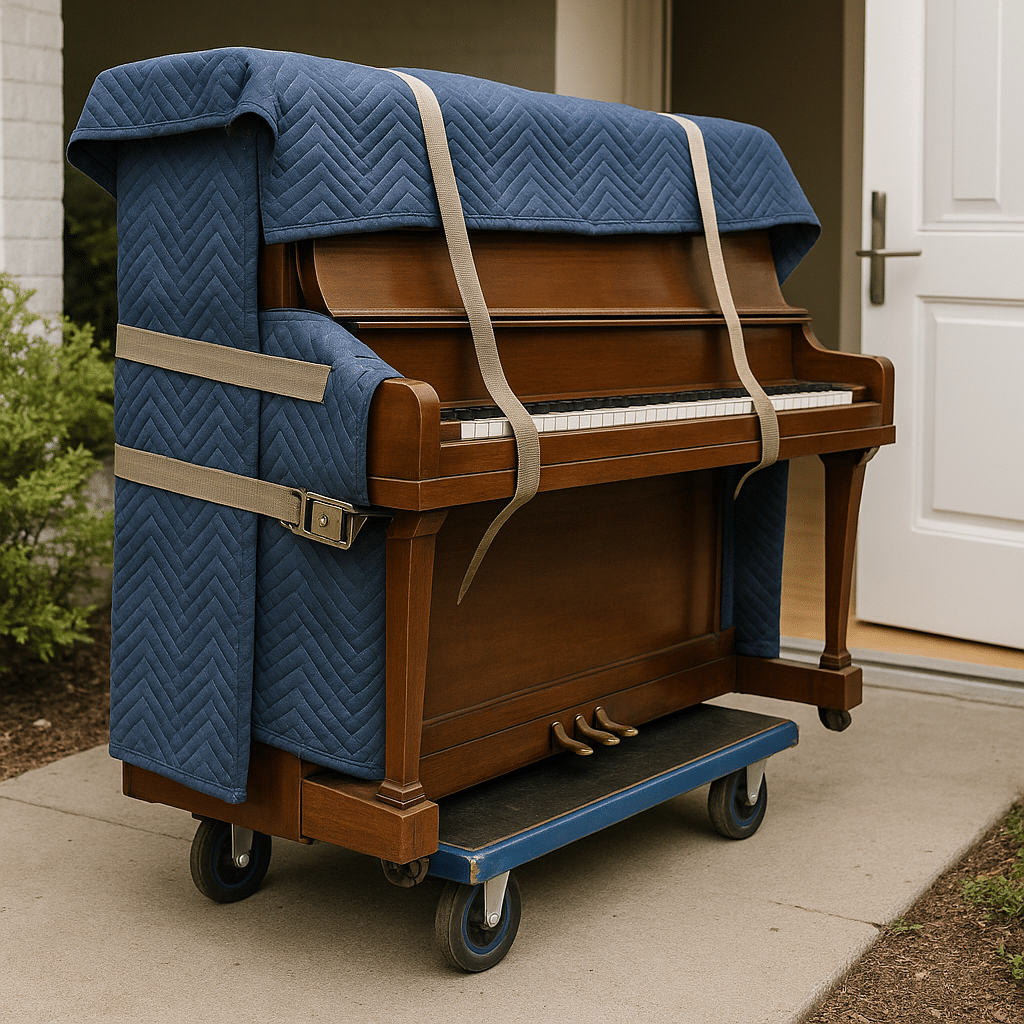
- Heavy-Duty Dollies: These are not your average hardware store dollies. Piano dollies feature non-marring, high-pressure rubber wheels and reinforced axles capable of supporting half a ton of concentrated weight.
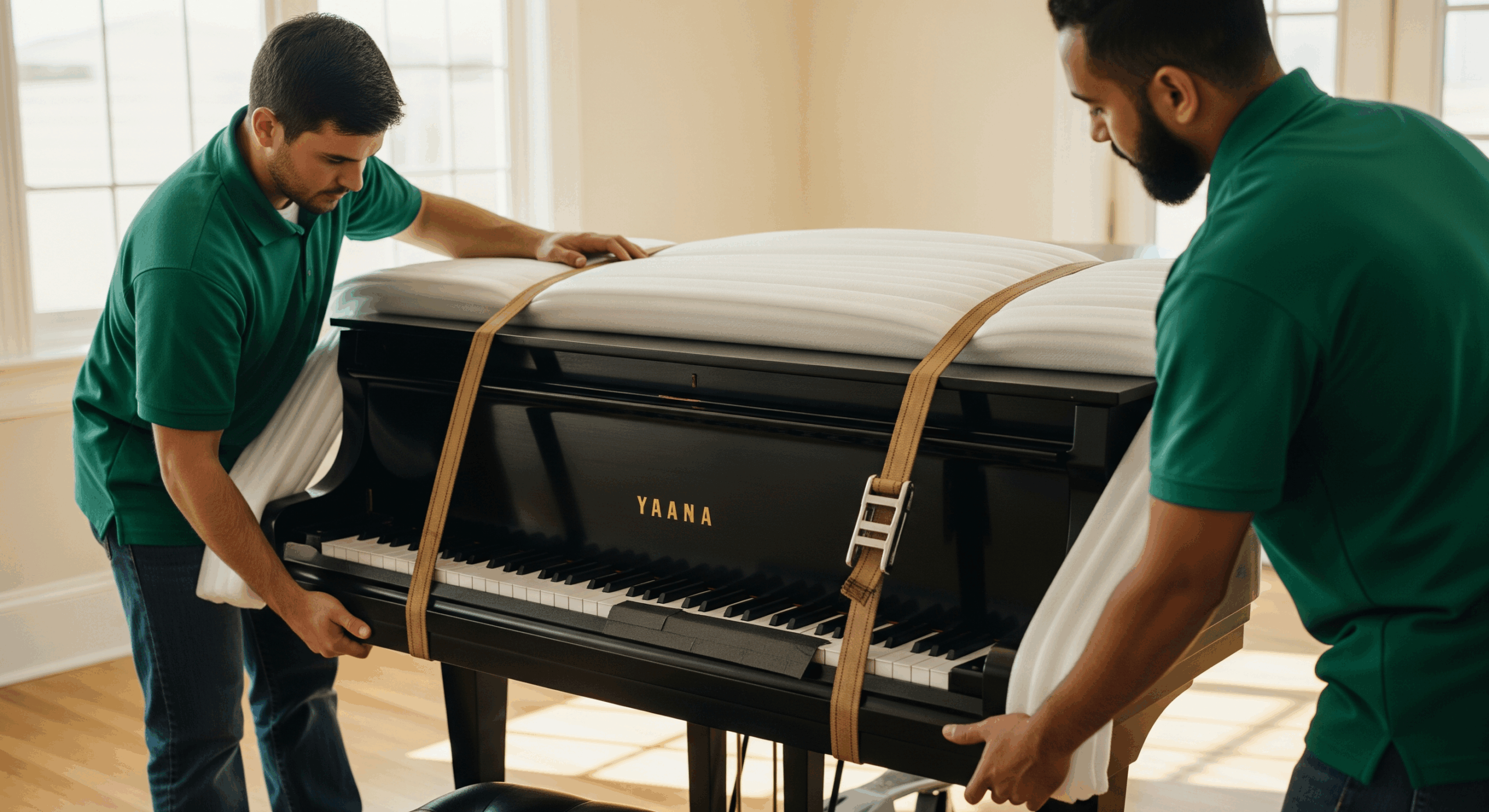
- Custom Padding and Blankets: Professional movers use "moving skins" and thick, quilted blankets to wrap the lid, rim, and keys. This prevents "finish checking" (cracking of the lacquer) caused by rapid temperature changes or physical abrasions.
- E-Track Systems: Inside the moving truck, the piano must be secured using E-track straps that lock into the walls of the vehicle, ensuring the instrument cannot shift even an inch during transit.
The Professional Moving Process: A Step-by-Step Overview
Understanding the sequence of a move can help owners prepare and vet their chosen service provider.
Phase 1: The Site Assessment
The movers should begin by measuring all points of egress. This includes door widths, hallway "swing" space, and stairwell clearances. In 2026, many high-end movers use digital measuring tools or LIDAR scans via mobile devices to ensure the instrument will fit through tight corners before they even lift it.
Phase 2: Disassembly
For grand pianos, the movers will first remove the lid hinges and the lid itself to reduce weight and prevent the lid from swinging open. Next, the "lyre" (pedal box) is removed. The piano is then carefully tilted onto its straight side (the "bass side") onto the piano board. Once the weight is transferred to the board, the legs are unscrewed and packed separately.
Phase 3: The Transit
Once the piano is on the board and strapped down, it is placed on a dolly. Navigation through the house requires "floor protection"—typically Neoprene runners or Masonite sheets—to prevent the heavy wheels from cracking tiles or denting hardwood floors.
Phase 4: Climate-Controlled Transport
Pianos are made of wood, felt, and leather—materials that are highly sensitive to humidity. Professional big piano movers utilize climate-controlled vehicles to maintain a consistent environment. Exposure to extreme cold or heat during a move can cause the soundboard to swell or shrink, potentially leading to cracks or "dead" notes.
| Piano Type | Typical Weight | Minimum Crew Size | Primary Challenge |
|---|---|---|---|
| Concert Grand (9') | 1,000 - 1,200 lbs | 3-5 People | Massive weight and length; requires specialized rigging. |
| Baby Grand (5'-5'5") | 500 - 600 lbs | 2-3 People | Off-center weight distribution; delicate leg removal. |
| Tall Upright (52"+) | 600 - 800 lbs | 2-3 People | Extremely top-heavy; high risk of tipping on ramps. |
| Digital Hybrid | 300 - 500 lbs | 2 People | Sensitive electronics combined with heavy wooden cases. |
Key Considerations for Choosing Big Piano Movers
Hiring the right team is the most critical step in the process. You are not just hiring labor; you are hiring technical expertise.
1. Insurance and Liability
Standard homeowners' insurance rarely covers a piano during transit. You must verify that the mover carries Cargo Insurance and General Liability. Specifically, ask about "Full Value Protection." If a $150,000 Steinway is damaged, a mover with only basic "Released Value Protection" (which pays by the pound) would only be liable for a few hundred dollars. According to the Federal Motor Carrier Safety Administration (FMCSA), movers are required to offer different levels of liability, but specialized high-value riders are often necessary for concert instruments.
2. Specialized Training
Ask the company if their employees are full-time staff or day laborers. Piano moving is a trade that requires years of apprenticeship. A "big piano mover" should be able to explain the specific mechanics of your brand of piano, whether it’s a Bosendorfer, Yamaha, or Steinway, as each has different structural nuances.
3. Hoisting and Craning Capabilities
In urban environments, it is common for a big piano to be unable to fit through an elevator or a stairwell. In these cases, the movers must be capable of rigging and hoisting. This involves removing a window and using a crane to lift the piano to an upper floor. This requires additional permits and specialized insurance.
Financial Expectations and Pricing in 2026
By 2026, the cost of specialized piano moving has seen adjustments due to rising fuel costs and the specialized labor market.
- Local Moves: For a large grand piano within the same city, expect to pay between $500 and $1,200. This fluctuates based on the number of stairs, the complexity of the "tip," and the value of the instrument.
- Long-Distance Moves: Moving a concert grand across state lines can range from $2,500 to $7,000. These moves often utilize "hub-and-spoke" logistics where the piano is stored in a climate-controlled warehouse between legs of the journey.
- Surcharges: Common add-ons include "stair charges" (often $5 to $10 per step), "grass hauls" if the truck cannot get close to the door, and "craning fees" which can add $1,000+ to the total bill.
Post-Move Considerations: Acclimation and Tuning
A common mistake owners make is attempting to tune the piano immediately after it arrives at its new location. Even with the most careful movers, a piano undergoes stress during a move.
The instrument should be allowed to acclimate to the new environment's humidity and temperature for at least two to four weeks before calling a technician. The Piano Technicians Guild (PTG) recommends this waiting period to allow the thousands of wooden parts and the soundboard to stabilize. Tuning the instrument too early will likely result in it falling out of tune again as the wood continues to settle.
Common Mistakes to Avoid
- DIY Moving: Never attempt to move a grand piano with friends. The risk of the piano "dropping" off its legs during the tilt is extremely high.
- Ignoring the Path: Failing to measure the "swing" at the top of a staircase can lead to a piano getting stuck, which is both dangerous and expensive to resolve mid-move.
- Inadequate Humidity Control: Moving a piano from a humid environment to a dry one without a "Piano Life Saver" (damp-chaser) system installed can cause the soundboard to crack within weeks.
FAQs
Why can't I use regular household movers for a big piano?
Household movers generally lack the specialized skids and the technical training required to disassemble and reassemble the delicate lyre and leg components of a grand piano. Additionally, their insurance policies often exclude high-value musical instruments or provide insufficient coverage for the actual replacement value of a concert-grade piano.
How do movers handle stairs with a 1,000-pound instrument?
Movers use a combination of "stair boxes," heavy-duty ramps, and specialized techniques. For a large grand, they often use a "double-team" where 4-5 men manage the weight using straps looped over their shoulders to distribute the load across their core muscles, rather than just their arms. In 2026, some companies also employ motorized stair-climbing dollies designed specifically for pianos.
Does moving a piano always ruin the tuning?
Moving doesn't "ruin" the tuning, but the change in atmospheric conditions (humidity and temperature) and the physical movement of the heavy cast-iron plate will almost certainly cause the strings to shift slightly. While the piano will be playable immediately, it will not be at "concert pitch" or perfectly in tune until it has acclimated to the new space.
What should I do if my piano needs to be stored during a move?
Ensure the storage facility is specifically climate-controlled, not just "temperature controlled." A piano requires a consistent relative humidity (RH) of approximately 40-45%. Storing a piano in a standard self-storage unit can lead to warped keys, rusted strings, and a cracked soundboard.
How much notice do I need to give big piano movers?
For local moves, two weeks is usually sufficient. However, if your move requires a crane or permits for street closures (common in major cities for concert grand deliveries), you should start the booking process at least four to six weeks in advance to allow for logistical coordination and site inspections.
Recommendation for Piano Owners
Before signing a contract, request a "Certificate of Insurance" (COI) from the mover that specifically names you or your property as the certificate holder. This ensures the coverage is active and applicable to your specific move. Always choose a mover that specializes exclusively in pianos or high-value fine arts; the technical requirements for a 9-foot concert grand are simply too high for generalists.
Image Gallery