Why Cloud Security Configuration Issues Matter: The Critical Impact of Mismanagement in 2026
Cloud security configuration issues matter because they represent the single most common vulnerability leading to enterprise data breaches and unauthorized access. Proper configuration ensures that security controls—such as identity ma...
Cloud security configuration issues matter because they represent the single most common vulnerability leading to enterprise data breaches and unauthorized access. Proper configuration ensures that security controls—such as identity management, encryption, and network isolation—function as intended to protect sensitive assets from evolving cyber threats and accidental exposure.
Contents
As we navigate the technological landscape of 2026, the reliance on cloud-native architectures has made the perimeter almost entirely software-defined. In this environment, a single misplaced "allow" statement in a security group or an incorrectly toggled permission on a storage bucket can bypass millions of dollars in defensive investments. Security configuration is no longer a one-time setup; it is the continuous foundation of digital trust.
The Anatomy of Cloud Security Configuration
Cloud configuration refers to the vast array of settings, policies, and permissions that govern how cloud services operate and interact. Unlike traditional on-premises hardware, cloud resources are created and modified via APIs. This abstraction allows for incredible speed and scalability, but it also means that a minor coding error in an Infrastructure as Code (IaC) template can propagate a security flaw across thousands of instances in seconds.
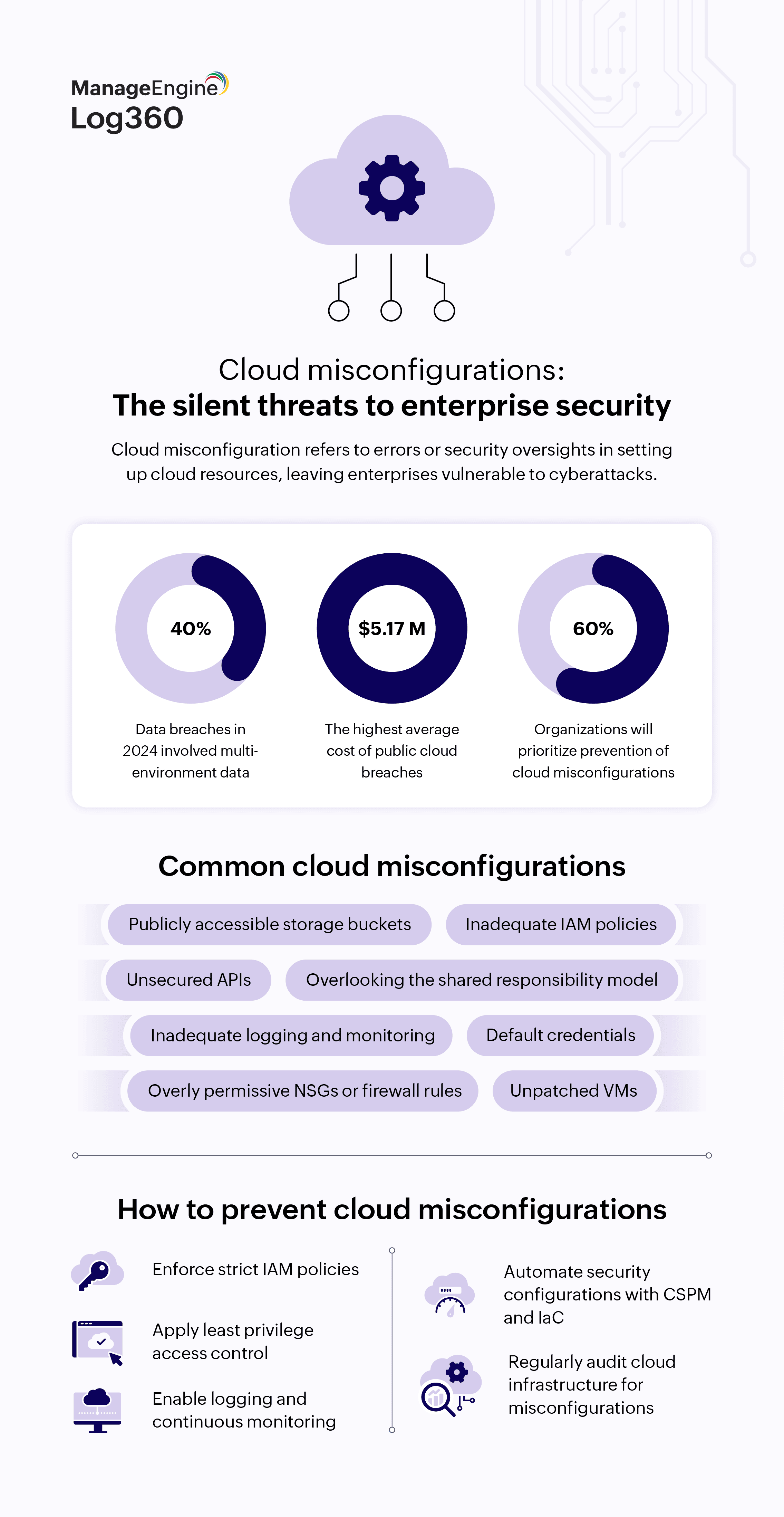
Configuration issues typically fall into several categories:
- Identity and Access Management (IAM): Granting excessive permissions to users, service accounts, or roles.
- Storage and Database Access: Leaving cloud storage buckets (like Amazon S3 or Azure Blobs) or databases exposed to the public internet without authentication.
- Network Security Groups: Permitting unrestricted inbound traffic on sensitive ports (e.g., SSH or RDP) or failing to segment internal networks.
- Logging and Monitoring: Disabling the audit trails necessary to detect and investigate suspicious activity.
- Encryption Settings: Failing to encrypt data at rest or in transit using customer-managed keys.
Understanding why these issues matter requires looking beyond the technical settings and examining the operational, financial, and legal consequences of a misconfigured environment.
The Shared Responsibility Model: A Critical Misunderstanding
The most frequent reason configuration issues arise is a fundamental misunderstanding of the Shared Responsibility Model. Organizations often assume that because they are using a reputable provider like AWS, Microsoft Azure, or Google Cloud Platform (GCP), the provider is responsible for all security.
In reality, the provider is responsible for the security of the cloud (physical data centers, cooling, and core networking), while the customer is responsible for security in the cloud. This includes the configuration of the operating systems, the management of identity, and the protection of customer data. By 2026, Gartner and other industry analysts have consistently noted that nearly 99% of cloud security failures are the fault of the customer, usually due to preventable misconfigurations.
Why Misconfiguration is the Primary Attack Vector
Attacker methodology has shifted from sophisticated zero-day exploits to automated scanning for low-hanging fruit. Today's threat actors use specialized bots to scan the entire IPv4 and IPv6 address space, looking specifically for misconfigured cloud assets.
1. Expanded Blast Radius
In a legacy environment, a compromised server might be isolated. In a cloud environment, a misconfigured IAM role attached to a compromised instance can allow an attacker to move laterally across the entire cloud tenant. This "blast radius" can extend from a single web server to the entire administrative console, leading to a total takeover of the organization's infrastructure.
2. The Persistence of "Shadow IT"
Configuration issues often stem from "Shadow IT"—instances where developers or departments spin up cloud resources outside the oversight of the central IT security team. Without standardized configuration templates, these "rogue" resources rarely meet the organization's security baseline, leaving gaping holes in the defensive posture.
3. Complexity of Multi-Cloud Environments
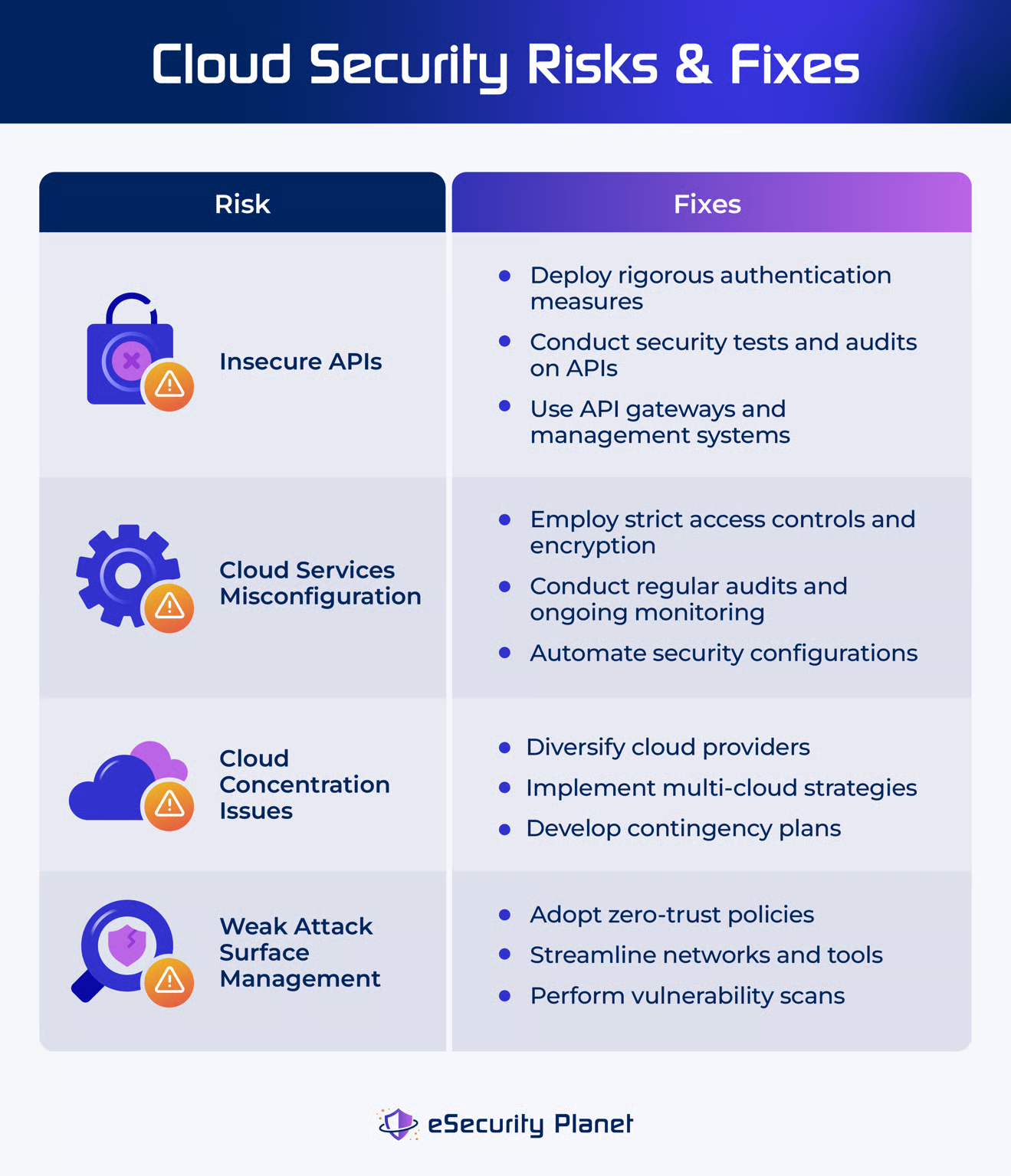
By 2026, most enterprises utilize at least two different cloud providers. Each provider uses different terminology, API structures, and security paradigms. What constitutes a "private" setting in Azure may not behave the same way in GCP. This complexity increases the cognitive load on security teams, making manual configuration almost impossible to perform without error.
The Financial and Legal Consequences
The impact of cloud configuration issues is often measured in millions of dollars. Beyond the immediate costs of incident response and data recovery, organizations face long-term financial liabilities.
Regulatory Fines and Compliance
Regulations such as GDPR (General Data Protection Regulation), CCPA (California Consumer Privacy Act), and various international data sovereignty laws mandate that organizations implement "appropriate technical and organizational measures" to protect data. A public S3 bucket is frequently cited by regulators as a failure to meet this standard, resulting in massive fines.
Ransomware and Extortion
In 2026, ransomware-as-a-service (RaaS) groups specifically target misconfigured cloud backups. If an organization's backup storage is misconfigured with "delete" permissions accessible from the main production environment, attackers will wipe the backups before encrypting the primary data, leaving the victim with no choice but to pay.
Reputational Devaluation
Trust is the most difficult asset to rebuild. High-profile leaks caused by configuration errors can lead to a drop in stock price, loss of customer contracts, and the departure of key executive leadership.
Manual vs. Automated Configuration Management
The scale of modern cloud environments has surpassed the human capacity for manual oversight. The following table compares the risks and benefits of manual configuration versus automated Cloud Security Posture Management (CSPM).
| Feature | Manual Configuration | Automated (CSPM/IaC) |
|---|---|---|
| Speed of Deployment | Slow; prone to human bottlenecks. | Instant; integrated into CI/CD pipelines. |
| Consistency | Low; settings vary by administrator. | High; strictly follows "Policy as Code." |
| Visibility | Limited to what is manually audited. | Real-time; continuous discovery of assets. |
| Remediation | Reactive (after a breach is found). | Proactive (prevents "drift" from baseline). |
| Human Error Risk | High; 90%+ of cloud errors are manual. | Low; errors are caught during testing. |
| Scalability | Non-existent; requires more staff. | Infinite; manages thousands of accounts. |
Strategic Mitigation: How to Solve the Configuration Crisis
To address why cloud security issues matter, organizations must pivot from a "fix-it-later" mentality to "Secure by Design."
Implementing Policy as Code (PaC)
Organizations should define their security requirements in code (using tools like Terraform, CloudFormation, or Pulumi). These templates are vetted by security teams before they are ever deployed. If a developer attempts to deploy a resource that violates a policy—such as an unencrypted database—the deployment is automatically blocked.
Embracing the Principle of Least Privilege (PoLP)
The most effective way to mitigate IAM misconfiguration is to ensure that no user or service has more permission than is strictly necessary. In 2026, advanced organizations use Just-In-Time (JIT) access, where elevated permissions are granted only for a specific window of time and for a specific task, then automatically revoked.
Continuous Monitoring and Drift Detection
Cloud environments are dynamic. Even if a resource is configured correctly at launch, "configuration drift" can occur when an administrator makes a manual change to troubleshoot an issue and forgets to revert it. Continuous monitoring tools detect these changes instantly and can even "auto-remediate" the setting back to its secure state.
Frequently Asked Questions
Why is cloud misconfiguration considered more dangerous than software bugs?
While software bugs (like Buffer Overflows) require specific exploits, a misconfiguration is essentially an "open door." It doesn't require a sophisticated hack; it simply requires finding the URL or IP address. Because misconfigurations often involve core infrastructure settings, they can lead to much larger data exposures than a bug in a single application.
Can cloud providers fix my misconfigurations automatically?
Cloud providers offer tools (like AWS Config or Azure Policy) that can identify errors, but they generally do not change your settings without your permission because doing so could break your applications. The responsibility for defining and applying the "correct" configuration remains with the user.
What is the most common cloud security misconfiguration in 2026?
The most common issue remains identity over-provisioning. As organizations move toward microservices, the number of "non-human" identities (service accounts, lambdas, containers) has exploded. These identities are frequently granted "Administrator" or "Owner" rights to simplify development, creating massive security holes.
How does "Infrastructure as Code" help prevent these issues?
IaC allows security teams to treat infrastructure like software. This means configurations can be peer-reviewed, version-controlled, and scanned for vulnerabilities using automated tools before the infrastructure is even built. It removes the "human element" from the deployment process.
Is multi-cloud safer or more prone to configuration issues?
While multi-cloud provides redundancy, it significantly increases the risk of configuration issues. The complexity of managing different security models across AWS, Azure, and GCP often leads to "lowest common denominator" security, where teams use the simplest (and often least secure) settings that work across all platforms.
Next Steps for Organizations
To ensure cloud security configuration issues do not compromise your operations in 2026, the immediate priority should be the implementation of a Cloud Security Posture Management (CSPM) solution. This tool provides a "single pane of glass" view of your entire cloud estate, highlighting misconfigurations in real-time.
Furthermore, teams must integrate security into the DevOps workflow (DevSecOps). By shifting security "left"—identifying configuration errors during the design and coding phases—organizations can reduce their risk profile while maintaining the speed and agility that cloud computing provides. For more information on established security standards, organizations should consult the NIST Cloud Computing Security Requirements and the Center for Internet Security (CIS) Benchmarks.
Image Gallery