How to Become a Small Business Consultant: A Step-by-Step Guide
To become a small business consultant, define your core area of expertise, choose a business entity structure, set your pricing model, and build a targeted client acquisition framework. Small business consultants analyze operational, f...
To become a small business consultant, define your core area of expertise, choose a business entity structure, set your pricing model, and build a targeted client acquisition framework. Small business consultants analyze operational, financial, or marketing challenges to help business owners increase profitability, streamline processes, and execute sustainable growth strategies.
Contents
What Does a Small Business Consultant Do?
A small business consultant serves as an external advisor to small-to-medium enterprises (SMEs). Unlike enterprise-level corporate consultants who often deal with massive organizational restructuring or multinational regulatory compliance, small business consultants work directly with founders, executive teams, and sole proprietors to solve immediate, high-impact operational hurdles.
Small business owners frequently face resource constraints, leading them to juggle multiple operational roles simultaneously. A consultant brings specialized domain knowledge, objective analysis, and dedicated bandwidth that internal teams lack. Depending on your background, your advisory focus may span one or several specific domains:
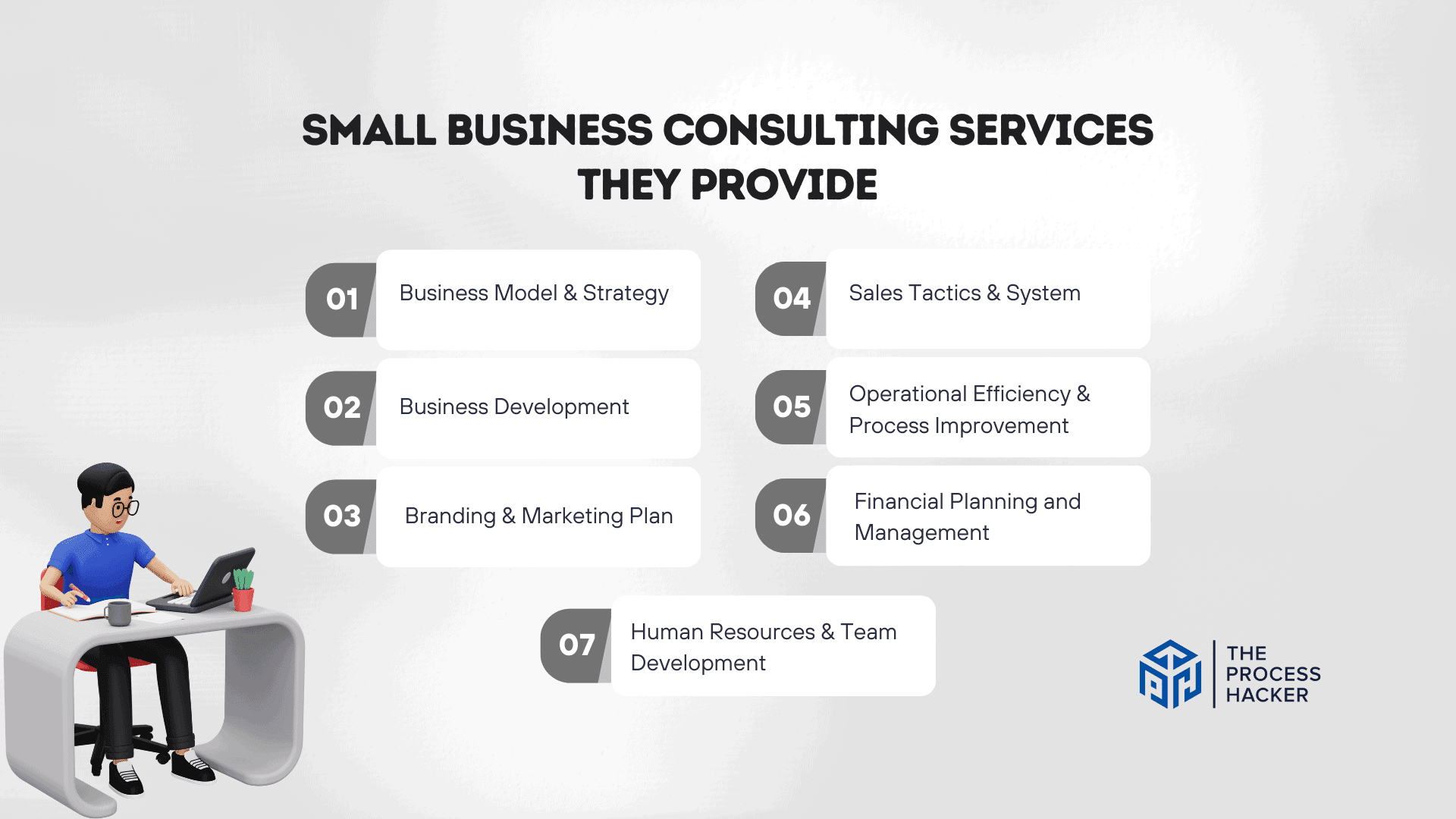
- Financial Strategy: Inventory cash flow, design financial forecasts, improve profit margins, and prepare businesses for capital raising or debt financing.
- Operations and Process Engineering: Streamline supply chains, reduce waste, implement enterprise software systems, and standardize standard operating procedures (SOPs).
- Marketing and Sales Optimization: Analyze customer acquisition costs (CAC), build lead generation pipelines, train sales reps, and refine product-market positioning.
- Human Resources and Leadership: Establish hiring frameworks, organize team structures, refine compensation plans, and ensure labor compliance.
- Technology and Digital Transformation: Migrate legacy business software to modern cloud solutions, implement customer relationship management (CRM) tools, and institute cybersecurity policies.
Step 1: Identify Your Niche and Service Offerings
Attempting to serve every business owner with general advice makes marketing difficult and dilutes your value proposition. Successful independent consultants position themselves around a specific domain, industry vertical, or business stage.
Define Your Core Competency
Audit your career history to pinpoint where you have delivered quantifiable outcomes. Ask yourself:
- What specific problems have I solved repeatedly in past leadership or management roles?
- Do I possess specialized technical certifications, data analysis capabilities, or industry insights?
- What measurable results (e.g., revenue growth percentages, cost reductions, time savings) can I demonstrate?
Tailor Offerings to Small Business Realities
Small businesses usually cannot afford broad strategic reports that lack implementation guidance. Your service offerings should deliver actionable, hands-on solutions. Frame your service menu into clear packages:
- Diagnostic Audits: A short-term evaluation of a business’s existing financial health, tech stack, or marketing funnel, concluding with a prioritized roadmap.
- Implementation Projects: Execution-focused engagements where you help install software, write operational manuals, or restructure a sales pipeline over 30 to 90 days.
- Advisory Retainers: Ongoing mentorship and strategic governance, providing business owners with scheduled executive coaching sessions and on-demand guidance.
Step 2: Establish Your Legal and Financial Infrastructure
Operating as an independent consultant requires establishing a professional business structure that protects your personal assets and builds credibility with prospective clients.
Choose a Business Entity Structure
Selecting the right legal entity depends on your risk tolerance, tax goals, and scale. Consult a qualified legal or tax professional in your jurisdiction to evaluate options such as:
- Sole Proprietorship: Simple to set up with low initial administrative overhead, but leaves your personal assets exposed to business liabilities.
- Limited Liability Company (LLC): The standard choice for independent consultants in the United States. It creates a formal legal distinction between personal and business assets while offering pass-through tax treatment.
- S Corporation / Professional Corporation: Often utilized by mature consulting practices to optimize self-employment taxes once net income reaches a sustained threshold.
Learn more about business structure requirements directly through the U.S. Small Business Administration (SBA).
Risk Management and Contracts
Consulting involves advising clients on business-critical decisions. Protect your practice with proper risk management tools:
- Professional Liability Insurance (Errors & Omissions): Covers legal defence costs and damages if a client claims your advice resulted in financial loss.
- Master Services Agreement (MSA) and Statement of Work (SOW): Never begin consulting work without a signed agreement. An MSA details general terms, liability caps, intellectual property rights, and payment terms, while the SOW outlines project deliverables, milestones, and timelines.
Step 3: Determine Your Pricing Strategy
Choosing the correct pricing framework directly impacts both your revenue potential and how prospects perceive your services. Cheap pricing can signals low quality, while cost structures that are too high can discourage cash-conscious owners.
Comparing Common Fee Structures
| Pricing Model | Best Used For | Advantages | Potential Disadvantages |
|---|---|---|---|
| Hourly Rate | Ad-hoc advisory work, scoping phases, or variable-scope consulting. | Easy to compute; ensures pay for all time invested. | Penalizes efficiency; caps earnings based on hours worked. |
| Project-Based Fee | Defined deliverables with clear start and end dates (e.g., CRM setup). | Predictable costs for client; higher margins if completed quickly. | Scope creep can reduce hourly margins if boundaries are weak. |
| Monthly Retainer | Ongoing executive guidance, fractional leadership, or oversight. | Predictable recurring revenue for your business; consistent client support. | Requires setting strict boundaries around availability and monthly hours. |
| Value-Based Pricing | High-impact initiatives tied to quantifiable upside (e.g., tax savings, sales lift). | Maximizes revenue potential based on delivered return on investment (ROI). | Harder to quantify; requires deep client trust and verifiable data baselines. |
For strategic initiatives where your intervention yields measurable financial gain, value-based pricing offers the highest returns. However, project-based fees and retainers remain the most standard choices for emerging consultants establishing predictable revenue.
Step 4: Develop a Client Acquisition System
Finding and securing business clients requires an active sales system. Relying solely on word-of-mouth word is rarely enough to build a stable full-time business consulting practice.
Build an Authority-Based Digital Presence
Small business owners run background checks on consultants before signing retainers. Your public digital presence must clearly establish your expertise:
- Optimized Website: Develop a clean website highlighting your niche, specific case studies, client testimonials, and a booking link for initial consultations.
- LinkedIn Profile Strategy: Structure your profile as a sales page rather than a resume. Share case studies, break down industry problems, and highlight specific business transformations you have guided.
- Thought Leadership: Publish articles, whitepapers, or host webinars that address common pain points within your target industry.
Leverage Direct Outreach and Strategic Networking
Establishing direct relationships remains one of the fastest routes to landing your initial clients:
- Local Business Associations: Join local chambers of commerce, industry associations, and business networks to build face-to-face relationships with regional business owners.
- Strategic Partnerships: Network with professionals who serve your target market in non-competing capacities—such as commercial bankers, CPAs, corporate attorneys, and IT service vendors. These partners often hear about operational issues first and can refer clients to you.
- Pro Bono Diagnostic Audits: When starting out, consider offering zero-cost strategic audits to 2 or 3 selected businesses in exchange for comprehensive testimonials, provided you deliver verifiable value.
Organizations like SCORE offer insights into small business mentorship structures and regional networking opportunities across the United States.
Step 5: Establish Diagnostic Frameworks and Delivery Systems
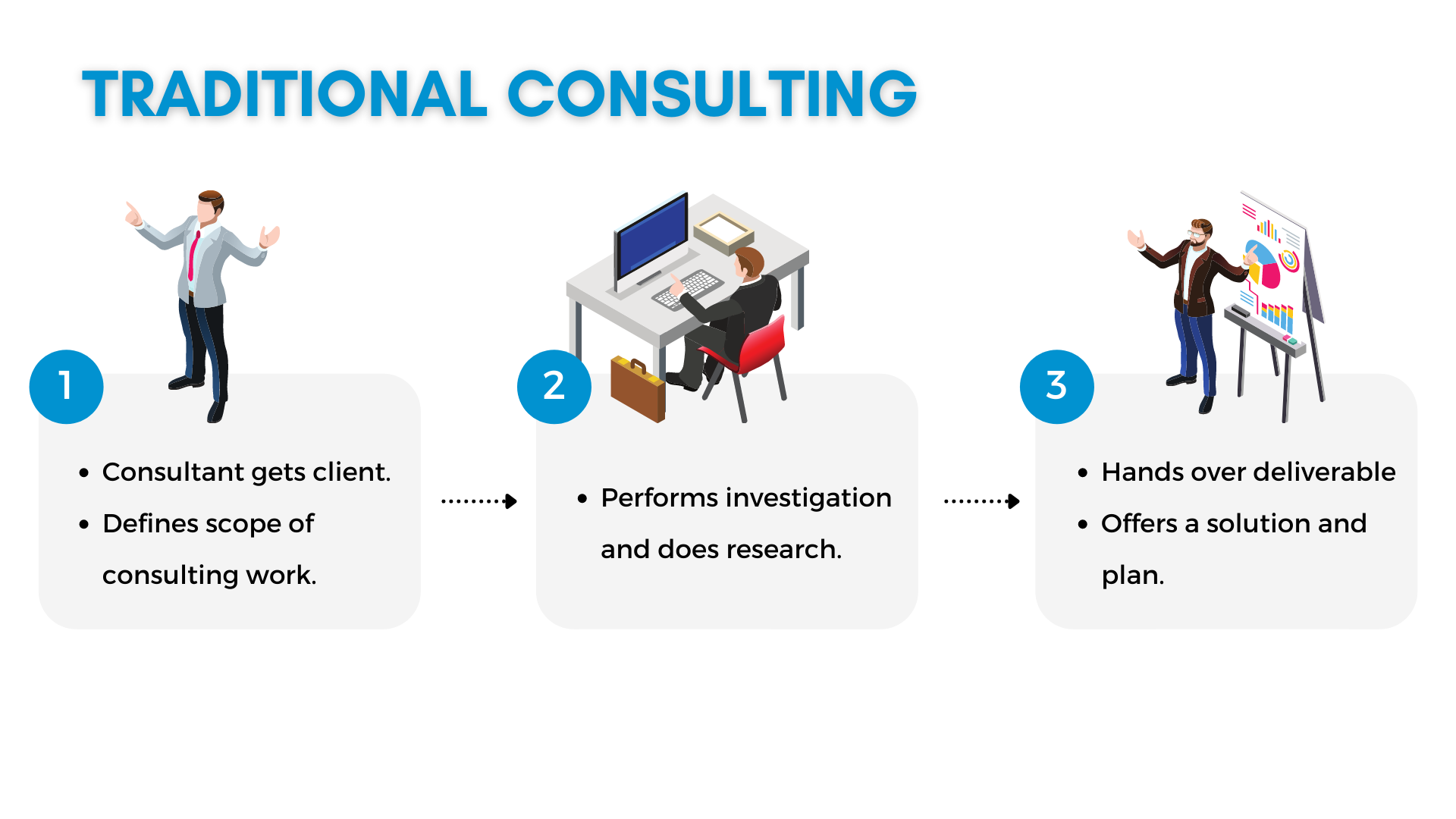
To scale your consulting business beyond simple unstructured advice, create repeatable delivery systems. Systematizing your framework improves delivery speed and ensures clients experience consistent results.
The Consulting Lifecycle Framework
Phase 1: Discovery & Audit
Phase 2: Strategy Development
Phase 3: Execution & Support
Phase 4: Review & Offboarding
Discovery & Audit: Collect historical data, conduct staff interviews, review financial statements, and execute diagnostic benchmarking.
Strategy Development: Translate findings into an actionable, prioritized roadmap with clear Key Performance Indicators (KPIs). Present this plan to leadership for buy-in.
Execution & Support: Oversee process changes, train staff, configure software, or adjust workflows. Hold weekly or bi-weekly check-ins to monitor implementation progress.
Review & Offboarding: Compare ending metrics against baseline benchmarks. Deliver final documentation and discuss options for ongoing retainer support.
Professional Certifications
While a specific degree or credential is not always legally required to work as a small business consultant, industry-recognized credentials can help distinguish your practice in a competitive market:
- Certified Management Consultant (CMC®): Offered by the Institute of Management Consultants USA (IMC USA), this designation requires verified experience, client reviews, and an examination of consulting ethics and execution.
- Project Management Professional (PMP®): Administered by the Project Management Institute, useful for consultants focused on complex operational implementations.
- Domain-Specific Credentials: Certified Public Accountant (CPA), Certified Financial Planner (CFP), or specialized software certifications (e.g., Salesforce, HubSpot, QuickBooks) depending on your niche focus.
Common Mistakes to Avoid as a New Consultant
Navigating the transition from an employee or executive to an independent consultant involves avoiding several common traps:
- Underpricing Services: Setting rates too low attracts high-friction clients and creates financial stress. Calculate your billing rate by factoring in non-billable overhead hours, self-employment taxes, health insurance, and administrative software costs.
- Allowing Scope Creep: Doing unbilled work outside the original Statement of Work erodes profitability. Always address extra work requests with formal change orders that adjust fees and timelines accordingly.
- Neglecting Pipeline Generation: Many new consultants stop marketing while working on active client engagements, leading to income drops once the project ends. Dedicate time each week to outreach and sales, regardless of your current client load.
- Failing to Track Baseline Data: If you do not record a client's starting metrics before implementing changes, demonstrating your impact becomes difficult later. Record clear baselines during the onboarding phase.
Recommended Next Actions
- Select Your Niche: Write down the three specific business problems you are best equipped to solve based on your background.
- Form Your Business Structure: Select an appropriate business entity (e.g., LLC) and secure professional liability insurance.
- Build Your Service Menu: Outline one diagnostic audit offering and one comprehensive implementation package, complete with transparent pricing structures.
- Launch Outbound Outreach: Connect with your immediate professional network, introduce your practice, and request warm introductions to business owners who need operational or financial guidance.
Frequently Asked Questions
Do I need a license to work as a small business consultant?
Generally, no specialized national license is required simply to offer general business advice. However, if your consulting services touch regulated fields—such as legal counsel, certified accounting, tax filing, or selling securities—you must hold the appropriate state or national professional licenses. Always check local city or state business licensing rules before accepting paid clients.
How much do small business consultants charge per hour?
Hourly rates for small business consultants vary widely based on location, industry, and specialized skill levels. Independent business consultants typically charge between $75 and $300 per hour. Specialized financial, cybersecurity, or enterprise strategy consultants can command rates over $500 per hour.
How do I win my first consulting client with no portfolio?
Leverage your existing network. Inform former colleagues, managers, and vendors that you have launched an independent consulting practice. Offer to conduct a deeply discounted or zero-cost business diagnostic audit for two local business owners in exchange for detailed testimonials and case studies if your work yields quantifiable results.
What software tools do small business consultants need?
An effective tech stack includes a CRM system (e.g., HubSpot, Zoho) to track prospects, proposal and e-signature tools (e.g., PandaDoc, DocuSign), accounting software (e.g., QuickBooks Online, Xero), project management platforms (e.g., Asana, ClickUp), and scheduling applications (e.g., Calendly).
Image Gallery