Best Plantar Fasciitis Shoes for Running: Biomechanics, Features, and Selection Guide
Selecting the right running shoes for plantar fasciitis requires balancing shock absorption, structural support, and appropriate drop geometry to reduce strain on the plantar fascia. The ideal shoe features a firm heel counter, targete...
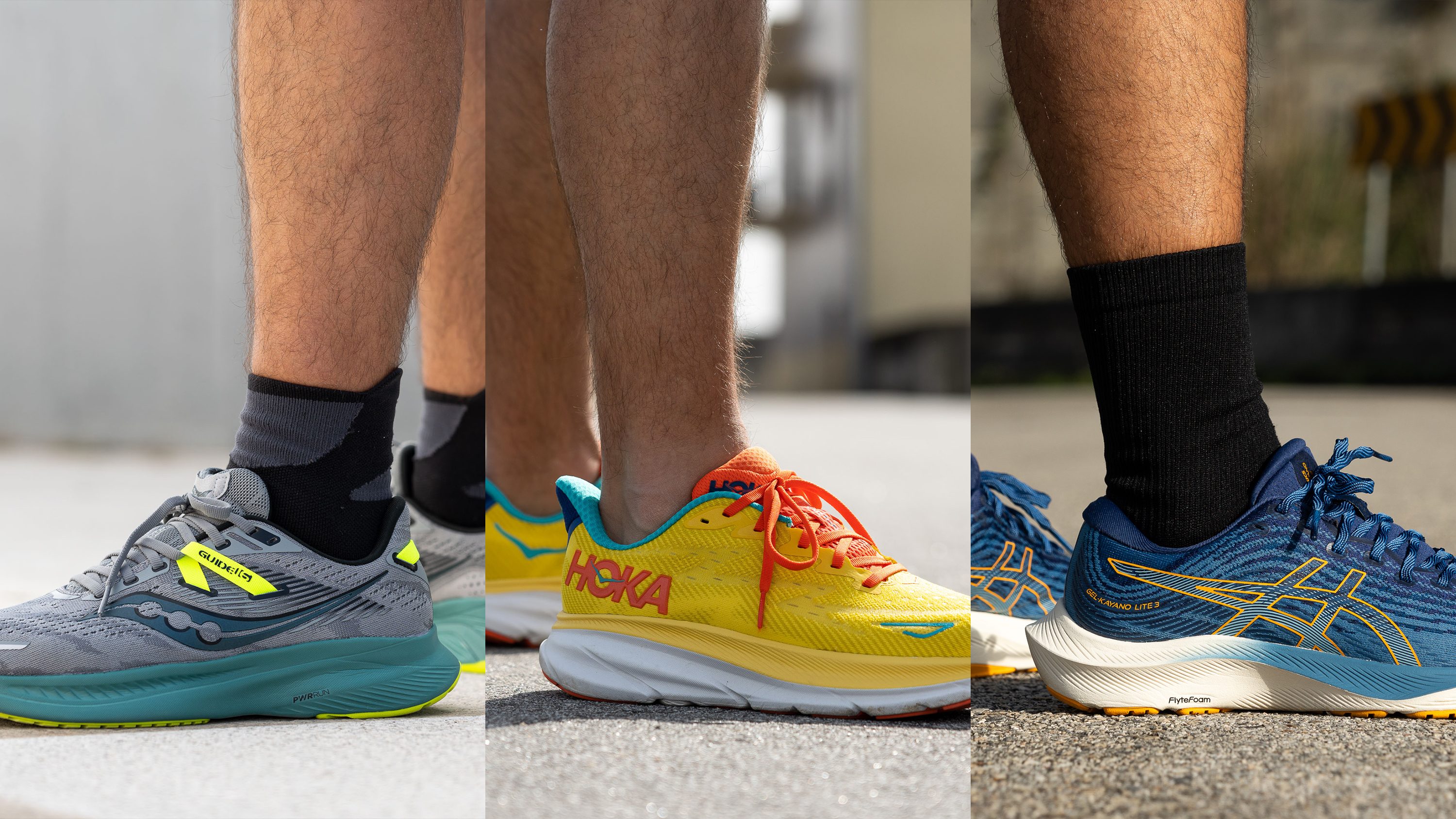
Selecting the right running shoes for plantar fasciitis requires balancing shock absorption, structural support, and appropriate drop geometry to reduce strain on the plantar fascia. The ideal shoe features a firm heel counter, targeted arch support, a cushioned yet resilient midsole, and a moderate-to-high heel-to-toe drop (typically 8 to 12 millimeters).
Contents
Medical Disclaimer: This guide provides technical analysis and educational information regarding footwear biomechanics. It does not constitute medical advice, diagnosis, or treatment. Runners experiencing acute or chronic foot pain should consult a podiatrist, physical therapist, or sports medicine professional.
Biomechanics of Plantar Fasciitis in Runners
The plantar fascia is a thick, fibrous band of connective tissue that originates at the medial process of the calcaneal tuberosity (heel bone) and extends forward across the sole of the foot to insert into the base of the proximal phalanges (toes). It plays a vital role in maintaining the structural integrity of the medial longitudinal arch and transmitting propulsion forces during gait.
During running, ground reaction forces reach two to three times a runner's body weight. Each foot strike subjects the plantar fascia to high repetitive stress. The strain on this structure increases dramatically through the windlass mechanism—a mechanical process where extension of the big toe (dorsiflexion at the metatarsophalangeal joint) winds the plantar fascia around the head of the first metatarsal. This winding action shortens the distance between the calcaneus and the toes, elevating the arch and transforming the foot into a rigid lever for propulsion during toe-off.
- Calcaneus (Heel Strike)
- Tensile Strain
- Metatarsal Heads (Toe-off)
Plantar fasciitis develops when repetitive micro-tearing occurs near the calcaneal insertion point, leading to collagen breakdown, localized inflammation, and micro-degeneration of the fascia tissue. Key biomechanical drivers include:
- Overpronation: Excessive inward rolling of the foot after heel contact forces the arch to flatten prematurely, excessively stretching the plantar fascia.
- High Arches (Pes Cavus): Rigid, high-arched feet lack natural shock-absorption capacity, transmitting elevated peak impact stresses directly into the heel attachment point.
- Tight Achilles-Calf Complex: Gastrocnemius and soleus tightness limits ankle dorsiflexion. To compensate, the midfoot unlocks during stance phase, placing excessive tension on the plantar fascia.
Choosing running shoes engineered to control excessive foot motion, absorb peak impact energy, and modify foot leverage directly mitigates these biomechanical strain factors.
Essential Features of Plantar Fasciitis Running Shoes
Not all cushioned running shoes provide adequate protection against plantar fascia strain. Evaluating running footwear for micro-tearing prevention requires looking at specific design parameters.
1. Heel-to-Toe Drop (8 mm to 12 mm)
The heel-to-toe drop (or offset) measures the difference between the midsole stack height at the heel and the forefoot.
- High Drop (8–12 mm): Elevates the heel relative to the forefoot, shortening the posterior muscle-tendon chain (Achilles tendon and calf complex). This elevation directly reduces tensile pull on the calcaneal insertion of the plantar fascia during foot strike and midstance.
- Low Drop (0–4 mm): Requires full elongation of the Achilles tendon and calves, increasing the structural tension across the plantar surface. Runners suffering from active plantar fasciitis should generally avoid zero-drop or minimalist footwear until symptoms fully resolve.
2. Firm, Deep Heel Counter
The heel counter is the semi-rigid plastic or composite structure surrounding the back of the heel. A cup-shaped, rigid heel counter prevents excessive lateral movement of the calcaneus upon landing. By holding the heel's protective fat pad directly beneath the calcaneus, a firm heel counter maintains natural tissue cushioning and prevents heel displacement that exacerbates tissue tearing.
3. Torsional Rigidity and Shank Support
A shoe designed to protect the plantar fascia must resist twisting across the midfoot. Torsional rigidity prevents the longitudinal arch from collapsing when loaded under dynamic running forces. High-quality shoes incorporate internal midfoot shanks or molded foam medial structures that allow smooth flexibility at the forefoot (metatarsal heads) while maintaining a rigid midfoot platform.
4. Midsole Foam Durometer and Energy Return
Midsole foam must balance shock absorption with energy return. Ultra-soft, pillowy foams without structural reinforcement can cause instability, causing the foot to sink into deep pronation and stretching the plantar fascia. Ideal midsoles utilize dual-density EVA (ethylene-vinyl acetate), TPU (thermoplastic polyurethane), or supercritical PEBA (polyether block amide) foams that cushion impact forces without destabilizing the foot.
5. Forefoot Rocker Geometry
A subtle forefoot rocker (curved sole design at the front of the shoe) facilitates a smooth roll-through from midstance to push-off. By reducing the angle of toe dorsiflexion required during toe-off, a rocker sole lessens the mechanical tension created by the windlass mechanism.
Matching Shoe Types to Your Foot Biomechanics
Foot structure dictates which running shoe category will provide optimal relief and strain reduction.
- Foot Biomechanics & Gait Type
- Overpronation
- Low/Flat Arch
- Stability / Motion (Medial posts, Guide Rails)
- Low/Flat Arch
- Neutral / Supination
- High/Normal Arch
- Neutral / Maximalist (Shock absorption, Rockers)
- High/Normal Arch
- Overpronation
Overpronation and Low Arches
Runners with flat or hyper-flexible arches experience excessive inward foot rolling (pronation). This movement stretches the plantar fascia with every foot strike.
- Recommended Category: Stability Shoes or Motion-Control Shoes.
- Key Design Features: Medial posts (denser foam along the inner edge of the midsole), rigid arch bridge, integrated guide rails, and high torsional stiffness.
Neutral Mechanics and Normal Arches
Runners with standard arch height and neutral foot tracking require balanced cushioning with structured heel retention.
- Recommended Category: Structured Neutral Shoes.
- Key Design Features: Moderate-to-high stack heights, firm heel counters, uniform midsole density, and an 8–10 mm drop.
High Arches (Pes Cavus) and Supination
High-arched feet are naturally rigid and poor at dissipating impact shock, concentrating force directly on the heel and ball of the foot.
- Recommended Category: Maximalist Neutral Cushioned Shoes.
- Key Design Features: Deep plush midsoles, anatomically contoured footbeds to maximize ground contact surface area, and forefoot rocker soles to compensate for limited midfoot flexibility.
Comparison of Shoe Categories for Plantar Fasciitis Management
The table below outlines technical characteristics across running shoe categories to help match footwear specifications to biomechanical needs.
| Category | Primary Biomechanical Purpose | Recommended Drop | Torsional Rigidity | Ideal Runner Profile | Key Architectural Features |
|---|---|---|---|---|---|
| Stability Shoes | Controls excessive inward foot rotation (overpronation) | 8 mm – 12 mm | High | Low arches, overpronators, severe heel-strike runners | Medial stability posts, firm heel counters, wide midfoot base |
| Maximalist Neutral Shoes | Absorbs high peak impact forces; reduces forefoot flexion | 6 mm – 10 mm | Moderate | High arches, supinators, runners seeking maximum dampening | Thick foam stack heights, integrated forefoot rocker geometry |
| Structured Cushioning Shoes | Combines uniform impact dampening with subtle midfoot guidance | 8 mm – 12 mm | Moderate to High | Neutral runners with fatigue-induced pronation | Dual-density foam, deep calcaneal heel cup, breathable structured upper |
| Motion-Control Shoes | Maximum resistance against extreme foot collapse and arch flattening | 10 mm – 12 mm | Very High | Severe overpronators, heavy runners requiring rigid support | Polyurethane midfoot shanks, reinforced medial posts, ultra-rigid heel counter |
Integrating Insoles and Orthotics
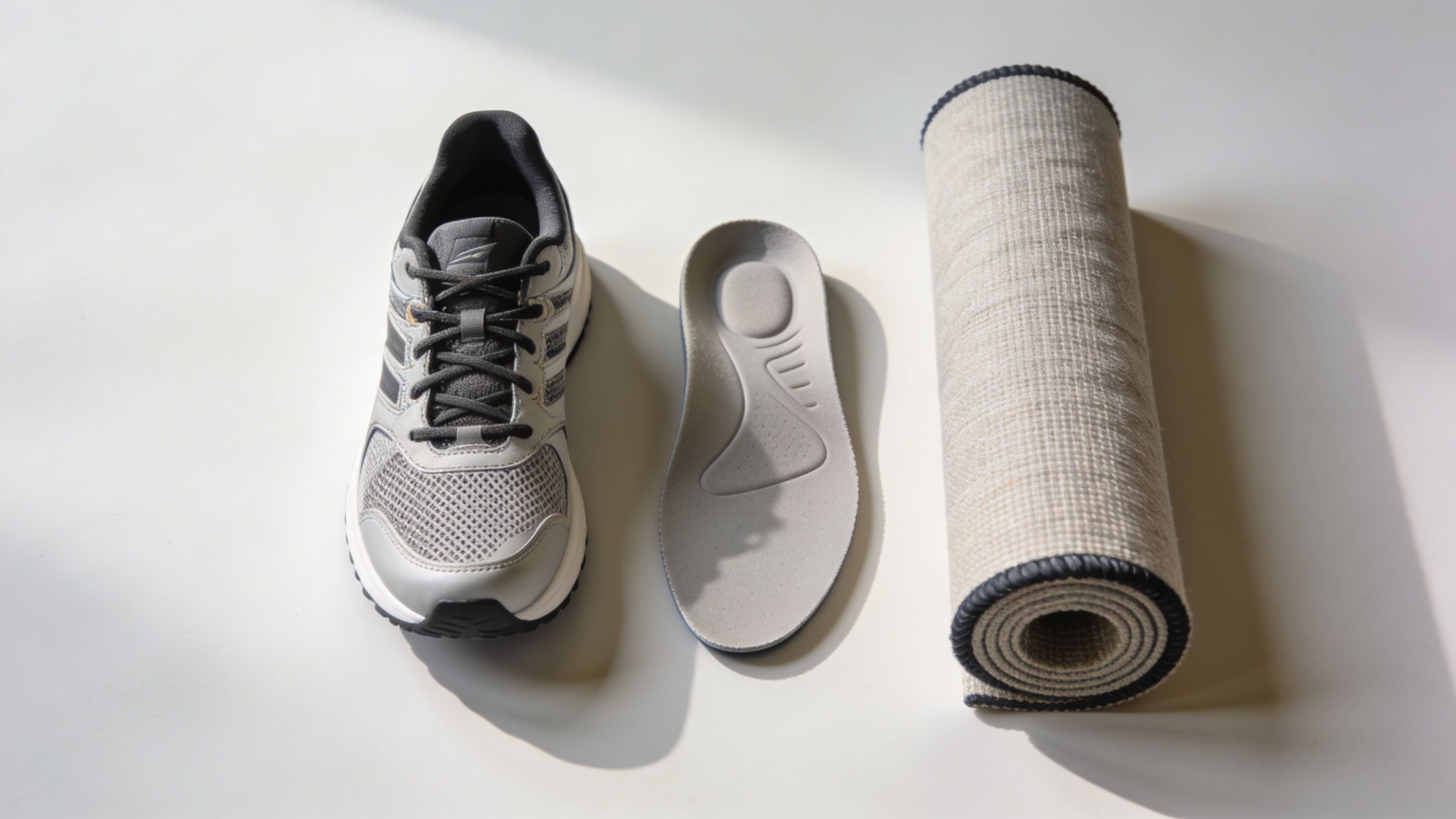
In many cases, the stock insole (sockliner) supplied with running shoes provides minimal structural arch support. Replacing the removable factory footbed with specialized orthotics can optimize load distribution across the plantar surface.
Over-the-Counter (OTC) Orthotics vs. Custom Podiatric Orthotics
- OTC Orthotics: Pre-molded inserts with rigid or semi-rigid arch bridges and deep heel cups. Effective for mild to moderate arch flattening and general impact dampening. Look for models with solid plastic arch plates rather than soft foam inserts.
- Custom Orthotics: Fabricated by a podiatrist using 3D foot scans or plaster casts. Recommended for severe structural deformities, recalcitrant plantar fasciitis, severe limb-length discrepancies, or complex rearfoot gait deviations.
Fitting Considerations for Running Shoes
When using secondary insoles or orthotics, ensure your running shoes meet specific volume requirements:
- Removable Sockliner: Confirm the shoe features a removable factory footbed. Placing orthotics over top of existing sockliners reduces interior volume and pushes the foot too high in the shoe.
- Upper Volume and Depth: Orthotics raise the midfoot position inside the upper cavity. Choose shoes with deep heel collars and flexible uppers to prevent top-of-foot pressure (dorsal nerve compression) and heel slipping.
- Toe Box Width: Ensure the orthotic does not crowd the forefoot, which can cause toe overlapping or blister formation.
Common Mistakes When Choosing Footwear for Heel Pain
Avoiding common selection errors prevents further aggravation of the plantar fascia during training:
- Transitioning Quickly to Minimalist or Zero-Drop Shoes: Moving from a traditional running shoe to a zero-drop platform places acute strain on the Achilles tendon and plantar fascia. If zero-drop shoes are desired, transition gradually over several months through specific physical therapy exercises.
- Selecting Soft Shoes Without Midfoot Support: Ultra-plush midsoles without internal shanks or guide rails allow the midfoot to collapse into excessive pronation, straining the plantar fascia despite initial comfort.
- Running Beyond Shoe Lifespan: Most running shoes lose structural integrity after 300 to 500 miles (480–800 km). As foam dampening degrades and midfoot shanks soften, impact stresses shift directly into the foot's connective tissues.
- Ignoring Overall Shoe Width: Narrow shoes squeeze the metatarsals together, restricting natural forefoot splay and altering ground pressure distribution, which exacerbates heel pain.
Safe Return-to-Running Protocol with Plantar Fasciitis
Introducing footwear changes should be paired with a structured strategy to safely resume running while managing plantar fascia load:
Active Symptoms / Rest
Walk-Run Transitions (Alternate 1 min run / 1 min walk in new shoes)
Surface & Distance Adjustment (Low-impact surfaces: smooth trails, tracks)
Load Management & Recovery (Calf/Fascia eccentric load work, foot strength)
Gradual Shoe Break-in: Wear new running shoes for daily walking activities for 3–5 days before attempting a running workout to allow foot adaptation.
Use a Walk-Run Program: Begin with alternating intervals (e.g., 1 minute of easy running, 1 minute of walking) on soft, level surfaces such as smooth dirt trails or synthetic tracks. Avoid hard concrete and cambered road surfaces.
Manage Training Load: Limit weekly mileage increases to no more than 10%. Avoid hill workouts and speed training initially, as both increase forefoot dorsiflexion and peak strain under the windlass mechanism.
Incorporate Auxiliary Rehabilitation: Combine supportive footwear with daily eccentric calf stretches, plantaris and soleus foam rolling, hallux strengthening exercises, and plantar fascia ice rolling post-run.
Frequently Asked Questions
Should running shoes for plantar fasciitis have a high or low heel-to-toe drop?
Runners dealing with active plantar fasciitis generally benefit from a moderate-to-high heel-to-toe drop (8 mm to 12 mm). This elevation reduces tension across the calf-Achilles complex, decreasing tensile pull on the calcaneal attachment point of the plantar fascia during heel strike and midstance.
Can maximalist, soft running shoes cure plantar fasciitis?
Maximalist shoes with thick cushioning provide ground reaction force dampening, but cushioning alone does not address the root biomechanical cause. Without sufficient midfoot rigidity, arch support, and heel counter stability, soft foam can lead to foot instability that aggravates plantar fascia micro-tears.
How often should runners with plantar fasciitis replace their shoes?
Runners with a history of plantar fasciitis should replace running footwear every 300 to 500 miles (480 to 800 kilometers), or sooner if structural degradation occurs. When midsole foam compresses permanently or heel counters become pliable, shock absorption drops significantly, increasing foot strain.
Do I need custom orthotics if I buy a stability running shoe?
Not always. Quality stability running shoes feature integrated arch bridges and medial posts that provide sufficient motion control for mild-to-moderate overpronators. However, runners with severe anatomical abnormalities, rigid flat feet, or persistent heel pain may require custom orthotics paired with deep neutral running shoes.
Is it safe to run through active plantar fasciitis pain?
Running through severe, sharp, or worsening heel pain is not recommended, as it risks transforming localized tissue tearing into chronic plantar fasciosis or a partial fascia tear. Mild discomfort (rated 2 or 3 out of 10) that does not worsen during or after the run may be manageable, but severe morning heel pain warrants training reduction and medical evaluation.
Recommended Next Steps
To successfully manage running performance while protecting against plantar fasciitis:
- Get a Formal Gait Analysis: Visit a specialty running store or sports podiatrist to measure arch height, assess rearfoot alignment, and evaluate pronation velocity on a treadmill.
- Prioritize Structure Over Softness: Look for shoes with a firm heel counter, high torsional rigidity across the midfoot, a moderate-to-high heel drop (8–12 mm), and a forefoot rocker.
- Audit Shoe Lifespan: Track mileage on all active running shoes, retiring pairs that show uneven tread wear or compressed, creased midsole foam.
- Combine Footwear with Rehabilitation: Pair proper footwear selection with targeted strength training for the intrinsic foot muscles, calf stretching routines, and professional medical guidance if pain persists.
Image Gallery