How to Exchange Monero to Bitcoin Safely
To exchange Monero (XMR) to Bitcoin (BTC) safely in 2026, use non-custodial platforms or decentralized atomic swaps to eliminate middleman risk. Prioritize services that do not require KYC (Know Your Customer) and utilize privacy-prese...
To exchange Monero (XMR) to Bitcoin (BTC) safely in 2026, use non-custodial platforms or decentralized atomic swaps to eliminate middleman risk. Prioritize services that do not require KYC (Know Your Customer) and utilize privacy-preserving tools like Tor or a VPN to mask your IP address during the transaction.
Contents
Exchanging Monero for Bitcoin presents a unique challenge: you are moving from one of the most private digital assets in existence to a transparent public ledger. In 2026, as blockchain analysis tools have become increasingly sophisticated, the "safety" of an exchange is no longer just about avoiding theft; it is about preventing the de-anonymization of your financial history. This guide explores the technical requirements, step-by-step procedures, and security protocols necessary to execute this swap without compromising your identity or your funds.
Understanding the Risks of XMR to BTC Swaps
Before initiating an exchange, it is vital to understand why a standard centralized exchange (CEX) might not be the safest choice for Monero users. Monero uses technologies like Ring Signatures, Stealth Addresses, and RingCT to hide the sender, receiver, and amount. Bitcoin, conversely, uses a UTXO (Unspent Transaction Output) model where every satoshi can be traced back to its minting.
The primary risks include:
- Counterparty Risk: The risk that a centralized platform freezes your funds due to "suspicious activity" or internal insolvency.
- Privacy Leaks: If you send XMR from a private wallet to a KYC-enabled exchange and then withdraw BTC to a personal wallet, that BTC is now forever linked to your real-world identity.
- Tainted Bitcoin: Receiving Bitcoin that was previously used in illicit activities can result in your destination wallet being "blacklisted" by major services or regulated platforms.
To mitigate these, savvy users in 2026 rely on non-custodial solutions where the user retains control of their private keys throughout the process or uses trustless smart contracts.
Method 1: Non-Custodial Instant Exchanges
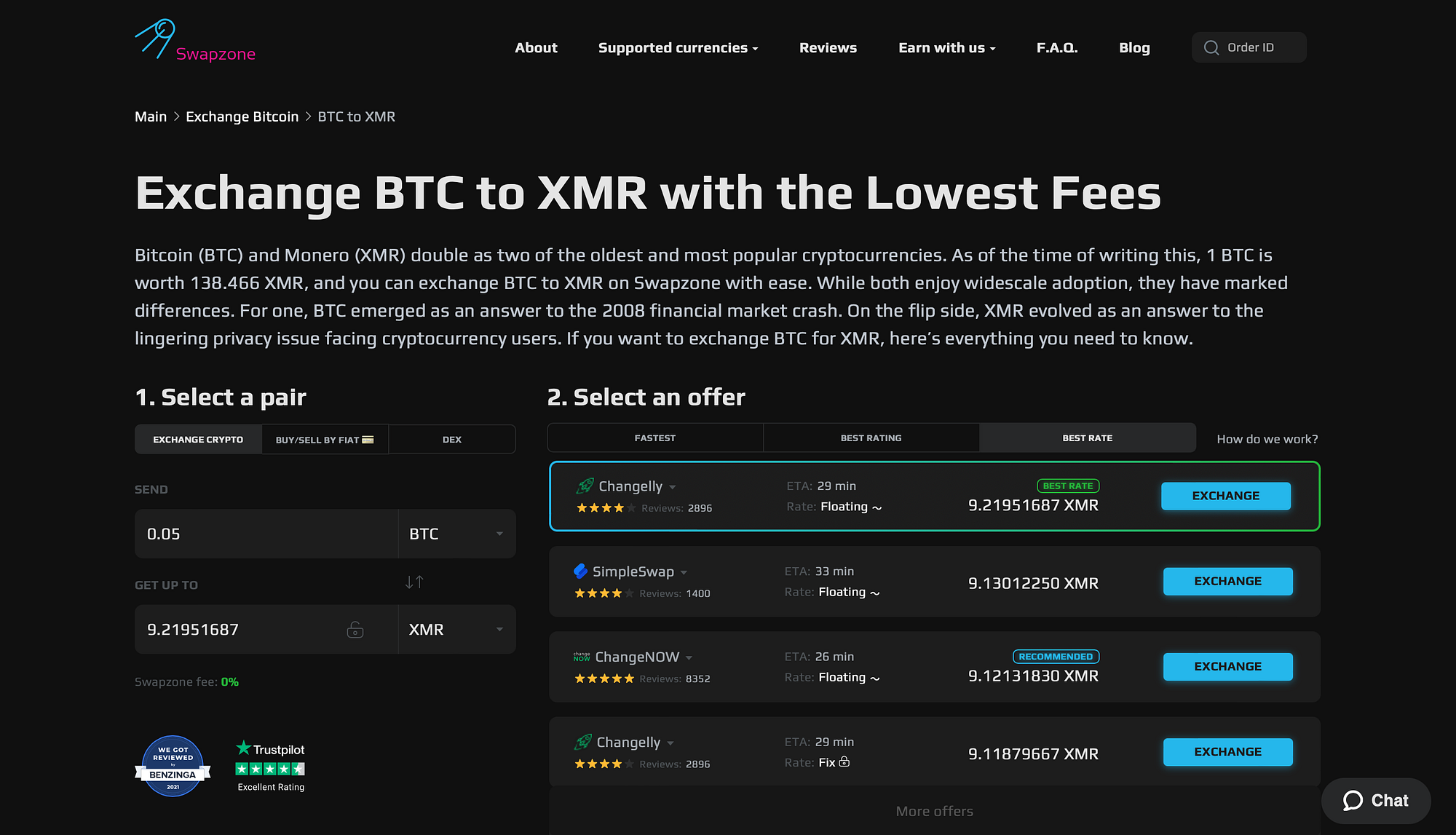
Instant exchanges are services that allow users to swap one cryptocurrency for another without creating an account. In 2026, these services remain popular because they act as a buffer. They receive your Monero and send Bitcoin from their internal liquidity pools to your designated address.
Prerequisites for Instant Swaps
- A Monero Wallet: Use an official or trusted wallet like GUI/CLI Monero or Cake Wallet.
- A Bitcoin Wallet: Use a wallet that supports SegWit addresses for lower fees, such as Electrum or Sparrow.
- Network Privacy: Always access these sites via the Tor Browser or a reputable VPN to ensure the exchange cannot log your IP address and link it to your Bitcoin address.
Step-by-Step Process
- Step 1: Select a Reputable Aggregator. Use an aggregator like Trocador or OrangeFren. These platforms compare rates across multiple non-custodial exchanges (like ChangeNOW or FixedFloat) and filter for those that do not require KYC for the specific pair.
- Step 2: Enter Transaction Details. Input the amount of XMR you wish to spend and provide your BTC destination address. Double-check every character of the Bitcoin address; Bitcoin transactions are irreversible.
- Step 3: Establish a Refund Address. Always provide a Monero subaddress for refunds. If the exchange fails or the rate fluctuates beyond a set limit, the service needs a place to return your XMR.
- Step 4: Execute the Send. The exchange will provide a one-time Monero deposit address. Send the exact amount of XMR from your wallet.
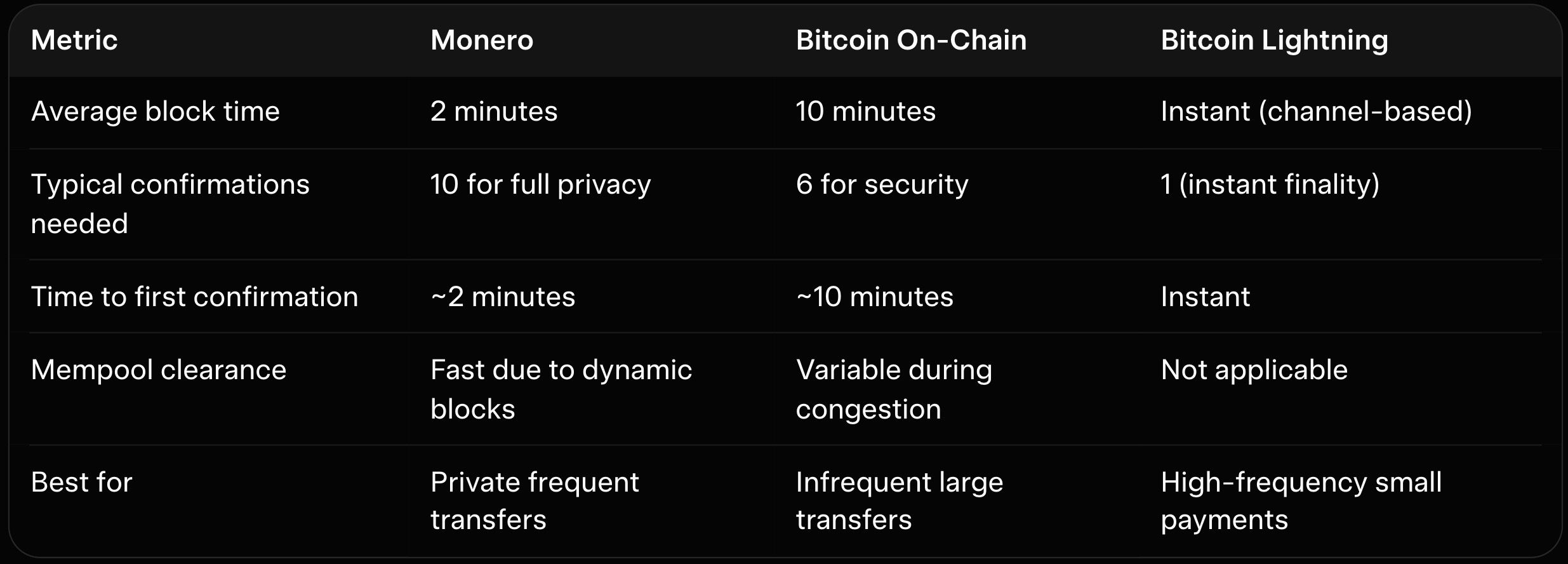
- Step 5: Verification. Wait for the Monero network to confirm the transaction (usually 10 confirmations or ~20 minutes). The service will then broadcast the BTC transaction to the Bitcoin network.
Method 2: Atomic Swaps (The Gold Standard)
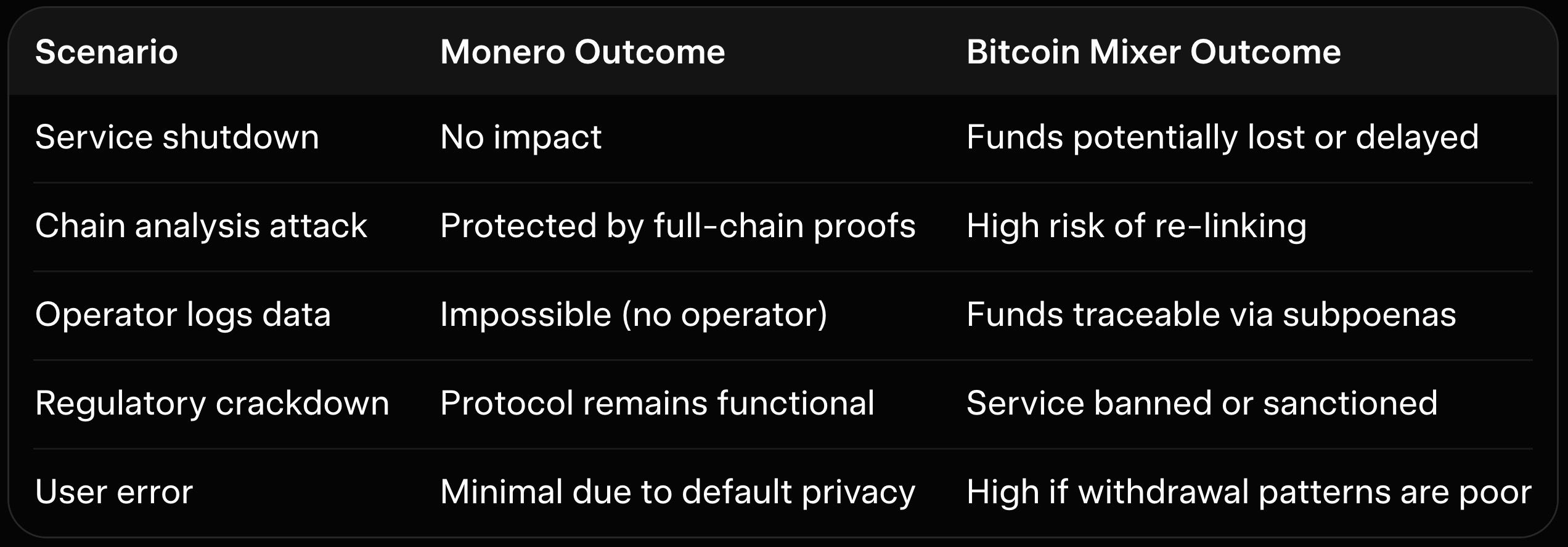
In 2026, Atomic Swaps represent the pinnacle of safety for exchanging XMR to BTC. An atomic swap is a peer-to-peer exchange executed via a Hashed Timelock Contract (HTLC). It is "atomic" because either the entire transaction happens, or nothing happens—there is no scenario where one party can steal funds from the other.
Why Atomic Swaps are Safer
Unlike instant exchanges, there is no company or middleman. You are trading directly with another individual’s wallet. If the other party disappears mid-transaction, your funds are automatically returned to you after a set time-lock expires. This eliminates the risk of an exchange "holding your funds hostage" for identity verification.
How to Perform an Atomic Swap
Currently, tools like UnstoppableSwap or the Samourai/ASMR protocols are the primary interfaces for this.
- Download the Swap Tool: Most atomic swap tools are standalone binaries or integrated into privacy-focused wallets.
- Find a Provider: The tool will scan a decentralized marketplace for "Makers" (liquidity providers) offering BTC in exchange for XMR.
- Lock the XMR: You will initiate the swap by locking your XMR into a script on the Monero blockchain.
- Wait for BTC Locking: The provider will see your lock and lock a corresponding amount of BTC on the Bitcoin blockchain.
- Redeem: Your software will automatically exchange the "secrets" required to unlock the BTC for you and the XMR for the provider.
Method 3: P2P Marketplaces (Haveno)
With the closure of older platforms like LocalMonero in 2024, the Monero community transitioned to Haveno. Haveno is a decentralized, peer-to-peer exchange built on the Monero network using Tor by default.
To use Haveno safely:
- Security Deposit: Both the buyer and seller must lock a small amount of XMR into a multisig escrow. This ensures both parties act honestly.
- Dispute Resolution: In the event of a conflict, a decentralized arbiter reviews the cryptographic evidence to release funds.
- Anonymity: Because Haveno runs on its own specialized network, there is no central server that can be seized or subpoenaed to reveal trade histories.
Comparison of Exchange Methods (2026)
| Feature | Instant Exchanges | Atomic Swaps | P2P (Haveno) | Centralized (CEX) |
|---|---|---|---|---|
| Counterparty Risk | Moderate | Zero (Math-based) | Low (Escrowed) | High |
| KYC Required | Sometimes (Triggered) | Never | Never | Mandatory |
| Privacy | High | Maximum | High | Minimal |
| Speed | 15–30 Minutes | 1–3 Hours | Variable | Instant (Post-KYC) |
| Technical Ease | Very High | Moderate | Moderate | High |
Technical Best Practices for Safety
Regardless of the method chosen, certain technical standards must be met to ensure the safety of your assets and identity.
Use Monero Subaddresses
Never use your "Primary Address" (starting with a 4) for exchanges. Instead, generate a Subaddress (starting with an 8) in your Monero wallet. Subaddresses prevent different services from realizing that the same wallet is being used across multiple transactions.
Monitor Blockchain Taint
When receiving Bitcoin, be aware that the UTXOs you receive have a history. If you intend to eventually move that Bitcoin to a regulated exchange (like Coinbase or Kraken) to cash out to fiat, those exchanges may flag the BTC if it originated from a "high-risk" source. To counter this, many users perform a CoinJoin using tools like Sparrow Wallet after the swap to break the deterministic link to the exchange.
Verification of Software
Always verify the GPG signatures of any swap software or wallet you download. In the cryptocurrency space, phishing and malicious "clones" of popular software are common. By verifying the developer's signature, you ensure the code has not been tampered with to steal your private keys.
Common Mistakes to Avoid
- Sending to a CEX Directly: Never swap XMR directly to a Bitcoin deposit address owned by a centralized exchange. If the exchange detects the swap came from a non-custodial bridge, they may freeze the account and demand proof of funds for the original Monero, which is nearly impossible to provide due to Monero's privacy.
- Ignoring Network Fees: Bitcoin network congestion can lead to high transaction fees. If you are swapping a small amount of Monero, the BTC mining fee might consume a significant percentage of your trade. Check current mempool status before confirming.
- Not Saving the Order ID: When using instant exchanges, always save the "Order ID" or "URL." If the transaction gets stuck, you will need this identifier to communicate with the service's support team.
Frequently Asked Questions
Is it legal to exchange Monero for Bitcoin?
In most jurisdictions, exchanging one cryptocurrency for another is legal, though it may be a taxable event. However, specific regulations like the EU's MiCA or US Treasury guidelines have placed stricter reporting requirements on "Virtual Asset Service Providers" (VASPs). Always consult with a local tax professional regarding your reporting obligations in 2026.
Why do some exchanges suddenly ask for KYC?
Non-custodial exchanges often use automated risk-scoring systems. If your XMR is linked by a third-party analytics firm to a known hack or "high-risk" entity, the exchange may trigger a "KYC Hold." Using atomic swaps is the only way to completely avoid this possibility.
How long does a safe exchange take?
A safe exchange typically takes between 20 minutes and 2 hours. This time is required for the Monero network to provide enough "confirmations" (usually 10) to ensure the transaction cannot be reversed (reorganized) by miners.
Can I swap Monero to Bitcoin without any fees?
No. You will always incur at least two types of fees: the Monero network mining fee (very low) and the Bitcoin network mining fee (variable). Additionally, most exchange services charge a "spread" or a flat percentage fee ranging from 0.5% to 3% to facilitate the swap.
What is the safest wallet for this process?
For Monero, the official GUI Wallet or Cake Wallet are highly recommended. For Bitcoin, Sparrow Wallet is preferred by privacy-conscious users due to its robust coin control and built-in privacy tools.
Final Recommendation
For most users, using a non-custodial aggregator like Trocador while connected via Tor provides the best balance of speed and safety. However, for those moving significant amounts of capital or those who prioritize absolute censorship resistance, learning to use Monero-Bitcoin Atomic Swaps is the most secure path in 2026. Always perform a small "test trade" before moving large sums to ensure your wallet configuration and the chosen service are functioning correctly.
Image Gallery