How Burial Life Insurance Plans Affect Funeral Budgeting
Burial life insurance plans directly impact funeral budgeting by providing dedicated, predetermined funds that ease out-of-pocket expenses for surviving family members, directly altering how individuals calculate, structure, and save f...
Burial life insurance plans directly impact funeral budgeting by providing dedicated, predetermined funds that ease out-of-pocket expenses for surviving family members, directly altering how individuals calculate, structure, and save for end-of-pocket final expenses.
Contents
Planning for end-of-life expenses is an intricate process that combines emotional decision-making with rigid financial realities. When an individual purchases a burial life insurance plan, commonly referred to as final expense insurance or funeral insurance, the foundational dynamics of their broader estate and funeral budget change significantly. Rather than relying entirely on personal savings, liquid cash reserves, or forcing family members to shoulder unexpected costs, a burial life insurance policy establishes a ring-fenced financial instrument dedicated exclusively to memorial, burial, and related administrative expenses. Understanding the mechanics of these policies allows consumers to refine their funeral budgeting strategies, prevent over-insuring, and avoid common financial pitfalls that can undermine both insurance utility and budgetary integrity.
The Financial Mechanics of Burial Life Insurance
Burial life insurance is a specialized form of permanent whole life insurance designed specifically to cover end-of-life costs. Unlike term life insurance, which expires after a set number of years, burial insurance remains active for the insured's entire life, provided premiums are paid. These policies typically feature smaller face values—frequently ranging from $5,000 to $25,000—making them more accessible for older adults or individuals on fixed incomes who do not require substantial income-replacement coverage.
From a budgeting perspective, these policies introduce predictable, fixed monthly expenses that replace unpredictable, catastrophic future costs. Premium rates are generally locked in at the time of purchase, meaning the monthly cost remains static regardless of age or health deterioration later in life. This predictability allows budget planners to integrate insurance premiums directly into monthly household expenditures, treating final expense coverage much like a utility bill or homeowners insurance.
However, the intersection of insurance payouts and funeral budgeting requires careful mathematical alignment. If a policy is purchased without a clear understanding of regional funeral costs, the insured may either overspend on unnecessary monthly premiums or leave a significant funding gap that surviving relatives must cover out of pocket.
Integrating Insurance Payouts into Funeral Cost Estimates
Effective funeral budgeting requires a granular breakdown of anticipated end-of-life expenses. When a burial insurance policy is integrated into this equation, it serves as the primary asset offsetting these liabilities.
Funeral costs typically encompass several distinct categories:
- Professional Service Fees: Basic services fees charged by the funeral home for coordination, obtaining permits, and filing death certificates.
- Disposition Costs: Expenses related to traditional burial (casket, vault, opening and closing of the grave plot) or cremation (crematory fees, urn, memorial service).
- Ceremonial Events: Charges for viewing or visitation, facility rental, officiant fees, and transportation (hearse, limousine).
- ancillary Expenses: Floral arrangements, printed programs, obituary notices, and catering.
When a burial life insurance policy pays out upon the insured's death, the proceeds are typically distributed to a designated beneficiary as a lump sum, usually within days or weeks of filing the claim. Crucially, beneficiaries are legally under no obligation to spend the insurance proceeds on funeral expenses; the money can be used for any purpose, including medical bills, credit card debt, or general living expenses. Therefore, effective funeral budgeting requires clear communication between the policyholder and the beneficiary to ensure the intended funds are actually allocated to the funeral home and associated vendors.
Comparative Impact: Self-Insuring Versus Burial Life Insurance
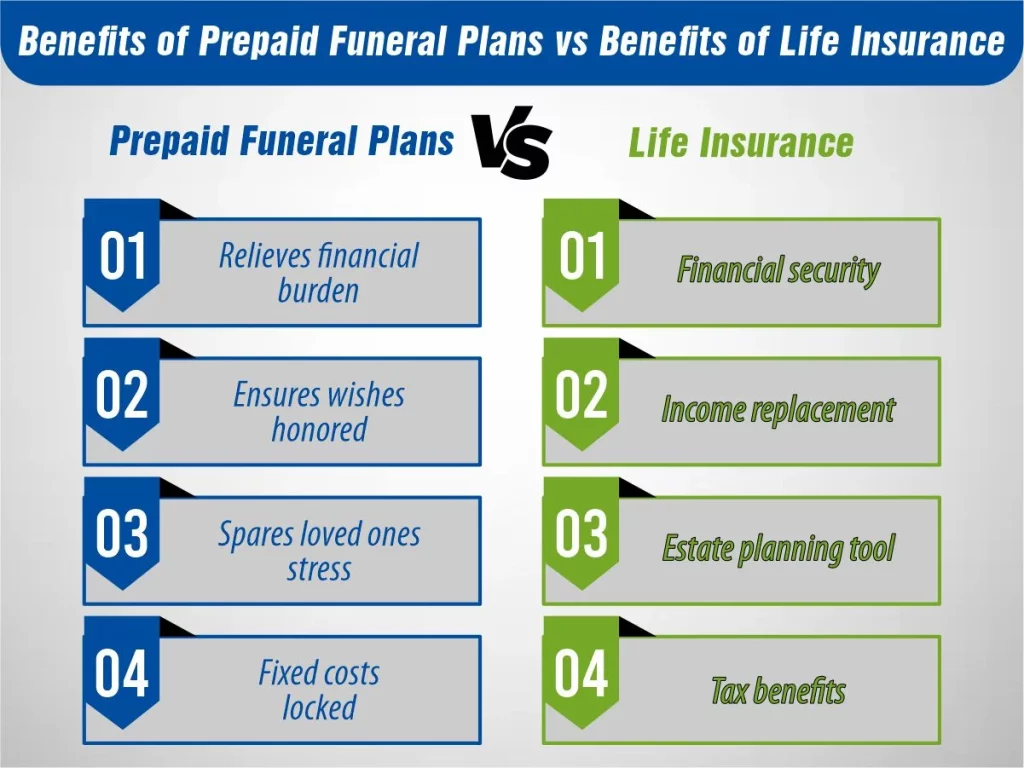
To understand how burial insurance alters financial planning, it is helpful to compare it against traditional self-insuring methods, such as building a dedicated savings account or relying on general estate liquidity.
| Funding Method | Cost Predictability | Access Speed | Financial Risk | Flexibility |
|---|---|---|---|---|
| Burial Life Insurance | High (Fixed premiums) | Fast (Days to weeks post-claim) | Lapsing if premiums stop; potential overpayment over time | Beneficiary discretion on fund usage |
| Dedicated Savings Account | Low (Vulnerable to inflation/emergencies) | Immediate upon death (subject to probate if unassigned) | Depletion via emergency withdrawals; slow accumulation | Complete control and flexibility |
| Traditional Whole Life | High (Fixed premiums) | Fast (Days to weeks post-claim) | Higher initial costs; subject to underwriting | High cash value accumulation potential |
| Pre-Need Funeral Plans | Fixed to specific provider | Tied to specific funeral home | Loss of portability if you relocate or home closes | Restricted strictly to pre-arranged services |
This comparison highlights that burial life insurance shifts the primary risk from a liquidity crisis (not having cash available immediately) to a cost-efficiency consideration (the total amount paid in premiums versus the face value payout). For households with limited liquid savings, insurance acts as an immediate wealth-transfer mechanism, bridging the gap that would otherwise require credit cards or crowdfunding.
Navigating Underwriting Types and Their Budgetary Ramifications
Burial life insurance policies are categorized by their underwriting requirements, which directly influence both monthly premium costs and the immediate reliability of the funeral budget.
Simplified Issue Policies
Simplified issue insurance requires no medical exam, but applicants must answer a brief series of health-related questions on the application. If the applicant has manageable health conditions, approval is usually granted quickly. Because there is no exam, insurers price these policies slightly higher than fully underwritten traditional policies, which must be accounted for in the monthly budget.
Guaranteed Issue Policies
Guaranteed issue policies require neither a medical exam nor health questions. Anyone within the eligible age range—typically ages 50 to 80 or 85, depending on the carrier—is accepted. While this ensures that individuals with severe health complications can secure coverage, it introduces a significant budgeting caveat: the graded death benefit.
Under a guaranteed issue policy, if the insured dies from natural causes within the first two or three years of the policy, the insurer typically does not pay the full face value. Instead, they refund all paid premiums plus a small interest percentage (usually 10%). For funeral budgeting, this means relying on a guaranteed issue policy during the initial years of the policy leaves the family exposed to funding shortfalls if death occurs prematurely. Planners must maintain secondary emergency savings during this graded period.
Avoiding Common Budgetary Pitfalls
When incorporating burial insurance into an end-of-life plan, several missteps can compromise financial efficiency:
- Failing to Account for Inflation: Funeral costs historically rise alongside general inflation. A $10,000 policy purchased at age 50 may possess significantly lower purchasing power by the time it is utilized decades later. Budget planners should review policy face values periodically or consider inflation riders if available.
- Purchasing Excessive Coverage: Over-insurance leads to unnecessarily high monthly premiums that strain fixed retirement incomes. Matching the policy face value to realistic, localized funeral cost estimates prevents wasted capital.
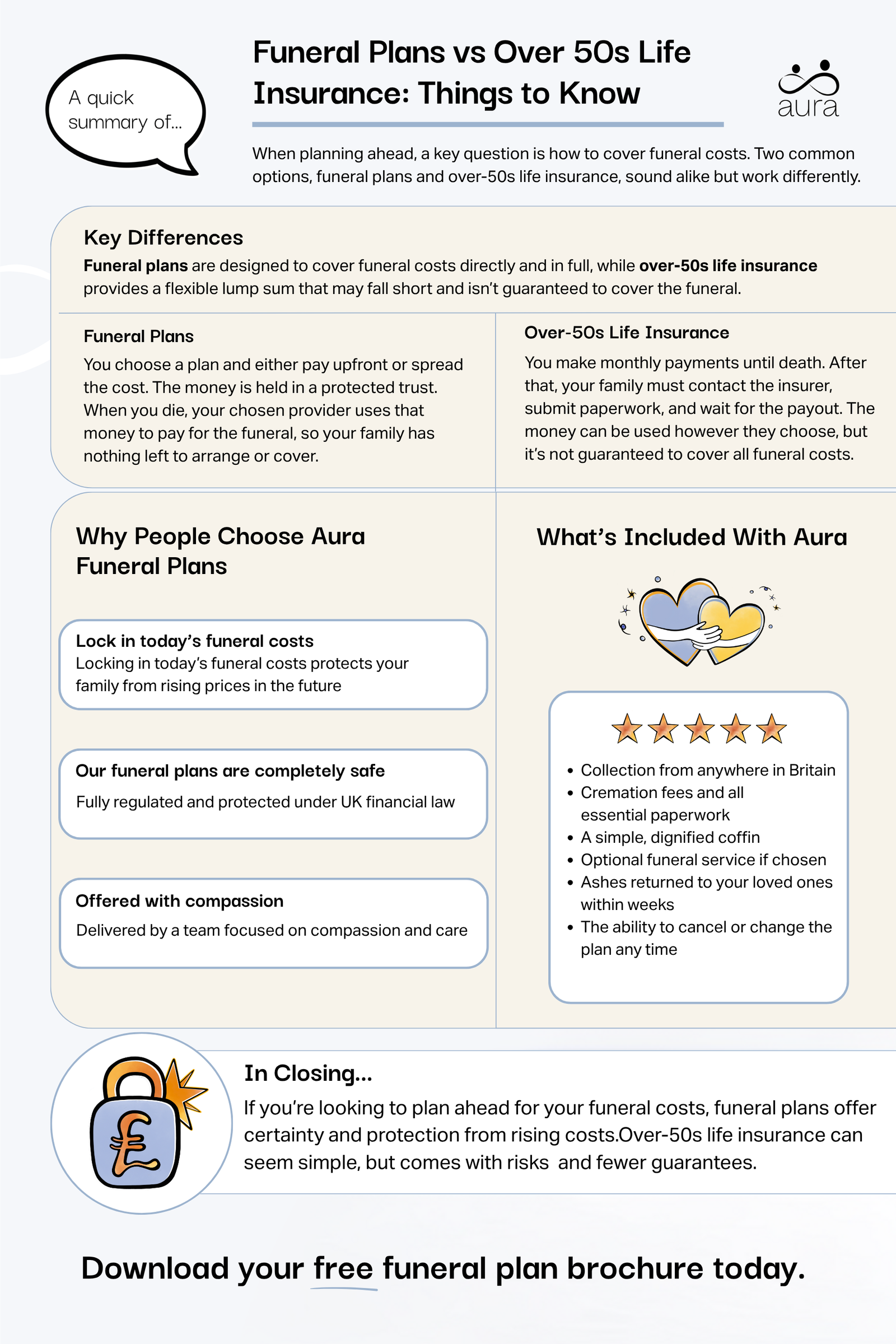
- Confusing Burial Insurance with Pre-Need Plans: Burial insurance provides cash to a beneficiary, whereas pre-need plans are contracts directly with a specific funeral home for specific goods and services. Mixing these concepts can lead to logistical confusion for grieving families.
- Allowing Policies to Lapse: Missing premium payments can result in policy cancellation, forfeiting all previously paid funds unless the policy has built up sufficient cash value to support non-forfeiture options like reduced paid-up insurance.
Disclaimer: Insurance products, underwriting guidelines, and regulatory frameworks vary significantly by jurisdiction and issuing carrier. Consumers should consult with licensed insurance professionals and review specific policy disclosures before making financial commitments.
Frequently Asked Questions
Are burial insurance payouts taxable for the beneficiary?
Generally, life insurance death benefits paid out to a named beneficiary are considered income-tax-free under federal tax laws. This applies to burial life insurance as well, meaning the full lump sum is available for funeral budgeting without deductions for federal income tax, though estate taxes may apply in rare high-net-worth scenarios.
Can burial insurance funds be used for expenses other than a funeral?
Yes. Unlike pre-paid funeral plans, the cash payout from a burial life insurance policy goes directly to the designated beneficiary. While the policyholder intends these funds for funeral costs, the beneficiary is legally permitted to use the money for medical bills, legal fees, or any other financial obligation.
What happens if the insured lives longer than expected and outpays the policy value?
Because burial life insurance is a permanent whole life product, it remains active as long as premiums are maintained. If an individual lives to an advanced age, the total cumulative premiums paid over decades could eventually exceed the policy's face value. This is a recognized trade-off for financial certainty and immediate liquidity upon death.
How do I determine the correct policy face value for my budget?
To calculate the appropriate face value, research current average funeral costs in your specific geographic region, factoring in casket or cremation expenses, service fees, and cemetery plots. Subtract any existing liquid savings explicitly earmarked for final expenses, and select a policy face value that bridges the remaining financial gap.
Can I get burial insurance if I have pre-existing health conditions?
Yes. Guaranteed issue burial life insurance policies do not require medical exams or health questionnaires, ensuring acceptance regardless of pre-existing conditions. However, these policies typically feature a graded death benefit period lasting two to three years during which natural death results in a return of premiums rather than the full face value.
Conclusion and Next Actions
Burial life insurance plans fundamentally transform funeral budgeting by replacing unpredictable, high-consequence out-of-pocket expenses with fixed, manageable monthly premiums. To successfully integrate these policies into your financial plan, begin by obtaining itemized cost estimates from local funeral service providers in your area. Next, evaluate your current liquid savings to identify any funding gaps. If insurance is required, shop multiple carriers to compare simplified and guaranteed issue options, paying close attention to graded benefit clauses and premium structures. Secure a policy that aligns precisely with your verified cost calculations, and clearly communicate your end-of-life wishes and policy details to your designated beneficiary to ensure your financial preparation achieves its intended purpose.
Image Gallery