Understanding SN1 Reaction Steps: A Detailed Guide to Unimolecular Nucleophilic Substitution
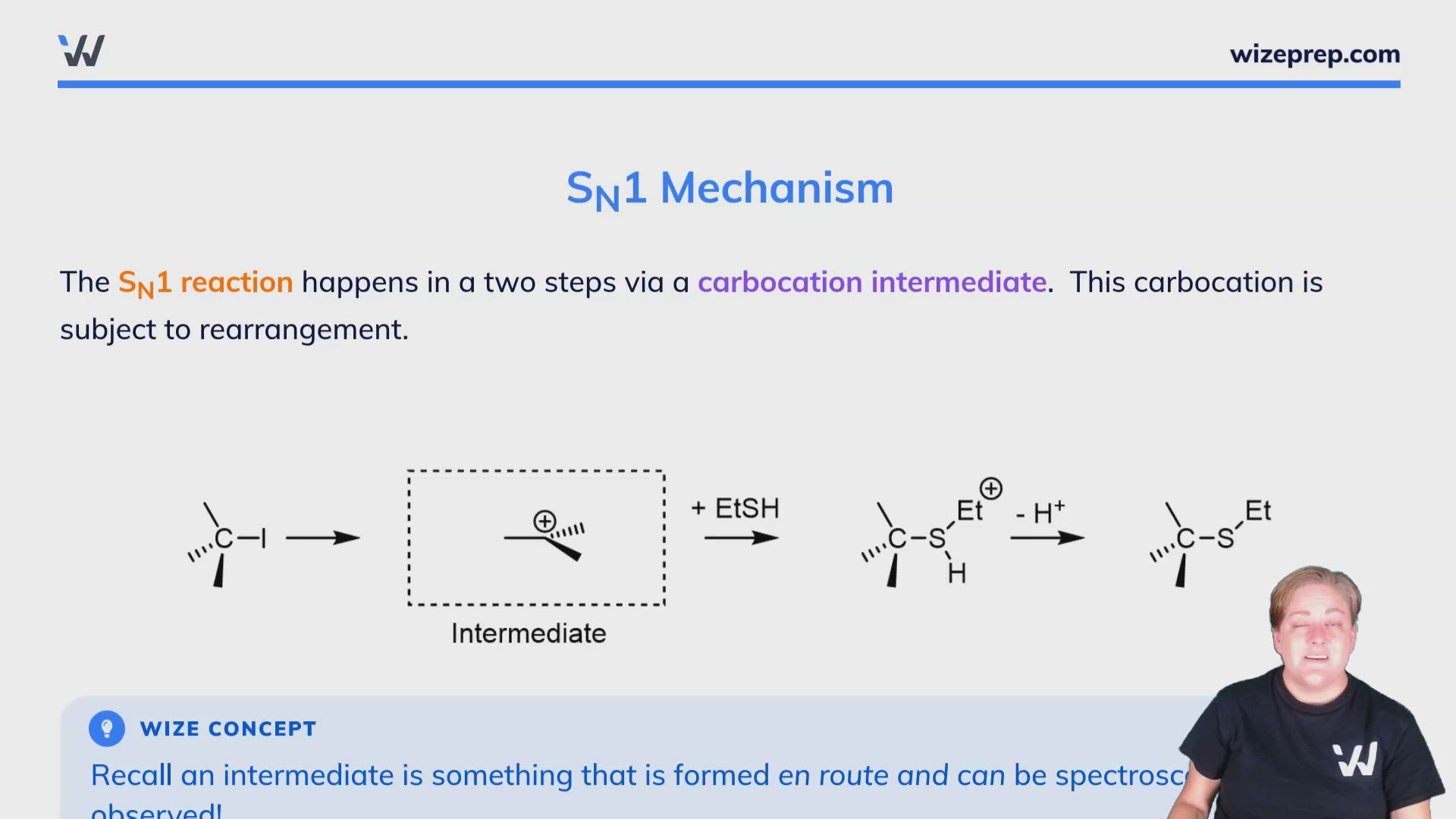
The SN1 reaction, or Unimolecular Nucleophilic Substitution, is a fundamental two-step organic mechanism where the rate-determining step involves only one molecule. It begins with the departure of a leaving group to form a carbocation...
The SN1 reaction, or Unimolecular Nucleophilic Substitution, is a fundamental two-step organic mechanism where the rate-determining step involves only one molecule. It begins with the departure of a leaving group to form a carbocation intermediate, which is subsequently attacked by a nucleophile, often resulting in a racemic mixture of products.
Contents
The Nature of the SN1 Mechanism
In the study of organic chemistry as of 2026, the SN1 mechanism remains a cornerstone for understanding how tertiary alkyl halides and related compounds interact with nucleophiles. Unlike the concerted SN2 mechanism, where bonds break and form simultaneously, the SN1 pathway is a stepwise process. The "1" in SN1 stands for unimolecular, indicating that the transition state of the rate-determining step involves only the substrate molecule.
Understanding the SN1 reaction requires a grasp of chemical kinetics and thermodynamics. The reaction follows a first-order rate law: Rate = k[Substrate]. This implies that the concentration of the nucleophile has no effect on the speed of the reaction, a characteristic that distinguishes it sharply from its SN2 counterpart. This phenomenon occurs because the nucleophile only participates in the reaction after the slow, rate-determining step has already been completed.
Step 1: The Formation of the Carbocation (The Rate-Determining Step)
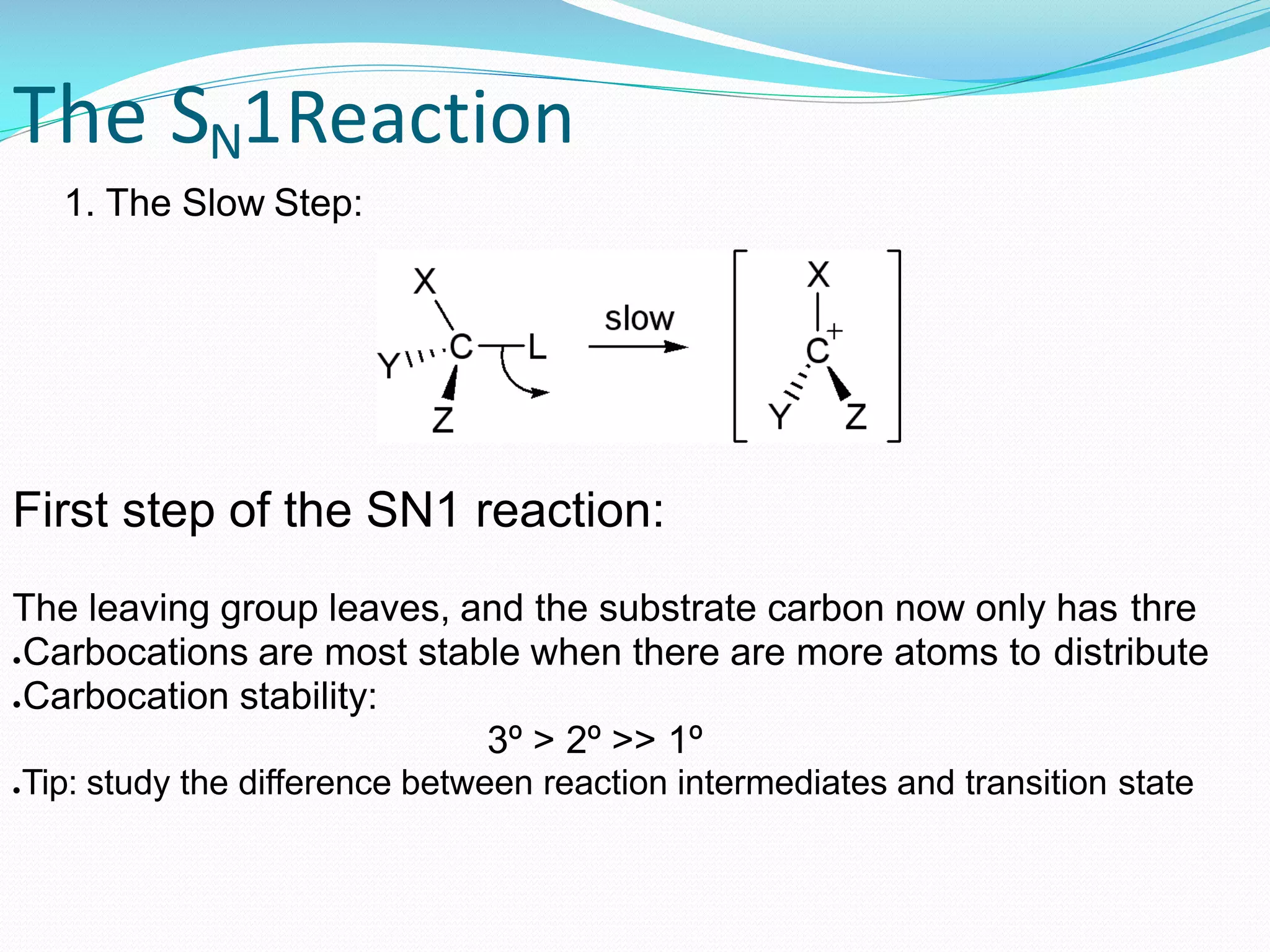
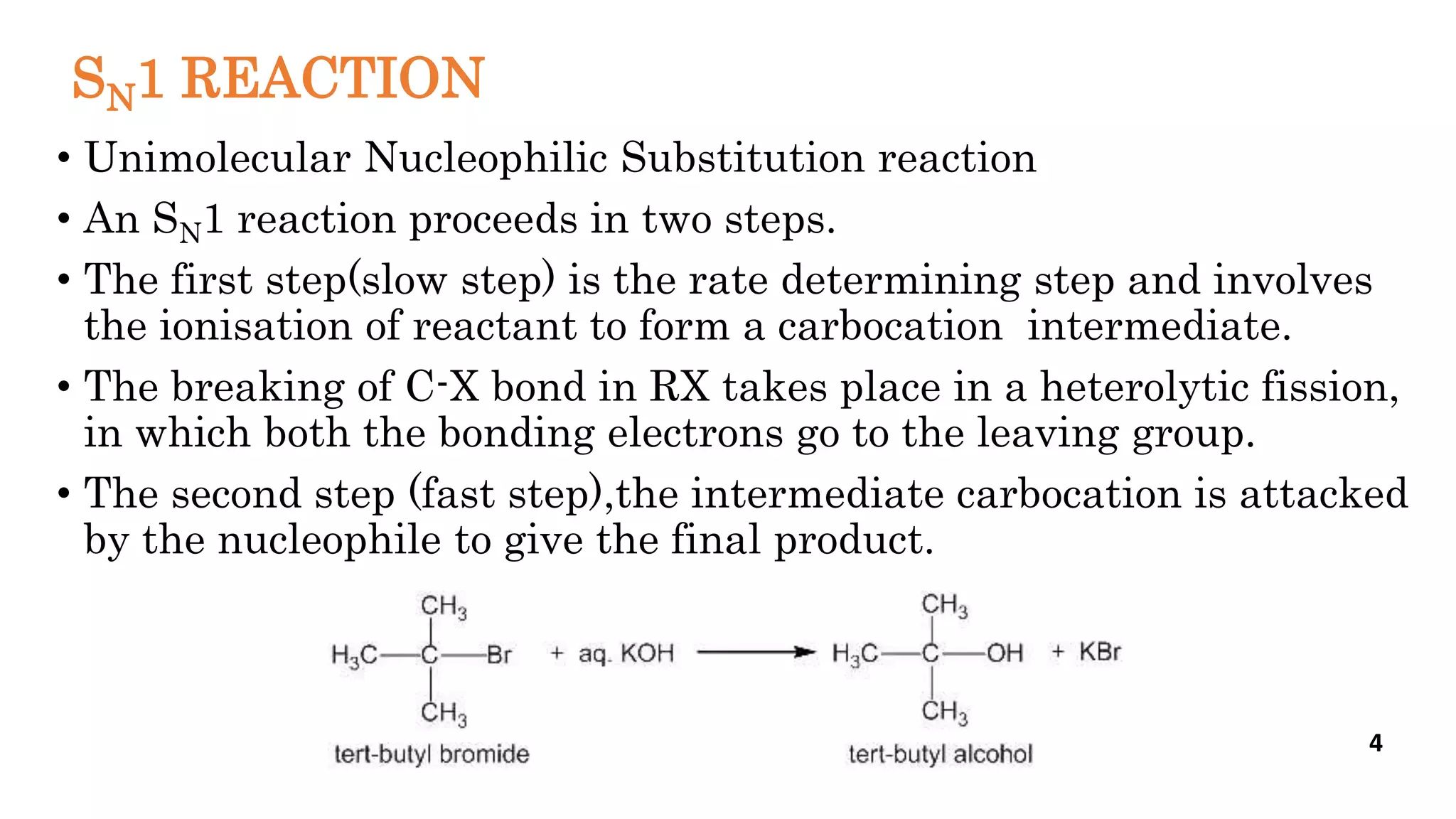
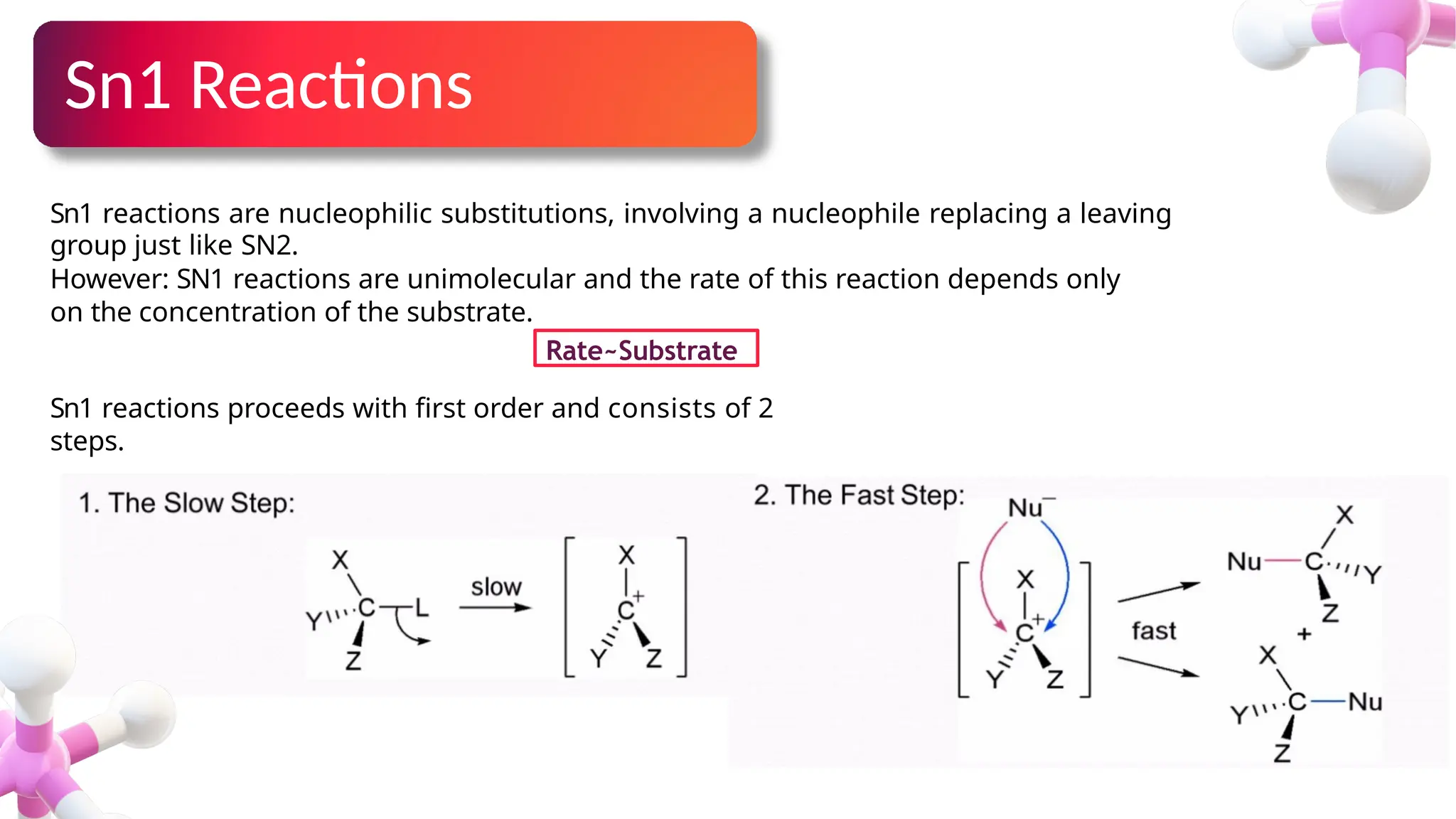
The first and most critical stage of the SN1 reaction is the heterolysis of the bond between the carbon atom and the leaving group. This step is endothermic and has a high activation energy, making it the "bottleneck" of the entire process.
Bond Dissociation and Ionization
During this step, the leaving group (typically a halide like bromide or iodide) departs with the pair of electrons from the sigma bond. This leaves the central carbon atom with only six valence electrons and a formal positive charge, transforming it into a carbocation. Because this step involves the separation of opposite charges, it is heavily influenced by the stability of the resulting ions and the surrounding environment.
Transition State 1
The transition state for this step involves a partial breaking of the C-LG (Carbon-Leaving Group) bond. The carbon atom begins to transition from an $sp^3$ hybridization state toward an $sp^2$ hybridization state. As the bond stretches, the potential energy of the system rises to a peak before the bond finally snaps, resulting in the intermediate.
Step 2: Nucleophilic Attack on the Intermediate
Once the carbocation intermediate is formed, the second step occurs almost instantaneously. The carbocation is a highly reactive electrophile, seeking electrons to complete its octet.
The Role of the Nucleophile
In this step, a nucleophile (which may be a neutral molecule like water or an alcohol, or a negatively charged ion) donates a pair of electrons to the vacant p-orbital of the carbocation. This forms a new covalent bond. If the nucleophile is a neutral molecule (such as $H_2O$), an additional deprotonation step may follow to reach the final neutral product. This specific variation is often referred to as solvolysis when the solvent itself acts as the nucleophile.
Transition State 2
The transition state for the second step involves the partial formation of the bond between the nucleophile and the carbon. This step has a much lower activation energy than the first because it involves the attraction of opposite charges (the positive carbocation and the electron-rich nucleophile).
The Importance of Carbocation Stability
The feasibility of an SN1 reaction is almost entirely dependent on the stability of the carbocation intermediate. If a stable carbocation cannot be formed, the reaction will likely proceed via a different mechanism or not occur at all.
Substituent Effects
Carbocations are stabilized by two primary factors:
- Inductive Effect: Alkyl groups are electron-donating. They push electron density toward the positively charged carbon, helping to disperse the charge.
- Hyperconjugation: This involves the overlap of the empty p-orbital of the carbocation with the electrons in adjacent C-H or C-C sigma bonds.
Because of these effects, the stability of carbocations follows the trend: Tertiary (3°) > Secondary (2°) >> Primary (1°) > Methyl. Consequently, tertiary substrates are the most reactive in SN1 reactions, while primary and methyl substrates rarely undergo SN1 unless they are resonance-stabilized (e.g., allylic or benzylic positions).
Stereochemical Outcomes of SN1 Reactions
One of the most defining characteristics of the SN1 mechanism is its impact on the spatial arrangement of atoms in the product.
The Planar Intermediate
When the carbocation forms, the central carbon adopts a trigonal planar geometry with $sp^2$ hybridization. The vacant p-orbital extends above and below the plane of the three remaining substituents. Because the p-orbital is symmetrical, the nucleophile can attack from either the "top" face or the "bottom" face with equal probability.
Racemization and Ion Pairs
If the starting material is a single enantiomer of a chiral molecule, the attack from both sides leads to a mixture of two enantiomers. This process is called racemization. Theoretically, an SN1 reaction should produce a 50/50 racemic mixture. However, in practice, we often observe a slight excess of the inversion product.
This is explained by the "ion pair" theory: as the leaving group departs, it remains momentarily close to the carbocation, physically shielding one side from the nucleophile. This forces the nucleophile to favor the opposite side, leading to a partial inversion of configuration.
Factors Affecting the Rate of SN1 Reactions
To predict whether a reaction will follow the SN1 pathway, one must evaluate four key variables.
| Factor | Preferred Condition for SN1 | Reason |
|---|---|---|
| Substrate Structure | Tertiary (3°), Allylic, or Benzylic | Requires a stable carbocation intermediate. |
| Leaving Group | Highly stable weak bases (e.g., $I^-$, $Br^-$, $OTs^-$) | Lower activation energy for the rate-determining step. |
| Nucleophile | Weak or Neutral (e.g., $H_2O$, $ROH$) | Strong nucleophiles often force an SN2 mechanism. |
| Solvent | Polar Protic (e.g., Water, Ethanol, Acetic Acid) | Stabilizes both the carbocation and the leaving group through solvation. |
The Role of Polar Protic Solvents
Polar protic solvents are essential for SN1 reactions. They possess $O-H$ or $N-H$ bonds, allowing them to form hydrogen bonds. These solvents stabilize the leaving group through hydrogen bonding and stabilize the carbocation through lone-pair interactions. By lowering the energy of the intermediate and the transition state leading to it, these solvents significantly increase the reaction rate.
Potential Complications: Carbocation Rearrangements
A unique challenge in SN1 reactions is the possibility of carbocation rearrangements. Because the reaction proceeds through a free intermediate, the molecule may adjust its structure to achieve a more stable state before the nucleophile attacks.
1,2-Hydride and 1,2-Methyl Shifts
If a secondary carbocation is formed adjacent to a tertiary or quaternary carbon, a hydrogen atom (with its electrons) or a methyl group may migrate to the positive carbon. This creates a more stable tertiary carbocation. Chemists must always check for these shifts when predicting products, as the "expected" substitution site may not be the one found in the final product.
SN1 vs. SN2: Choosing the Right Pathway
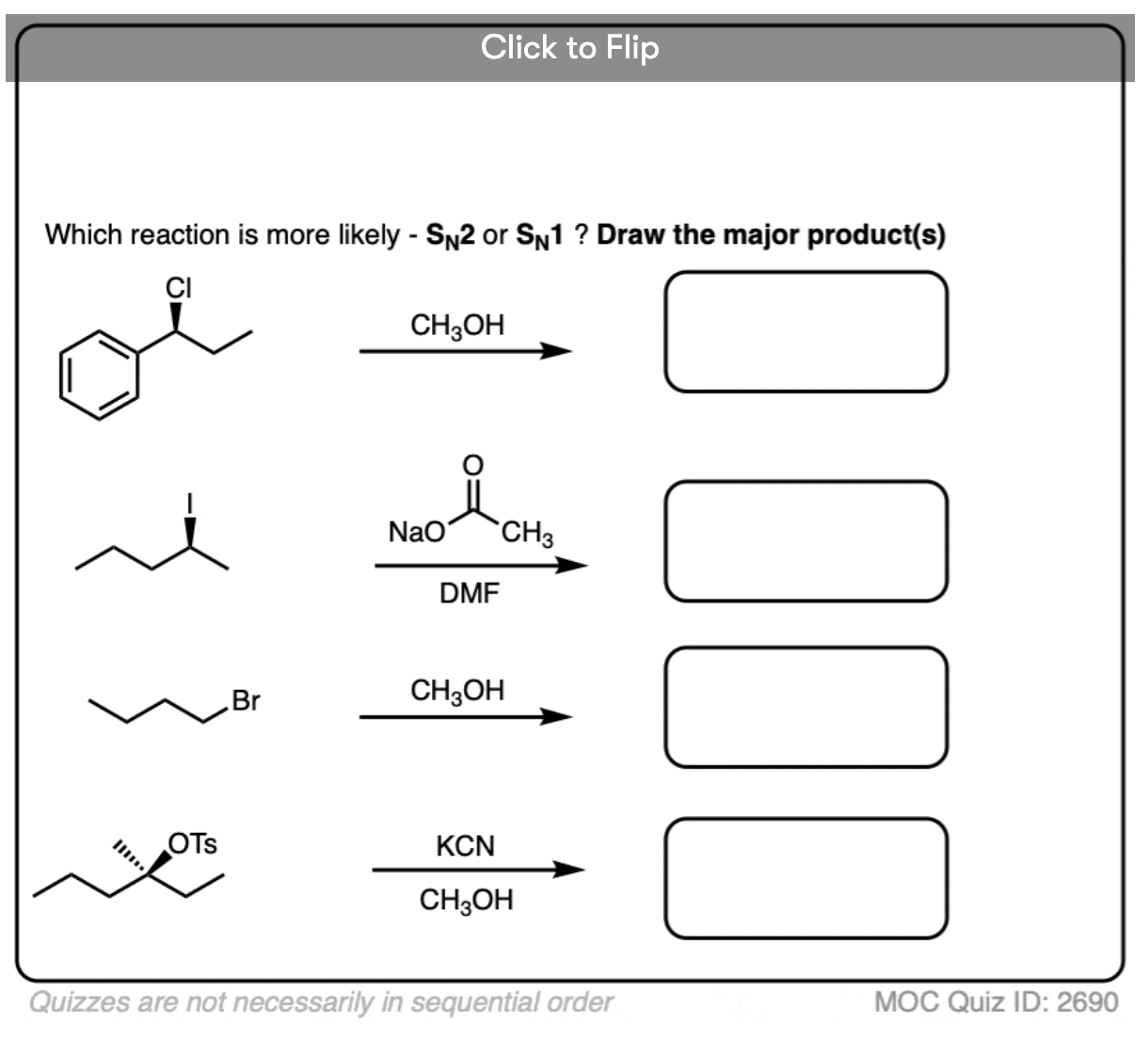
Distinguishing between SN1 and SN2 is a common task in laboratory synthesis. While SN1 relies on carbocation stability and solvent polarity, SN2 is governed by steric hindrance. A tertiary carbon is too crowded for a backside attack (SN2), forcing it toward the SN1 pathway. Conversely, a primary carbon is unhindered (favoring SN2) but produces an unstable carbocation (disfavoring SN1).
For further technical standards on organic nomenclature and mechanisms, the International Union of Pure and Applied Chemistry (IUPAC) provides the definitive guidelines used by the scientific community in 2026.
Frequently Asked Questions
Why is the SN1 reaction called "unimolecular"?
It is called unimolecular because the rate-determining step involves only one reactant molecule: the substrate. The nucleophile's concentration does not appear in the rate equation because it only reacts after the slowest step of the mechanism has occurred.
Which leaving groups are best for SN1?
The best leaving groups are weak bases, which are the conjugate bases of strong acids. Examples include iodide ($I^-$), bromide ($Br^-$), and tosylate ($OTs^-$). These groups are stable on their own once they depart, lowering the activation energy required for the bond to break.
Can an SN1 reaction happen on a primary carbon?
Generally, no. Primary carbocations are too high in energy to form under standard conditions. However, if the primary carbon is in an allylic or benzylic position, the resulting carbocation is stabilized by resonance, making an SN1 pathway possible.
How does temperature affect SN1 reactions?
Increasing the temperature generally increases the rate of all chemical reactions, including SN1. However, higher temperatures can also increase the rate of competing elimination reactions (E1), potentially leading to alkene byproducts instead of the desired substitution product.
What is solvolysis in the context of SN1?
Solvolysis is a specific type of SN1 reaction where the solvent acts as the nucleophile. Common examples include hydrolysis (where water is the nucleophile) and alcoholysis (where an alcohol like methanol or ethanol is the nucleophile).
Practical Recommendation for Synthesis
When planning a chemical synthesis involving SN1 reaction steps, prioritize the use of polar protic solvents and ensure the substrate can form a stable carbocation. If the goal is to maintain a specific stereochemical configuration, the SN1 pathway should be avoided in favor of SN2, as the SN1 mechanism inevitably leads to loss of optical purity through racemization. Always analyze the structure for potential 1,2-shifts to ensure the nucleophile attaches to the intended carbon atom.
Image Gallery