Stevens Institute of Technology Ranking Overview: Overall Standings, ROI, and Academic Performance
Stevens Institute of Technology consistently ranks among the top national research universities in the United States, earning distinction for its specialized focus on engineering, computer science, quantitative finance, and technology...
Stevens Institute of Technology consistently ranks among the top national research universities in the United States, earning distinction for its specialized focus on engineering, computer science, quantitative finance, and technology management. Recognized by major publications such as U.S. News & World Report, Forbes, and PayScale, Stevens stands out particularly for its high return on investment (ROI), stellar career placement rates, and competitive graduate starting salaries.
Contents
Founded in 1870 in Hoboken, New Jersey, Stevens Institute of Technology has grown from a specialized mechanical engineering institution into a premier technological research university. Evaluating university rankings requires looking beyond a single headline number to understand how different methodology systems assess academic reputation, graduate earnings, faculty resources, and research activity.
National University Rankings Breakdown
National collegiate ranking platforms evaluate institutions using distinct methodologies, weighing academic metrics, student retention, faculty productivity, and financial outcomes differently.
U.S. News & World Report
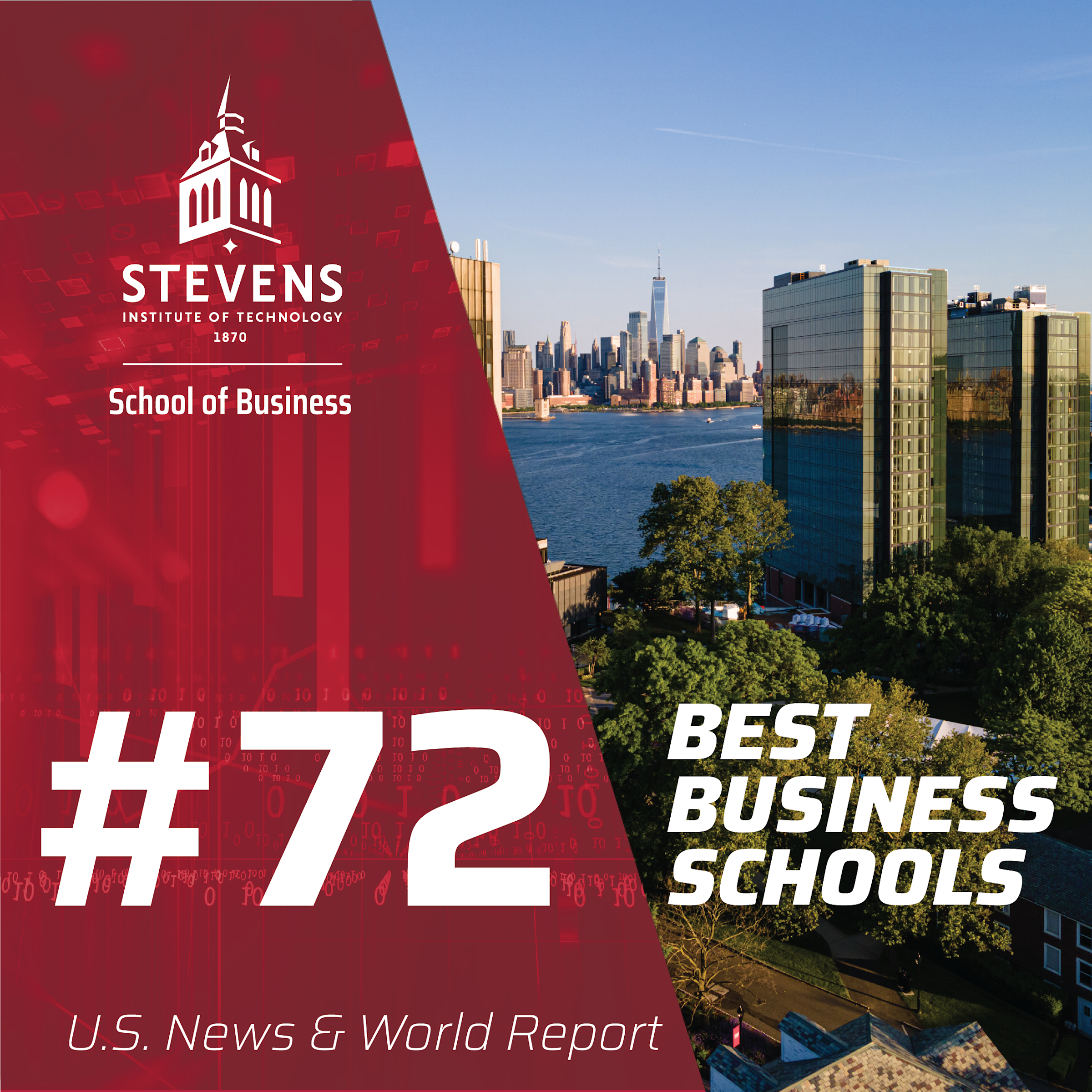
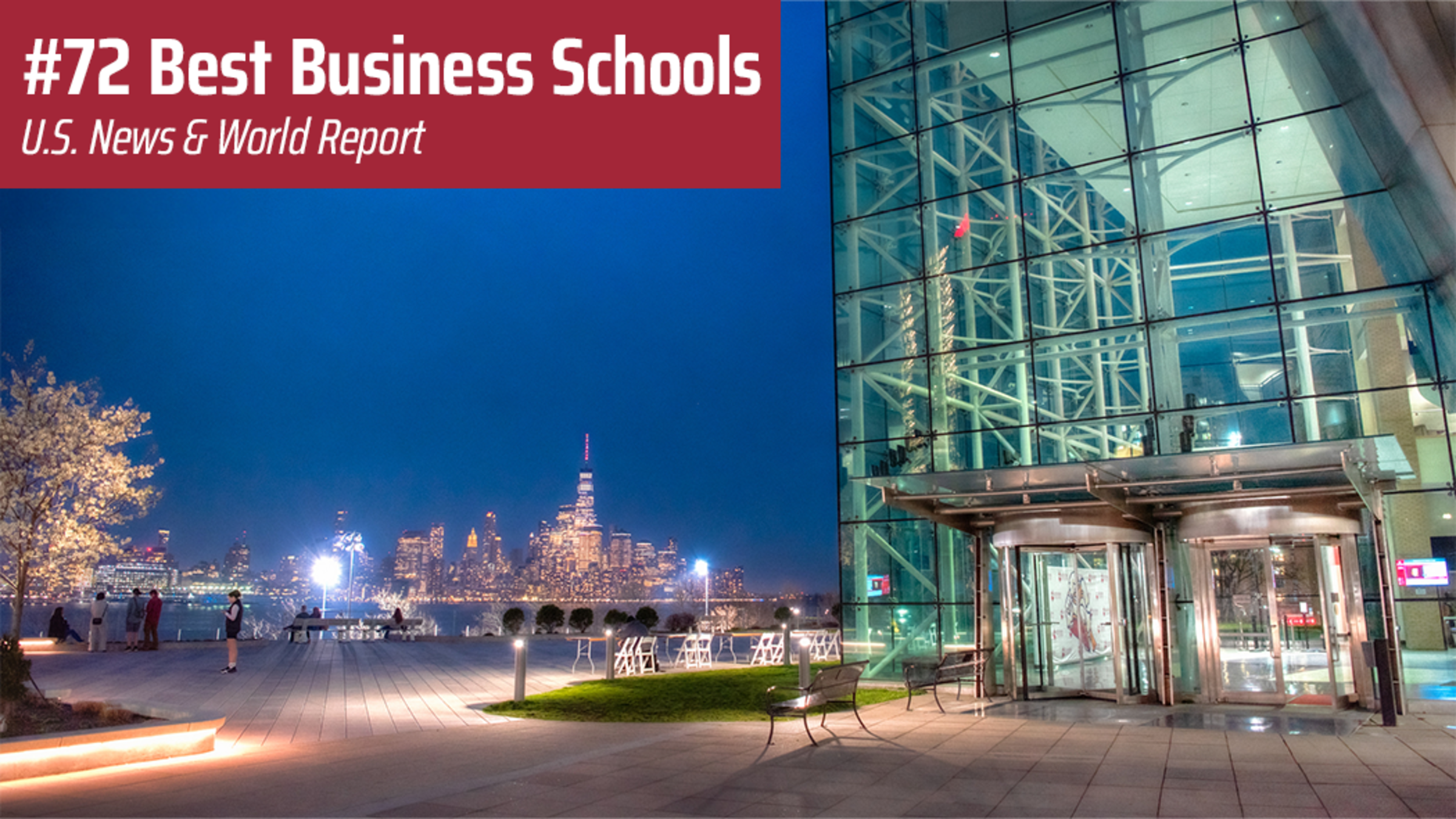
In the U.S. News & World Report Best Colleges rankings, Stevens Institute of Technology regularly secures a place among the Top 75 to Top 85 National Universities in the United States.
The U.S. News methodology evaluates universities across several core categories:
- Graduation and Retention Rates: Stevens maintains high first-year retention rates (typically around 93–95%) and strong six-year graduation metrics, reflecting strong academic support and student satisfaction.
- Peer Assessment: Academic reputation scores awarded by university presidents, provosts, and admissions deans contribute significantly to the overall score. Stevens maintains a solid standing among peer technological institutions.
- Faculty Resources: Class size metrics, faculty salaries, and student-to-faculty ratios (currently 12:1 at Stevens) support individualized learning environments, particularly in upper-level design courses and laboratory settings.
- Social Mobility and Graduate Outcomes: Recent shifts in methodology place higher emphasis on graduation rates for first-generation and Pell Grant-eligible students, as well as post-graduation debt levels.
Beyond the main national university list, U.S. News frequently ranks Stevens among the top 40 Most Innovative Schools and top 60 Best Value Schools, recognizing its modern curriculum updates and high graduate earning capacity relative to tuition costs.
Forbes America’s Top Colleges
Forbes ranks institutions primarily on student outcomes, debt levels, leadership achievements, and financial return. In Forbes rankings, Stevens frequently places in the Top 100 research universities nationwide and within the top tier of private colleges in the Northeast.
Forbes places heavy emphasis on post-graduation financial success. Because a significant portion of Stevens undergraduates earn degrees in high-demand STEM fields—such as computer engineering, cybersecurity, quantitative finance, and biomedical engineering—the university performs exceptionally well on median mid-career salary measures.
Wall Street Journal / College Pulse
The Wall Street Journal / College Pulse rankings prioritize graduate salary impact and the time required for students to pay off the net cost of attendance. Stevens routinely achieves high placement in this ranking, often scoring within the Top 50 colleges nationally for salary impact. This metric isolates the added financial value a Stevens degree provides compared to expected baseline earnings for similar demographics.
Return on Investment (ROI) and Graduate Outcomes
While overall institutional reputation is important, return on investment remains one of Stevens Institute of Technology's most compelling metrics. Specialized ROI reports consistently place Stevens near the top of all U.S. higher education institutions.
| Stevens Career Outcome Metrics at a Glance | Value |
|---|---|
| Career Outcome Rate (within 6 months) | 97% - 98% |
| Average Starting Salary (Undergrad) | $85,000 - $92,000 |
| PayScale 20-Year Net ROI Rank | Top 15 Nationwide |
| Princeton Review Career Placement Rank | Top 15 Nationwide |
PayScale College ROI Report
According to annual data from the PayScale College ROI Report, Stevens ranks in the Top 15 to Top 20 colleges nationwide for 20-year net return on investment.
The net ROI measures the differential mid-career earnings of graduates compared to high school graduates, adjusted for the total cost of attendance. Key drivers of Stevens' performance include:
- High Starting Salaries: The average starting salary for Stevens undergraduate alumni regularly exceeds $85,000, with specialized majors in computer science, software engineering, and quantitative finance reporting starting compensation packages well above $95,000.
- Mid-Career Earning Power: By mid-career (10+ years of experience), Stevens alumni report median salaries exceeding $150,000 to $165,000, driven by rapid advancement into technical lead, project management, and executive roles.
Princeton Review Recognition
The Princeton Review consistently places Stevens in elite national categories, including:
- Top 15 Best Career Placement
- Top 15 Best Schools for Internships
- Top 20 Best Value Colleges (Without Financial Aid)
These high placements stem from the university’s robust Career Center and its structured Cooperative Education (Co-op) Program. The Co-op program allows undergraduate engineering and science students to alternate academic semesters with full-time, paid professional employment, allowing students to graduate with up to five semesters of relevant industry experience.
Program-Specific and Departmental Rankings
Global and national composite rankings often obscure individual academic department strengths. Stevens operates four distinct academic schools, each maintaining specific national reputations.
Charles V. Schaefer, Jr. School of Engineering and Science
The Schaefer School is the historical core of Stevens. U.S. News & World Report ranks its undergraduate and graduate engineering programs among the top in the nation:
- Undergraduate Engineering Programs: Ranked among the Top 60 nationwide (among doctorate-granting institutions).
- Biomedical Engineering: Highly regarded for medical device innovation and clinical partnerships in the New York metropolitan area.
- Civil & Environmental Engineering: Top-tier research contributions in coastal resilience, infrastructure technology, and urban water management.
- Mechanical & Electrical Engineering: Strong emphasis on systems design, robotics, microelectronics, and renewable energy integration.
School of Business
The Stevens School of Business stands out by embedding technology, data analytics, and quantitative tools directly into business degree curricula.
- Quantitative Finance (BS & MS): Recognized as one of the premier programs in the United States, competing directly with top quantitative finance programs nationwide. Graduates frequently land roles on Wall Street, hedge funds, and risk management firms.
- Business Analytics & Financial Engineering: U.S. News and QuantNet rank Stevens’ graduate Financial Engineering and Business Analytics programs among the Top 25 to Top 30 specialized master’s programs in North America.
- Online MBA: The Stevens Online MBA routinely ranks within the Top 50 Online MBA programs by U.S. News, recognized for flexibility and modern tech-focused business management instruction.
School of Systems and Enterprises (SSE)
The School of Systems and Enterprises focuses on complex systems architecture, engineering management, and software systems. Its Graduate Engineering Management and Systems Engineering programs consistently rank in the top tier nationwide, drawing active duty military leaders, defense industry contractors, and corporate technology executives.
College of Arts and Letters (CAL)
While smaller than the engineering and business schools, the College of Arts and Letters offers unique hybrid majors combining humanities with technological proficiency, such as Science, Technology & Society (STS), Music & Technology, and Visual Arts & Technology.
Global University Rankings
On the global stage, international ranking organizations evaluate universities with a heavy emphasis on doctoral research output, global peer reputation, and total citation counts.
QS World University Rankings
In the QS World University Rankings, Stevens Institute of Technology typically falls within the #600–#750 bracket globally.
Factors influencing Stevens' QS global position include:
- High Citation per Faculty Score: Stevens researchers publish high-impact work in cybersecurity, artificial intelligence, photonics, biomedical engineering, and coastal systems.
- International Faculty & Student Ratio: Stevens scores well in global diversity, drawing international graduate students and foreign faculty researchers.
- Scale Limitation: Relative to massive public research institutions with tens of thousands of students and broad medical schools, Stevens' smaller physical footprint and focused STEM curriculum keep its raw volume score lower, even though its individual department impact remains concentrated.
Times Higher Education (THE) World Rankings
In Times Higher Education, Stevens holds a consistent position within the 351–400 bracket among U.S. institutions and top global tiers for industry income and technology transfer. THE emphasizes research contracts, corporate partnerships, and institutional income per academic staff member—areas where Stevens performs strongly due to enterprise consulting and federal research grants (e.g., Department of Defense, National Science Foundation, Department of Homeland Security).
Comprehensive Rankings Overview Table
The following table summarizes Stevens Institute of Technology's standing across primary national and international ranking systems, highlighting major criteria and strengths assessed by each organization.
| Ranking Body / Publisher | Scope / Category | National / Global Position (Approx.) | Key Metrics & Focus Areas Evaluated |
|---|---|---|---|
| U.S. News & World Report | National Universities | #75 – #85 National | Graduation rates, peer reputation, faculty resources, student selectivity. |
| U.S. News & World Report | Undergraduate Engineering | Top 60 (Doctoral) | Peer evaluation by engineering deans, program specialization depth. |
| U.S. News & World Report | Best Value Schools | Top 60 National | Academic quality relative to net cost of attendance after aid. |
| PayScale | 20-Year Net ROI Report | Top 15 – Top 20 Nationwide | Long-term salary differential, mid-career earnings, total cost. |
| Forbes | America’s Top Colleges | Top 100 Overall | Graduate outcomes, low student debt, post-grad salaries, alumni success. |
| Wall Street Journal / College Pulse | Best Colleges in the U.S. | Top 50 for Salary Impact | Value added to graduate earning capacity beyond baseline statistical expectations. |
| The Princeton Review | Best Career Placement | Top 15 Nationwide | Career center efficacy, campus recruiting, internship networks, placement rates. |
| QuantNet | Financial Engineering | Top 25 North America | Employment rate at graduation, starting salary, employer preference scores. |
| QS World University Rankings | Global Universities | #600 – #750 Global | International research citations, global academic surveys, employer reputation. |
Key Factors Driving Stevens' Academic and Placement Rankings
Understanding why Stevens ranks where it does requires examining its structural, geographic, and pedagogical advantages.
1. Geographic Advantage: Proximity to New York City
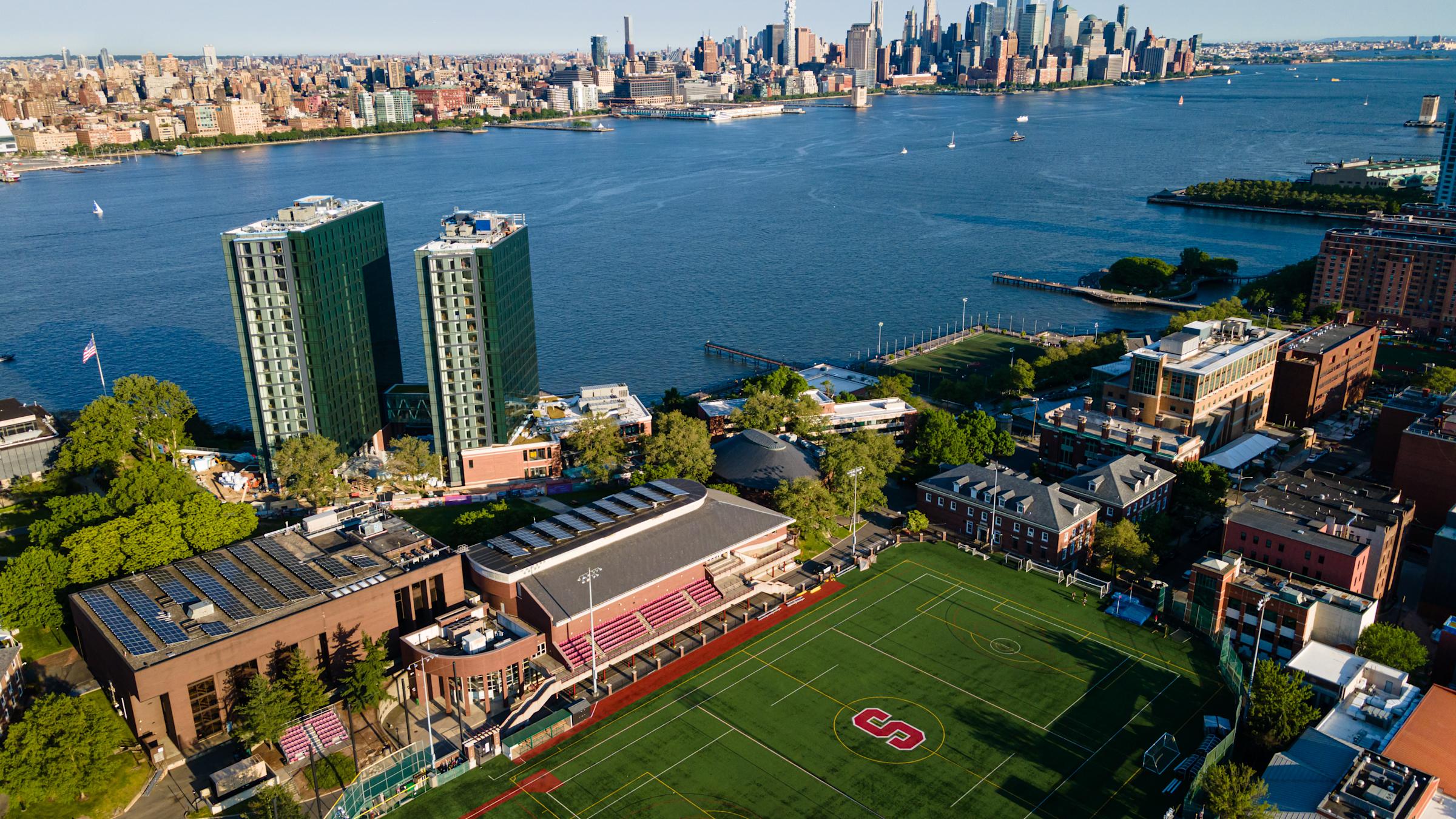
Located on a 55-acre hilltop campus in Hoboken, New Jersey, Stevens sits directly across the Hudson River from Manhattan. This location provides students with direct access to:
- Financial centers (Wall Street, Midtown financial technology firms).
- Major tech hubs (Google NYC, Meta, Amazon AWS centers).
- Global media, healthcare, and engineering consulting headquarters.
Recruiters regularly visit the campus due to easy transit connections via PATH trains and ferries, giving Stevens students an edge in securing competitive internships and full-time positions.
- The Stevens Location & Industry Advantage
- [Hoboken Campus] - (Hudson River) - [Manhattan/NYC Hub]
- Direct Corporate Pipeline to:
- Wall Street / Fintech (Goldman Sachs, JPMorgan Chase, Bloomberg)
- Tech Giants (Google, Meta, Microsoft NYC, Amazon)
- Infrastructure & Defense (Lockheed Martin, Pfizer, Merck, Stryker)
2. Industry Integration and Co-op Model
Unlike liberal arts colleges, Stevens integrates industry application directly into its undergraduate curriculum. The optional five-year Cooperative Education program allows students to complete four full academic years while accumulating nearly two full years of full-time work experience across major corporations like JPMorgan Chase, Johnson & Johnson, Stryker, Lockheed Martin, and Google.
3. Specialized Research Centers
Stevens hosts several federally designated research centers of excellence, including:
- SERC (Systems Engineering Research Center): The national DoD University Affiliated Research Center focused on complex systems development.
- CCT (Center for Complex Trait Genomics) & CRAFT: The Center for Research toward Advancing Financial Technologies, funded in part by the National Science Foundation to innovate in financial software and risk modeling.
These research capabilities elevate Stevens' national reputation among academic researchers and industry project sponsors.
How Prospective Students Should Interpret Rankings
Ranking tables provide a high-level snapshot, but prospective undergraduate and graduate applicants should weigh specific indicators based on their career goals.
When Stevens Rankings Matter Most:
- Focus on STEM and Tech Careers: If your primary goal is pursuing a career in software development, mechanical engineering, quantitative finance, cybersecurity, or tech product management, Stevens ranks among the top mid-sized technical institutions in the country.
- Prioritizing Financial ROI: If minimizing post-graduation debt and maximizing early-to-mid-career salary potential are your primary objectives, Stevens' ROI metrics (PayScale, WSJ) place it in an elite tier nationwide.
- Preference for Small-to-Medium Class Sizes: With an undergraduate enrollment of approximately 4,000 students, Stevens offers small technical design classes, direct faculty mentorship, and active lab access that larger public state universities cannot match.
Potential Limitations to Consider:
- Narrow Discipline Scope: Students looking for broad liberal arts degrees, fine arts majors, or traditional humanities focus will find limited departmental depth compared to comprehensive universities.
- Cost of Attendance: As a private research university located in the NYC metropolitan area, tuition and room/board costs are relatively high. Financial aid packages, merit scholarships, and co-op earnings are often necessary to offset high baseline tuition costs.
Frequently Asked Questions
What is Stevens Institute of Technology's overall national ranking?
U.S. News & World Report places Stevens Institute of Technology in the top 75 to 85 range among all National Universities in the United States. Forbes and Wall Street Journal rank Stevens within the Top 100 overall national research colleges, placing particular emphasis on graduate outcomes.
Why is Stevens ranked so high for Return on Investment (ROI)?
Stevens ranks in the top 15–20 schools nationwide for 20-year net ROI on PayScale because its graduates enter high-demand STEM, technical management, and quantitative finance fields with average starting salaries exceeding $85,000 to $92,000. Its location near NYC and mandatory design projects further boost graduate employability.
How does Stevens rank for business and finance programs?
While historically known for engineering, the Stevens School of Business is widely recognized for modern technology-driven business degrees. Its Quantitative Finance undergraduate degree, graduate Financial Engineering (MSFE), and Business Analytics programs rank among the top 25 to 30 specialized quantitative business degrees nationwide.
Is Stevens Institute of Technology an Ivy League or public university?
Stevens is neither. It is a private, non-profit specialized research university focusing on STEM, technology, and business education. It was chartered in 1870, making it one of the oldest technological universities in the United States.
How do Stevens' global rankings compare to its U.S. rankings?
In global rankings like QS (#600–#750) and Times Higher Education, Stevens ranks lower than in domestic U.S. lists. International rankings prioritize overall university volume, total doctoral output, and massive humanities research departments. Stevens' specialized focus and medium size mean it performs much higher in domestic career, ROI, and engineering-specific metrics.
Next Steps for Prospective Applicants
If you are evaluating Stevens Institute of Technology based on its rankings and program strengths, consider taking the following actions to assess institutional fit:
- Review Program-Specific Outcomes: Visit the Stevens Career Center outcome pages to examine detailed employment reports, employer lists, and average starting salaries specific to your intended major.
- Evaluate Financial Aid and Net Price Calculators: Compare total cost estimates against projected return on investment to understand your expected net cost after merit-based scholarships and financial support.
- Schedule an On-Campus or Virtual Visit: Experience the Hoboken campus directly to assess class sizes, lab spaces, and transit access to New York City corporate hubs.
Image Gallery