Aisha Bowe’s Father and the Spark of Engineering: How Family Inspiration Built a NASA Career and STEM Legacy
Aisha Bowe’s entry into aerospace engineering began not in an elite preparatory academy, but at home, inspired by her father’s career transformation from a taxi driver to a computer engineer. His self-taught determination led her to de...
Aisha Bowe’s entry into aerospace engineering began not in an elite preparatory academy, but at home, inspired by her father’s career transformation from a taxi driver to a computer engineer. His self-taught determination led her to defy low academic expectations, start at a community college, earn two aerospace engineering degrees, work at NASA, and found tech enterprise STEMBoard.
Contents
The Catalyst: How Aisha Bowe’s Father Ignited Her Engineering Journey
The narrative of pioneer aerospace engineer and entrepreneur Aisha Bowe is deeply rooted in the working-class perseverance of her family. Growing up, Bowe witnessed her father work as a taxi driver in Michigan. Seeking a better financial future and a intellectual challenge, her father made a pivotal decision that altered the trajectory of their entire family: he enrolled at Washtenaw Community College (WCC) in Ann Arbor, Michigan, to study computer science and mathematics.
Day after day, Bowe observed her father balance long shifts behind the wheel with late-night study sessions at the kitchen table. He systematically mastered complex programming languages, logic, and analytical problem-solving, eventually transitioning from driving a taxi to securing a position as a professional software engineer.
This dramatic career shift served as a living proof-of-concept for young Aisha Bowe. It demystified technical disciplines, demonstrating that engineering and technology were not exclusive clubs reserved for a privileged few, but skill sets that could be acquired through discipline, curiosity, and structured practice. Her father's transformation established three core principles that shaped her mindset:
- Demystification of Technical Skill: Engineering was framed not as an innate, genetically bestowed talent, but as a discipline learned through study.
- Resilience Against Circumstance: Economic status or non-traditional backgrounds do not dictate intellectual limits.
- The Power of Alternative Pathways: Community colleges serve as viable, high-value springboards into advanced STEM (Science, Technology, Engineering, and Mathematics) fields.
When Bowe later faced academic uncertainty, her father’s blueprint gave her the confidence to choose a technical path despite external doubts.
Overcoming Low Expectations: The Path Through Washtenaw Community College
Despite her father's inspiring example, Aisha Bowe's early academic journey was not an immediate straight line into aerospace research. In high school, she encountered a common systemic barrier faced by many young women and underrepresented minorities in STEM: low expectations from academic gatekeepers.
When Bowe expressed uncertainty about her career path, a high school guidance counselor evaluated her standardized test scores and suggested she pursue cosmetology. The counselor did not encourage advanced mathematics or science electives, reflecting a broader institutional trend where students who do not immediately excel in early math assessments are directed away from technical disciplines.
- High School Counseling
- Suggested Path: Cosmetology
- Alternative Choice Inspired by Father
- Washtenaw Community College
- Pre-Calculus Mastery
- University of Michigan B.S. & M.S.
- NASA Ames Research Center
Remembering her father’s career transformation, Bowe rejected the counselor’s assessment. She realized that standardized test scores in high school did not define her capacity for learning. Deciding to replicate her father's educational strategy, she enrolled at Washtenaw Community College.
The Turnaround in Pre-Calculus
Bowe entered WCC with significant anxiety surrounding mathematics, having internalized the idea that she was not a "math person." However, her perspective changed when she enrolled in a developmental pre-calculus course.
Instead of treating mathematics as an insurmountable barrier, she approached it with the methodical discipline she had watched her father practice. She spent hours in tutoring centers, retried practice problems, and asked targeted questions. Her effort yielded a straight-A grade in the course.
That single grade represented a major psychological breakthrough. It proved that mathematical ability is a muscle developed through effort rather than an unchangeable trait. Recognizing her newfound capability, Bowe declared her intention to major in aerospace engineering, setting her sight on transferring to one of the premier engineering programs in the nation: the University of Michigan College of Engineering.
From Community College to NASA Engineer
Transferring from Washtenaw Community College to the University of Michigan marked the next phase of Bowe’s development. At Michigan, she earned both a Bachelor of Science in Engineering (B.S.E.) in Aerospace Engineering and a Master of Science in Engineering (M.S.E.) in Space Systems Engineering.
Her transition from community college to a top-tier research institution highlights the viability of vertical transfer pathways in STEM education. At the University of Michigan, Bowe engaged in advanced coursework covering orbital mechanics, aerodynamics, propulsion systems, and satellite design.
STEM ACADEMIC AND CAREER PATHWAY
- Community College (Washtenaw CC)
- Pre-Calculus Mastery
- University Degree (U of Michigan)
- B.S. & M.S. Aerospace
- Federal Research (NASA Ames)
- Trajectory & Systems
- Entrepreneurship
- STEMBoard & LINGO
Career at NASA Ames Research Center
Upon completing her graduate studies, Bowe was hired as an Aerospace Engineer at NASA Ames Research Center in Moffett Field, California. During her tenure at NASA, she worked in the Aeromechanics Branch and later the Space Development and Optimization Branch.
Her technical contributions covered several critical areas:
- Air Traffic Management: Developing algorithms and system architecture to optimize national airspace utilization, lower fuel consumption, and reduce flight delays.
- CubeSat Development: Contributing to small satellite mission design, structural engineering, and payload integration for cost-effective space research.
- Real-Time Trajectory Optimization: Modeling flight paths for dynamic operational environments, ensuring aircraft and spacecraft remain within safe operational envelopes.
Her achievements at NASA validated the non-traditional pathway she had taken, proving that foundational learning at a community college can lead to contributions at the highest levels of space exploration.
Educational and Professional Trajectory of Aisha Bowe
The structural path Bowe took highlights how early inspiration combined with strategic academic stepping stones leads to technical leadership.
| Milestone Phase | Institution / Entity | Core Focus / Major Achievements | Significance & Key Impact |
|---|---|---|---|
| Early Foundation | Home / Family Environment | Observed father's transition from taxi driver to computer programmer | Established foundational belief in self-directed learning and STEM accessibility. |
| Foundational Higher Ed | Washtenaw Community College (WCC) | Pre-Calculus, Calculus, and core STEM prerequisites | Overcame math anxiety, built academic confidence, and established a transfer pathway. |
| Undergraduate & Graduate | University of Michigan | B.S.E. Aerospace Engineering; M.S.E. Space Systems Engineering | Mastered orbital mechanics, satellite design, and advanced aerospace system modeling. |
| Federal Science & Engineering | NASA Ames Research Center | Aerospace Engineer (Aeromechanics & Space Development) | Engineered flight optimization models, air traffic tools, and CubeSat mission designs. |
| Commercial Enterprise | STEMBoard | Founder & CEO; Inc. 5000 recognized engineering services firm | Built a multimillion-dollar defense and technology firm providing systems engineering solutions. |
| Educational Innovation | LINGO | Creator & CEO; hands-on coding and hardware kits | Created experiential STEM learning kits used globally to teach hardware assembly and coding. |
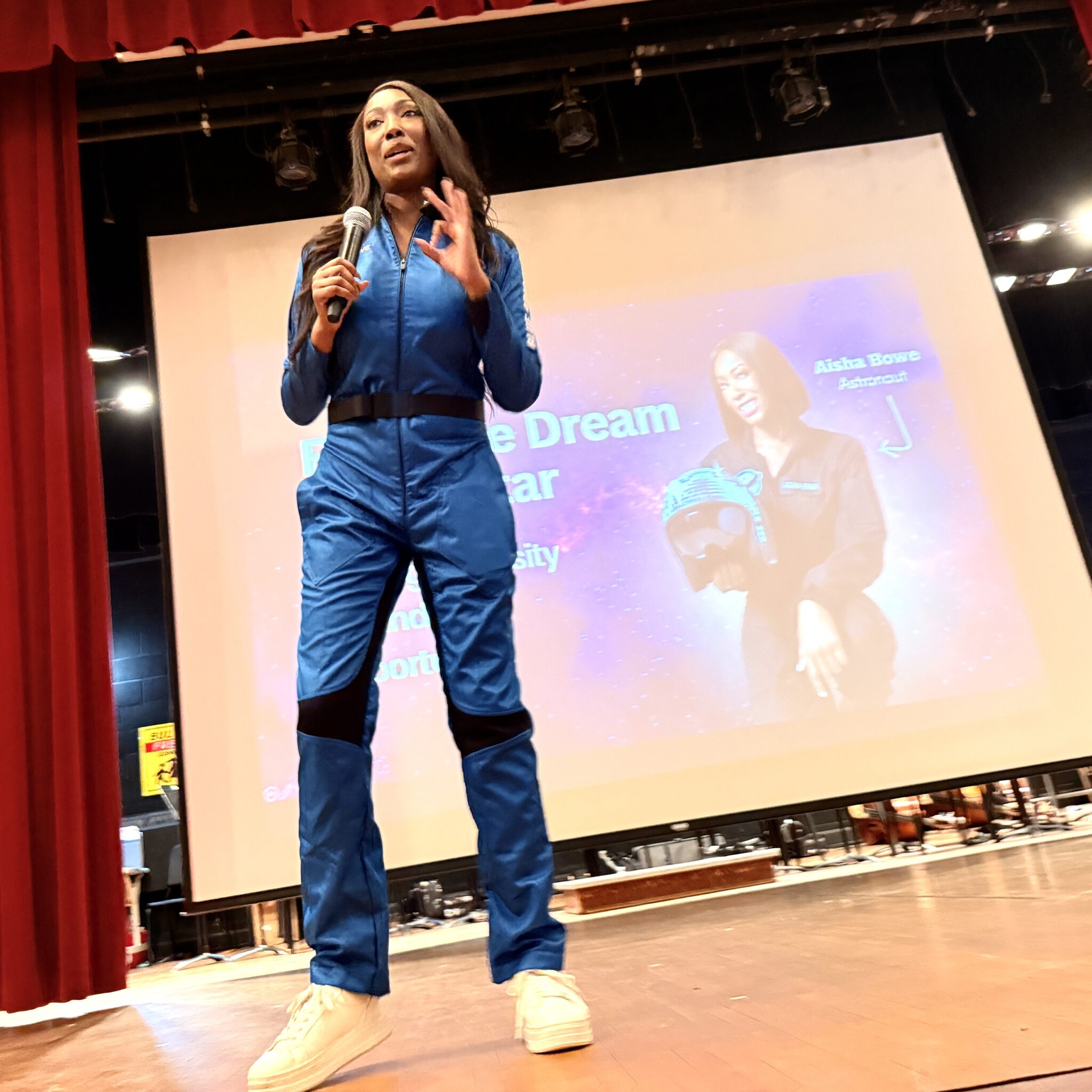
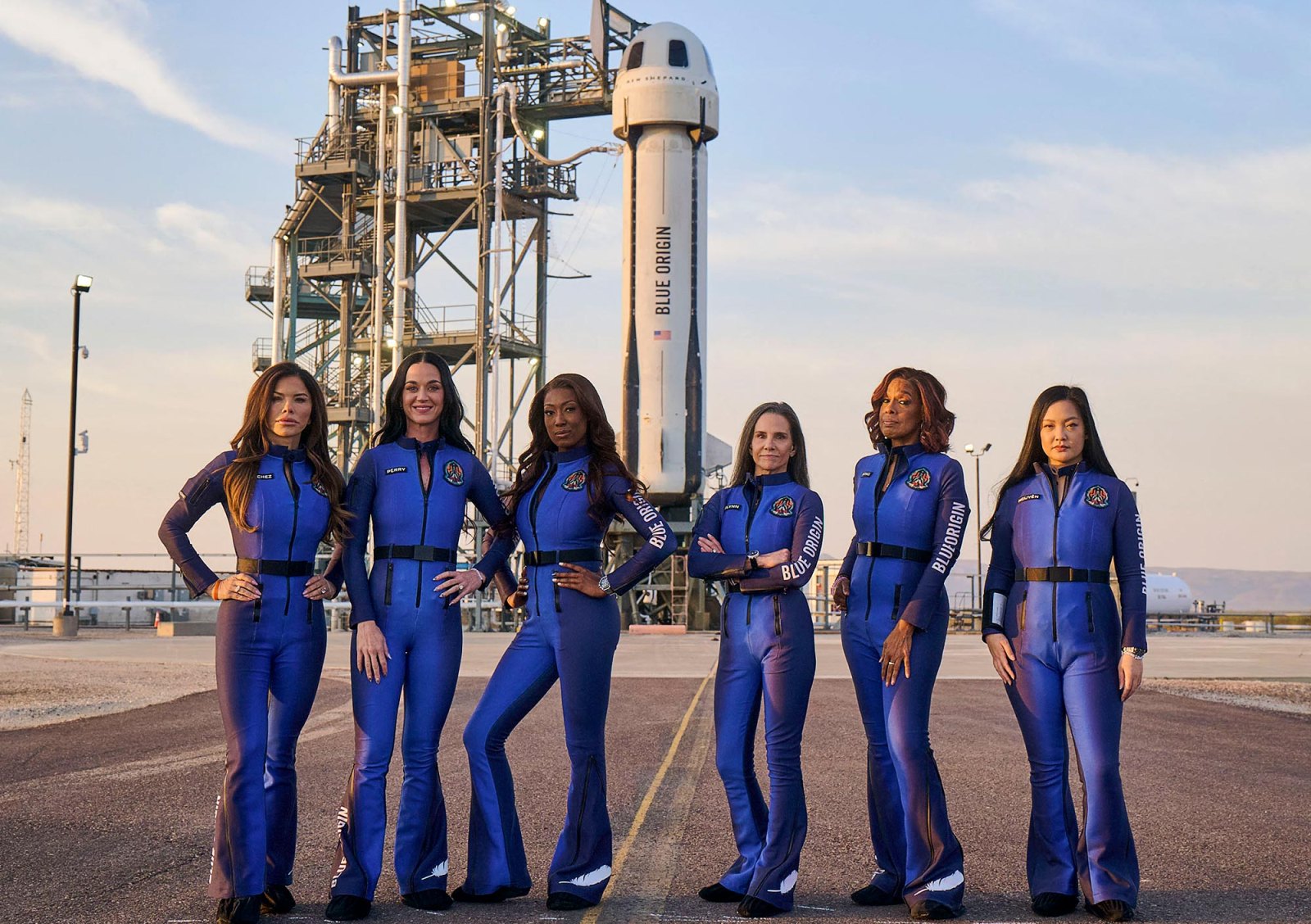
| Commercial Spaceflight | Blue Origin (Commercial Flight Crew) | Designated commercial astronaut crew member | Serves as a visible milestone for Black women in commercial aerospace and spaceflight. |
Translating Inspiration into Impact: STEMBoard and LINGO
Aisha Bowe’s journey from a high school student targeted for cosmetology to a NASA engineer inspired her to address systemic talent leaks in the tech ecosystem. Recognizing that traditional educational frameworks often overlook capable talent, she left NASA to become an entrepreneur.
Founding STEMBoard
Bowe co-founded STEMBoard, a engineering enterprise and technology solutions company. STEMBoard provides software engineering, data analytics, and geospatial solutions to federal government agencies, commercial organizations, and defense clients. Under her leadership as CEO, STEMBoard grew into a multimillion-dollar enterprise, landing on the Inc. 5000 list of fastest-growing private companies in America.
Creating LINGO for Hands-On STEM Learning
To address the educational access gap directly, Bowe created LINGO, a self-paced STEM kit designed to teach students coding, hardware engineering, and electronics at home or in the classroom.
Unlike purely theoretical software tutorials, LINGO kits provide physical components—such as breadboards, sensors, and microcontrollers—that students build into functional devices, such as back-up sensors for autonomous vehicles.
- Theoretical STEM Concept
- LINGO Physical Kit (Hardware + Software)
- Real-World Project Competency
The underlying philosophy of LINGO directly mirrors the experience Bowe had watching her father study at the kitchen table: engineering concepts become clear and approachable when students can interact with them directly, break down problems step-by-step, and see tangible results from their work.
Key Lessons for Students, Parents, and Educators
Aisha Bowe’s story offers several key lessons for developing technical talent in non-traditional environments.
1. Reject Early Academic Tracking
Early standardized test scores and high school placement exams measure past exposure, not future capability. Guidance counselors and parents should avoid setting rigid limits on a student’s potential based on early performance in mathematics or science.
2. Leverage Community Colleges as Engineering Springboards
Community colleges provide cost-effective, small-class environments ideal for building foundational math and science skills. Many major universities maintain articulation agreements and formal transfer pathways with local community colleges, allowing students to complete introductory coursework before entering rigorous engineering programs.
3. Normalize Non-Traditional Role Models
Children benefit immensely from seeing STEM concepts applied in everyday life. Bowe’s spark of engineering came not from a famous historical figure, but from watching her father apply focused study at home. Parents do not need advanced technical degrees to inspire their children; demonstrating continuous learning and problem-solving at home sets a powerful example.
4. Build Practical Competency Through Iterative Learning
Engineering requires comfort with trial, error, and iteration. Whether learning through self-guided projects, coding kits, or community college courses, developing a willingness to troubleshoot broken code or incorrect calculations is essential for long-term success in STEM fields.
Frequently Asked Questions
Who is Aisha Bowe's father, and what role did he play in her career choice?
Aisha Bowe's father was a Michigan taxi driver who decided to change his career by enrolling in computer science and mathematics courses at Washtenaw Community College. Watching him study at home and successfully transition into a computer engineering role inspired Bowe to tackle her own fear of mathematics and pursue an aerospace engineering career.
What obstacle did Aisha Bowe face in high school regarding her career path?
In high school, a guidance counselor suggested that Bowe pursue cosmetology, underestimating her academic potential based on standardized test scores. Bowe rejected this recommendation, choosing instead to follow her father's path by enrolling at a local community college to master higher-level mathematics.
Which university degrees did Aisha Bowe earn after community college?
After completing foundational coursework at Washtenaw Community College, Bowe transferred to the University of Michigan, where she earned a Bachelor of Science in Engineering (B.S.E.) in Aerospace Engineering and a Master of Science in Engineering (M.S.E.) in Space Systems Engineering.
What did Aisha Bowe do during her time at NASA?
At NASA Ames Research Center, Bowe worked as an Aerospace Engineer focus area within the Aeromechanics Branch and Space Development and Optimization Branch. Her work included trajectory modeling, air traffic management system optimization, and CubeSat nanosatellite integration projects.
What is LINGO, and how does it relate to Aisha Bowe’s educational philosophy?
LINGO is a hands-on STEM education kit created by Aisha Bowe that teaches hardware engineering and software coding to students. It reflects her philosophy that technical subjects should be accessible, practical, and demystified through hands-on, project-based learning.
Recommended Next Actions for Aspiring Engineers
If you are a student, career-changer, or parent seeking to build a pathway into engineering using the principles demonstrated by Aisha Bowe and her father, consider taking these practical steps:
- Assess Transfer Pathways: If pursuing a non-traditional route, research local community college STEM programs that have formal transfer articulation agreements with accredited four-year university engineering departments.
- Focus on Foundational Math Mastery: Start with pre-calculus or college algebra regardless of past academic performance. Utilize free or low-cost learning resources such as Khan Academy, university open courseware, or local tutoring services to build absolute fluency in foundational concepts.
- Engage in Hands-On Learning Projects: Build practical technical skills outside the classroom using accessible kits like LINGO, Arduino, or Raspberry Pi to connect abstract theory with physical hardware applications.
- Connect with Professional Engineering Organizations: Join networks such as the National Society of Black Engineers (NSBE), the Society of Women Engineers (SWE), or the American Institute of Aeronautics and Astronautics (AIAA) for mentorship, academic guidance, and career advancement resources.
Image Gallery