Do You Need a Workers' Compensation Lawyer in Queens? A Decision Guide
While you are not legally required to hire an attorney for a New York workers' compensation claim, retaining a Queens workers' compensation lawyer is critical if your claim is contested, involves permanent disability, requires a hearin...
While you are not legally required to hire an attorney for a New York workers' compensation claim, retaining a Queens workers' compensation lawyer is critical if your claim is contested, involves permanent disability, requires a hearing, or involves pre-existing conditions. For simple injuries with an un-disputed claim and full recovery, self-representation is possible.
Contents
Understanding New York Workers' Compensation Basics in Queens
The New York State workers' compensation system operates as a mandatory, no-fault insurance policy designed to protect employees who suffer job-related injuries or occupational illnesses. Under New York law, injured workers are entitled to medical treatment paid directly by the employer's insurance carrier and partial indemnity benefits to replace lost wages. In exchange for these guaranteed statutory benefits, employees forfeit the right to file a traditional personal injury lawsuit against their employer.
In Queens—one of New York City’s most economically diverse boroughs—workers across construction, health care, aviation at JFK and LaGuardia airports, retail, transportation, and service sectors encounter unique workplace hazards. The New York State Workers' Compensation Board (WCB) oversees all claims statewide. While administrative procedures are standardized, local logistics matter. Hearings for Queens residents are typically processed through the WCB’s Queens District Office located in Jamaica or conducted via the state's official digital platform, WCB Virtual Hearings.
Navigating this administrative process requires strict adherence to statutory rules. You must establish that your injury arose out of and in the course of employment. Although the system is designed to be self-executing, workers frequently encounter disputes regarding medical treatment necessity, benefit calculation rates, and temporary vs. permanent disability classifications. Deciding whether to hire an attorney depends entirely on the complexity of your case and the level of pushback from the insurance carrier.
When You Can Handle a Workers' Compensation Claim Without an Attorney
Not every workplace incident requires legal representation. If your case is straightforward and meets specific criteria, you can successfully navigate the process independently without paying legal fees.
You generally do not need a lawyer if your case meets all of the following conditions:
- Uncontested Claim: Your employer promptly reports the injury to their insurance carrier, and the carrier accepts full financial responsibility without issuing a controversy notice.
- Minor Medical Care: Your injury requires basic medical treatment (such as minor stitches, diagnostics, or brief physical therapy) with zero or minimal missed work.
- Complete Recovery: You recover fully from your injury within a brief period and return to your full-duty job at full wage capacity without lasting physical limitations or scarring.
- No Lost Time Beyond the Waiting Period: In New York, workers' compensation indemnity benefits are not paid for the first seven days of disability unless the disability extends beyond 14 calendar days. If you return to work within a week, lost wage claims are minimal or non-existent.
- Clear-Cut Incident: There is no dispute about how, where, or when the accident happened, and no pre-existing injury or medical history complicates your medical reports.
When these circumstances exist, your main responsibility is filing the appropriate forms on time, ensuring your treating physician is authorized by the WCB, and maintaining open communication with the insurance adjuster assigned to your case.
When You Definitely Need a Workers' Compensation Lawyer in Queens
Insurance companies are profit-driven entities represented by experienced claims adjusters and legal counsel. When a claim presents financial exposure or legal ambiguity, insurers often seek ways to reduce, delay, or deny payouts. In complex scenarios, attempting to handle a claim without legal experience can permanently forfeit financial and medical benefits.
- Workplace Injury Occurs in Queens
- Uncontested Claim (Minor injury, full recovery)
- Self-Representation Feasible
- Contested / Complex (Form C-7 denial, dispute)
- Attorney Highly Advised
- Uncontested Claim (Minor injury, full recovery)
You should consult a specialized Queens workers' compensation attorney under the following circumstances:
1. Your Claim Is Formally Denied (Notice of Controversy)
If the insurance carrier files a Form C-7 (Notice of Controversy), they are formally contesting your right to benefits. Common denial arguments include claims that the injury did not occur at work, was intentionally self-inflicted, resulted from intoxication, or was reported past the statutory deadline. Overturning a denial requires assembling admissible medical evidence, securing expert testimony, and presenting arguments before a Workers' Compensation Law Judge (WCLJ).
2. The Insurance Carrier Disputes Your Average Weekly Wage (AWW)
Your indemnity payment rate depends on your Average Weekly Wage, which is calculated based on your earnings during the 52 weeks prior to your injury. Insurers frequently miscalculate this figure by omitting overtime, seasonal pay, bonuses, or earnings from a secondary job (concurrent employment). A lower AWW permanently reduces your weekly benefit check and any future permanent disability settlement.
3. You Require a Schedule Loss of Use (SLU) or Permanent Disability Classification
If your injury leaves you with permanent physical impairment to an extremity (arm, hand, finger, leg, foot, toe), eyesight, or hearing, you are entitled to a Schedule Loss of Use (SLU) monetary award under New York law. Alternatively, non-schedule injuries (spine, head, internal organs) may qualify for a Permanent Partial Disability (PPD) classification.
Insurance carriers hire independent medical examiners to issue low loss-of-use percentages. A knowledgeable attorney will coordinate with your treating doctor to ensure your permanent impairment is fully documented, maximizing your final monetary award.
4. You Are Directed to an Independent Medical Examination (IME)
Insurance carriers regularly mandate that injured workers undergo an examination by a doctor of their choosing. Despite the name, IME doctors are retained by the insurer and often issue opinions stating you have fully recovered, require no further care, or can return to work without restrictions. An attorney prepares you for the IME process, challenges biased IME reports, and cross-examines the IME doctor during administrative depositions.
5. Pre-Existing Conditions Are Cited to Reduce Benefits
If you injured a body part that was previously treated (such as a back injury from years prior), the insurance company will likely argue that your current symptoms stem entirely from your pre-existing condition rather than the workplace accident. Legal representation is necessary to establish medical apportionment—proving that the workplace event caused a new injury or aggravated a dormant condition.
6. You Suffer a Construction or Third-Party Accident
Queens construction workers face dangerous job site environments. If your injury was caused by a negligent third party—such as a general contractor, property owner, equipment manufacturer, or reckless driver—you may have both a workers' compensation claim and a personal injury lawsuit. Personal injury lawsuits allow recovery for pain and suffering, which is explicitly barred under workers' compensation laws. Managing the intersection of workers' compensation statutory liens and third-party lawsuit recoveries requires skilled legal coordination.
Comparing Self-Representation vs. Hiring a Workers' Comp Lawyer
Understanding how your claim experience changes with and without legal counsel helps clarify whether representation is necessary for your specific situation.
| Claim Factor | Self-Representation (Pro Se) | With a Queens Workers' Comp Lawyer |
|---|---|---|
| Out-of-Pocket Legal Costs | $0 upfront; no fee paid to anyone. | $0 upfront; legal fees are strictly regulated and deducted only from awarded cash benefits upon judge approval. |
| Handling Contested Claims | Worker must gather evidence, file legal motions, and argue against experienced insurance attorneys alone. | Attorney handles all legal filings, secures medical affidavits, conducts depositions, and represents you at hearings. |
| Wage Calculation (AWW) | Worker must verify insurance math independently without specialized legal software or knowledge of concurrent rules. | Attorney audits 52-week payroll records, includes bonuses/overtime, and ensures maximum statutory rate. |
| Schedule Loss of Use (SLU) | Insurer often offers a settlement based primarily on their low-ball IME evaluation. | Attorney fights for maximum doctor impairment rating, negotiating optimal award payouts. |
| Medical Care Approvals | Worker must independently navigate Variance Requests (Form MG-2) when treatment is delayed or denied. | Legal team files urgent hearing requests to compel insurance coverage for necessary surgeries and therapies. |
| Third-Party Lien Resolution | Worker risks paying excessive back-liens to workers' comp insurers out of personal injury settlements. | Attorney negotiates statutory lien reductions under NY Workers' Comp Law Section 29. |
How Attorney Fees Work in New York Workers' Compensation Claims
One common reason injured workers hesitate to hire a lawyer is the fear of high legal bills. However, New York maintains strict statutory protections regarding legal fees in workers' compensation matters to protect injured employees.
No Upfront or Out-of-Pocket Expenses
Under New York law, a workers' compensation attorney cannot charge an upfront retainer, ask for consultation fees, or bill you directly by the hour. It is illegal for a lawyer to collect money directly from an injured worker for representation in a WCB claim.
Contingency Fees Approved by a Judge
Legal representation operates strictly on a contingency-fee basis. This means your lawyer only gets paid if they successfully obtain lost wage benefits, fight off a claim denial, or secure a lump-sum monetary award (such as an SLU settlement or Section 32 Agreement) for you.
Furthermore, the attorney cannot unilaterally decide their fee. When cash benefits or settlements are awarded, the attorney submits an Application for Fee (Form OC-400.1). A Workers' Compensation Law Judge reviews the work performed, the complexity of the case, and the financial benefit delivered to the worker before setting the fee. The fee typically ranges between 10% and 15% of the monetary award gained, and it is paid directly out of the awarded funds by the insurance carrier. If no financial recovery is secured for you, your attorney receives no fee.
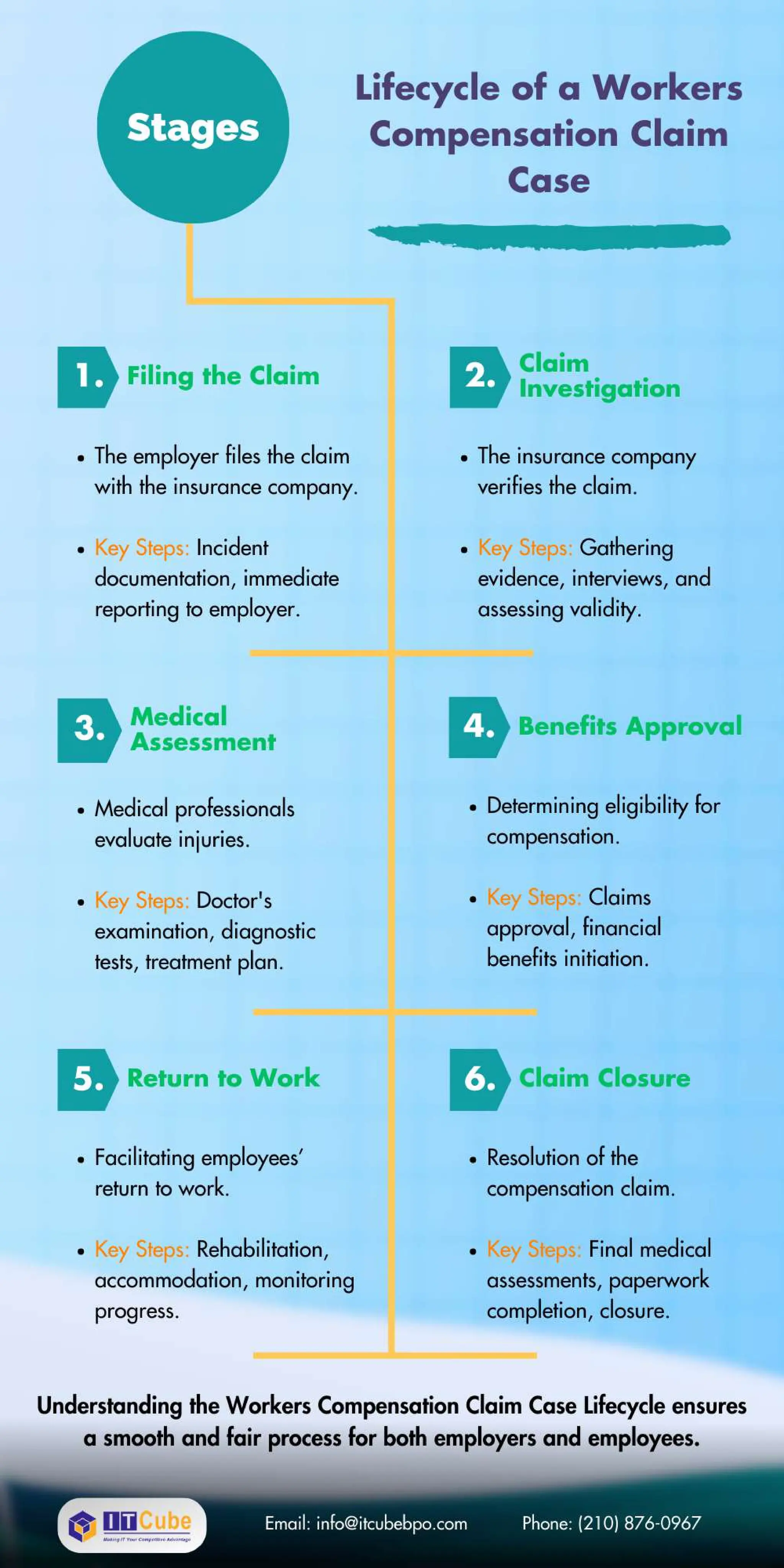
Critical Steps and Statutory Deadlines in New York
Timing is critical in New York workers' compensation cases. Missing statutory deadlines can result in an automatic, permanent forfeiture of your benefits regardless of injury severity.
Injury Occurs
Written Notice to Employer (Within 30 Days)
File Form C-3 with WCB (Within 2 Years)
Obtain Immediate Medical Treatment: Inform the treating healthcare provider that your injury occurred at work. Ensure the doctor is authorized by the NYS Workers' Compensation Board to treat injured workers.
Provide Written Notice Within 30 Days: You must notify your employer (supervisor, manager, or HR department) in writing within 30 calendar days of the accident date. Verbal notification is insufficient under New York Workers' Compensation Law Section 18.
File Form C-3 Within Two Years: You must file an official Employee Claim Form (Form C-3) with the Workers' Compensation Board within two years of the accident date or within two years of when you knew (or should have known) that an occupational disease was caused by your employment.
Follow Medical Guidance and Document Everything: Attend all scheduled medical follow-ups, physical therapy sessions, and IME appointments. Retain copies of all incident reports, pay stubs, medical receipts, and written communications from the insurance carrier.
Common Pitfalls That Harm Queens Injured Workers' Claims
Even valid claims can run into obstacles due to simple procedural mistakes early in the process. Navigating the system requires avoiding several common missteps:
- Failing to Give Written Notice: Telling a co-worker or mentioning an injury verbally to a supervisor without submitting a written document often leads employers to deny receiving timely notice.
- Treating with Unauthorized Physicians: Except in emergency situations, medical treatment must be delivered by a physician certified by the NYS Workers' Compensation Board. Receiving non-emergency care from an unauthorized provider can result in unpaid medical bills and unverified medical reports.
- Giving Recorded Statements Without Guidance: Insurance adjusters frequently request recorded telephone statements shortly after an injury report. Casual comments regarding how the accident occurred or past medical histories can be misinterpreted and used to dispute your claim.
- Accepting an Early Lowball Settlement: Settling a claim through a Section 32 Waiver Agreement surrenders future medical or wage rights permanently. Signing an agreement before reaching Maximum Medical Improvement (MMI) can leave you financially exposed if your medical condition worsens later.
Frequently Asked Questions
Can I be fired for hiring a workers' compensation lawyer in Queens?
No. Under New York Workers' Compensation Law Section 120, it is illegal for an employer to discharge, retaliate against, or discriminate against an employee simply because they filed a workers' compensation claim or hired legal counsel. If your employer retaliates against you, they face financial penalties, and you may be entitled to job reinstatement and back pay.
How long does a workers' compensation claim take in Queens?
For uncontested claims, medical coverage begins immediately, and initial lost-wage benefit checks arrive within 18 days of the employer receiving notice. However, if a claim is contested by the insurer, resolving disputes through administrative hearings, depositions, and judge decisions typically takes several months to over a year depending on medical complexity.
What is the difference between a workers' comp claim and a personal injury lawsuit?
Workers' compensation is a no-fault administrative system providing statutory wage replacement and medical care from your employer's insurance, regardless of who caused the accident. You cannot recover compensation for pain and suffering through workers' comp. A personal injury lawsuit is a civil court claim against a negligent third party (not your employer) that allows full recovery for past and future pain and suffering, complete wage loss, and loss of quality of life.
What happens if the insurance company stops paying my weekly benefits?
Insurers cannot arbitrarily terminate or reduce benefits without medical justification. If the carrier cuts your payments, it is usually based on an IME report claiming you have recovered or reached Maximum Medical Improvement. When this happens, an attorney can request an expedited hearing before a Workers' Compensation Law Judge to reinstate your benefits while medical evidence is reviewed.
Do I have to travel to Manhattan for my Workers' Compensation hearings?
No. Most administrative hearings for workers residing in Queens are handled virtually through the WCB’s digital video system. If an in-person hearing or administrative review is ordered, it is typically scheduled at a regional Workers' Compensation Board hearing location serving the Queens district, such as the Jamaica District Office.
Recommended Next Steps
If you have suffered a workplace injury in Queens, take immediate action to protect your legal and financial interests:
- Document Your Injury: Submit a formal written notice of injury to your employer immediately and keep a dated copy for your personal records.
- Seek WCB-Authorized Medical Attention: Visit an authorized medical provider, clearly state that your injury occurred at work, and obtain a detailed narrative report establishing casual relationship.
- Evaluate Your Claim's Complexity: Review whether your claim involves disputes, lost wages, pre-existing conditions, or permanent physical limitations.
- Consult an Attorney: If your claim is denied, contested, or involves permanent impairment, schedule a free consultation with a qualified Queens workers' compensation attorney to review your file before agreeing to any carrier settlements or signing legal waivers.
Image Gallery