Understanding Attribution Theory: Meaning, Models, and Applications
Attribution theory is a foundational framework in social psychology that explains how individuals interpret the causes of human behavior and events. It clarifies whether people attribute actions to internal personal characteristics, su...
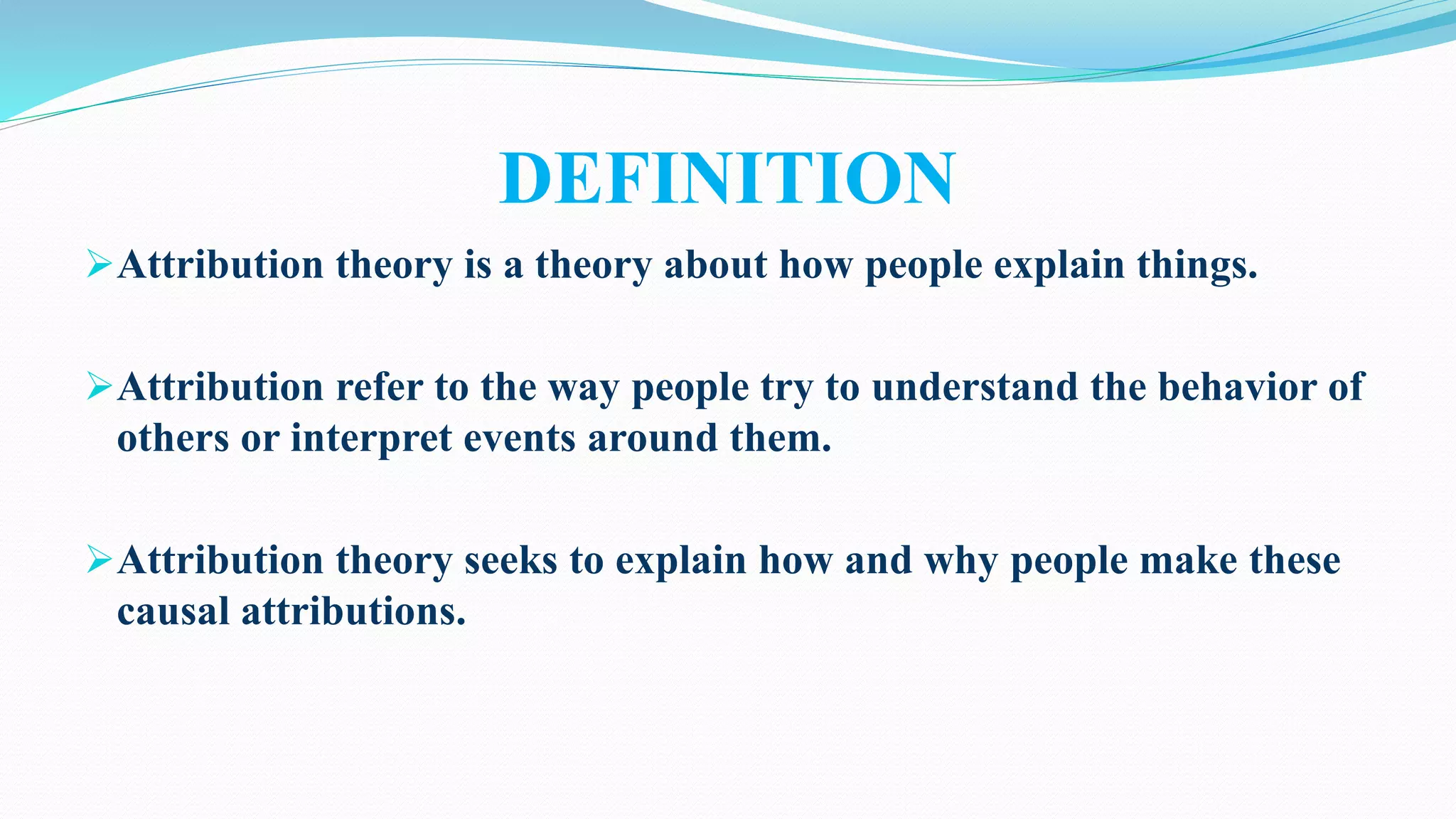
Attribution theory is a foundational framework in social psychology that explains how individuals interpret the causes of human behavior and events. It clarifies whether people attribute actions to internal personal characteristics, such as personality or effort, or to external environmental factors, such as luck, social pressure, or task difficulty.
Contents
What Is Attribution Theory? Core Meaning and Foundation
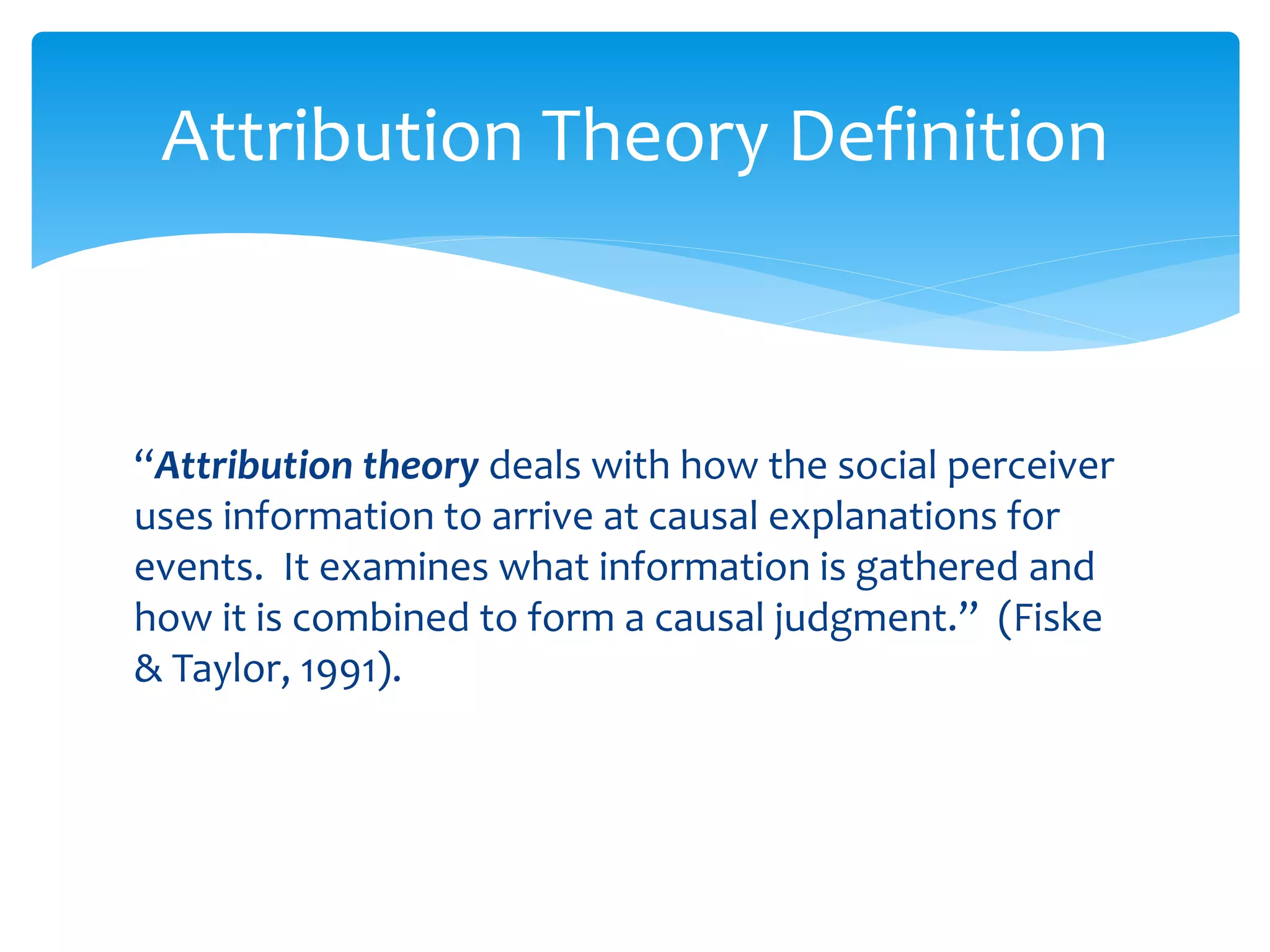
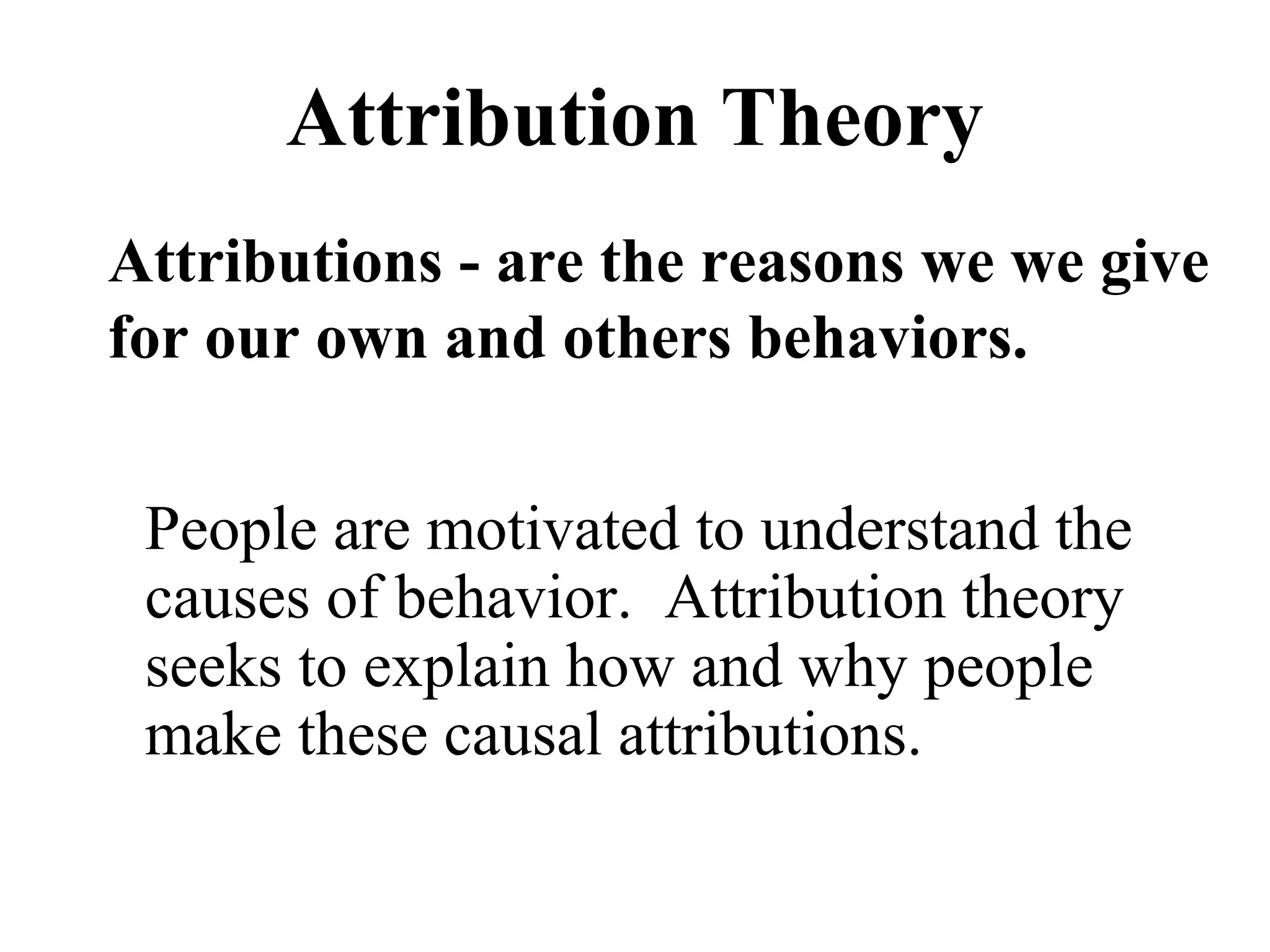
At its core, attribution theory explores the cognitive processes humans use to answer the fundamental question: "Why did that happen?" Human beings are naturally driven to make sense of their environment. When observing an action—whether a colleague missing a deadline, a student excelling on an exam, or a friend failing to return a phone call—the human brain immediately generates causal explanations to establish predictability and control over the social world.
The foundational groundwork of attribution theory was established by Austrian psychologist Fritz Heider in his 1958 book, The Psychology of Interpersonal Relations. Heider referred to average individuals as "naive scientists" who systematically observe behavior, gather information, and form causal hypotheses to explain everyday events.
- Observed Event
- Internal Attribution (Personality, Ability, Effort, Intentions)
- External Attribution (Environment, Luck, Social Situation)
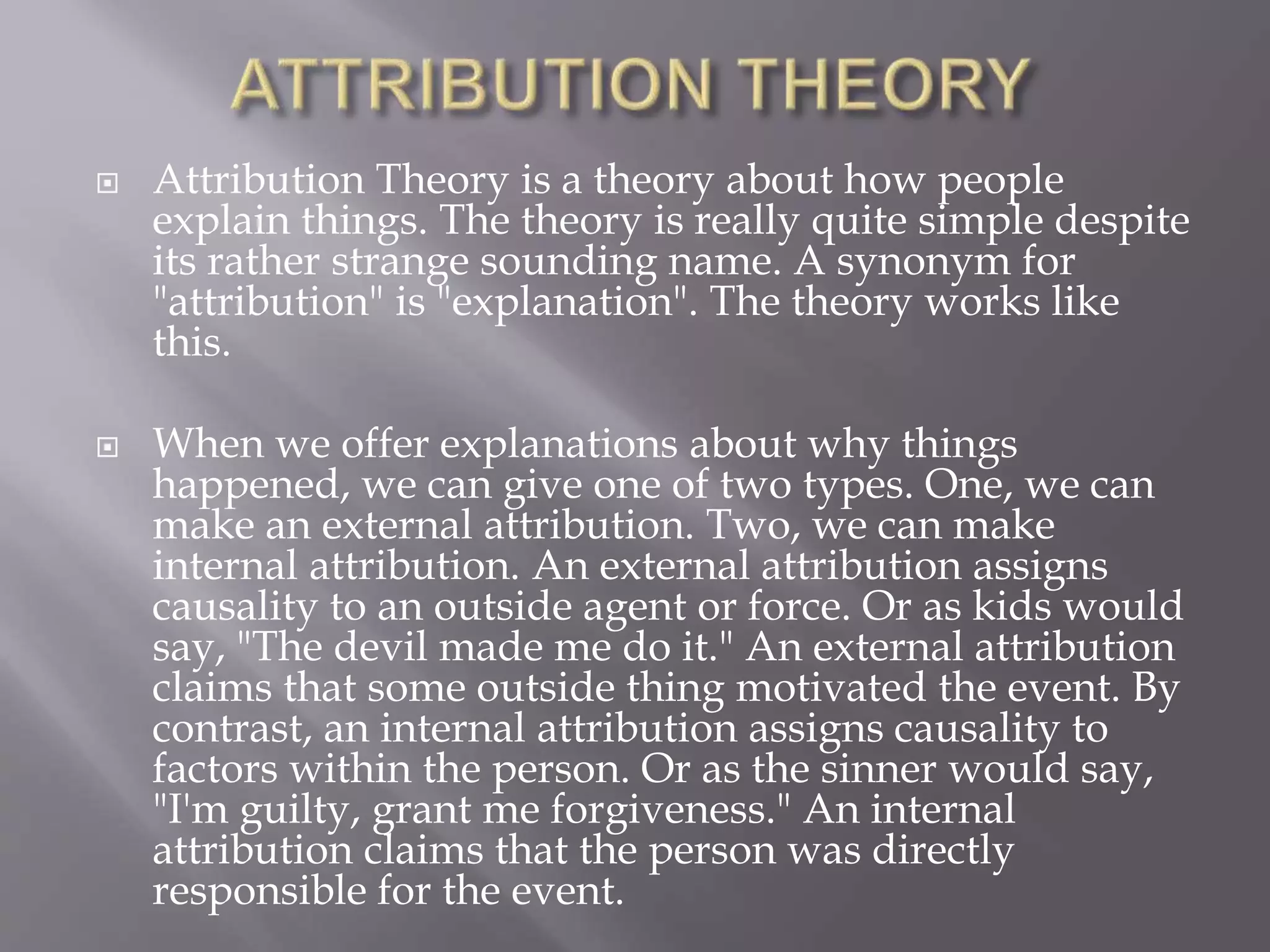
Heider categorized these causal explanations into two primary categories:
- Internal (Dispositional) Attribution: Assigning the cause of a behavior to internal characteristics within the individual, such as personality traits, innate ability, mood, values, or conscious effort. For example, assuming a worker is late because they are irresponsible is an internal attribution.
- External (Situational) Attribution: Assigning the cause of a behavior to environmental, structural, or situational factors outside the individual’s direct control. For example, assuming a worker is late due to an unexpected highway blockage or severe weather is an external attribution.
Understanding attribution is vital because the causal conclusions people reach directly influence their emotional responses, future expectations, and interpersonal behaviors. Misinterpreting the cause of an event can lead to misdirected blame, flawed performance evaluations, or impaired self-esteem.
Major Models of Attribution Theory
Following Heider’s initial work, several psychologists expanded attribution theory into structured, empirical models. Three primary models dominate cognitive and social psychological literature: Jones and Davis’s Correspondent Inference Theory, Kelley’s Covariation Model, and Weiner’s Three-Dimensional Model.
1. Jones and Davis’s Correspondent Inference Theory (1965)
Edward E. Jones and Keith E. Davis developed the Correspondent Inference Theory to explain how an observer decides whether a person’s action reflects an underlying, enduring personality trait (a "correspondent inference").
When observing an actor's behavior, observers evaluate three key factors:
- Free Choice: Was the behavior freely chosen, or was the person forced by external circumstances? Behaviors performed freely are far more likely to be attributed to dispositional traits.
- Social Desirability: Is the behavior standard and socially expected, or does it violate social norms? Standard behaviors (e.g., saying "thank you") reveal little about personal traits, whereas unusual or non-conforming behaviors reveal distinct personal characteristics.
- Non-Common Effects: Does the chosen action produce unique outcomes that alternative actions would not? If an action leads to a single unique outcome, observers can infer intention and specific motives with higher confidence.
2. Harold Kelley’s Covariation Model (1967)
Harold Kelley formulated the Covariation Model, which explains how individuals collect multiple pieces of information across different instances to determine whether an outcome stems from internal traits, external circumstances, or specific stimuli.
Kelley proposed that observers analyze three primary dimensions of information:
- Consensus: Do other people behave in the same way in this specific situation? High consensus means others act similarly (pointing toward an external cause), while low consensus means few act this way (pointing toward an internal cause).
- Distinctiveness: Does the person behave this way only toward this specific stimulus, or across many different situations? High distinctiveness means the behavior is unique to this context (pointing toward an external cause), while low distinctiveness means the behavior occurs universally across contexts (pointing toward an internal cause).
- Consistency: Does the person act the same way toward this stimulus every time this situation occurs? High consistency means the pattern repeats over time, whereas low consistency suggests a fleeting, anomalous event.
By evaluating high or low levels of consensus, distinctiveness, and consistency, observers infer whether the cause is personal (internal actor), entity-based (external target), or circumstantial.
3. Bernard Weiner’s Three-Dimensional Model (1971, 1986)
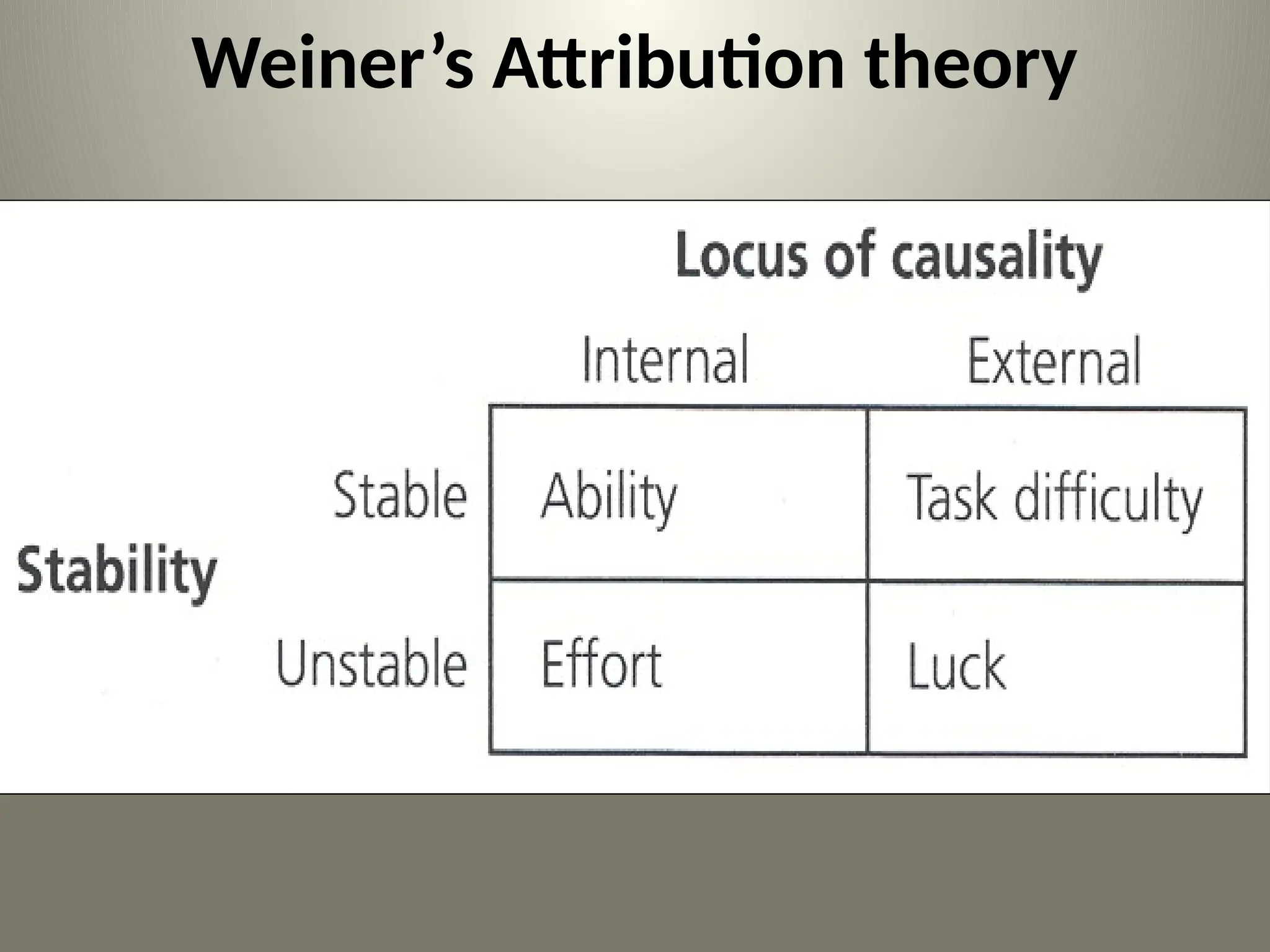
Bernard Weiner adapted attribution theory specifically to explain achievement, motivation, and emotional reactions to success and failure. Weiner's Attribution Framework categorizes attributions along three distinct structural dimensions:
- Locus of Control (Internal vs. External): Whether the event's origin rests within the individual (e.g., effort, skill) or in the surrounding environment (e.g., task difficulty, weather).
- Stability (Stable vs. Unstable): Whether the cause is constant over time (e.g., intelligence, systemic rules) or variable across time (e.g., luck, momentary fatigue).
- Controllability (Controllable vs. Uncontrollable): Whether the cause can be influenced or changed by human intervention (e.g., study time, strategy) or is inherently beyond personal control (e.g., genetic traits, economic collapse).
| STABLE | UNSTABLE | |
|---|---|---|
| INTERNAL | Ability / Innate Skill | Effort / Energy Level |
| EXTERNAL | Task Difficulty / System | Luck / Chance Occurrences |
Weiner’s model demonstrates how individuals react emotionally to outcomes. For instance, attributing failure to an internal, stable, and uncontrollable factor (e.g., "I lack intelligence") leads to helplessness and low self-esteem. Conversely, attributing failure to an internal, unstable, and controllable factor (e.g., "I did not study enough") fosters resilience and constructive motivation.
Comparison of Major Attribution Models
The table below contrasts the fundamental components, variables, and clinical/organizational focus of the primary attribution frameworks:
| Model | Pioneer(s) & Era | Primary Variables Measured | Attribution Outcome | Practical Application Focus |
|---|---|---|---|---|
| Naive Psychology | Fritz Heider (1958) | Internal Locus vs. External Locus | Dispositional vs. Situational causes | Basic interpersonal understanding |
| Correspondent Inference | Jones & Davis (1965) | Choice, Social Desirability, Non-common effects | Intentional dispositional traits | Evaluating personal intentions |
| Covariation Model | Harold Kelley (1967) | Consensus, Distinctiveness, Consistency | Actor (Internal) vs. Target/Context (External) | Data-driven observational reasoning |
| Three-Dimensional Model | Bernard Weiner (1971) | Locus, Stability, Controllability | Achievement & motivational cognitive states | Education, sports, and therapy |
Common Attribution Biases and Cognitive Errors
Although humans attempt to evaluate situations rationally, cognitive constraints and self-preservation mechanisms often introduce systematic errors known as attribution biases.
- COMMON ATTRIBUTION BIASES
- Fundamental Attribution Error
- Self-Serving Bias
- Actor-Observer Distortion
The Fundamental Attribution Error (FAE)
First identified by Edward Ross (1977), the Fundamental Attribution Error describes the widespread tendency to overestimate internal dispositional factors and underestimate external situational influences when judging the behavior of others. For instance, if an employee misses a sales target, managers frequently attribute the outcome to poor work ethic (internal) while overlooking supply-chain delays or macroeconomic downturns (external).
The Self-Serving Bias
The Self-Serving Bias occurs when individuals attribute their own personal successes to internal factors while attributing their failures to external circumstances.
- Success: "I passed the certification because I am highly capable." (Internal attribution)
- Failure: "I failed the test because the questions were unfair." (External attribution)
This bias serves an evolutionary and psychological purpose by preserving self-esteem, but it can impede personal accountability, learning, and skill development.
The Actor-Observer Effect
The Actor-Observer Effect highlights an asymmetric perspective between participants and observers. When people evaluate their own actions (as actors), they focus heavily on environmental context because situational variables are prominent in their awareness. When they evaluate someone else's actions (as observers), the focal point shifts to the individual, making personal traits the dominant explanation.
The Ultimate Attribution Error
Expanding attribution theory to intergroup dynamics, Thomas Pettigrew defined the Ultimate Attribution Error. This bias occurs when members of an "in-group" attribute negative actions by an "out-group" to their fundamental character, while dismissing the out-group's positive actions as luck, manipulation, or exceptional circumstances.
Practical Applications in Management, Therapy, and Education
Attribution theory is widely applied across workplace management, cognitive behavioral therapy, educational design, and consumer behavior.
- APPLICATIONS OF ATTRIBUTION THEORY
- Educational Mindsets
- Workplace Leadership
- Clinical Psychology
- Marketing Trust
1. Organizational Leadership and Management
In corporate environments, leaders frequently misattribute performance bottlenecks to employee incompetence rather than systemic process flaws. By training managers on Kelley’s Covariation Model, organizations can systematically evaluate whether performance drops are localized to one worker (low consensus/low distinctiveness = dispositional issue) or shared across teams (high consensus = systemic operational issue). This mitigates biased reviews and fosters psychological safety.
2. Clinical Psychology and CBT
Attributional style is a central component of cognitive therapy for depression and anxiety. According to the American Psychological Association, individuals suffering from clinical depression often exhibit a depressogenic attributional style: attributing negative events to internal, stable, and global factors ("I fail at everything because I am incompetent"). Therapists use cognitive restructuring to reframe these attributions into unstable, specific, and controllable causes, helping patients regain personal agency.
3. Education and Student Achievement
In educational psychology, attribution theory heavily informs growth mindset strategies. When students attribute academic setbacks to fixed abilities ("I am bad at math"), effort declines. When teachers guide students to frame outcomes in terms of unstable, controllable factors ("I need a different study strategy or more practice time"), academic persistence and achievement improve significantly.
4. Marketing and Consumer Trust
Marketers leverage attribution theory to manage brand reputation following service disruptions. When a product fails, consumers assess attribution: Was it a fluke (unstable), or is the company fundamentally unreliable (stable)? Prompt refunds, transparent communication, and clear accountability help shift consumer attributions away from permanent brand defects toward isolated, external events.
How to Overcome Attribution Biases
To make objective decisions and foster healthy relationships, leaders and individuals must actively counter cognitive attribution biases. Applying structured evaluation techniques reduces reliance on unexamined assumptions.
- Conduct a Counter-Factual Analysis: Before concluding that an individual’s failure stems from laziness or incompetence, systematically evaluate what situational constraints could cause a high performer to fail under the same conditions.
- Gather Covariation Data Explicitly: Use Kelley's dimensions. Check if other team members faced similar outcomes (Consensus) and whether this specific failure occurs across all tasks (Distinctiveness) before issuing performance warnings.
- Separate Locus from Controllability: Differentiate between actions an employee caused directly and variables they lacked the authority or resources to change.
- Practice Perspective-Taking: Actively adopt the actor's viewpoint to counter the Actor-Observer Effect. Asking simple questions like "What contextual information am I missing?" helps rebalance perspective.
Frequently Asked Questions
What is the core definition of attribution theory?
Attribution theory is a psychological framework that explains how individuals infer the causes of behavior and events, assigning responsibility to either internal personal traits or external environmental factors.
Who created attribution theory?
Fritz Heider is recognized as the father of attribution theory following his 1958 work on internal and external causal attributions. The framework was later significantly expanded by Edward Jones, Keith Davis, Harold Kelley, and Bernard Weiner.
What is the difference between dispositional and situational attribution?
Dispositional (internal) attribution places the cause of an outcome on an individual's personal characteristics, such as personality, intelligence, or effort. Situational (external) attribution attributes outcomes to environmental forces outside the individual's control, such as task difficulty, weather, or bad luck.
How does attribution theory affect employee motivation?
Attribution theory directly impacts employee motivation by shaping how staff perceive performance outcomes. When employees believe failure is caused by controllable factors (effort or strategy), they maintain high motivation. Conversely, attributing failure to uncontrollable internal traits (lack of innate talent) leads to burnout and learned helplessness.
What is the Fundamental Attribution Error?
The Fundamental Attribution Error is a cognitive bias where observers overestimate the influence of internal personality traits and underestimate the influence of external situational factors when explaining another person's behavior.
Summary and Next Actions
Attribution theory provides a rigorous framework for understanding how human beings interpret behavior, evaluate performance, and assign responsibility. Recognizing the cognitive biases inherent in human reasoning—such as the Fundamental Attribution Error and Self-Serving Bias—allows leaders, educators, and clinicians to make fairer judgments, design effective interventions, and foster constructive communication.
Recommended Next Actions:
- Audit Performance Appraisal Systems: Review corporate evaluation criteria to ensure managers evaluate systemic factors (consensus and distinctiveness) rather than relying solely on subjective trait assessments.
- Reframe Personal Setbacks: Apply Weiner’s model to personal and professional challenges by focusing on unstable, controllable factors such as effort, strategy, and skill acquisition.
- Integrate Cognitive Restructuring: Educational and mental health professionals should incorporate attributional retraining techniques to help learners reframe failure into actionable growth opportunities.
Image Gallery