How to Choose Casual Clothes for Big Men: A Complete Guide to Fit and Style
Choosing casual clothes for big men requires focusing on proper proportions, fabric structure, and strategic layering rather than simply buying larger sizes. The key to looking sharp and feeling comfortable is wearing garments that com...
Choosing casual clothes for big men requires focusing on proper proportions, fabric structure, and strategic layering rather than simply buying larger sizes. The key to looking sharp and feeling comfortable is wearing garments that complement your body frame by highlighting structure, avoiding excess cling, and maintaining balanced lines from shoulders to footwear.
Contents
Understanding Fit: Why Proportion Matters More Than Size
For larger frames, fit is the single most critical factor in looking well-dressed. Many men with bigger builds make the mistake of buying oversized clothes to hide their body shape, or buying clothes that are too tight in an effort to look slimmer. Both approaches create visual imbalance. Oversized garments add unnecessary volume, making you appear broader than you are, while overly tight clothing pulls across the belly, chest, and shoulders, highlighting areas of tension.
Achieving a balanced silhouette starts with understanding how clothing cuts interact with larger proportions. Pay close attention to key reference points across your upper and lower body.
Shoulder Seams, Torso Cut, and Hem Length
The shoulder seam serves as the anchor of any top. On a properly fitting t-shirt, casual button-down, or polo shirt, the shoulder seam should sit directly at the point where your collarbone meets your shoulder joint. If the seam drops several inches down your upper arm, the shirt is too large and will create a slouched, boxy appearance. If the seam pulls toward your neck, the chest and shoulders are restricted.
For the torso, seek out ** relaxed fit ** or ** athletic fit ** cuts rather than traditional slim fits or boxy oversized options. An athletic fit offers extra room through the chest and shoulders while maintaining a subtle taper toward the hem. This prevents the fabric from billowy tenting over the stomach while offering freedom of movement.
Hem length is equally vital:
- Casual Un-tucked Shirts: The lower hem should fall right at mid-fly—roughly halfway down the zipper of your trousers. A shirt that is too short exposes the waist when reaching up, while an overly long hem shortens the leg line visually.
- Tucked Shirts: Look for "tall" sizing variants if you have a longer torso to ensure the hem stays tucked cleanly without pulling up throughout the day.
Pant Rise, Thigh Clearance, and Tapering
Trousers and denim establish the lower half of your visual frame. The most flattering rise for bigger men is a mid-rise or high-rise pant. Low-rise pants sit beneath the belly, pushing the torso outward and creating a shorter leg appearance. Mid-to-high-rise pants sit near the natural waist, creating an uninterrupted vertical line from the waist down to your shoes.
Look for pants featuring an athletic taper fit. This cut provides generous room through the seat and thighs to accommodate larger legs without pulling, then tapers slightly from the knee down to the ankle. This slight taper prevents wide leg openings from pooling awkwardly over your shoes, yielding a clean, modern aesthetic.
Fabric Selection: Choosing Materials That Drape Without Clinging
Fabric weight and weave dictate how a garment hangs on your body frame. Flimsy, ultra-lightweight synthetic fabrics tend to stick and cling to curves, accentuating body contours unnecessarily. Conversely, excessively stiff fabrics can add rigid bulk. The ideal materials balance breathable weight with natural drape.
| Recommended | To Avoid |
|---|---|
| Mid-to-Heavy Cotton | Thin Synthetics |
| Cotton-Linen Blends | High-Elastane |
| 10oz to 14oz Denim | Shiny Polyester |
| Oxford Cloth & Twill | Flimsy Jersey |
Heavyweight Cotton and Natural Blends
Mid-weight to heavyweight cotton (ranging from 180 to 240 GSM for t-shirts) provides enough structural integrity to hang straight down over the torso without clinging to the midsection. Natural plant fibers like cotton, linen, and hemp allow air circulation while maintaining a clean shape.
For warm weather, opt for cotton-linen blends. Pure linen wrinkles easily and can lose its shape, but a blend combines the cooling properties of linen with the structural stability of cotton. For cool weather, brushed cotton twill, flannel, and medium-weight wool provide warmth without adding excessive bulk.
Stretch Fabrics and Structure Maintenance
Elastane or spandex blends offer flexibility, but moderation is essential. A casual pant or shirt containing ** 1% to 3% elastane ** provides subtle stretch across the back, knees, and waist, enhancing comfort during movement.
Avoid high-stretch synthetic garments (above 5% stretch) for daily casual wear, as these fabrics tend to contour tightly against the body rather than holding an independent drape. Reserve high-performance technical wear exclusively for athletic activity.
Core Casual Wardrobe Essentials for Larger Frames
Building a versatile casual wardrobe involves selecting foundational pieces designed to work cohesively. Prioritize adaptable garments that can be combined for work-from-home, weekend errands, or casual evening gatherings.
| Garment Category | Key Feature / Ideal Specification |
|---|---|
| Heavyweight Crew-Neck Tees | 180+ GSM cotton, set-in sleeves, wide collar |
| Structured Polos | Banded collar, 3-button placket, mid-weight |
| Casual Button-Downs (Oxford/Twill) | Soft button-down collar, curved hem |
| Athletic-Fit Denim | Mid-rise, 12oz-14oz weight, 2% stretch |
| Flat-Front Chinos | Mid/high-rise, no pleats, tapered leg |
| Unstructured Blazers / Jackets | Soft shoulders, hip-length hem |
Tops: Crew Necks, Polos, and Casual Button-Downs
- Crew-Neck T-Shirts: Choose necklines with a sturdy, rib-knit collar band that stays flat against the neck without stretching out. A neat collar draws attention upward toward the face. V-neck tees can work well if the drop is subtle; avoid deep V-necks that lengthen the neck excessively.
- Polo Shirts: Polos are inherently flattering because the structured collar frames the neck. Select polos with a firm collar band that maintains its shape and a three-button placket to keep the chest looking balanced.
- Button-Down Shirts: Oxford Cloth Button-Down (OCBD) shirts are ideal casual staples. The dense weave of Oxford cloth holds its structure over the torso, while the buttoned collar stays neat without requiring starch. Wear them un-tucked with a curved shirt hem, or tucked into chinos for a smarter casual look.
Bottoms: Athletic Fit Denim and Flat-Front Chinos
- Denim: Dark indigo and medium-wash denim are the most versatile options. Dark washes naturally streamline your lower half. Avoid heavily distressed jeans, horizontal fading across the thighs, or whiskering around the lap, as these wash details highlight width.
- Chinos: Choose flat-front chinos made from mid-weight cotton twill. Avoid front pleats unless you are wearing high-waisted vintage-style trousers, as modern low-to-mid-rise pleats tend to flare open over the hips and add bulk to the midsection.
Layering Pieces: Structure Through Jackets and Overshirts
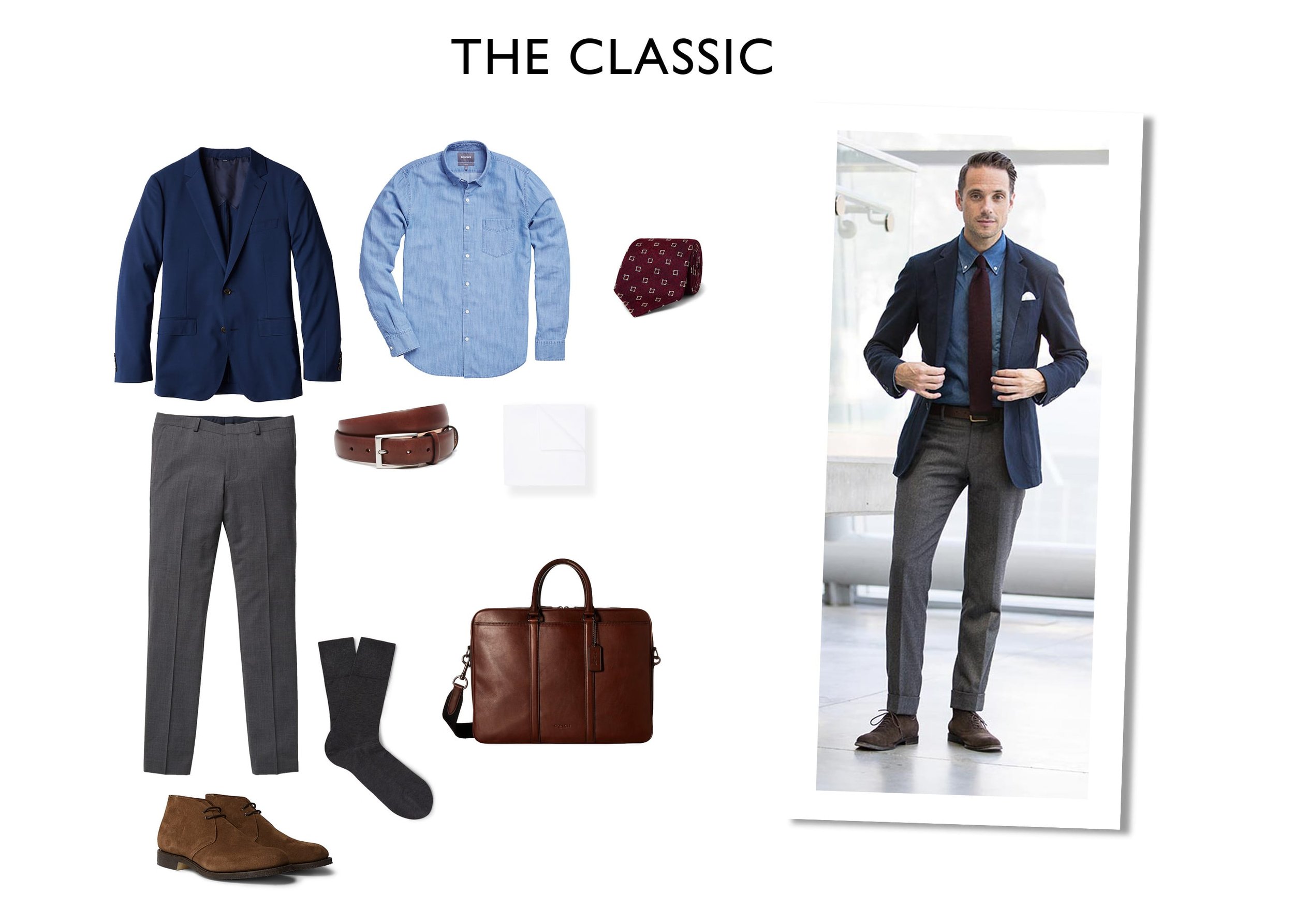
Layering is one of the most effective styling techniques for larger men. Wearing an open outer layer creates two vertical lines down the center of the body, which draws the eye up and down rather than side to side.
- Overshirts and Shackets: A heavy cotton canvas or denim overshirt worn open over a plain t-shirt adds structure to the shoulders while keeping the torso look clean.
- Unstructured Blazers and Casual Jackets: Look for unlined, soft-shoulder blazers made from cotton, wool-blend, or linen. Avoid heavy shoulder padding, which can make a broad upper body appear boxy. Harrington jackets, field jackets, and utility shirt-jackets ending at upper-hip level are excellent casual outerwear choices.
Visual Styling Rules: Creating Balance and Long Lines
Strategic styling uses color, pattern, and proportion to create visual balance. Apply these principles to construct cohesive outfits:
- Utilize Tonal and Monochromatic Color Palettes: Wearing garments within the same color family (such as navy jeans with a slate blue shirt, or charcoal trousers with a dark gray overshirt) avoids harsh horizontal divisions at the waistline, lengthening your visual profile.
- Scale Patterns Proportionately: Small, micro-grid checks or tiny floral prints can look out of scale against a large chest or broad shoulders. Opt for medium-to-large scale patterns, such as classic buffalo checks, wide vertical stripes, or medium windowpane checks, which match your physical frame.
- Emphasize Verticality: Vertical stripes on casual shirts naturally guide the eye downward, creating a longer visual line. Avoid prominent horizontal stripes across the midsection.
- Choose Appropriately Scaled Accessories: Match your accessories to your build. Select watch cases between 42mm and 46mm in diameter, leather belts around 1.5 inches wide, and collars with standard-length points to keep everything in balance.
Common Fit Mistakes (and How to Fix Them)
| Common Mistake | Why It Happens | Practical Solution |
|---|---|---|
| Wearing Ultra-Wide Leg Pants | Attempting to hide thigh size behind excess fabric | Switch to an athletic-fit taper that provides thigh room while narrowing at the ankle |
| Sizing Up for Length | Regular sizes are too short in the torso | Shop specifically in Tall (T) sizing ranges for correct body and sleeve length |
| Wearing Flimsy, Thin Fabrics | Choosing lightweight tops for heat management | Opt for lightweight cotton-linen blends that maintain structure without clinging |
| Wearing Pants Below the Belly | Sinking trousers beneath the midsection | Move to a mid-rise or high-rise cut worn at the natural waistline with a belt or adjusters |
| Excessive Shirt Cuff Pooling | Sleeves designed for wider wrists folding down | Have a tailor shorten sleeve lengths or adjust cuff button placement |
Frequently Asked Questions
What is the best shirt fit for a man with a large belly?
An athletic fit or relaxed fit with a straight hem is generally best. Look for shirts made of medium-weight fabrics like Oxford cloth or 200+ GSM cotton that hang straight down from the chest. Avoid slim fits that pull across the front buttons and standard oversized cuts that add fabric bulk to your sides.
Should big men wear fitted or loose clothes?
Neither extreme works well. Big men look best in tailored-fitting clothing that follows the body shape without clinging or sagging. Clothes should fit comfortably with roughly 2 to 3 inches of ease through the torso and thighs to permit free movement while retaining a clean shape.
Are pleats good or bad for larger men?
Single or double pleats can work well on high-waisted dress trousers because they allow the fabric to expand when sitting. However, on low- or mid-rise casual pants, pleats often pull open while standing, adding unwanted visual bulk around the hips. For casual wear, flat-front chinos and mid-rise jeans are usually more flattering.
How can big men layer clothes in warm weather?
Use lightweight, unlined outer layers made from natural fibers. An open, unbuttoned short-sleeve linen overshirt worn over a structured cotton tank or lightweight tee creates vertical lines without trapping heat. Tropical-weave wool or open-weave cotton jackets also work exceptionally well for summer layering.
What jeans fit is best for big thighs?
Jeans labeled Athletic Fit (or relaxed-taper) are specifically cut with extra room through the seat and thighs while tapering slightly from the knee down. This fit accommodates muscular or large legs comfortably without creating a flared or baggy hem around your shoes.
Practical Action Plan for Building Your Wardrobe
- Audit Your Current Closet: Remove garments that pull across the chest, flare open at the buttons, or cling tightly to your stomach, as well as oversized shirts with drooping shoulder seams.
- Determine Your Correct Measurements: Take precise measurements of your neck, chest, natural waistline (at or near the navel), hips, and inseam. Use these figures instead of relying strictly on letter sizing (XL, 2XL, 3XL), which varies widely between brands.
- Invest in Core Basics First: Acquire 3–4 heavyweight crew-neck tees in neutral tones (navy, heather gray, black, olive), 2 structured Oxford button-down shirts, and 2 pairs of dark-wash athletic-fit jeans or flat-front chinos.
- Partner with a Local Tailor: Off-the-rack garments rarely fit perfectly. A local tailor can hem trousers to the proper length, shorten shirt sleeves, or take in excess fabric around the lower waist to give your casual clothes a custom-fitted appearance.
Image Gallery