How a Checking Account Works: A Complete Guide to Features, Fees, and Banking Mechanics
A checking account is a liquid deposit account held at a financial institution that allows you to deposit money, make everyday purchases, pay bills, and withdraw cash. It functions as a central hub for your daily finances, using routin...
A checking account is a liquid deposit account held at a financial institution that allows you to deposit money, make everyday purchases, pay bills, and withdraw cash. It functions as a central hub for your daily finances, using routing and account numbers to process transactions seamlessly through debit cards, electronic bank transfers, paper checks, and automated clearing house (ACH) networks.
Contents
The Core Mechanics: How Money Moves In and Out
A checking account serves as an operational transit point for personal and business cash flow. Unlike investment vehicles or savings products designed for capital accumulation, a checking account prioritizes immediate accessibility, safety, and transactional velocity. To understand how a checking account works, it is essential to examine the core channels through which funds enter and exit the account.
- YOUR CHECKING ACCOUNT
- DEPOSITS (Inflow)
- Direct Deposit (ACH)
- Mobile Check Deposit
- Wire Transfers / RTP
- Cash Deposits (ATM/Branch)
- PAYMENTS & WITHDRAWALS (Outflow)
- Debit Card Purchases (POS)
- ATM Cash Withdrawals
- ACH Bill Payments & Transfers
- Paper Checks & P2P Apps
- DEPOSITS (Inflow)
Inflows: Depositing Money into Your Account
Money can enter a checking account through several physical and digital pathways. The modern banking system relies heavily on automated settlement systems to clear these deposits into usable capital.
- Direct Deposit: The most common deposit method, where employers, government agencies, or retirement plans electronically transfer funds into your account via the Automated Clearing House (ACH) network. Direct deposits typically clear on the scheduled payment date, and many banks offer early access to these funds if payroll instructions are transmitted ahead of time.
- Mobile Check Deposit: By taking photos of the front and back of a endorsed physical check using a banking application, account holders can deposit funds remotely. The image is processed through optical character recognition (OCR) technology, and the funds are submitted to the paying bank.
- ATM and Branch Deposits: Cash or physical paper checks can be inserted directly into a bank’s automated teller machine (ATM) or handed to a teller at a brick-and-mortar branch. Cash deposits usually clear immediately, while check deposits may be subject to temporary holds.
- Wire Transfers and Real-Time Payments: For urgent or high-value transfers, domestic wire transfers or instant payment networks (such as FedNow or the Real-Time Payments/RTP network) allow funds to arrive and clear within seconds or minutes.
Outflows: Spending, Transferring, and Withdrawing Funds
Once money is inside the account, it can be disbursed through multiple payment rails. Each rail operates on distinct timeframes and security protocols.
- Debit Card Transactions: When you swipe, dip, or tap a debit card at a merchant terminal—or enter details online—the merchant requests an authorization from your bank. If approved, the bank places a temporary hold on those funds until the final settlement completes, usually within one to three business days.
- ACH Debit and Automated Bill Payments: Recurring expenses like mortgage payments, utility bills, and subscription services are frequently authorized through ACH debit payments. You provide the billing party with your account and routing numbers, allowing them to draw the exact balance owed on a recurring schedule.
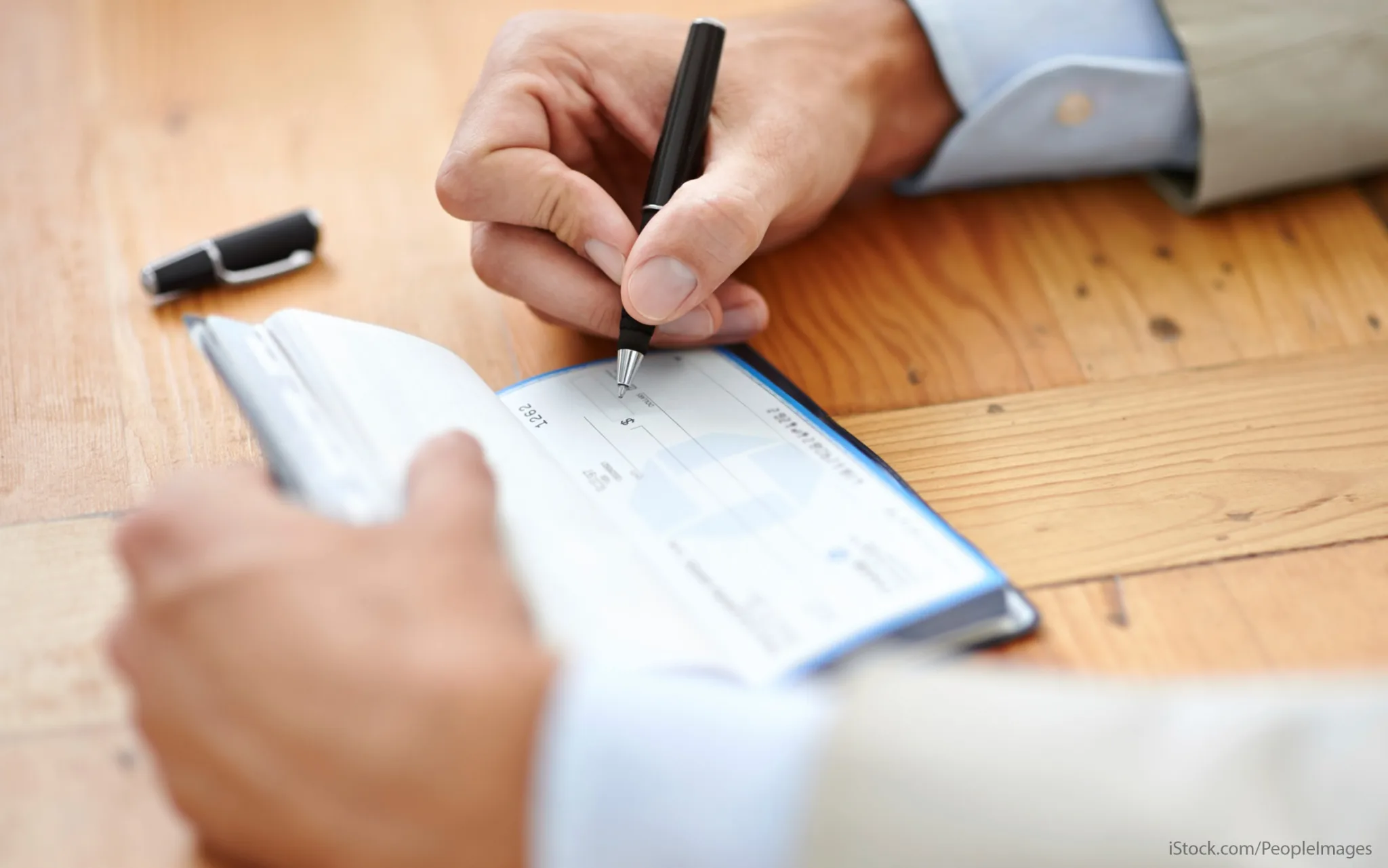
- Physical Checks: Writing a check provides a written order to your bank to pay a specific sum to the named recipient. When the payee deposits the check, their financial institution sends it through a clearing system back to your bank to debit your balance.
- Peer-to-Peer (P2P) Apps and Digital Wallets: Services like Zelle, Venmo, PayPal, Apple Pay, and Google Pay link directly to your checking account or debit card. Zelle operates through direct bank integration for rapid clearing, whereas other P2P services act as digital wallets that periodically transfer funds back to your linked checking account via ACH.
Anatomy of a Checking Account: Identifiers and Balances
To manage your funds effectively and avoid unexpected penalties, you must understand the numerical identifiers assigned to your account, as well as the distinction between different balance categories.
Routing Numbers vs. Account Numbers
Every bank account contains two critical identifying numbers, printed at the bottom of standard paper checks and displayed inside online banking portals:
- ABA Routing Transit Number (RTN): A nine-digit sequence that identifies the specific financial institution where your account is held. Established by the American Bankers Association, this number acts as an address for routing electronic transfers, wires, and check clearances through the payment system.
- Account Number: A unique string of digits (typically ranging from 8 to 12 numbers) assigned specifically to your individual checking account. Combined with the routing number, it ensures that transfers and bill payments reach your exact account without ambiguity.
Current Balance vs. Available Balance
One of the most frequent points of confusion for account holders is the difference between the current balance (sometimes called the ledger balance) and the available balance.
- Current Balance: The total amount of money in your account at the start of the business day or after all fully settled transactions have posted. This figure includes funds from pending deposits that have not yet cleared, but it does not deduct pending debit card charges or unprocessed payments.
- Available Balance: The actual portion of your money that is immediately accessible for spending, withdrawals, or transfers. Financial institutions calculate this figure by taking the current balance and subtracting pending debit authorizations, active account holds, and uncollected check funds.
Important Takeaway: Always rely on your available balance when making purchases. Spending based on your current balance can result in accidental overdrafts if pending merchant holds settlement charges post later in the day.
Standard Checking Account Types
Financial institutions offer several distinct variations of checking accounts tailored to different demographics, financial capabilities, and transactional needs.
- TYPES OF CHECKING ACCOUNTS
- Standard/Basic
- Low balance
- Daily spending
- Fee waivers
- Student
- No monthly fee options
- Age limit
- Interest
- APY earned
- High min. balance
- Second Chance
- For poor credit
- Restricted features
- Higher upkeep fees
- Standard/Basic
1. Traditional/Basic Checking Accounts
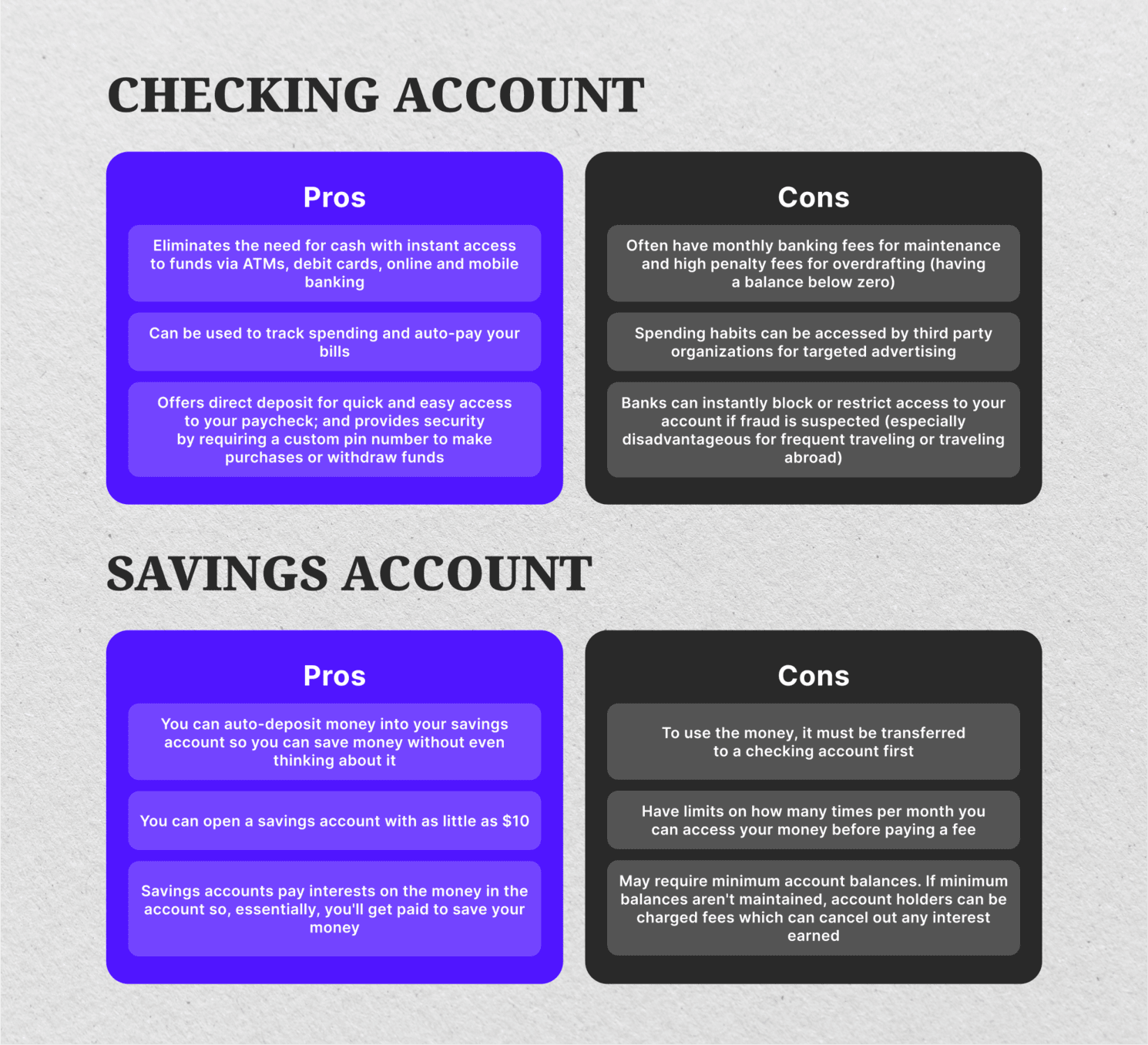
Designed for everyday personal banking, these accounts offer full access to debit cards, online/mobile banking, and online bill pay. They often carry a nominal monthly maintenance fee ($5 to $15), which institutions typically waive if you maintain a required minimum balance or arrange qualifying monthly direct deposits.
2. Student and Teen Checking Accounts
Targeted at young adults (usually ages 13 to 24), student checking accounts generally waive monthly maintenance fees without requiring minimum balance thresholds or direct deposits. They feature standard access tools and parental monitoring options for minors, transitioning into standard accounts upon graduation or reaching an age limit.
3. Premium and Interest-Bearing Checking Accounts
Unlike standard checking accounts that pay zero interest, interest-bearing checking accounts pay a modest Annual Percentage Yield (APY) on your balance. Premium checking accounts often offer added perks, such as waived out-of-network ATM fees, complimentary paper checks, and priority customer support. However, they demand significantly higher minimum daily balances (e.g., $5,000 to $25,000) to avoid monthly fees.
4. Second Chance Checking Accounts
Designed for consumers who have been turned away from traditional accounts due to negative reporting in consumer reporting databases like ChexSystems (often caused by past unpaid overdraft fees or closed accounts). Second chance accounts provide essential transactional access, though they usually charge non-waivable monthly upkeep fees and restrict overdraft limits or check-writing features.
Comparing Transactional and Storage Options
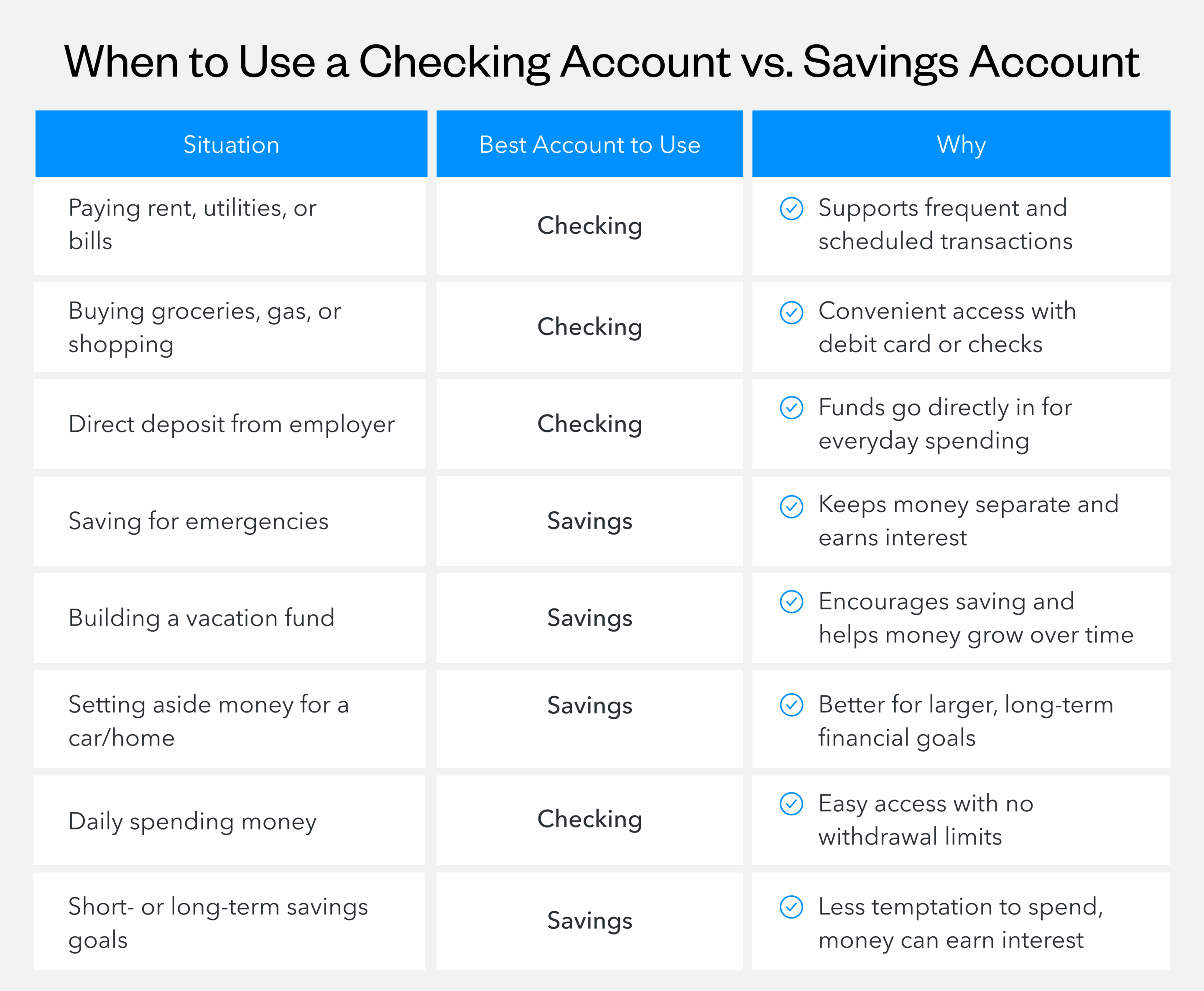
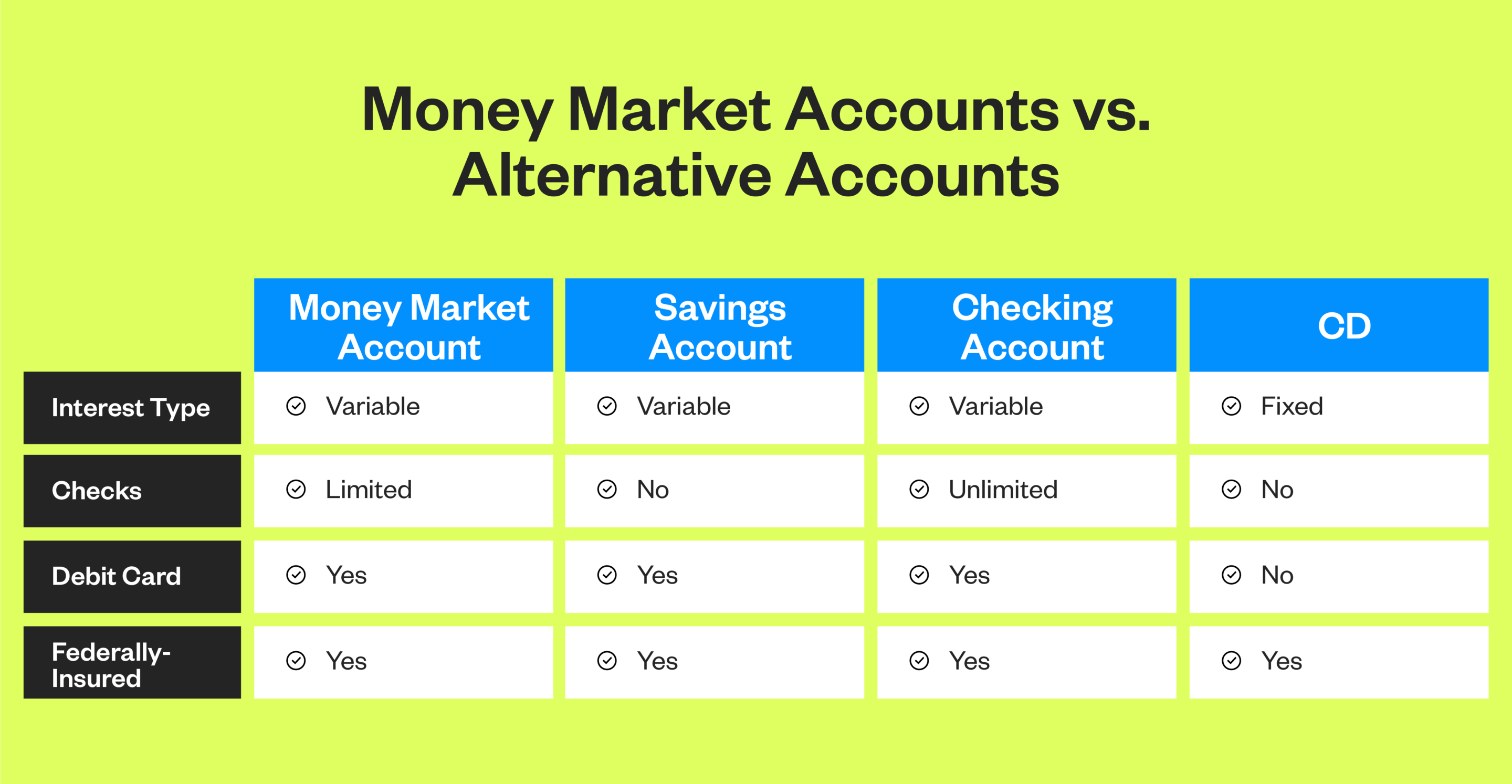
| Feature | Checking Account | Savings Account | Prepaid Debit Card |
|---|---|---|---|
| Primary Purpose | Daily spending and bill payment | Medium-to-long-term wealth storage | Managed spending without a bank |
| Liquidity & Access | Immediate (Debit card, ACH, Checks, Cash) | High, but transactions may be capped | Limited to pre-loaded card funds |
| Interest (APY) | None to Very Low (0.00% – 0.50%) | Variable Low to High (0.40% – 5.00%+) | Typically None |
| Account & Routing Numbers | Yes (Full electronic clearing access) | Yes (Inbound/Outbound transfer access) | Varies (Some offer limited direct deposit) |
| Overdraft Capability | Yes (If opted in or allowed by bank) | No (Transactions simply decline) | No |
| Deposit Insurance | Yes (FDIC / NCUA up to $250,000) | Yes (FDIC / NCUA up to $250,000) | Varies (Pass-through insurance only) |
| Monthly Fees | Common, but usually waivable | Low or waivable with minimum balance | Frequent (Reload fees, purchase fees) |
Fees, Regulations, and Consumer Safeguards
While checking accounts offer unprecedented convenience, they operate within strict legal boundaries and financial fee models that consumers must navigate carefully.
Common Checking Account Fees
Financial institutions generate revenue through specific account maintenance and transactional service fees:
- Monthly Maintenance Fee: A recurring charge for maintaining the account. Banks usually provide specific waiver paths, such as receiving $500+ in monthly direct deposits or maintaining a $1,500 minimum daily balance.
- Overdraft Fee: Charged when the bank covers a transaction that exceeds your available balance, leaving your account in a negative balance state. Overdraft fees historically range from $15 to $35 per occurrence, though many modern banks now offer overdraft grace zones or fee-free overdraft buffers up to a set amount.
- Non-Sufficient Funds (NSF) Fee: Triggered when a payment attempt (like an ACH debit or paper check) exceeds your balance, and the bank rejects or returns the transaction unpaid.
- Out-of-Network ATM Fees: Applied when you use an automated teller machine outside your bank’s network. You may face two separate charges: one from your own bank and a surcharge from the operating ATM owner.
- Foreign Transaction Fees: A percentage charge (typically 1% to 3%) assessed on purchases or cash withdrawals made outside your home country or in foreign currencies.
Government Regulations and Safety Nets
In the United States, checking accounts are governed by federal banking laws designed to secure consumer deposits and prevent unauthorized financial losses:
1. Deposit Insurance (FDIC and NCUA)
Your funds are protected against bank insolvency. The Federal Deposit Insurance Corporation (FDIC) insures deposits at chartered banks, while the National Credit Union Administration (NCUA) provides identical protection for credit unions. Deposit insurance covers up to $250,000 per depositor, per insured institution, per ownership category automatically upon account opening.
2. Regulation E (Electronic Fund Transfer Act)
Regulation E protects consumers against unauthorized electronic transactions, including stolen debit card usage, unauthorized ACH debits, and lost ATM transfers. If you report a lost or stolen card within two business days, your liability for unauthorized purchases is capped at $50. If reported within 60 days of receiving the statement showing the error, liability is capped at $500; beyond 60 days, protection drops significantly.
3. Overdraft Opt-In Rules (Regulation E Amendment)
Under federal rules, banks cannot automatically charge you overdraft fees on everyday debit card purchases and ATM withdrawals unless you explicitly opt in to overdraft coverage. If you do not opt in, debit card transactions that exceed your available funds will simply be declined at the register without incurring an overdraft fee.
How to Open and Manage a Checking Account
Setting up a checking account is a straightforward legal process, whether completed online or inside a physical bank branch.
- Select Bank & Account Type
- Submit Identity Documents & SSN
- Background Check (ChexSystems/EWS)
- Initial Deposit & Account Setup
Prerequisites and Required Identification
To open an account, federal Anti-Money Laundering (AML) and Know Your Customer (KYC) regulations require financial institutions to verify your identity. You will need to provide:
- Government-Issued Photo ID: A valid driver's license, passport, or state ID card.
- Identifying Information: Your full legal name, date of birth, and Social Security Number (SSN) or Individual Taxpayer Identification Number (ITIN).
- Proof of Residential Address: A recent utility bill, lease agreement, or mortgage statement displaying your physical address (P.O. Boxes are generally not accepted for identity verification).
- Opening Deposit: Many institutions require an initial deposit, which can range from $25 to $100, payable via cash, check, or external debit/ACH transfer.
The Background Screening Process
When you submit an application, the bank evaluates your banking history through consumer verification databases, primarily ChexSystems or Early Warning Services (EWS). These reporting agencies keep track of non-sufficient funds activity, forced account closures, unpaid negative balances, and suspected fraud. A history of unresolved overdraft balances at prior institutions may lead to application denial for a traditional account, steering you instead toward a second-chance checking account.
Frequently Asked Questions
Can I lose money in a checking account if the bank fails?
No, provided your financial institution is insured by the FDIC (for banks) or the NCUA (for credit unions) and your total account balance within that institution stays at or under the $250,000 threshold. If an insured institution fails, the regulator steps in to reimburse depositors or seamlessly transfer the accounts to another healthy institution without loss of principal.
What happens if my checking account balance goes negative?
If your checking account balance drops below $0—due to an authorized purchase, fee assessment, or recurring payment—the account enters a negative balance state. The bank may charge an overdraft fee for processing the item. If you do not deposit money to bring the account back to a positive balance within a set timeframe (usually 30 to 60 days), the bank will close the account, report the default to ChexSystems, and potentially turn the balance over to a collections agency.
How long does it take for a deposited check to clear?
Standard check clears usually take between one and three business days, depending on the bank’s check hold policy and the source of the check. Federal regulations under Regulation CC require banks to make the first $225 of a deposited check available by the next business day, while the remaining balance becomes available shortly after payment clears from the issuing bank.
Can I have multiple checking accounts at different banks?
Yes. Consumers can open multiple checking accounts across one or several financial institutions. Holding separate accounts can help isolate fixed expenses (bill paying) from discretionary spending, manage joint finances with a household partner, or take advantage of specific banking perks, reward rates, and sign-up bonuses offered by different providers.
How do modern instant payment rails like FedNow affect checking accounts?
Instant payment networks, including FedNow and RTP, allow bank transfers to process and settle within seconds 24 hours a day, seven days a week, 365 days a year. Unlike traditional ACH transfers, which process in batches during standard weekday business hours, real-time clearing means direct deposits, bill payments, and peer-to-peer transfers hit your available checking balance instantly without processing delays.
Actionable Strategy for Account Selection
When choosing and setting up a checking account, prioritize operational efficiency and cost elimination:
- Audit Your Expected Usage: If you utilize cash frequently, ensure the bank has a widespread local ATM network. If you rely strictly on digital transactions, an online-only bank may offer better interest rates and zero monthly fees.
- Verify Fee-Waiver Requirements: Review the account's fee schedules. Choose an account where you effortlessly satisfy the monthly fee waiver conditions—such as setting up an automated payroll direct deposit—without needing to manually manage account metrics every month.
- Manage Overdraft Settings: Evaluate your risk tolerance. For strict budget control, keep overdraft coverage turned off so that debit card transactions fail at the point of sale rather than triggering $35 fees. If you prefer financial safety for critical bill coverage, review grace period rules carefully.
- Establish Fraud Rules and Balance Alerts: Immediately after your account is open, sign up for mobile push notifications or SMS alerts for any transaction over a specific dollar limit (e.g., $50) to catch unauthorized usage immediately under Regulation E protections.
Disclaimer: This article provides general financial education and should not be construed as legal or official financial advice. Fee structures, regulations, and account characteristics vary by institution and jurisdiction. Always verify terms directly with your financial institution.
Image Gallery