Asset Classes for Investment: A Complete Guide to Portfolio Allocation
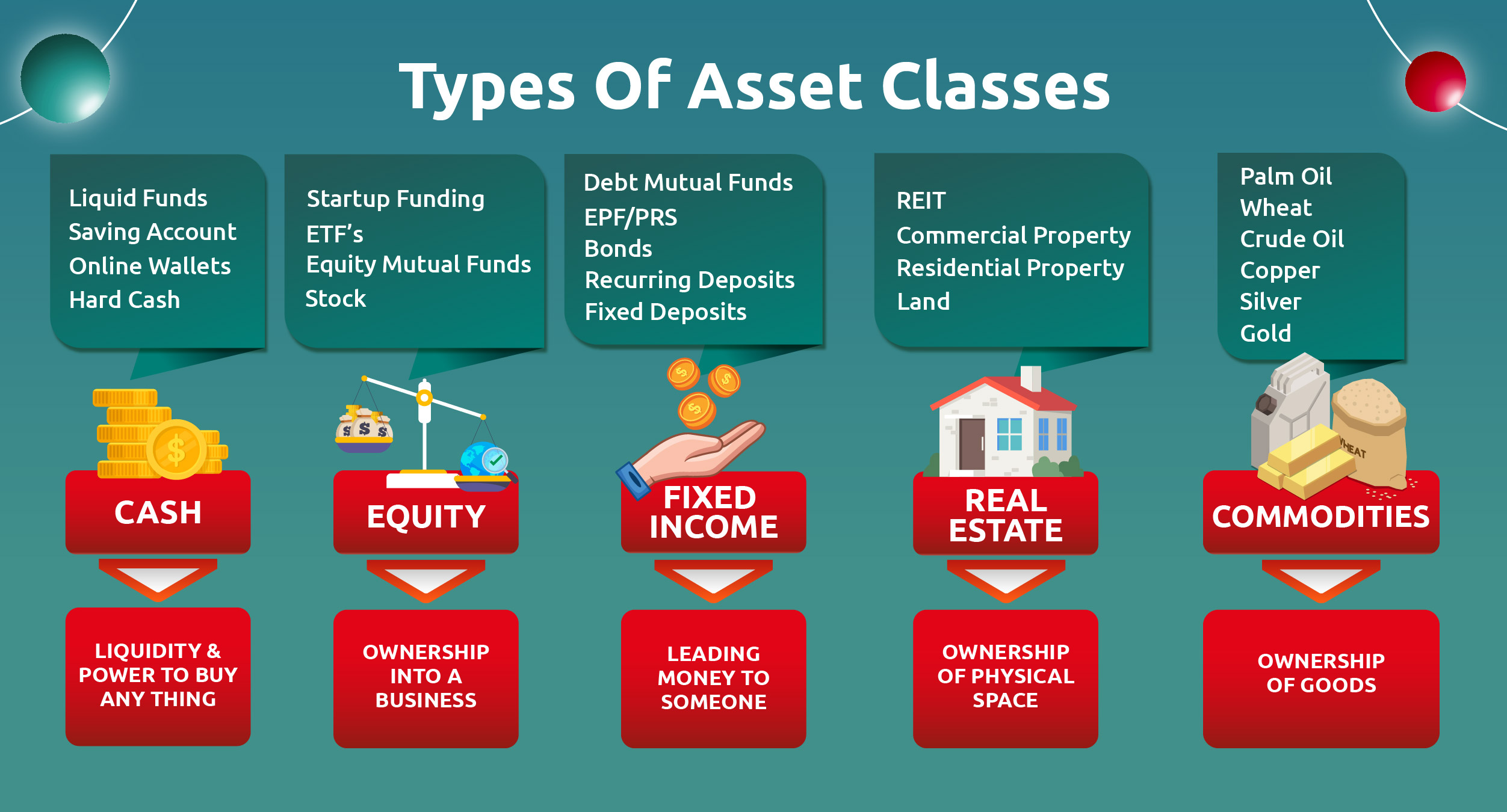
An asset class is a grouping of investments that exhibit similar financial characteristics, adhere to the same laws and regulations, and behave similarly under specific market conditions. The primary asset classes—equities, fixed incom...
An asset class is a grouping of investments that exhibit similar financial characteristics, adhere to the same laws and regulations, and behave similarly under specific market conditions. The primary asset classes—equities, fixed income, cash equivalents, real estate, commodities, and alternative investments—serve distinct roles within a portfolio. Structuring investments across these categories enables investors to balance risk, optimize total return, and preserve purchasing power across economic cycles.
Contents
Understanding the Role of Asset Classes in Portfolio Construction
Capital allocation decisions determine the vast majority of a portfolio’s long-term performance and volatility. Modern Portfolio Theory (MPT), pioneered by Harry Markowitz, demonstrates that combining assets with varying risk-return profiles and non-correlated market behaviors reduces overall portfolio risk without proportionally sacrificing expected returns.
Asset classes differ primarily by their capital structure ranking, income generation mechanisms, liquidity profile, and reaction to macroeconomic indicators such as inflation, real interest rates, and gross domestic product (GDP) growth.
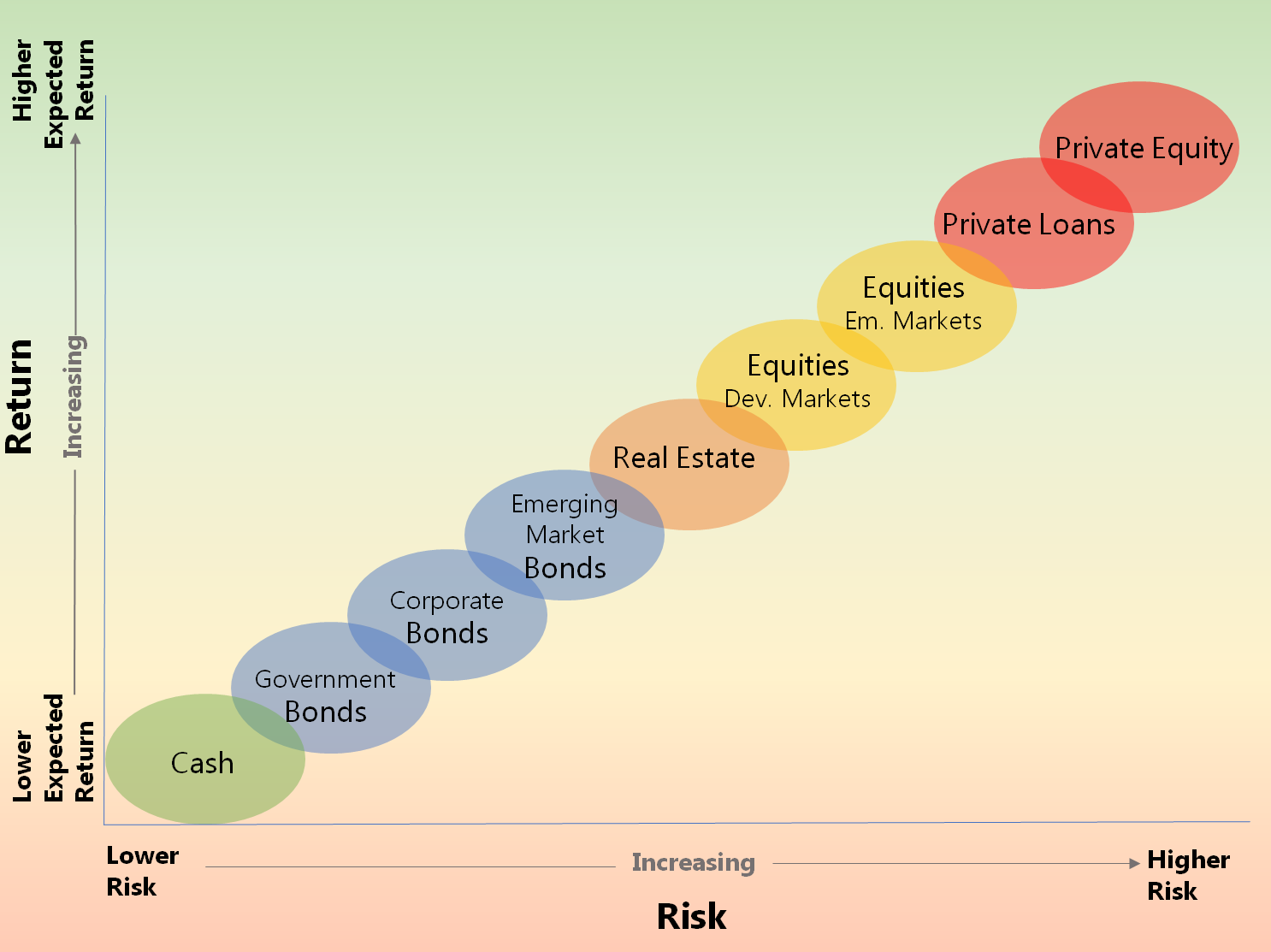
Risk-Return Spectrum across Major Asset Classes (from Low Risk / Low Expected Return to High Risk / High Expected Return):
- Cash & Equivalents
- Fixed Income
- Real Estate
- Equities
- Private Equity & Digital Assets
Core Characteristics Used to Classify Assets
- Risk and Volatility: The degree of price dispersion around an expected mean return, commonly measured by standard deviation or beta relative to a broader market index.
- Liquidity: The ease and speed with which an asset can be converted into cash without inflicting a significant price concession.
- Income vs. Growth Orientation: Whether economic returns derive primarily from contractual distributions (coupons, rents, dividends) or capital appreciation.
- Correlation: The mathematical relationship (ranging from -1.0 to +1.0) governing how two assets move in relation to one another under identical macroeconomic shocks.
Traditional Asset Classes
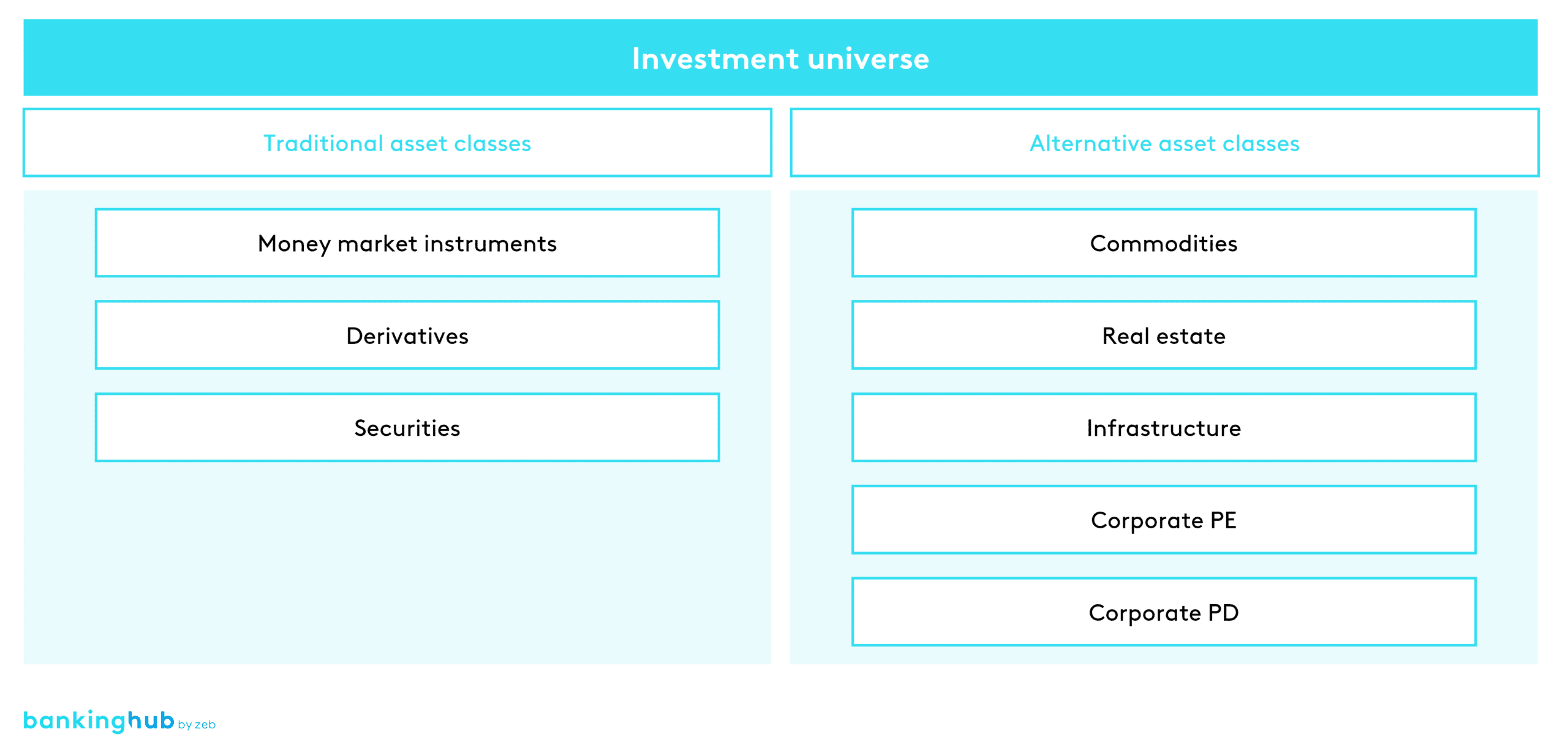
Traditional asset classes form the core foundation of institutional and retail investment portfolios worldwide due to their deep market liquidity, established regulatory oversight, and standardized price discovery mechanisms.
Traditional Asset Classes:
- Equities
- Common Stocks
- Preferred Stock
- Global Equities
- Fixed Income
- Govt Bonds
- Corp Debt
- Muni Bonds
- Cash Equivalents
- Treasury Bills
- Money Market
- Certificates
1. Equities (Public Stocks)
Equities represent fractional ownership in publicly traded corporations. When an investor purchases equity shares, they acquire a residual claim on the company’s net assets and earnings after senior debt obligations are settled.
- Primary Objective: Long-term capital growth and real equity compounding.
- Income Mechanism: Discretionary corporate dividends and share repurchase programs.
- Sub-Segment Classification:
- Market Capitalization: Large-cap (typically $10 billion+), mid-cap ($2 billion to $10 billion), and small-cap ($300 million to $2 billion).
- Style: Growth (companies expected to outperform market average revenue/earnings growth) vs. Value (companies trading at discounts relative to book value or cash flow).
- Geography: Domestic, developed international (e.g., Western Europe, Japan), and emerging/frontier markets (e.g., Brazil, India).
Equities generally offer high long-term real returns but experience substantial medium-term price volatility. Over extended horizons, equity returns closely track corporate earnings growth and return on invested capital (ROIC).
2. Fixed Income (Bonds and Debt Securities)
Fixed income assets are contractual debt obligations issued by governments, municipalities, or private enterprises. The borrower promises to pay the lender periodic coupon payments over a fixed tenure and return the principal face value at maturity.
- Primary Objective: Income generation, capital preservation, and equity downside mitigation.
- Income Mechanism: Standard contractual interest (coupons), floating-rate resets, or original issue discount accretion (zero-coupon bonds).
- Core Categories:
- Sovereign Debt: Issued by national governments (e.g., U.S. Treasury securities, German Bunds). These are generally considered default-risk-free when denominated in the issuing nation's currency.
- Corporate Bonds: Issued by private and public firms. Sub-divided into Investment Grade (BBB-/Baa3 rating or higher) and High-Yield Debt (junk bonds with higher default risk and credit spreads).
- Municipal Bonds: Issued by state or local entities, frequently carrying tax-exempt status on interest income.
Fixed income value is strongly influenced by interest rate dynamics. Bond prices move inversely to prevailing market yields. Key metrics include duration (measuring price sensitivity to interest rate shifts) and credit risk (evaluating the issuer's capability to honor debt covenants).
3. Cash and Cash Equivalents
Cash and cash equivalents are short-term, highly liquid debt instruments with initial maturities of 90 days or less. They represent minimal nominal credit risk and virtually zero principal price fluctuation.
- Primary Objective: Liquidity management, emergency cash buffers, and capital preservation.
- Common Instruments: Commercial paper, short-dated Treasury Bills (T-Bills), money market mutual funds, certificates of deposit (CDs), and high-yield bank deposits.
- Risk Profile: While nominal risk is low, cash exposes investors to severe inflation risk (negative real returns during inflationary periods) and reinvestment risk when rates decline.
Alternative Asset Classes
Alternative asset classes encompass non-traditional investments that generally exhibit lower correlation with public stock and bond markets. Historically restricted to institutional endowments and accredited investors, access to alternatives has widened through specialized fund structures.
1. Real Estate and Physical Property
Real estate investments involve commercial, residential, industrial, or agricultural physical land and building assets. Real estate acts as a hybrid asset class, exhibiting both equity-like capital growth potential and fixed-income-like rental yields.
Real Estate Assets:
Direct Ownership
- Residential / Units
- Commercial Property
- Direct Management
Institutional / REITs
- Publicly Traded REITs
- Private REIT Funds
- Syndicated Deals
Public Real Estate Investment Trusts (REITs): Pass-through entities traded on public exchanges that own income-producing property portfolios. REITs provide market liquidity and high dividend payouts mandated by tax law.
Direct Real Estate Ownership: Private acquisitions of multi-family, retail, or industrial assets. Offers tax advantages via depreciation write-offs and custom leverage structuring, but requires active management and lacks instant liquidity.
Macroeconomic Role: Real estate serves as a robust inflation hedge, as lease agreements often permit rent increases indexed to consumer price shifts.
2. Commodities and Hard Assets
Commodities are raw physical materials or primary agricultural products standardized for trading. Unlike equities or debt, commodities generate no internal cash flows, earnings, or interest; returns rely entirely on supply-and-demand imbalances driven by global industrial output, weather patterns, and macroeconomic conditions.
- Sub-Sectors:
- Energy: Crude oil, natural gas, refined products.
- Precious Metals: Gold, silver, platinum (acting as currency hedges and store-of-value instruments).
- Industrial Metals: Copper, lithium, aluminum, iron ore (sensitive to global manufacturing cycles).
- Agriculture: Grains, soybeans, livestock, soft commodities.
- Implementation: Investors gain exposure through commodity futures contracts, physically backed exchange-traded funds (ETFs), or equities of natural resource producers.
3. Private Equity and Private Credit
Private equity involves acquiring non-public corporate entities or taking public companies private through leveraged buyouts (LBOs), growth equity injections, or venture capital funding.
- Private Credit: Non-bank direct lending to mid-market private operating companies, often structured as senior secured debt carrying floating interest rates.
- Characteristics: These assets feature long investment horizons (5 to 10+ year lock-up periods), substantial illiquidity, and potential for excess risk-adjusted returns (alpha) driven by operational improvements and deal structuring.
- The J-Curve Effect: Private capital investments often generate negative net cash flows during the early investment years due to upfront capital calls, acquisition fees, and operational turnarounds before realizing substantial capital gains upon exit.
4. Digital Assets and Infrastructure
Digital assets, led by decentralized cryptographic networks such as Bitcoin and Ethereum, represent a new asset class characterized by programmatic issuance, cryptographic consensus mechanisms, and 24/7 global trading.
- Characteristics: High historic price volatility, low correlation to traditional macro assets during specific market regimes, asymmetric return profiles, and evolving regulatory standards.
- Infrastructure Assets: Essential physical assets such as toll roads, energy transport systems, airports, and telecommunication towers. They offer long-term contractual cash flows, often inflation-indexed, with low exposure to general economic cycles.
Comparative Analysis of Major Asset Classes
The structural differences between investment asset classes influence how they perform across different economic regimes.
| Asset Class | Primary Performance Metric | Historical Volatility | Market Liquidity | Inflation Protection | Capital Structure Rank |
|---|---|---|---|---|---|
| Equities | Capital Growth & Dividends | Moderate to High | High (Public Markets) | Moderate to High (Long term) | Residual (Lowest) |
| Fixed Income | Coupon Income & Yield to Maturity | Low to Moderate | High (Sovereign/IG Debt) | Low (Negative for fixed rate) | Senior to Mezzanine |
| Cash Equivalents | Short-Term Interest Rate | Negligible | Very High | Poor (Lags CPI spikes) | Senior Secured |
| Real Estate | Rental Yield & Property Value | Moderate | Low (Direct) / High (REITs) | Strong | Asset-backed Equity/Debt |
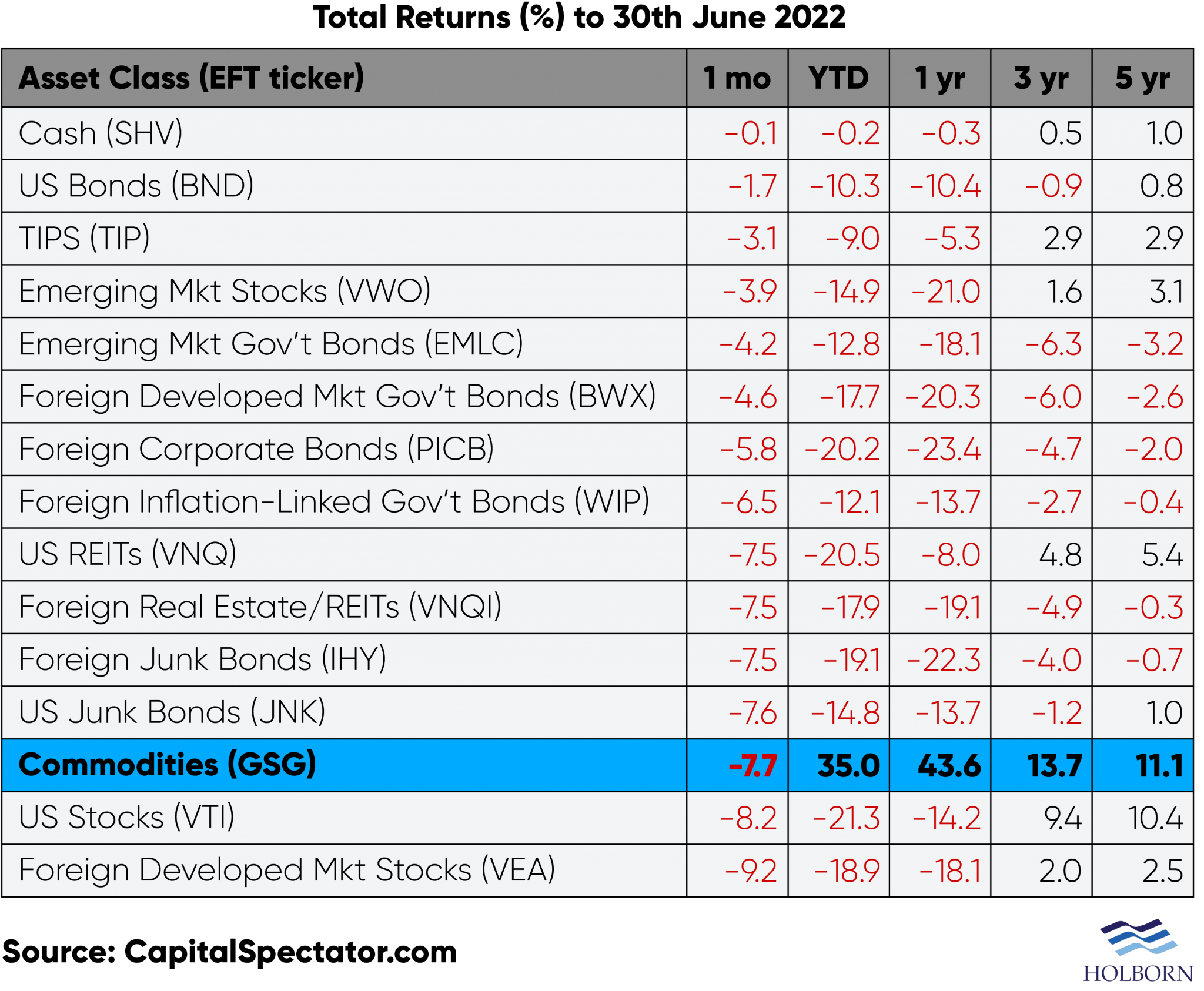
| Commodities | Spot & Futures Price Changes | High | High (Futures Market) | Excellent | Non-applicable |
| Private Equity | Internal Rate of Return (IRR) | High (Unmarked) | Extremely Low | Moderate | Equity / Preferred |
| Digital Assets | Network Value & Token Utility | Very High | High | Uncorrelated / Unproven | Protocol Level |
Strategic Asset Allocation Frameworks
Selecting the appropriate mix of asset classes—a process known as asset allocation—is the key driver of overall portfolio variance and long-term risk-adjusted performance.
Strategic Portfolio Allocation Matrix:
- Growth Component
- Public Equities
- Private Equity
- Real Estate (Growth)
- Defensive Component
- Govt & IG Bonds
- Cash Equivalents
- Treasury Inflation
1. The Classic 60/40 Asset Allocation
The traditional 60/40 benchmark allocates 60% of total capital to global equities (for growth) and 40% to high-grade fixed income (for yield and downside protection). This strategy relies on an inverse or low correlation between stocks and bonds, where bond prices tend to appreciate during equity market pullbacks as interest rates fall.
2. The Core-Satellite Strategy
This approach divides capital between two distinct operational tiers:
- The Core (70%–80%): Low-cost, passive index funds across broad asset classes (e.g., total market equity indexes, sovereign bond funds) to capture broad market risk premia (beta).
- The Satellite (20%–30%): Higher-risk, active management positions in specialized asset classes (e.g., emerging market tech equities, private real estate, commodities, private credit) designed to deliver outperformance (alpha).
3. Tactical Asset Allocation (TAA)
Unlike static Strategic Asset Allocation (SAA), Tactical Asset Allocation permits temporary deviations from target weights to exploit prevailing macroeconomic trends or market mispricings. For example, an investor might temporarily underweight fixed income and overweight short-duration cash equivalents during an aggressive central bank tightening cycle.
Key Drivers of Asset Class Performance
Every asset class responds differently to changes in macro economic conditions. Understanding these interactions helps investors anticipate shifts in performance:
Macroeconomic Regimes and Asset Class Sensitivity:
- High Inflation & Stagflation:
- Commodities
- Infrastructure
- High Inflation & Growth / Boom:
- Real Estate
- TIPS / Floating Debt
- Low Inflation & Stagflation:
- Cash Equivalents
- Gold
- Low Inflation & Growth / Boom:
- Public Equities
- High-Yield Corporate Debt
- Growth Trends: Equities and corporate credit perform best during periods of economic expansion when corporate revenues and margins widen.
- Inflation Rates: Physical assets, real estate, commodities, and inflation-protected securities (such as TIPS) generally outperform fixed-rate paper assets during inflationary shocks.
- Monetary Policy and Yield Curves: Central bank decisions regarding policy rates directly impact cash and fixed income yields. Rate hikes depress existing bond prices while raising yields on newly issued debt.
- Market Liquidity: Quantitative easing or tightening by monetary authorities shifts liquidity across asset classes, affecting pricing multiples across public and private markets.
Common Mistakes in Managing Asset Classes
Maintaining a long-term portfolio requires avoiding structural missteps in asset classification and execution:
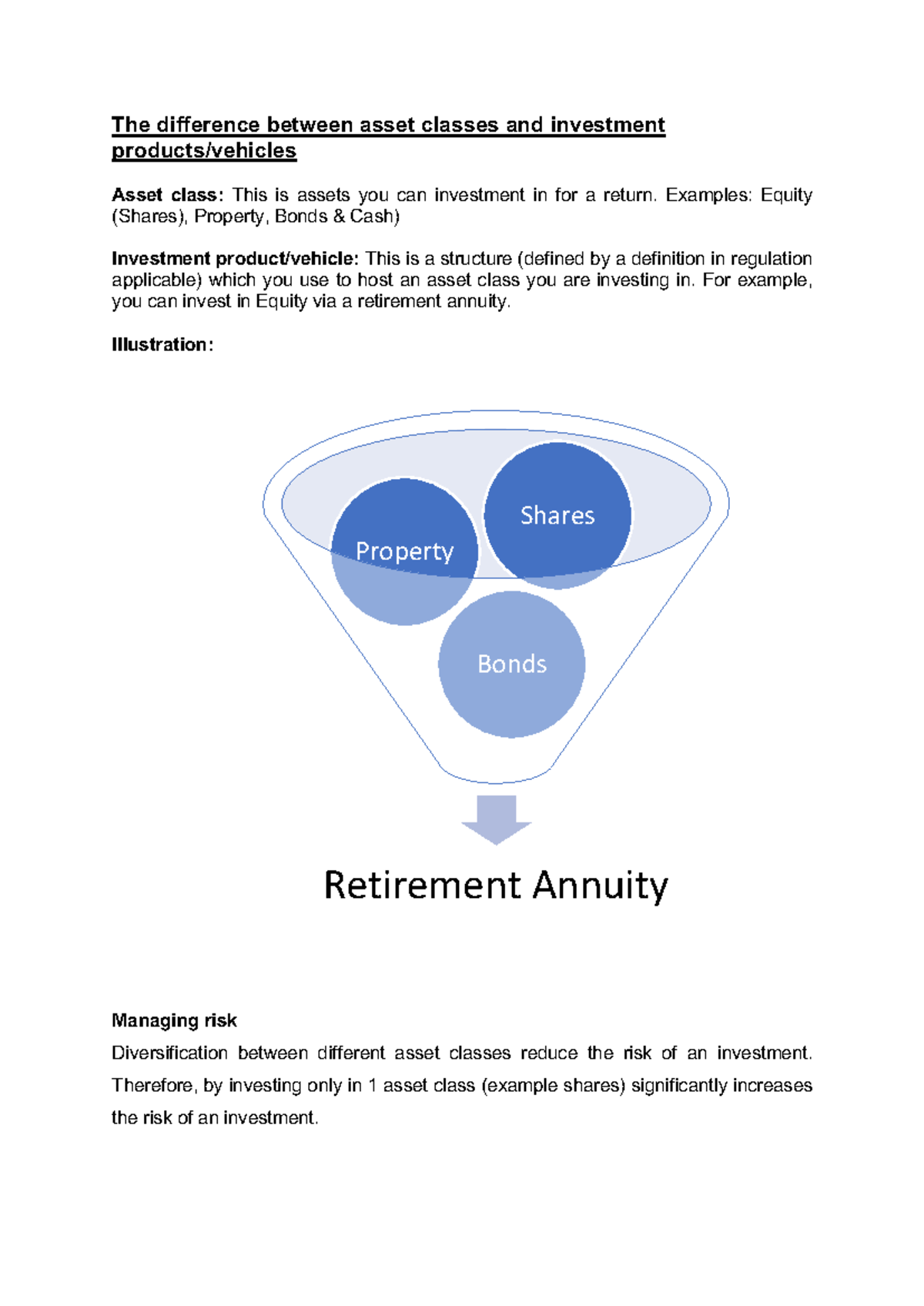
- Confusing Asset Vehicles with Asset Classes: Investors often mistake the wrapper for the underlying asset. For instance, an Exchange-Traded Fund (ETF) or Mutual Fund is an investment vehicle, whereas the underlying assets held within it (e.g., S&P 500 equities, corporate bonds, or physical gold) represent the actual asset class.
- Home Bias: Over-concentrating capital within domestic equities and bonds while ignoring international market opportunities, exposing the portfolio to regional concentration risk.
- Chasing Historical Yield: Rotating into high-yield asset classes (such as junk bonds or high-dividend equities) without recognizing that elevated yield often signals underlying credit distress or limited growth.
- Ignoring Liquidity Mismatches: Investing capital required for short-term liabilities into illiquid asset classes, such as private equity funds or direct property investments, forcing fire-sales during unexpected liquidity needs.
- Neglecting Portfolio Rebalancing: Failing to rebalance periodically allows outperforming asset classes to dominate portfolio weightings, raising overall volatility above the investor's intended risk tolerance.
Frequently Asked Questions
What is the difference between an asset class and an investment vehicle?
An asset class refers to the specific underlying financial asset, such as common stock, corporate debt, or physical real estate, which shares distinct economic behavior. An investment vehicle is the structural wrapper used to own that asset, such as an Exchange-Traded Fund (ETF), open-ended mutual fund, broad index investment, or interval fund.
How many asset classes should an investor hold?
Portfolio diversification benefits generally follow a curve of diminishing marginal returns. Most individual investors achieve sufficient diversification by holding four core asset class exposures: broad domestic and international equities, fixed income, real assets (like real estate or commodities), and cash equivalents. Institutional investors often add private equity, absolute return strategies, and private credit.
How do rising interest rates impact different asset classes?
Rising interest rates increase discount rates, which can pressure asset valuations. Fixed-income securities experience immediate price drops inversely proportional to their duration. High-growth equities with distant future cash flows often see valuation multiple contractions. Conversely, floating-rate private credit, cash equivalents, and financial sector equities often benefit from higher rate environments.
Why are alternative asset classes typically less liquid?
Alternative assets like direct real estate, private equity, and venture capital often involve non-standardized contracts, private corporate structures, complex due diligence requirements, and a smaller pool of qualified buyers. Unlike public stocks traded instantaneously on computerized exchanges, buying or selling alternative assets requires negotiated transactions that can take weeks, months, or years to settle.
How frequently should asset class allocation be rebalanced?
Rebalancing should occur systematically based on time intervals (e.g., semi-annually or annually) or portfolio drift thresholds (e.g., when an asset class shifts by more than 5% from its target allocation). Frequent rebalancing can incur excessive trading costs and trigger capital gains tax liabilities, while infrequent rebalancing risks unbalancing the portfolio's intended risk-return profile.
Actionable Strategy for Investors
To construct a resilient investment portfolio built upon sound asset class principles:
- Define Your Investment Horizon and Liabilities: Quantify your liquidity requirements, risk tolerance, and target timeline. Capital needed within 1 to 3 years should be anchored in cash equivalents and short-duration sovereign fixed income.
- Establish a Baseline Strategic Allocation: Determine target percentages for equities, fixed income, real estate, and alternatives aligned with your financial objectives.
- Select Cost-Effective Implementation Vehicles: Utilize low-fee, liquid index funds or ETFs for core public equity and bond holdings, reserving active management or illiquid private assets for specialized allocations.
- Enforce a Rebalancing Policy: Monitor portfolio weights periodically to systematically buy underperforming, undervalued asset classes while taking profits on overextended ones.
Disclaimer: This material is provided for informational and educational purposes only and does not constitute personalized investment, legal, or tax advice. Investors should consult with qualified financial advisors to evaluate their specific financial circumstances before executing complex asset allocation strategies.
Image Gallery