How to Find Shoes for Wide Feet Men: A Comprehensive Guide
Finding the right footwear for wide feet requires moving beyond standard sizing labels to understand foot geometry, material flexibility, and the specific standardized measurements used by manufacturers. A proper fit is essential not o...
Finding the right footwear for wide feet requires moving beyond standard sizing labels to understand foot geometry, material flexibility, and the specific standardized measurements used by manufacturers. A proper fit is essential not only for comfort but to prevent common foot conditions like bunions, corns, and plantar fasciitis that often arise from wearing shoes that are too narrow.
Contents
Understanding Foot Anatomy and Width Sizing
In the footwear industry, "wide feet" is not a subjective term; it refers to the girth of the foot at its widest point—the ball area. Standard shoe sizes (e.g., 10, 11, 12) only account for length. If you have wide feet, wearing a standard "D" width shoe forces your foot to spill over the sides of the sole or causes the upper material to stretch and deform, leading to significant pressure on the metatarsal joints.
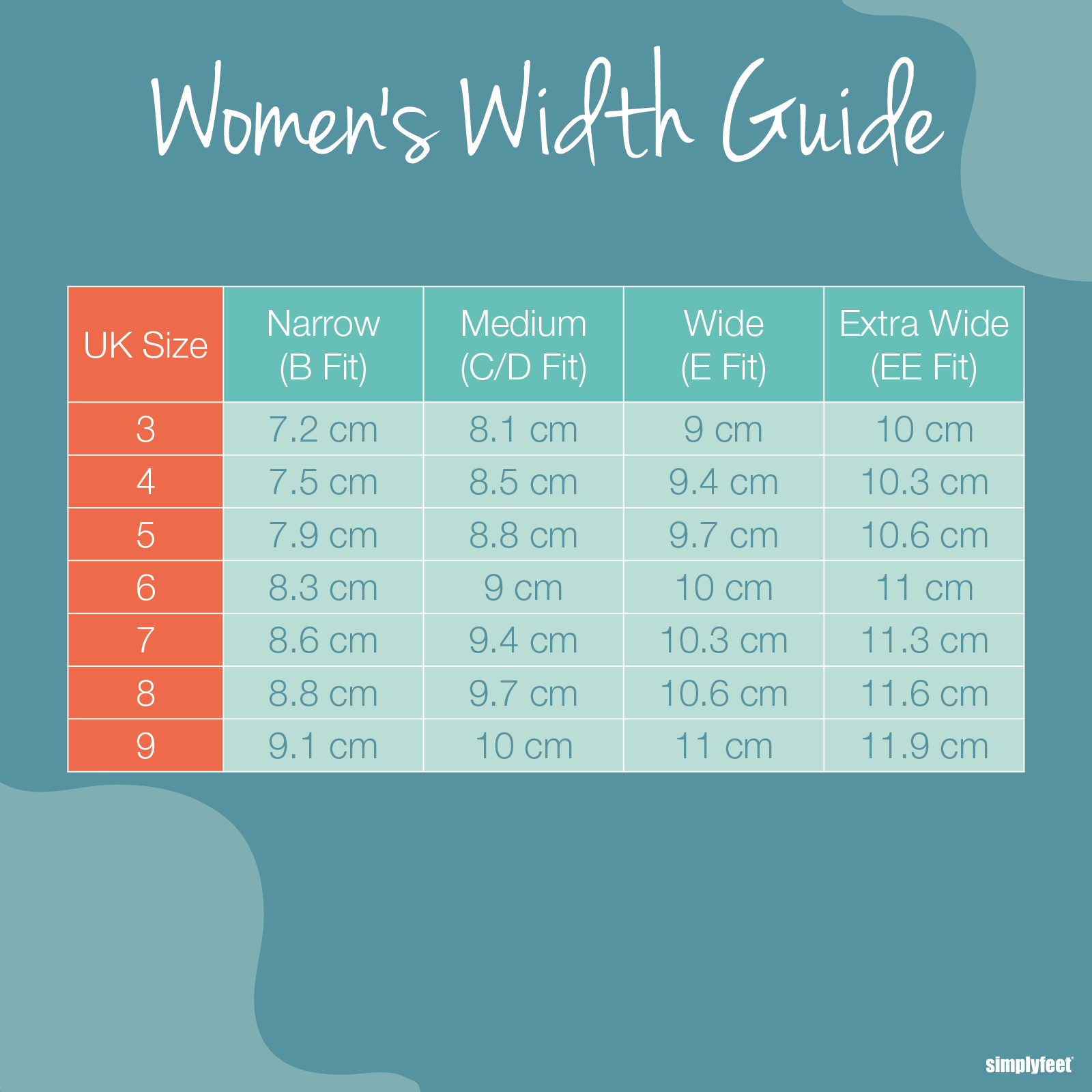
Most major manufacturers use a standardized letter-code system to denote width. For men, the standard width is "D." Anything beyond that moves into the wide categories:
- 2E (EE): Wide
- 4E (EEEE): Extra Wide
- 6E (EEEEEE): Extra-Extra Wide
When shopping, look specifically for these codes. If a product description does not explicitly list a width, it is almost certainly a standard "D," which will likely be insufficient for those requiring a 2E or 4E fit.
The Importance of Accurate Measurement
Do not rely on the size printed on your current favorite pair of shoes, as manufacturers utilize different "lasts"—the foot-shaped forms around which a shoe is constructed. A 10.5 in one brand may fit entirely differently than a 10.5 in another.
To determine your true size:
- Measure in the evening: Your feet swell throughout the day due to gravity and activity. Measuring at the end of the day ensures you are buying for your feet at their largest point.
- Use a Brannock Device: Visit a professional shoe retailer that uses a manual Brannock Device. This tool measures both heel-to-toe length and arch-to-toe length, as well as width.
- Trace your foot: If you cannot access a store, place a piece of paper on the floor, stand on it, and outline your foot with a pencil. Measure the widest part of the forefoot. Compare this measurement against the size charts provided on the official websites of the brands you are considering.
Key Features to Look For
When shopping for shoes for wide feet, the design of the shoe is just as important as the letter-code on the box. Not all "wide" shoes are created equal. Focus on these structural elements:
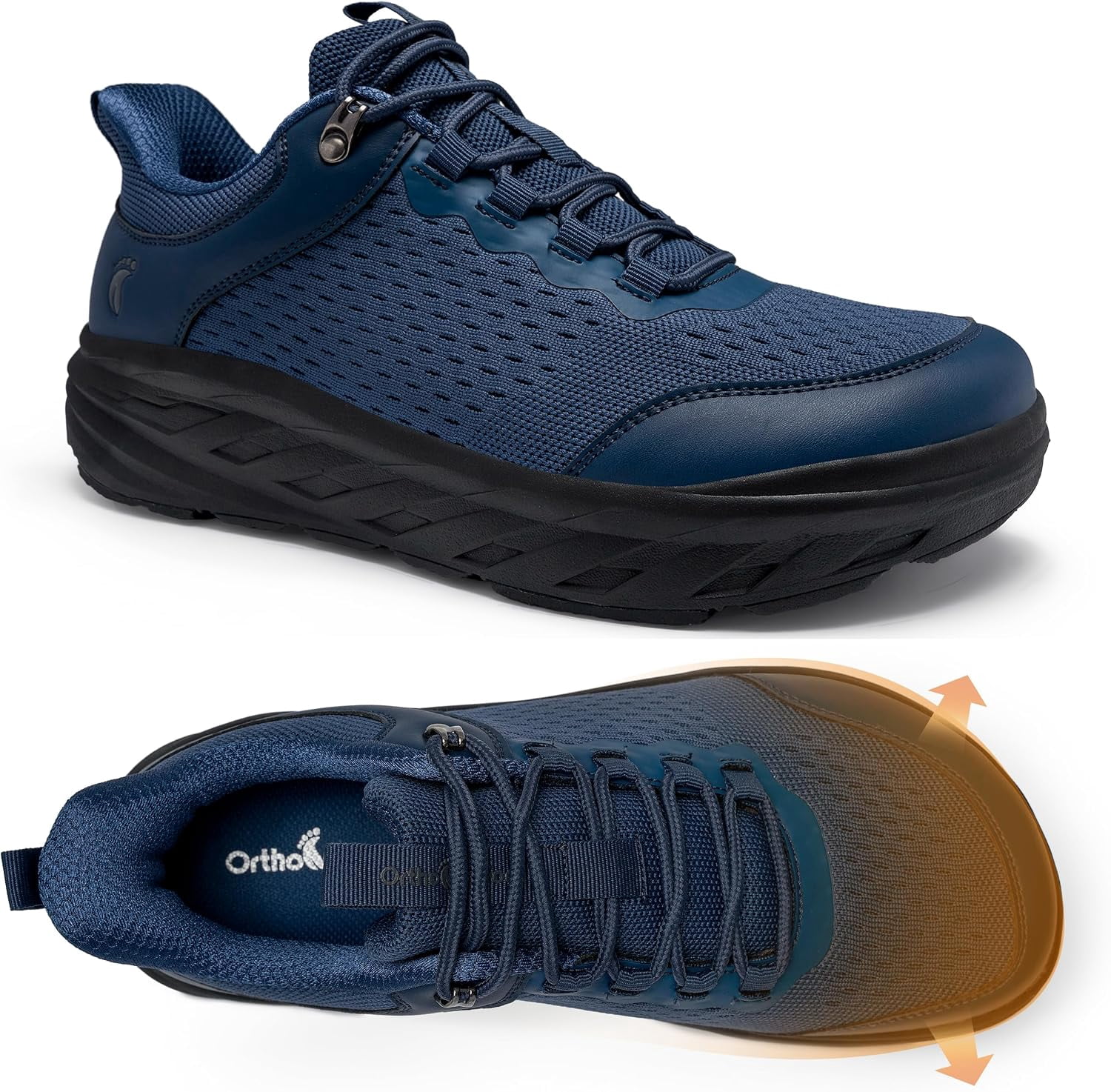
- Toe Box Shape: Avoid "pointed" or "almond" toe boxes. Look for "rounded" or "anatomical" toe boxes that mimic the natural shape of the human foot, allowing the toes to splay properly.
- Upper Material: Soft, malleable materials like full-grain leather, knit, or mesh provide more "give" than stiff synthetic materials. If you have a wide foot, synthetic leathers with rigid coatings will often dig into the sides of your feet.
- Removable Insoles: Many men with wide feet also have high arches or require custom orthotics. Shoes with removable factory insoles allow you to insert your own, which can adjust the internal volume of the shoe to better accommodate your foot shape.
- Lacing Systems: Look for open-lacing systems (like those found on many derby-style shoes or performance sneakers). This allows you to loosen the laces across the entire instep to provide extra width where needed, unlike closed-lacing systems (oxford style) which are more restrictive.
Comparison Table: Understanding Shoe Width Categories
| Width Code | Designation | Description | Best For |
|---|---|---|---|
| D | Standard | Regular width for men | Narrow to average feet |
| 2E / EE | Wide | Slightly broader at the ball | Feet with slight overflow in D width |
| 4E / EEEE | Extra Wide | Significant additional volume | Feet that feel tight or pinch in 2E |
| 6E | Ultra Wide | Maximum volume and width | Severe swelling or wide bone structure |
Evaluating Brands and Retailers
Not every brand is built for every foot type. Some high-end European manufacturers focus on sleek, narrow profiles, while many American and specialized athletic brands cater to a broader range of foot widths.
When researching, prioritize brands that explicitly list their width offerings in their navigation menus. If a brand only offers "Medium" and no other options, they are unlikely to be a suitable choice for someone requiring a 4E fit. Furthermore, consider retailers that offer "wide" filters on their websites. This is the most efficient way to browse inventory, as it immediately hides styles that will not meet your requirements.
Common Mistakes to Avoid
One of the most frequent errors men with wide feet make is "sizing up" to gain width. For example, if you wear a 10 4E, you might be tempted to buy an 11 D to accommodate the width. This is a critical mistake. Sizing up makes the shoe longer, shifting the arch support and the "break point" of the shoe (where it bends when you walk) away from your own anatomy. This leads to tripping, heel slippage, and inadequate support, which can exacerbate existing foot pain. Always prioritize the correct width over the length.
Another common mistake is ignoring the "break-in" period. While high-quality leather shoes will stretch slightly to accommodate the foot, a shoe should never be painful when you first put it on in the store. If the sides of your feet are bulging over the edge of the insole, the shoe is too narrow, regardless of how much it might "stretch" over time.
Addressing Related Foot Care Questions
If you have persistent difficulty finding shoes that fit, you may need to look into specialized orthopedic footwear. These are designed with extra depth—the distance from the insole to the top of the shoe—which is vital if you suffer from conditions like hammertoes or require thick medical orthotics.
If you are experiencing consistent pain, consult a podiatrist. They can confirm if your wide feet are causing specific structural issues and may recommend custom-molded orthotics, which can change the way you interact with standard shoe sizes.
Frequently Asked Questions
Can I stretch wide feet shoes at home? Professional cobblers can use a mechanical shoe stretcher to expand the width of leather shoes. While DIY spray-on stretchers exist, they are generally ineffective for leather and useless for synthetic materials. Do not expect significant changes in width through DIY methods.
Are wide shoes always more expensive? Not necessarily. While some niche brands specializing in extra-wide footwear may carry a premium price, most major athletic brands offer 2E and 4E sizes at the same price point as their standard D-width counterparts.
Do all brands use the same width measurements? No. There is no international standardization for width. A 4E in one brand may feel identical to a 2E in another. This is why checking the manufacturer’s specific size guide, rather than relying on your "typical" size, is essential.
How do I know if I have "wide" feet versus just swelling? If your feet feel tight in the morning before you have been active, you likely have structurally wide feet. If they only feel tight at the end of the day, you may be experiencing edema (swelling), which is better managed through elevation and lifestyle changes rather than sizing up your shoes.
Should I buy shoes online if I have wide feet? Yes, but only from retailers with generous, no-cost return policies. Because fit is so variable, it is often necessary to order two sizes or two widths to see which is superior. Ensure the site allows you to try on shoes on a clean surface before committing to the purchase.
Recommendation
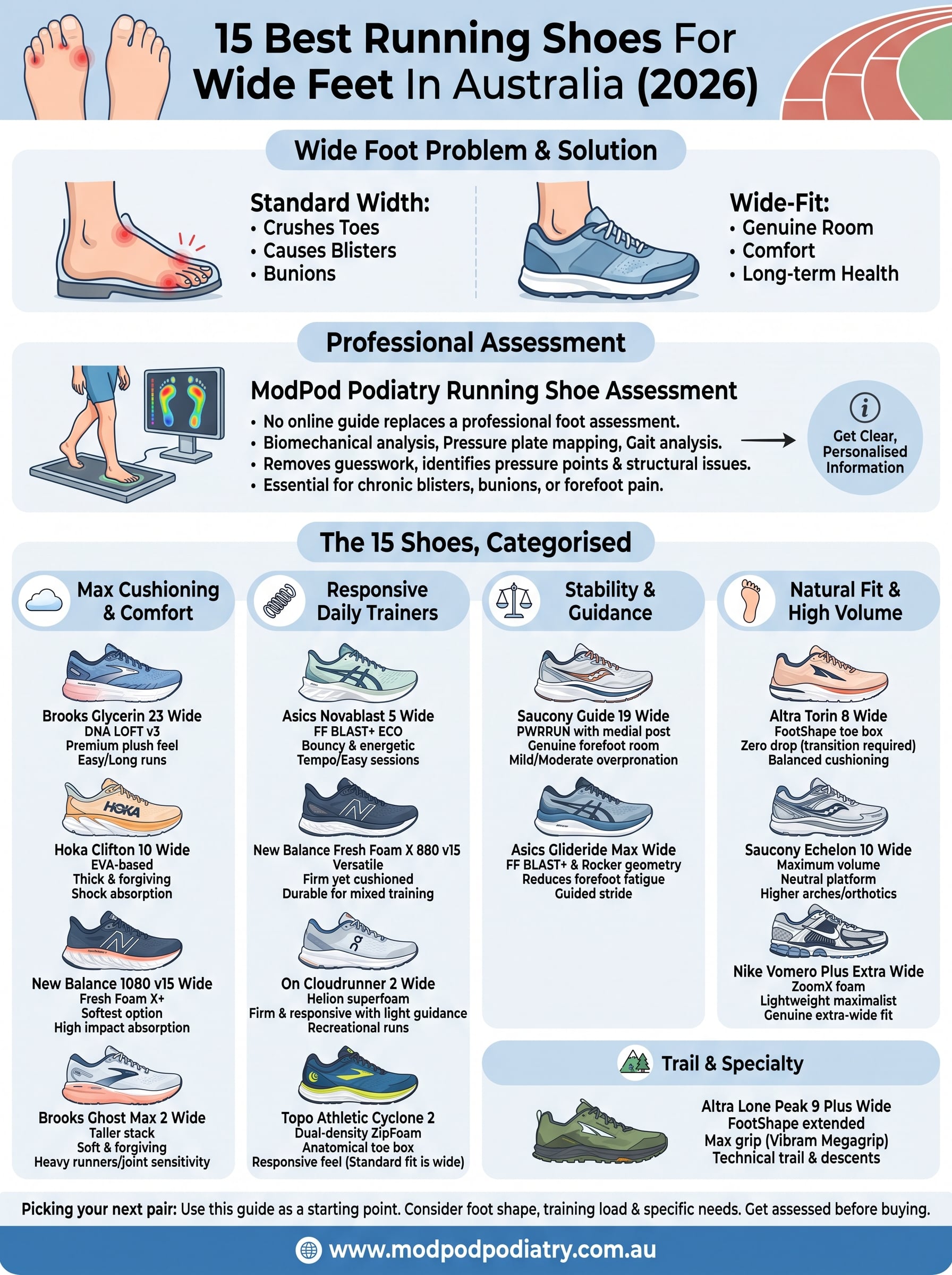
If you have struggled to find a consistent fit, start by visiting a local athletic footwear store that carries performance running shoes. These brands (such as New Balance, Brooks, or Saucony) have the most robust and consistent "Wide" and "Extra Wide" programs in the industry. Once you identify your precise size in these brands, use that as a benchmark for researching more formal or casual footwear.
Image Gallery