Harvard University Laboratory Safety and Historical Explosion Incidents: A Comprehensive Review
Harvard University manages one of the world's most dense concentrations of high-stakes research laboratories, where chemical, biological, and physical experiments occur daily. While the university maintains rigorous safety protocols th...
Harvard University manages one of the world's most dense concentrations of high-stakes research laboratories, where chemical, biological, and physical experiments occur daily. While the university maintains rigorous safety protocols through its Environmental Health and Safety (EH&S) department, several notable explosion incidents—most significantly in 2024 and 2011—have shaped contemporary campus safety mandates and emergency response strategies as of 2026.
Contents
The 2024 Science and Engineering Complex (SEC) Incident
In early April 2024, a significant explosion occurred at Harvard’s Science and Engineering Complex (SEC) located on the Allston campus. The incident centered on a laboratory environment utilizing high-pressure gas systems. This event serves as a primary case study for modern institutional response and the inherent risks associated with cutting-edge materials science and engineering research.
The explosion was traced back to a failure in a hydrogen gas delivery system. Hydrogen, while essential for various clean energy and chemical vapor deposition experiments, possesses a wide flammability range and a low ignition energy. When the mechanical failure occurred, the resulting overpressure caused localized structural damage to the laboratory’s specialized ventilation and containment systems. Fortunately, because the SEC was designed with modern "blast-relief" architectural features, the energy of the explosion was partially directed away from high-occupancy corridors, preventing mass casualties.
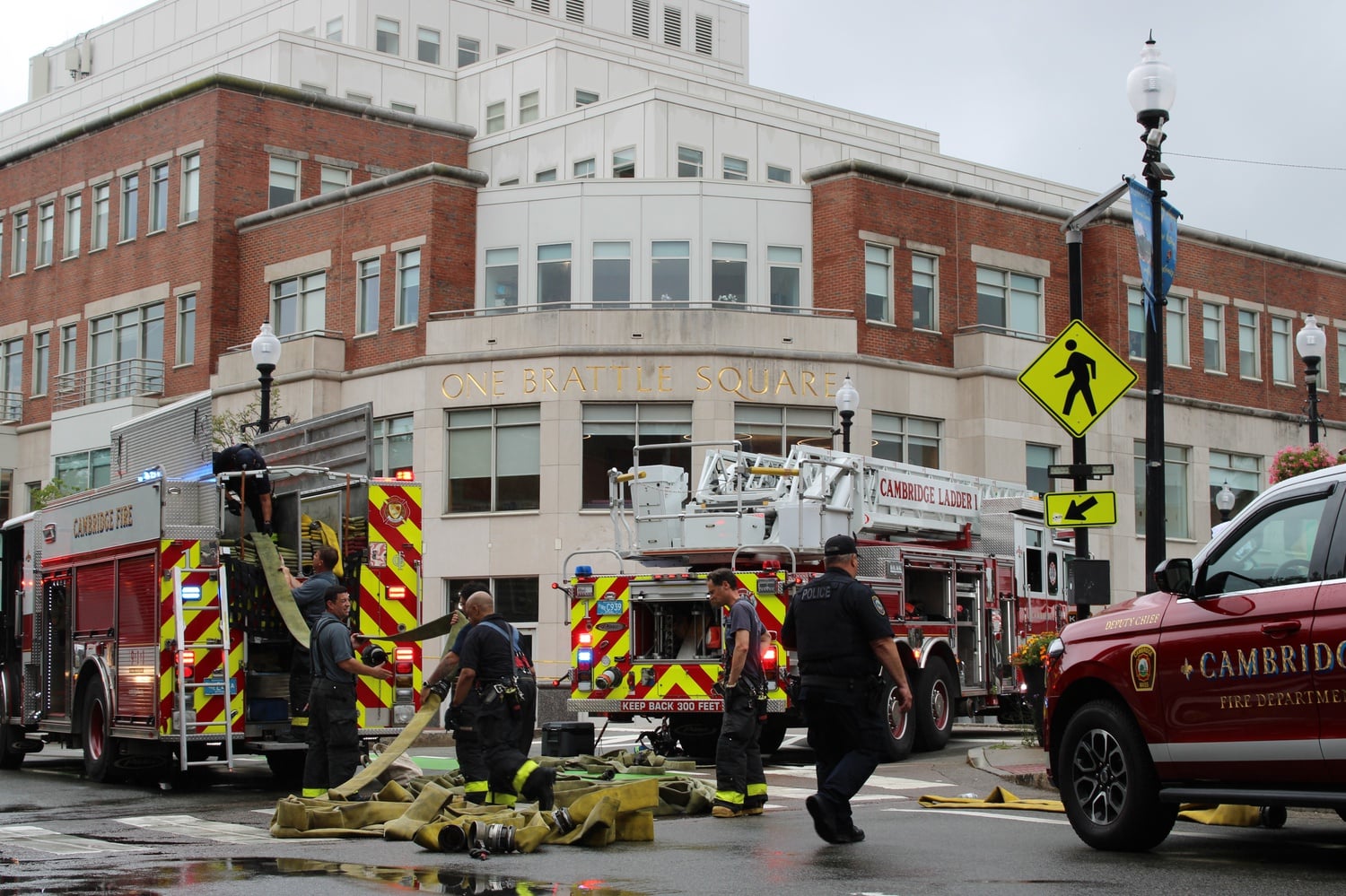
In the immediate aftermath, the Cambridge and Boston Fire Departments, alongside Harvard’s emergency management teams, executed a full evacuation of the 544,000-square-foot facility. The response highlighted the effectiveness of integrated building management systems (BMS) that automatically shuttered gas lines and reversed airflow to prevent the spread of potentially hazardous fumes. For researchers in 2026, the 2024 incident remains a sobering reminder that even in LEED-certified, state-of-the-art facilities, mechanical redundancy and rigorous pre-operational checks are the only barriers against catastrophic failure.
Historical Context: The 2011 Mallinckrodt Chemical Explosion
To understand Harvard’s current safety culture, one must examine the 2011 explosion in the Mallinckrodt Chemistry Laboratory. Unlike the mechanical failure in 2024, the 2011 event was a chemical explosion resulting from the handling of unstable compounds. A graduate researcher was injured while working with trimethylsilyl azide (TMSN3), a compound known for its sensitivity.
The 2011 incident was a turning point for the Department of Chemistry and Chemical Biology (CCB). The subsequent investigation by the Occupational Safety and Health Administration (OSHA) and internal committees revealed a need for stricter "Scale-Up" protocols. Scale-up refers to the process of increasing the amount of a chemical reaction; often, a reaction that is safe at a milligram level becomes exponentially more dangerous at a gram level due to heat dissipation issues and reactant concentration.
Following this event, Harvard implemented the "Laboratory Safety Commitee" review process for any experiment involving "Particularly Hazardous Substances" (PHS). This historical event shifted the focus from reactive safety (wearing goggles) to proactive safety (formalized hazard assessment and peer review of experimental designs).
Institutional Response and Emergency Protocols
When an explosion or high-risk "Code Red" event is detected at Harvard, a multi-tiered response system is activated. As of 2026, this system relies on a combination of IoT-enabled sensors and human oversight.
Immediate Tactical Response
Upon the detection of an overpressure event or a rapid chemical spike, the Harvard University Police Department (HUPD) and the Operations Center are notified via automated telemetry. The university utilizes the MessageMe system to broadcast immediate instructions to students and faculty. In the event of an explosion, the protocol dictates:
- Immediate Egress: Utilizing designated fire-rated stairwells.
- Exclusion Zones: Establishing a 500-foot perimeter to allow emergency vehicles access.
- Accountability Check: Principal Investigators (PIs) are responsible for the digital "roll call" of their laboratory personnel via the Harvard safety app.
Investigative Phase
Post-incident, the Harvard EH&S department leads a "Root Cause Analysis" (RCA). This involves forensic engineering to determine if the failure was due to human error, mechanical fatigue, or chemical instability. The findings are typically synthesized into safety bulletins shared across the Ivy Plus Safety Consortium to ensure that other research institutions can learn from the event and update their own protocols.
Laboratory Safety Standards and EH&S Requirements
Harvard’s Environmental Health and Safety (EH&S) department mandates a rigorous framework for all laboratory personnel. Compliance is not optional; it is a prerequisite for maintaining research funding and facility access.
The Role of the Principal Investigator (PI)
The PI is the individual legally and institutionally responsible for the safety of their laboratory. They must ensure that every researcher has completed the "Laboratory Safety Fundamentals" course and specific modules for high-hazard activities. In the context of potential explosions, PIs must maintain an updated Chemical Hygiene Plan (CHP) that specifically addresses the storage and use of explosives, pyrophorics, and water-reactive chemicals.
Engineering Controls
Engineering controls are the primary defense against explosions. These include:
- Fume Hoods: Designed to contain small-scale flashes and vent toxic gases.
- Blast Shields: Polycarbonate barriers used when researchers are manipulating pressurized or potentially explosive vessels.
- Gas Cabinets: Self-closing, exhausted enclosures for hazardous gas cylinders that include automatic shut-off valves linked to fire alarm systems.
Comparative Overview of Major Safety Incidents
The following table summarizes key aspects of significant safety incidents at Harvard University to provide context on the evolution of risk management.
| Feature | 2011 Mallinckrodt Incident | 2024 SEC Incident | 2026 Current Standards |
|---|---|---|---|
| Primary Cause | Chemical Instability (Azides) | Mechanical Failure (Hydrogen System) | Predictive Maintenance & AI Monitoring |
| Primary Impact | Individual Injury / Lab Damage | Structural Damage / Mass Evacuation | Real-time Hazard Mitigation |
| Safety Change | Scale-up Protocol Mandates | Gas Delivery Redundancy | Automated Digital Permitting |
| Facility Age | Historic Research Building | Modern Engineering Complex | Integrated Smart-Labs |
| Regulatory Action | OSHA Citations & Fines | Internal Safety Audit | Continuous Compliance Monitoring |
Risk Mitigation and Preventative Technologies in 2026
By 2026, Harvard has integrated several advanced technologies to further reduce the likelihood of explosions within its research ecosystem. One of the most significant advancements is the implementation of Digital Twins for high-risk laboratory systems. A digital twin is a virtual model of a physical system, such as a high-pressure reactor, that uses real-time data from sensors to predict when a component might fail before it actually does.
Furthermore, the university has transitioned to "Just-in-Time" chemical procurement. Rather than storing large quantities of potentially explosive precursors, laboratories receive smaller, stabilized amounts as needed. This reduces the "fire load" of the building and ensures that in the event of a localized incident, there is less fuel available to escalate the situation.
Environmental monitoring has also evolved. Modern labs at Harvard now feature multispectral flame detectors that can identify a hydrogen fire—which is invisible to the naked eye in daylight—within milliseconds. These detectors are linked directly to the building’s fire suppression system, which in high-tech labs often utilizes clean-agent gas (like Sapphire or FM-200) instead of water to protect sensitive electronics while extinguishing the threat.
Common Mistakes in Laboratory Safety
Despite the sophisticated systems in place, human factors remain the most frequent point of failure. Research into past incidents at Harvard and similar institutions identifies several recurring errors:
- Bypassing Interlocks: Researchers occasionally disable safety sensors or alarms to facilitate an experiment, a practice that is strictly forbidden and grounds for immediate loss of lab privileges.
- Inadequate Labeling: Failing to label "waste" containers properly can lead to the accidental mixing of incompatible chemicals (e.g., oxidizers and organics), which is a leading cause of laboratory explosions.
- Underestimating Scale: As seen in the 2011 incident, a reaction that is stable at a small scale can undergo "thermal runaway" when the volume is increased, leading to a rapid release of energy.
Frequently Asked Questions
What should I do if I hear a loud bang or explosion in a Harvard building?
Immediately treat the event as a fire. Pull the nearest fire alarm pull station, evacuate the building through the closest exit, and do not use elevators. Once outside, move at least 500 feet away from the structure and call the Harvard Operations Center or 911 to report any specific details you observed.
How does Harvard notify students about ongoing emergencies like explosions?
Harvard uses the MessageMe system, which sends alerts via SMS, email, and voice calls. All students, faculty, and staff are encouraged to keep their contact information updated in the Harvard Directory to ensure they receive these critical life-safety messages in real-time.
Are Harvard’s older science buildings safe compared to the new SEC?
Yes, although older buildings like Mallinckrodt or Hoffman lack some of the "smart" features of the SEC, they have been retrofitted with modern fire suppression, upgraded ventilation, and rigorous administrative controls. Safety is managed through a combination of physical infrastructure and strict adherence to EH&S protocols.
Who is responsible for paying for damages if an experiment causes an explosion?
Generally, the University carries comprehensive insurance for property damage. However, the Department and the Principal Investigator may face internal financial consequences or loss of grants if the investigation finds that the incident was caused by a willful violation of safety protocols or negligence.
Can I report a safety concern anonymously?
Yes. Harvard provides several channels for "whistleblowing" regarding laboratory safety. Personnel can report concerns to their Departmental Safety Officer, the EH&S office, or use the University’s anonymous reporting hotline. Harvard policy strictly prohibits retaliation against anyone who reports a safety concern in good faith.
Final Recommendations for Campus Safety
For researchers, students, and staff navigating the Harvard University laboratory landscape in 2026, safety must be viewed as an active discipline rather than a passive requirement. The transition from the 2011 chemical-focused incidents to the 2024 mechanical-focus highlights that hazards evolve as technology advances.
The primary action for any individual working in a high-risk environment is to perform a Job Hazard Analysis (JHA) before every new procedure. This involves identifying potential "what-if" scenarios—including the risk of overpressure or explosion—and ensuring that the appropriate engineering controls (like blast shields) and personal protective equipment (PPE) are in place. By maintaining a culture of rigorous peer-review and technological vigilance, the Harvard community can continue to push the boundaries of scientific discovery while minimizing the risks inherent in high-stakes research.
Image Gallery