The History and Current Role of the Kings of Tonga: From Sacred Empire to Constitutional Monarchy
The King of Tonga serves as the sovereign head of state of the Kingdom of Tonga, representing one of the oldest unbroken monarchical lineages in the Pacific. Historically wielding absolute executive and sacred authority, the Tongan mon...
The King of Tonga serves as the sovereign head of state of the Kingdom of Tonga, representing one of the oldest unbroken monarchical lineages in the Pacific. Historically wielding absolute executive and sacred authority, the Tongan monarchy transitioned in 2010 into a constitutional system where the King retains vital reserve powers, head-of-state duties, and cultural leadership while democratic parliamentary institutions manage day-to-day governance.
Contents
The Pre-Modern Roots of Tongan Royalty: Sacred Lineages and Dynastic Evolution
To understand the modern Tongan monarchy, one must examine its ancient origins. Long before European contact, Tonga was the center of a vast maritime empire across the South Pacific. The authority of Tongan rulers was traditionally rooted in mana (spiritual power) and tapu (sacred prohibitions), establishing a sacred hierarchy that governed Pacific island society for over a millennium.
The Sacred Tuʻi Tonga Empire
The historic origin of Tongan royalty dates back to around 950 CE with the establishment of the Tuʻi Tonga line. The first Tuʻi Tonga, ʻAhoʻeitu, was believed in Tongan tradition to be the son of the sky god Tangaloa and an earthly mother. As divine rulers, the early Tuʻi Tonga held supreme spiritual and temporal power, extending their influence across Fiji, Samoa, Niue, and parts of modern Tuvalu and Tokelau.
Over centuries, as the empire expanded, administering both political governance and religious rituals created operational strain. Following the assassination of several supreme rulers in the 14th and 15th centuries, the 24th Tuʻi Tonga, Kauʻulufonua I, instituted a major constitutional division of power. He transferred secular administrative authority to his brother, who established the Tuʻi Haʻatakalaua line, while the Tuʻi Tonga retained supreme sacral and ceremonial status.
The Rise of the House of Tupou (Tuʻi Kanokupolu)
In the late 16th century, a third major dynastic branch emerged: the Tuʻi Kanokupolu. Founded by Ngata, a son of the 6th Tuʻi Haʻatakalaua, this dynasty gradually secured control over trade, land distribution, and military forces. By the 18th century, the Tuʻi Kanokupolu had eclipsed both the Tuʻi Haʻatakalaua and the sacred Tuʻi Tonga in practical political influence.
Internal civil conflicts during the late 18th and early 19th centuries destabilized the island chain as rival chiefs competed for hegemony. This period of fragmentation persisted until the rise of a visionary warrior chief named Tāufaʻāhau, who brought the rival dynasties under a unified, centralized state.
Unification and the 1875 Constitution: King George Tupou I
The modern Kingdom of Tonga was forged by Tāufaʻāhau, who held the title of 19th Tuʻi Kanokupolu. Through strategic military victories, diplomatic alliances, and conversion to Christianity, Tāufaʻāhau unified the island groups of Vavaʻu, Haʻapai, and Tongatapu. In 1845, he assumed the royal title of King George Tupou I, initiating the current House of Tupou.
- Ancient Lineages (c. 950 CE)
- Tuʻi Tonga (Sacred Paramount Rulers)
- Tuʻi Haʻatakalaua (Secular Administrators, c. 1470)
- Tuʻi Kanokupolu (Political & Military Rulers, c. 1600)
- Unified Modern Kingdom under King George Tupou I (1845)
- House of Tupou (Present Monarchy)
- Unified Modern Kingdom under King George Tupou I (1845)
Modernizing Tonga to Retain Sovereignty
King George Tupou I recognized that Pacific nations faced colonization from European powers such as Great Britain, France, and Germany. To safeguard Tongan independence, he enacted sweeping legal and social reforms inspired by Western legal traditions while preserving indigenous customs:
- Abolition of Serfdom (1862): The Edict of Emancipation freed commoners from compulsory labor obligations to regional chiefs, granting them personal liberty and legal rights.
- Land Tenure Protections: Land was declared the property of the Crown, allocated to Tongan citizens for sustenance while strictly prohibiting land sales to foreign nationals—a law that remains in force today.
- Establishment of Written Law: Working alongside Wesleyan missionary Rev. Shirley Waldemar Baker, the King drafted formal legal codes that culminated in the landmark Constitution of 1875.
Key Provisions of the 1875 Constitution
Promulgated on October 4, 1875, the Constitution established Tonga as a constitutional monarchy. It created an executive Privy Council, a Legislative Assembly comprising both hereditary nobles and representatives of the people, and an independent judiciary.
Crucially, the 1875 Constitution concentrated significant power in the monarch. The King appointed the Prime Minister, Cabinet ministers, and governors; held absolute veto power over legislation; and commanded the military forces. This constitutional structure enabled Tonga to maintain its independence throughout the colonial era, making it the only Pacific island nation never to forfeit its native sovereignty.
The 20th Century: Navigating British Protection and Full Independence
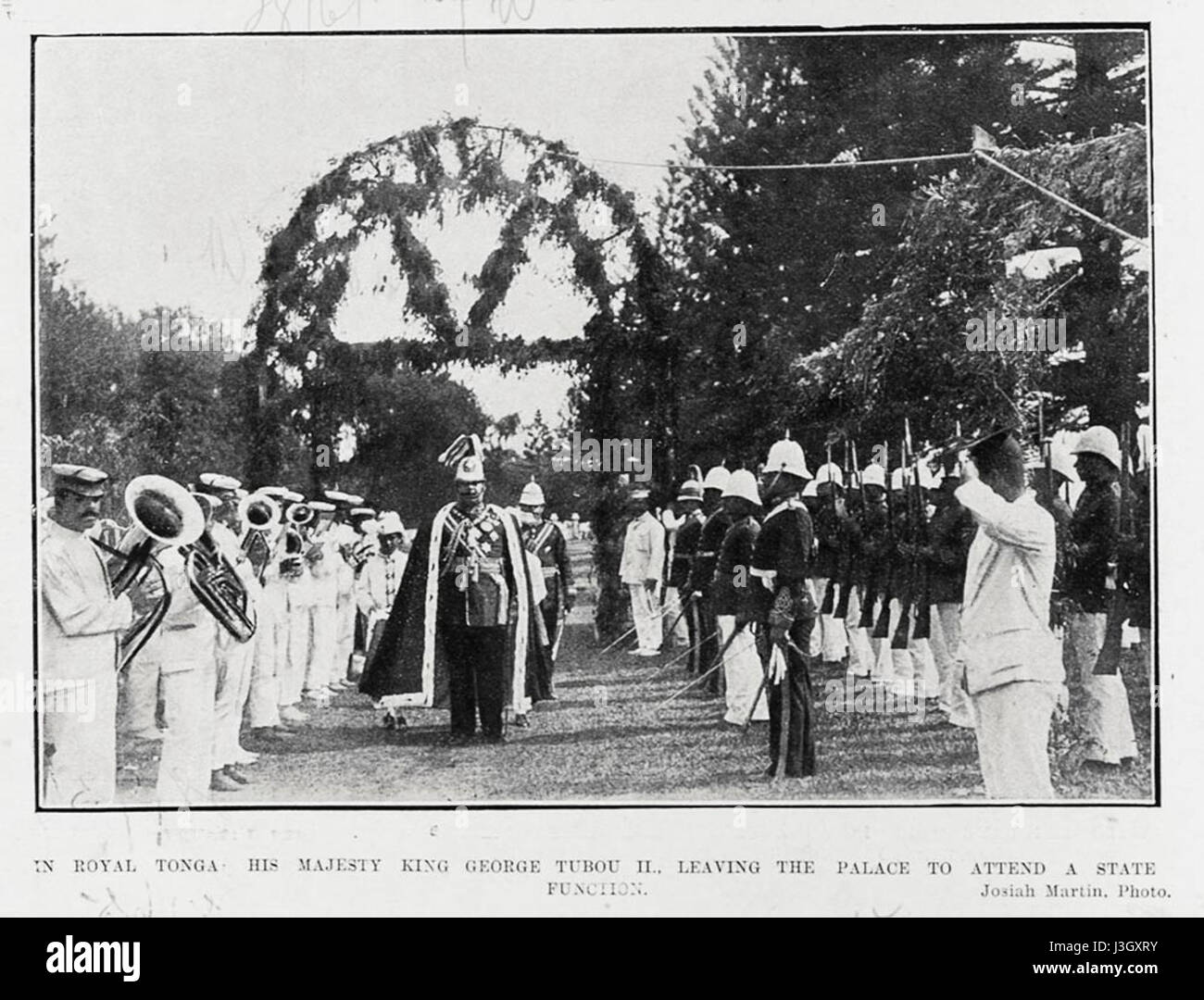
Although Tonga preserved its monarchical independence, international financial strain and geopolitical pressures led King George Tupou II to sign the Treaty of Protection with the United Kingdom in 1900. Tonga became a British Protected State, relying on Britain for foreign affairs and defense while retaining full internal autonomy under the Tongan Crown.
Queen Sālote Tupou III: Stability and Cultural Diplomacy
Following the death of George Tupou II in 1918, his daughter Queen Sālote Tupou III acceded to the throne, reigning for 47 years until 1965. Queen Sālote remains one of Tonga’s most venerated monarchs. She successfully integrated traditional Tongan social structures with modern public health, education, and social infrastructure.
Queen Sālote brought global recognition to Tonga during her attendance at the 1953 coronation of Queen Elizabeth II in London, where her warmth and dignity captured international acclaim. Under her stewardship, Tonga navigated the economic challenges of World War II and laid the groundwork for complete international independence.
King Tāufaʻāhau Tupou IV: Sovereignty and Economic Modernization
Succeeding his mother in 1965, King Tāufaʻāhau Tupou IV presided over a pivotal era. On June 4, 1970, Tonga formally ended its Protected State status with Great Britain, establishing full independence and joining the Commonwealth of Nations and later the United Nations.
King Tāufaʻāhau Tupou IV held advanced degrees in law and medicine from the University of Sydney, making him the first Tongan monarch with Western university training. During his 41-year reign, he actively directed national economic development, expanding telecommunications, aviation, commercial fisheries, and agricultural exports. However, as executive decisions remained concentrated within the royal court and appointed nobility, public calls for greater democratic representation intensified by the turn of the 21st century.
The 2010 Democratic Reforms: Transition to Constitutional Democracy
The transition from executive royal governance to representative parliamentary democracy represents one of the most remarkable constitutional evolutions in modern Pacific history.
King George Tupou V and Voluntary Devolution of Power
When King George Tupou V acceded to the throne in September 2006 following the death of his father, Tonga faced heightened political tension and demands for democratic accountability. Demonstrating unprecedented royal initiative, King George Tupou V announced that he would voluntarily surrender the monarch’s day-to-day executive governance powers to a democratically elected parliament.
Working with Parliament, the constitutional amendments of 2010 restructured Tonga's political framework:
- Elected Prime Minister: The power to select the Prime Minister shifted from the King to the elected members of the Legislative Assembly.
- Cabinet Accountability: Cabinet ministers were now chosen by the Prime Minister from among parliamentarians, making the executive directly accountable to the legislature.
- Composition of Parliament: The Legislative Assembly was reformed to feature a majority of People's Representatives (17 seats) elected by universal suffrage, alongside 9 seats elected by Tonga’s hereditary nobility.
Tonga held its historical first democratic elections under this reformed model in November 2010, establishing a constitutional parliamentary democracy.
Current Role and Constitutional Powers of the King of Tonga
Under the contemporary constitutional framework, King Tupou VI (who acceded in 2012 following the passing of George Tupou V) operates primarily as a constitutional head of state. However, unlike many Western monarchs, the King of Tonga retains substantial reserve prerogatives codified in the national constitution.
1. Executive and Ceremonial Responsibilities
The King acts as the official Head of State, representing the nation in international diplomacy, receiving foreign ambassadors, and symbolizing national unity. He formally opens and closes sessions of the Legislative Assembly (Fale Alea) and delivers the Royal Address outlining state priorities.
2. The Royal Assent and Legislative Oversight
No bill passed by the Legislative Assembly can become law without the Royal Assent. Under Section 56 of the Tongan Constitution, the King retains the authority to withhold assent from legislation passed by Parliament. While this prerogative is exercised judiciously, it acts as a constitutional check on parliamentary decisions.
3. The Privy Council and Judicial Appointments
The monarch presides over the Privy Council of Tonga, a constitutional advisory body distinct from the Cabinet. The King appoints members of the Judiciary—including the Chief Justice, Supreme Court judges, and Land Court judges—acting on the advice of the Judicial Services Commission. This structural separation protects judicial independence from party political influence.
4. Head of the Armed Forces and Land Authority
The King remains the Commander-in-Chief of His Majesty's Armed Forces (HMAF). Additionally, under Tongan land law, ultimate land ownership remains vested in the Crown, with the monarch holding legal authority over royal estates and the formal confirmation of noble titles (nōpele).
Comparative Chronology of the Tupou Dynasty
The following table details the lineage, tenure, and historical impact of the sovereigns of the House of Tupou from 1845 to the present:
| Monarch | Reign Period | Primary Constitutional & Historical Achievements |
|---|---|---|
| King George Tupou I | 1845–1893 | Unified Tonga; emancipated serfs (1862); enacted the original Constitution of 1875; preserved national land rights. |
| King George Tupou II | 1893–1918 | Signed the Treaty of Protection with Great Britain (1900); established early state administrative infrastructure. |
| Queen Sālote Tupou III | 1918–1965 | Unified political factions; led social reforms; raised Tonga's global standing; navigated World War II challenges. |
| King Tāufaʻāhau Tupou IV | 1965–2006 | Achieved full independence from British protection (1970); expanded economic, aviation, and diplomatic ties. |
| King George Tupou V | 2006–2012 | Voluntarily surrendered executive governance; initiated the 2010 constitutional reforms creating parliamentary democracy. |
| King Tupou VI | 2012–Present | Maintains constitutional stability under democratic reform; acts as Head of State, Commander-in-Chief, and guardian of custom. |
Balance of Power and Governance in Modern Tonga
The interplay between traditional monarchical authority, hereditary noble rights, and elected parliamentary representatives creates a distinct governance environment.
In Tonga’s system, political tensions occasionally emerge regarding the exact boundaries of constitutional prerogatives. For example, debates over the dismissal of parliament, royal approval of international treaties, and judicial appointments highlight the ongoing balance between the King's reserve powers and the executive mandate of the elected Prime Minister.
Despite these constitutional discussions, the monarchy retains immense cultural authority. The king is viewed not merely as a political official, but as the supreme cultural leader (Tui) who embodies Tongan heritage, unity, and social cohesion.
Frequently Asked Questions
Does the King of Tonga still hold absolute power?
No. Following the constitutional reforms of 2010, absolute executive power was transferred to an elected parliament and Cabinet. The King operates as a constitutional monarch with defined reserve powers, such as issuing Royal Assent, appointing judges via advisory commissions, and commanding the military.
Who is the current King of Tonga?
The current monarch is King Tupou VI (ʻAhoʻeitu ʻUnuakiʻotonga Tukuʻaho), who acceded to the throne on March 18, 2012, following the death of his elder brother, King George Tupou V. He was formally crowned on July 4, 2015.
How are land rights connected to the Tongan Monarchy?
Under the Tongan Constitution, all land is technically owned by the Crown. Land cannot be sold outright to foreign individuals or corporations. It is allocated to Tongan male citizens as hereditary holdings or leased under regulated state conditions to preserve native landownership across generations.
Why was Tonga never colonized by a foreign power?
Tonga avoided foreign colonization through proactive diplomatic leadership by King George Tupou I. By codifying laws, embracing Christianity, and establishing the 1875 Constitution, Tonga demonstrated sovereign governance recognized by foreign powers. Later, the 1900 Treaty of Protection with Great Britain maintained internal self-governance while leaving foreign defense under British protection until full independence in 1970.
What role does the nobility play in Tonga’s modern monarchy?
Hereditary nobles (nōpele) form an essential bridge between the Crown and the public. In the 26-seat Legislative Assembly, 9 seats are reserved specifically for representatives elected by the hereditary nobility, while 17 seats are elected by general voters. Nobles also manage estate lands and maintain traditional customs within their respective districts.
Key Takeaways for Researchers and Observers
When analyzing the Tongan monarchy's historical evolution and operational role, keep the following core concepts in mind:
- Constitutional Continuity: Tonga’s legal foundation relies on the uninterrupted continuity of its 1875 Constitution, adapted over time to accommodate modern democratic standards.
- Voluntary Democratic Transition: Unlike monarchies reshaped by conflict or revolution, Tonga’s political reform in 2010 was initiated voluntarily by the Crown (King George Tupou V) to align national governance with contemporary parliamentary practice.
- Dual Role of the Crown: The King of Tonga exercises both legal-constitutional duties (such as granting Royal Assent) and deep socio-cultural functions rooted in centuries of Polynesian tradition.
For official legislative texts, constitutional amendments, and government records, consult official resources maintained by the Parliament of Tonga and the Tongan Government Portal.
Image Gallery