Supermicro Rackmount Servers: Enterprise Architecture, Workload Selection, and Deployment Guide
Supermicro rackmount servers provide customizable, high-density data center infrastructure across 1U, 2U, 3U, and 4U form factors. Built on Supermicro's proprietary Building Block Solutions® architecture, these systems support Intel Xe...
Supermicro rackmount servers provide customizable, high-density data center infrastructure across 1U, 2U, 3U, and 4U form factors. Built on Supermicro's proprietary Building Block Solutions® architecture, these systems support Intel Xeon Scalable and AMD EPYC processors, PCIe 5.0 expansions, and CXL memory interfaces. They deliver tailorable compute, storage, and AI processing power for enterprise virtualization, hyperconverged infrastructure, cloud native applications, and high-performance computing (HPC).
Contents
Architectural Foundation: The Building Block Approach
Supermicro (Super Micro Computer, Inc.) differentiates its server lineup through a modular engineering methodology known as Building Block Solutions®. Rather than forcing enterprise IT teams into rigid, pre-configured chassis options, Supermicro designs standardized chassis components, redundant power supplies, backplanes, and motherboards that interoperate seamlessly across multiple product generations.
This modularity provides enterprise architects with several distinct advantages:
- Granular Hardware Selection: Systems can be provisioned down to the exact backplane topology (e.g., SAS4, SATA3, or direct-attached NVMe PCIe Gen 5), network interface configuration (SIOM/AIOM expansion modules), and riser card arrangement.
- Rapid Time-to-Market: When chip manufacturers launch new CPU or GPU architectures, Supermicro updates core motherboards while retaining validated chassis designs, allowing rapid deployment of modern silicon.
- Reduced Total Cost of Ownership (TCO): Component reuse allows data center managers to upgrade internal motherboards, compute sleds, or power supplies without replacing whole racks or rack enclosure infrastructure.
Supermicro rackmount platforms accommodate high thermal design power (TDP) processors, offering systems engineered for air-cooled operating environments up to 35°C (86°F) ambient temperatures, as well as specialized Direct-to-Chip (D2C) liquid cooling configurations.
Form Factor Analysis: 1U through 4U Rackmount Systems
Selecting the correct rack unit (U) height requires balancing thermal headroom, PCIe expansion card slots, and storage drive bay density.
Supermicro Form Factor Spectrum:
- 1U Rackmount: Maximum Density, Edge & General Compute
- 2U Rackmount: Optimal PCIe Expansion, Storage & Multi-Node
- 3U Rackmount: Specialized High-Density Storage & Mid-Range GPU
- 4U Rackmount: Max Storage Density, Enterprise AI / Multi-GPU
1U Rackmount Servers
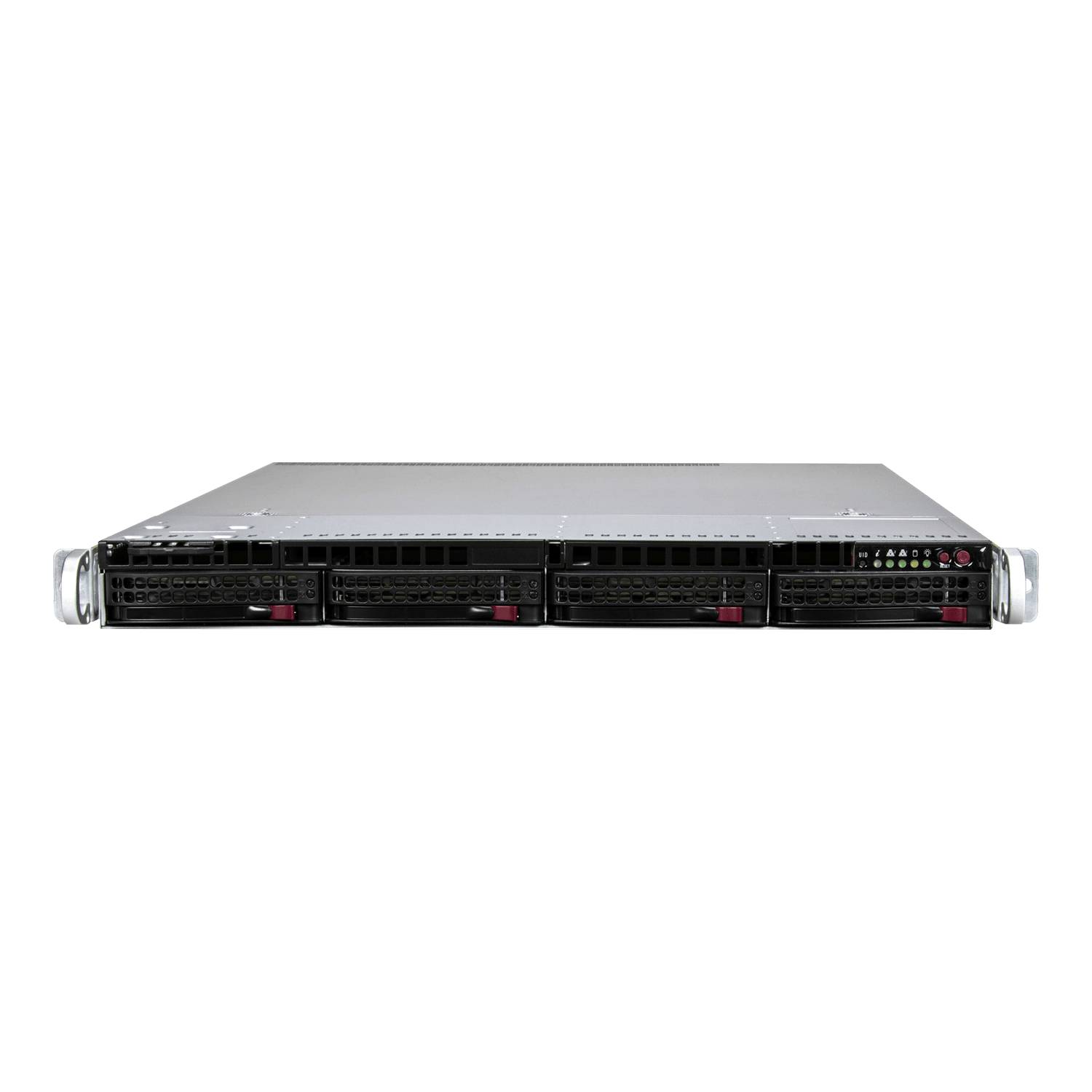
1U servers (1.75 inches in height) optimize rack density. They are primarily deployed for high-density web hosting, microservices, compute-heavy clustering, edge deployment, and front-facing enterprise application gateways.
- Drive Options: Typical configurations feature 4 to 12 hot-swappable 2.5-inch or 3.5-inch drive bays, with modern chassis supporting E1.S or E3.S Enterprise and Data Center Standard Form Factor (EDSFF) NVMe drives.
- Expansion & Thermal Dynamics: Due to limited height, 1U systems generally support 1 to 3 low-profile PCIe expansion slots. Cooling relies on high-RPM counter-rotating fan arrays. Systems housing high-TDP dual CPUs (such as dual 350W+ processors) require careful thermal planning to prevent thermal throttling under sustained heavy loads.
2U Rackmount Servers
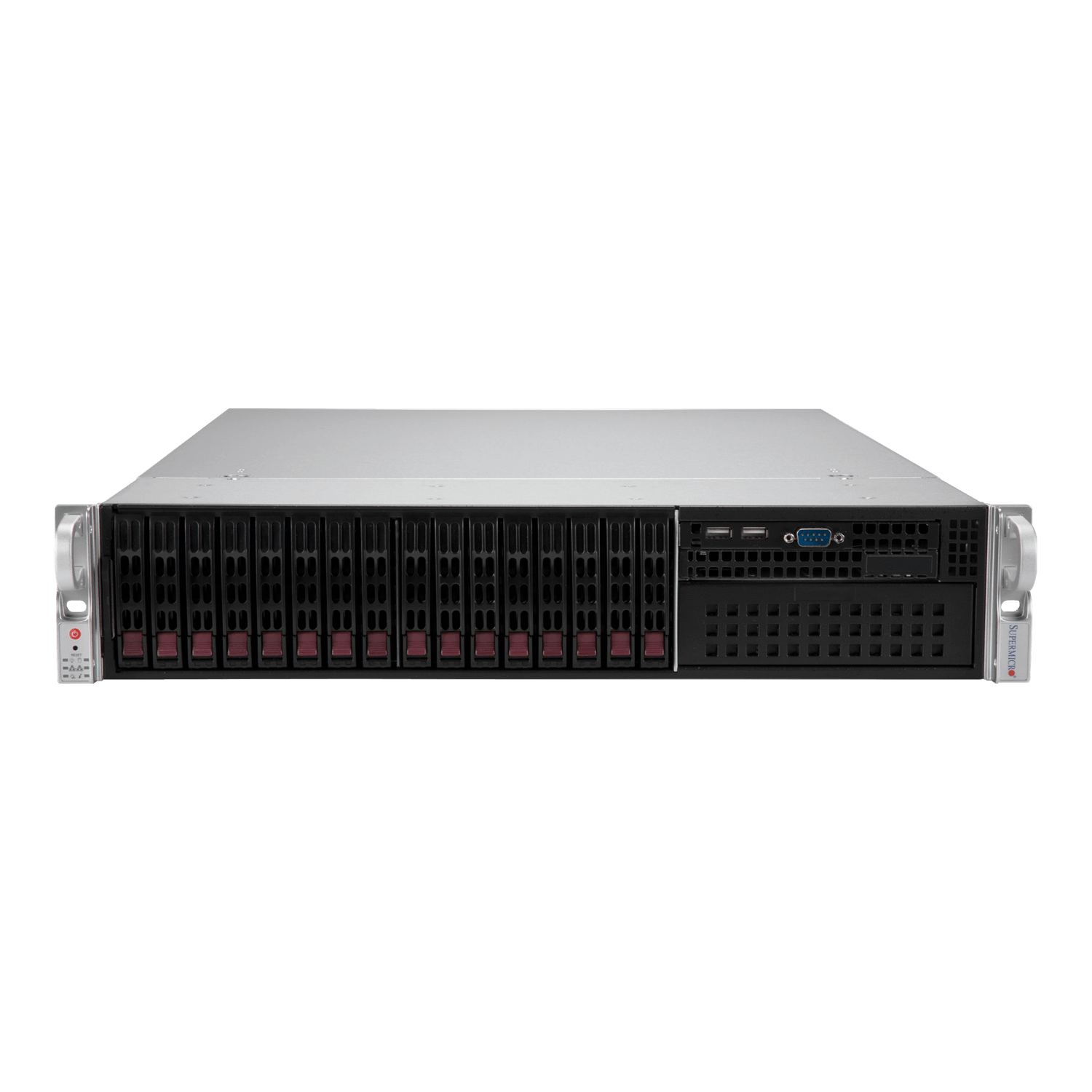
2U servers (3.5 inches in height) represent the most versatile workhorse form factor in standard enterprise infrastructure. The additional vertical headroom accommodates full-height, full-length (FHFL) expansion cards, larger heat sinks, and lower-fan-speed cooling profiles.
- Expansion Capabilities: A standard 2U enterprise chassis typically accommodates up to 6 or 8 PCIe slots, making it ideal for dual-port 100GbE/200GbE Network Interface Cards (NICs), Host Bus Adapters (HBAs), and hardware RAID controllers.
- Workload Suitability: 2U systems serve as the benchmark platform for virtualization platforms (e.g., VMware vSphere, Proxmox VE), database clusters (Microsoft SQL Server, PostgreSQL), and Software-Defined Storage (SDS) nodes such as Ceph or VMware vSAN.
3U and 4U Rackmount Servers
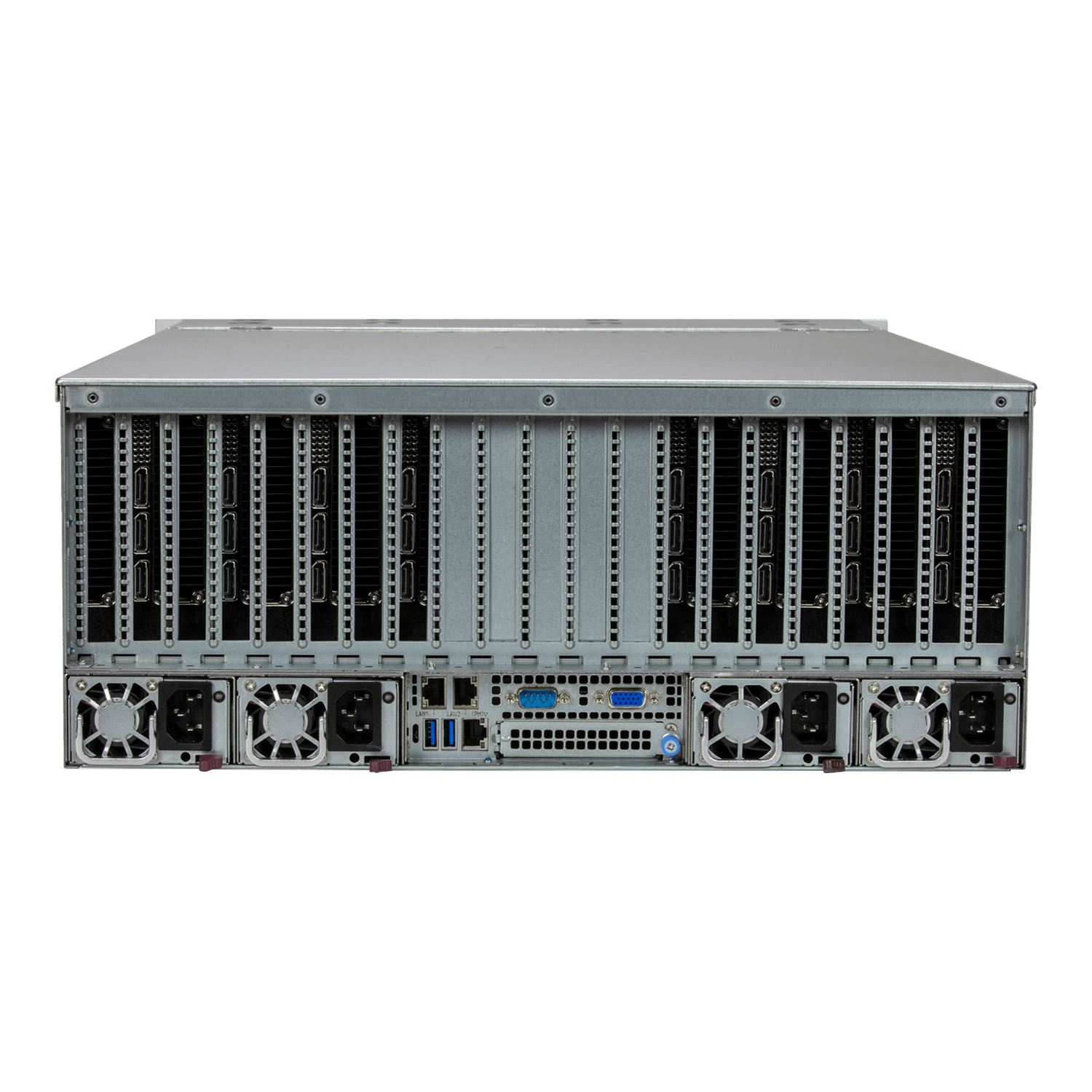
3U and 4U chassis (5.25 inches and 7.0 inches high, respectively) target heavy-duty compute, massively parallel AI/ML workloads, and high-capacity storage arrays.
- Dense Storage Platforms: 4U top-loading or front/rear-loading storage servers can house between 24 and 100+ 3.5-inch SAS/SATA/NVMe drives, reaching petabyte-scale raw capacity per rack unit.
- Accelerated Compute & GPU Chassis: 4U platforms provide the physical clearance, power busbars, and air/liquid flow channels required to host 4 to 8 double-width accelerator cards (such as NVIDIA H100/H200/B200 or AMD Instinct MI300 series) alongside multi-kilowatt redundant power supply units (PSUs).
Core Product Families and Workload Mapping
Supermicro categorizes its rackmount portfolio into distinct product families tailored to specific infrastructure deployment models.
| Product Family | Primary Target Applications |
|---|---|
| Ultra | Enterprise core workloads, mission-critical apps |
| Hyper | High-performance virtualization, AI inference |
| BigTwin / FatTwin | Multi-node HCI, cloud multi-tenancy, dense compute |
| GPU / AI | Machine learning training, LLMs, HPC simulation |
| Storage SuperServer | High-capacity NAS/SAN, S3 object storage, backup |
1. Ultra SuperServer
The Ultra family represents Supermicro’s flagship line for core enterprise applications. Designed for maximum flexibility, performance, and uptime, Ultra platforms feature flexible I/O configurations through Advanced I/O Modules (AIOM), which follow the OCP 3.0 specification.
Ultra servers support dual Intel Xeon Scalable or dual AMD EPYC processors with maximum memory bandwidth (up to 24 or 32 DIMM slots per system). They are equipped with redundant Titanium-level (96%+ efficiency) power supplies, making them suitable for tier-3 and tier-4 enterprise data centers handling ERP systems, real-time analytics, and heavy multi-tenant virtualization.
2. Hyper SuperServer
The Hyper series is engineered for demanding multi-cloud workloads, high-density compute clusters, and low-latency financial trading platforms. Hyper systems prioritize extreme expansion capability, offering broad PCIe lane routing directly from the CPU sockets to eliminate PCIe switch latency. They feature tool-less drive trays and optimized cable routing pathways to minimize maintenance friction during hot-swap field servicing.
3. Multi-Node Systems: BigTwin® and FatTwin®
Multi-node architectures consolidate multiple independent server nodes into a shared 2U or 4U chassis, sharing power and cooling infrastructure to drastically improve power usage effectiveness (PUE) and rack space utilization.
- BigTwin® (2U 4-Node or 2U 2-Node): Houses up to four dual-processor or single-processor compute nodes in a 2U enclosure. Each node operates independently with hot-swappable sled access from the rear. It provides shared central power supplies and thermal management while delivering double the compute density of standard 1U servers.
- FatTwin® (4U Multi-Node): Offers modular configurations such as 8 single-socket nodes or 4 dual-socket nodes in a 4U footprint, tailored for cloud service providers (CSPs), HPC sites, and large-scale web farms.
4. GPU & AI Accelerated Systems
Supermicro’s GPU rackmount servers range from 1U single-node dual-GPU servers to enterprise-grade 4U/5U platforms featuring NVIDIA HGX or AMD Instinct baseboards. These chassis utilize complex internal airflow ducts or integrated liquid-to-air cooling manifolds to handle total system power draws ranging from 3kW to 10kW per server.
Key features include direct CPU-to-GPU PCIe topologies or NVLink/xGMI interconnects, enabling high bandwidth and low latency for Large Language Model (LLM) training, generative AI, and real-time inference engines.
Hardware Architecture: Processors, Memory, and PCIe Fabrics
Understanding internal data paths and platform choices is vital when selecting a Supermicro rackmount build.
Modern Supermicro System Topology:
- Socket 0: Intel / AMD
- Interconnect: UPI / Infinity Fabric to Socket 1: Intel / AMD
- DDR5 Memory
- PCIe 5.0 / CXL Buses
- NVMe Drive
- AIOM / OCP 3.0
- Socket 1: Intel / AMD
- DDR5 Memory
- PCIe 5.0 / CXL Buses
- PCIe Add-in
- GPU Accel.
Intel vs. AMD Platform Offerings
Supermicro maintains parallel product trees supporting both major x86 CPU architectures:
- Intel Platforms (X13 / X14 Series Motherboards): Support Intel Xeon Scalable processors. These systems integrate hardware accelerators such as Intel Advanced Matrix Extensions (AMX) for AI workloads, Intel Data Streaming Accelerator (DSA), and Intel QuickAssist Technology (QAT) for hardware crypto/compression offload.
- AMD Platforms (H13 / H14 Series Motherboards): Support AMD EPYC processors (including 9004 and 9005 series). AMD architectures offer high core counts per socket (up to 128 or 192 cores depending on core architecture type) and up to 12 channels of DDR5 memory per socket, providing high compute density for enterprise cloud consolidation.
Compute Express Link (CXL) and PCIe Gen 5
Modern Supermicro systems leverage PCIe 5.0 interfaces offering up to 32 Gigatransfers per second (GT/s) per lane. This bandwidth doubling relative to PCIe 4.0 prevents bottlenecks for 200G/400G networking and fast NVMe storage arrays.
Additionally, CXL 1.1 and CXL 2.0 support allows server nodes to attach external memory pools via PCIe slots, expanding system memory capacity beyond physical DIMM slot constraints and enabling low-latency memory sharing across heterogeneous processing nodes.
System Comparison Matrix
The following table summarizes key technical specifications across Supermicro's core rackmount server families:
| Server Family | Form Factor | Max Sockets / Nodes | Drives & Storage Backplane Types | Primary Expansion Options | Key Use Cases |
|---|---|---|---|---|---|
| Ultra SuperServer | 1U, 2U | Dual Socket (Single Node) | 4 to 24 NVMe/SAS4/SATA3 (2.5"/3.5"/EDSFF) | Up to 8 PCIe 5.0 slots + AIOM (OCP 3.0) | Enterprise Core, Virtualization, Database |
| Hyper SuperServer | 1U, 2U | Dual Socket (Single Node) | 8 to 12 Direct-Attach NVMe/SAS | Flexible Riser Configurations, up to 8 PCIe slots | Multi-Cloud, Cloud Native, Financial Trading |
| BigTwin® | 2U | 4 Nodes (Dual/Single Socket per Node) | 2 to 6 Hot-swap NVMe/SAS per node | 2 PCIe 5.0 slots + AIOM per node | HCI (vSAN, Ceph), High-Density Compute |
| FatTwin® | 4U | 4 or 8 Nodes | 2 to 6 Drives per node (3.5" or 2.5") | 1 to 2 Low-Profile PCIe slots per node | Cloud Hosting, Web Scale Out, Big Data |
| GPU / AI Systems | 1U to 5U | Dual Socket + 2 to 10 GPUs | 4 to 24 U.2/U.3/EDSFF NVMe | Up to 10 FHFL Double-Width PCIe Slots | AI Training, LLMs, Deep Learning, HPC |
| Storage SuperServer | 2U to 4U | Single/Dual Socket or JBOD | 12 to 100+ Top/Front Loading 3.5" Bays | Hardware RAID/HBA slots + high-speed NICs | Object Storage, Backup Targets, NAS/SAN |
Out-of-Band Management and Remote Control
Enterprise data center operations rely heavily on standard, agentless remote platform administration. Supermicro handles out-of-band management through integrated Baseboard Management Controllers (BMC) featuring embedded ASPEED processors.
IPMI 2.0 and HTML5 Virtual Console
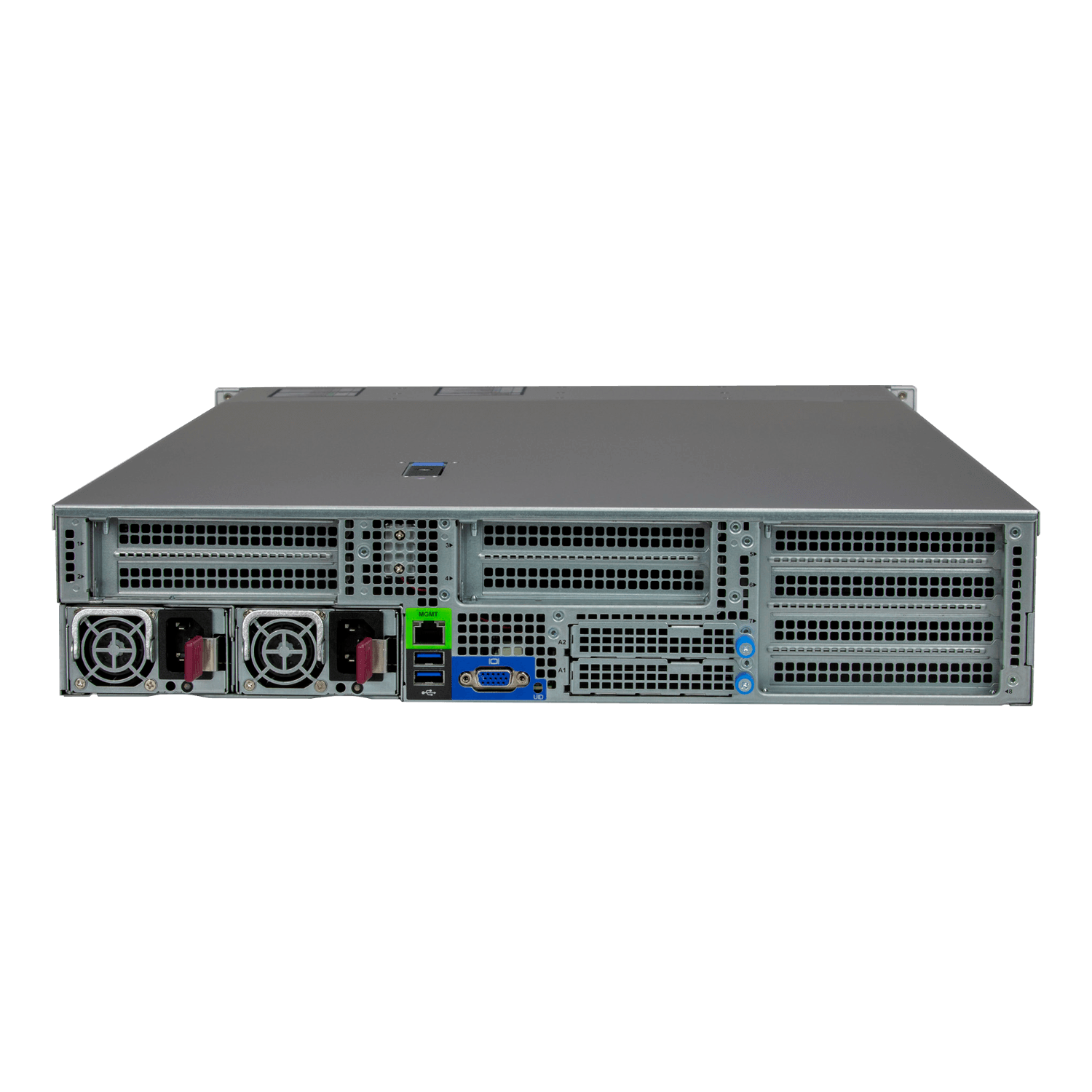
Every Supermicro rackmount motherboard features a dedicated 1GbE RJ45 management port linked to the BMC. Key capabilities include:
- Agentless Monitoring: Real-time health metrics including component temperatures, voltage rails, fan speeds, power consumption, and memory error logging via ECC.
- Virtual KVM (Keyboard, Video, Mouse): HTML5-based remote console support accessible directly through modern web browsers without requiring outdated Java runtimes. Enables remote BIOS configuration, OS installation, and boot diagnostic troubleshooting.
- Virtual Media Mounting: Allows remote ISO images to be mounted over the network as virtual DVD-ROM or USB drives for bare-metal OS deployments.
Redfish RESTful API and Supermicro Server Manager (SSM)
For scale-out data centers and automated DevOps pipelines, Supermicro supports the DMTF Redfish RESTful API standard. Through JSON-formatted HTTP requests, automated orchestration tools (such as Ansible, Terraform, or custom Python scripts) can programmatically perform inventory discovery, apply firmware updates, configure RAID arrays, and adjust BIOS flags across thousands of nodes simultaneously.
Enterprise IT teams managing large Supermicro server fleets can deploy Supermicro Server Manager (SSM). SSM provides a unified portal for monitoring node health, performing bulk BIOS updates, scheduling automated firmware rollouts, and managing system power budgets via Supermicro Power Manager (SPM).
Deployment, Thermal Planning, and Configuration Guidelines
Deploying Supermicro rackmount hardware into production data centers requires strategic planning around physical dimensions, power distribution, and thermal profiles.
Deployment Check Sequence:
- Cabinet Depth Check: Ensure 1000mm-1200mm rack depth
- Power Distribution: Match PSU specs to PDU phase/voltage
- Rail Kit Selection: Verify square-hole vs round-hole posts
- Backplane Routing: Choose NVMe Direct-Attach vs SAS HBA
- Thermal Airflow: Secure front-to-back cabling pathways
1. Cabinet Depth and Rail Kit Compatibility
Supermicro rackmount chassis—especially enterprise Ultra, GPU, and Storage models—often feature extended physical chassis depths ranging from 28 inches (710mm) to 32 inches (813mm).
- Ensure data center server cabinets provide a minimum frame depth of 1000mm to 1200mm to allow sufficient front door clearance and rear cable management arm (CMA) articulation.
- Verify rack post hole types before ordering rail kits. Supermicro offers tool-less quick-release slide rails designed for standard square-hole EIA-310-E 19-inch racks, as well as adapter kits for older round-hole threaded cabinets.
2. Power Supply Unit (PSU) Provisioning and Input Voltages
Supermicro systems leverage high-efficiency redundant PSUs certified under 80 PLUS Platinum (94%+ efficiency) or Titanium (96%+ efficiency) standards.
- Voltage Requirements: High-density 2U multi-node (BigTwin) and 4U GPU servers frequently require 200V to 240V AC or 277V/380V DC power inputs. Operating high-draw multi-CPU/GPU nodes on low-line 110V/120V household-style circuits can reduce maximum power output capacity by 50% or prevent system initialization entirely.
- Phase Distribution: Calculate total thermal design power and ensure Power Distribution Units (PDUs) within the rack are configured with balanced 3-phase circuits to accommodate peak transient current spikes.
3. Drive Backplanes and Bus Cabling Topologies
Configuring internal storage pathways requires alignment between drive selection and backplane capabilities:
- Direct-Attached NVMe Backplanes: Connect NVMe U.2/U.3 drives directly to CPU PCIe lanes via SlimSAS or MCIO cabling, maximizing IOPS and minimizing controller latency.
- SAS/SATA Expander Backplanes: Route dozens of 3.5-inch or 2.5-inch drive channels through a single broadcom hardware SAS/SATA HBA or RAID controller card via SAS expanders, sacrificing direct PCIe speed in favor of maximum storage capacity and hardware redundancy.
Operational Troubleshooting and Maintenance
Maintaining high uptime on Supermicro rackmount servers requires familiarization with built-in diagnostic features:
Front Panel Diagnostic LEDs
Supermicro chassis feature front indicator panels displaying system status:
- Overheat / Fan Fail LED: Flashes red if internal chassis ambient temperatures exceed thermal thresholds or if an internal counter-rotating cooling fan drops below nominal RPM speeds.
- Power Fail LED: Solid red indicates failure of one module within a redundant PSU pair. Replace the faulted PSU module while the system remains powered online via the redundant secondary unit.
- NIC Activity LEDs: Indicate physical layer link status and packet transmission across integrated onboard network ports.
Memory Error Diagnostics (ECC)
Uncorrectable memory errors triggers a system event log (SEL) entry in the IPMI web console. When replacing degraded DIMMs, refer to the motherboard silk-screen layout and system manual block diagram. Supermicro dual-socket systems require specific, populated memory channel balancing sequences (e.g., populating Slot 1 of Channels A through L evenly across Sockets 0 and 1) to maintain full memory bandwidth capabilities.
Frequently Asked Questions
What is the difference between Supermicro Ultra and Hyper server lines?
The Ultra family is Supermicro's flagship enterprise platform optimized for multi-purpose flexibility, maximum memory availability, and broad software validation across standard enterprise apps. The Hyper family focuses specifically on minimal latency, direct PCIe lane connectivity, and flexible custom expansion profiles, making it popular for custom multi-cloud architectures, edge computing, and high-frequency trading.
Can I install standard third-party PCIe expansion cards in Supermicro rackmount systems?
Yes. Supermicro uses standard, non-proprietary PCIe slots on its riser card architectures. Standard network adapters, host bus adapters (HBAs), NVMe add-in cards, and graphics processing units (GPUs) work reliably provided physical length, height, slot spacing, power cabling, and cooling TDP limits are met.
How do I update the BIOS on a Supermicro rackmount server remotely?
Supermicro provides remote BIOS update functionality through the IPMI HTML5 web interface using an IPMI BIOS SFT license key, or via command-line using the free Supermicro Update Manager (SUM) utility. SUM allows system administrators to update BIOS and BMC firmware out-of-band across network nodes without disrupting operating system execution until a scheduled system reboot.
Do Supermicro rackmount servers require custom rack mounting enclosures?
No. Supermicro servers adhere strictly to standard EIA-310-E 19-inch rack mounting dimensions. They can be installed into standard 4-post data center cabinets. However, administrators should confirm that the server rack's internal depth (front rail to rear rail distance) accommodates extended-depth chassis designs (often 30+ inches).
What is Supermicro SIOM / AIOM networking?
Supermicro Advanced I/O Modules (AIOM) are standard-compliant expansion cards based on the open-source OCP 3.0 form factor. AIOM modules allow users to swap rear network connectivity interfaces—such as changing from dual 10GbE RJ45 ports to quad 25GbE SFP28 or dual 100GbE QSFP28 ports—without occupying valuable standard full-height PCIe expansion slots.
Strategic Recommendation and Next Steps
When selecting and deploying Supermicro rackmount infrastructure, apply the following step-by-step decision workflow:
- Define Primary Workload Metrics: Determine whether the node's chief bottleneck is raw CPU core count (AMD EPYC multi-node platforms), memory bandwidth per core (Intel/AMD enterprise 2U servers), storage IOPS (direct-attach NVMe/EDSFF arrays), or parallel matrix processing (4U GPU accelerator platforms).
- Conduct Data Center Environmental Audits: Measure rack depth, verify available PDU voltages (200V-240V AC required for heavy enterprise nodes), and assess cooling capacity (air-cooled vs. liquid-assisted cooling loop availability).
- Standardize Platform Management: Configure IPMI out-of-band management interfaces on dedicated, isolated management VLANs immediately upon rack installation. Establish centralized platform control using Supermicro Server Manager (SSM) or integrate Redfish API scripts into existing automated operational toolchains.
By systematically mapping workload demands to Supermicro's Building Block Solutions®, enterprise organizations can build reliable, energy-efficient data center architectures optimized for high performance and long-term hardware scalability.
Image Gallery