A Comprehensive Summary of Barbarians in World History
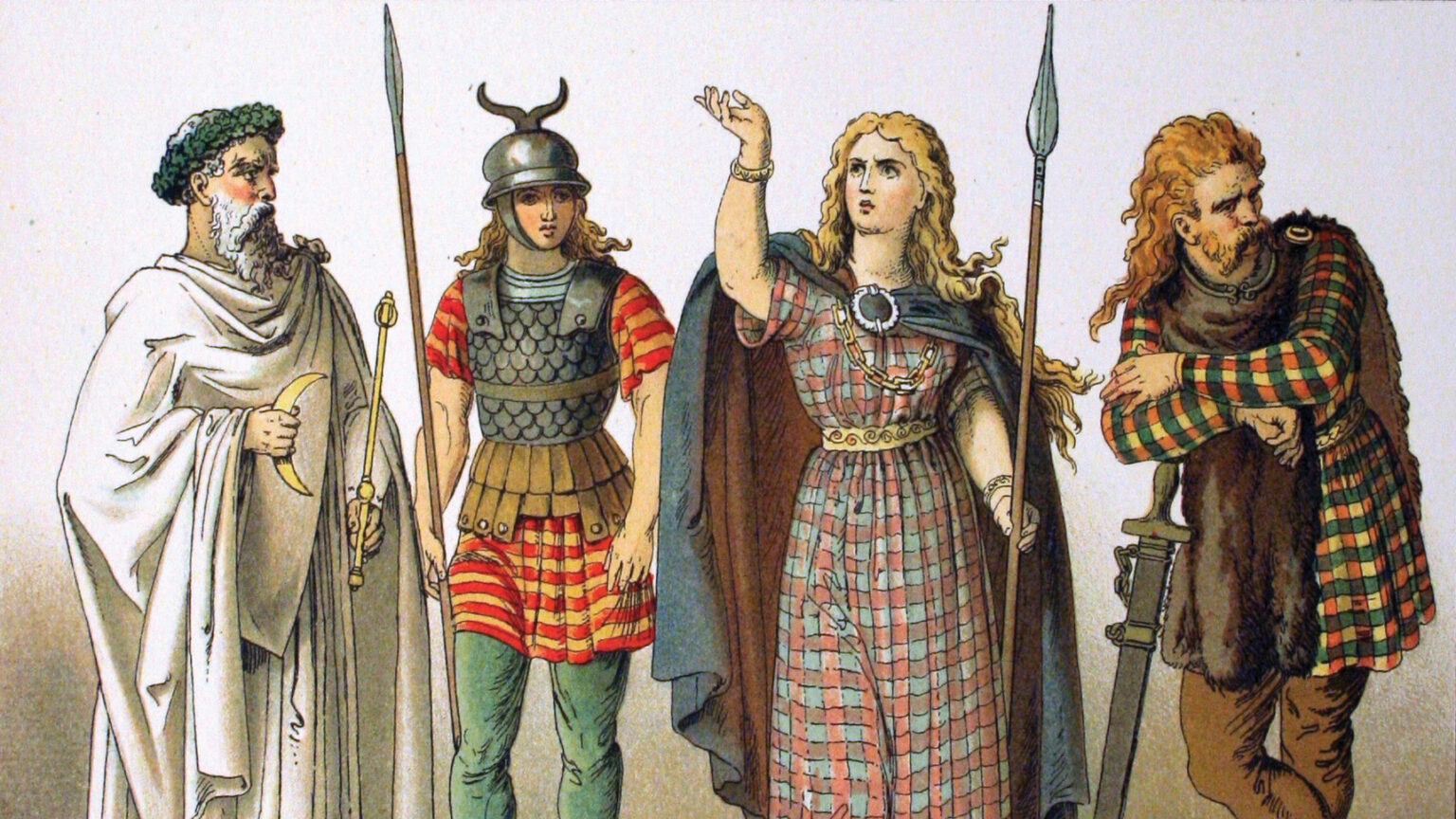
In historical terms, barbarians were diverse tribal groups—primarily Germanic, Slavic, and nomadic Steppe peoples—who lived outside the borders of the Roman Empire and other "civilized" states. Rather than being mere "savages," they po...
In historical terms, barbarians were diverse tribal groups—primarily Germanic, Slavic, and nomadic Steppe peoples—who lived outside the borders of the Roman Empire and other "civilized" states. Rather than being mere "savages," they possessed complex social structures, legal codes, and artistic traditions that eventually reshaped the map of modern Europe.
Contents
The Etymology and Evolution of the Term "Barbarian"
The word barbarian did not originally carry the connotation of a "savage" or "uncivilized" person. Its origins lie in the Ancient Greek word barbaros, which was an onomatopoeic term used to describe the speech of foreigners. To the Greeks, non-Greek speakers sounded like they were saying "bar-bar," a repetitive and unintelligible noise. Initially, this included the Persians and Egyptians—civilizations the Greeks actually respected.
By the Roman period, however, the term became more pejorative. The Roman Empire used "barbarian" to define any group residing outside the Limes (the imperial frontiers). This political and cultural "othering" helped the Romans justify their expansion and maintain a sense of superiority. As of 2026, modern historiography focuses less on this binary of "civilized vs. uncivilized" and more on the interdependence of the Roman and barbarian worlds through trade, military service, and diplomatic treaties.
Major Barbarian Groups and Their Origins
The history of the "barbarian" is largely the history of the Great Migration Period (roughly 300 to 700 AD). During this era, dozens of ethnic groups moved across the European and Asian continents. Understanding the distinct identities of these groups is essential to understanding the collapse of the Western Roman Empire.
The Germanic Tribes: Goths, Vandals, and Franks
The Germanic peoples were the most influential groups in Western European history. They were not a single unified nation but a collection of tribes sharing similar linguistic roots.
- The Goths: Divided into the Visigoths (Western Goths) and Ostrogoths (Eastern Goths). The Visigoths are famous for the Sack of Rome in 410 AD under King Alaric I. Eventually, they established a significant kingdom in the Iberian Peninsula (modern-day Spain).
- The Vandals: Originating from Central Europe, they migrated through Gaul and Spain to North Africa. In 439 AD, they captured Carthage and established a powerful Mediterranean kingdom. Their 455 AD sack of Rome was so systematic that it birthed the modern term "vandalism," though they were actually quite sophisticated administrators.
- The Franks: A confederation of tribes from the Lower Rhine. Under King Clovis I, the Franks converted to Catholicism and established the Merovingian dynasty, laying the foundation for what would eventually become France and Germany.
The Steppe Nomads: The Huns and Mongols
Unlike the Germanic tribes, these groups came from the Eurasian Steppe and relied on expert horsemanship and archery.
- The Huns: Their arrival in Eastern Europe in the late 4th century acted as a catalyst for the Great Migration. By pushing Germanic tribes westward into Roman territory, they created a domino effect of instability. Their most famous leader, Attila the Hun, was known as the "Scourge of God."
- The Mongols: Though they appeared later in the medieval period (13th century), they are frequently categorized under the broader umbrella of "barbarian" invaders. Led by Genghis Khan, they created the largest contiguous land empire in history, proving that "barbarian" societies could achieve unprecedented levels of organizational and military efficiency.
The Migration Period: Catalysts for Change
The movement of these peoples was rarely a sudden "invasion" in the way it is portrayed in cinema. Instead, it was often a slow, multi-generational process of migration driven by several factors:
- Climate Change: A cooling period in Northern Europe made farming less viable, forcing tribes to seek warmer, more fertile lands in the south.
- Pressure from the East: The westward expansion of the Huns forced the Goths and Vandals to seek refuge within Roman borders.
- Roman Instability: As the Roman Empire suffered from internal corruption, economic inflation, and civil wars, its borders became porous. Many barbarian groups were initially invited into the empire as foederati (allies) to serve in the Roman army.
Barbarian Contributions to Law, Art, and Culture
Contrary to the "Dark Ages" myth, barbarian groups brought significant cultural innovations that blended with Roman traditions to form the basis of Medieval European society.
Legal Systems and Social Order
Barbarians operated under tribal laws that focused on wergild (blood money or restitution) rather than the Roman system of state-administered justice. The Lex Salica (Salic Law) of the Franks is one of the most famous examples. These codes emphasized family honor and personal loyalty, which eventually evolved into the feudal system of the Middle Ages.
Artistic Mastery
The "barbarians" were masters of metalwork and jewelry. Their art—often called Migration Period art—featured intricate geometric patterns, interlaced designs, and "animal style" motifs. This aesthetic survived and flourished, eventually influencing Celtic and Anglo-Saxon manuscript illumination, such as the Book of Kells.
Language and Toponymy
The linguistic map of Europe is a direct result of these migrations. The English language itself is a "barbarian" tongue, rooted in the dialects of the Angles, Saxons, and Jutes. Similarly, the names of modern regions—Franche-Comté (Franks), Lombardy (Lombards), and Andalusia (Vandals)—serve as permanent reminders of these tribal settlements.
Comparison of Key Barbarian Groups
The following table summarizes the primary characteristics and impacts of the most significant groups during the transitional period from Antiquity to the Middle Ages.
| Tribe Group | Origin Region | Primary Impact | Notable Leader | Ultimate Fate |
|---|---|---|---|---|
| Visigoths | Scandinavia/N. Germany | Sacked Rome (410); settled Spain | Alaric I | Conquered by Umayyad Caliphate (711) |
| Vandals | Central Europe/Poland | Established N. African Kingdom | Genseric | Defeated by Byzantine Empire (534) |
| Huns | Central Asian Steppe | Forced Germanic migrations | Attila | Collapsed after Attila's death (453) |
| Franks | Rhine River Valley | Founded the Kingdom of France | Clovis I | Evolved into the Carolingian Empire |
| Lombards | Northern Germany | Conquered Northern Italy | Alboin | Defeated by Charlemagne (774) |
| Saxons | North Sea Coast | Migrated to and settled Britain | Hengist & Horsa | Merged into the English identity |
The Fall of Rome: Barbarian Invasion or Transformation?
One of the most debated topics in history is whether barbarians "destroyed" the Roman Empire. Historians in 2026 generally favor a "transformation" model. By the 5th century, the Roman military was almost entirely composed of Germanic soldiers and generals. Men like Stilicho (a Vandal descendant) and Ricimer were the real powers behind the throne.
The "fall" in 476 AD, when the Germanic chieftain Odoacer deposed the boy-emperor Romulus Augustulus, was not a cataclysmic event for the average citizen. Odoacer did not claim the title of Emperor; instead, he sent the imperial regalia back to Constantinople and ruled as "King of Italy" under the theoretical authority of the Eastern Emperor. This marked the shift from a centralized empire to a fragmented landscape of barbarian kingdoms.
Frequently Asked Questions
Who was the most famous barbarian leader?
Attila the Hun is arguably the most famous. Between 434 and 453 AD, he commanded a vast empire stretching from the Rhine to the Caspian Sea. His ability to extort massive amounts of gold from the Eastern Roman Empire and his nearly successful invasion of Gaul made him a figure of terror in Western collective memory.
Did barbarians have a written language?
Most early barbarian groups relied on oral traditions for their history and laws. However, some Germanic tribes used runes for inscriptions. In the 4th century, a Goth named Ulfilas created a Gothic alphabet to translate the Bible, which is one of the earliest examples of a written Germanic language.
Why did the Romans call them "barbarians"?
The Romans used the term as a catch-all for anyone who didn't live like a Roman—specifically those who didn't speak Latin or Greek, didn't live in cities, and didn't follow Roman law. It was a tool of political propaganda used to categorize the "outside world" as chaotic and dangerous.
Are modern Europeans descendants of barbarians?
Yes. The majority of modern Europeans have genetic and linguistic roots in these tribal groups. The English are descended from Anglo-Saxons and Vikings; the French from the Franks; and the Spanish from the Visigoths and Suebi. The "barbarian" migrations were essentially the founding event of modern European nations.
Was the Viking Age part of the barbarian era?
The Viking Age (roughly 793–1066 AD) is often considered the "final wave" of barbarian migrations. While the classic "Barbarian Summary" focuses on the 4th–6th centuries, the Vikings shared many characteristics with earlier Germanic tribes, including maritime skill, paganism (initially), and a tribal social structure.
Practical Recommendations for Further Study
To gain a deeper understanding of this historical period, consider the following actions:
- Visit Archaeological Museums: The British Museum (London) and the Romano-Germanic Museum (Cologne) house some of the finest examples of barbarian metalwork and artifacts.
- Read Primary Sources: Look for the Getica by Jordanes (a history of the Goths) or Gregory of Tours' History of the Franks for a contemporary—albeit biased—view of these tribes.
- Explore Genetic History: Modern DNA services often provide "Deep Ancestry" reports that can trace your lineage back to specific migration-era groups like the Saxons or Celts.
- Study Historical Maps: Use interactive historical atlases to visualize how borders shifted between 300 AD and 800 AD to see the "barbarian" kingdoms emerge.
Image Gallery