The Biggest New Year's Eve Celebrations in the World: Global Scale and Key Features
The world's largest New Year's Eve celebration by physical crowd size is Rio de Janeiro's Réveillon on Copacabana Beach, attracting over two million revelers annually. New York City's Times Square leads in global television viewership...
The world's largest New Year's Eve celebration by physical crowd size is Rio de Janeiro's Réveillon on Copacabana Beach, attracting over two million revelers annually. New York City's Times Square leads in global television viewership with over one billion spectators, while Sydney and Dubai set international benchmarks for pyrotechnic scale, synchronized light displays, and structural engineering.
Contents
Measuring Global Scale: Crowd Size, Broadcast Reach, and Pyrotechnic Volume
Determining which New Year's Eve celebration qualifies as the "biggest" depends on the metric applied. Event organizers, municipal agencies, and crowd-safety experts evaluate global scale using four primary parameters:
- Physical Crowd Density: The total count of in-person attendees within designated event zones. Open-air coastal and urban environments, such as Rio de Janeiro's oceanfront or Berlin's public corridors, accommodate millions of standing spectators across several linear kilometers.
- Global Broadcast and Digital Reach: The cumulative audience tuning in via terrestrial television, satellite feeds, and digital live streams. Events with long-standing media syndication, most notably New York City's Times Square Ball Drop, dominate this metric.
- Pyrotechnic and Production Footprint: The sheer volume of explosives, laser setups, drone fleets, and architectural lighting installations integrated into the midnight display. Cities like Sydney and Dubai lead in structural hardware and technical synchronization across vast geographic areas.
- Economic and Cultural Impact: The international tourism influx, citywide infrastructure deployment, and cultural tradition associated with the event.
While many international metropolises host notable gatherings, only a select group of cities operate celebrations at a truly mega-scale level.
Copacabana Beach, Rio de Janeiro: The World’s Largest Physical Assembly
Rio de Janeiro's annual celebration, known locally as Réveillon, represents the world's largest gathering of in-person revelers. Stretched along the crescent curve of Copacabana Beach, the celebration routinely draws between 2 million and 3 million participants each December 31.
Key Features and Cultural Traditions of Réveillon
The defining characteristic of Réveillon is its integration of Afro-Brazilian cultural traditions with a massive municipal music festival.
- Dressing in White: Attendees overwhelmingly dress in white clothing, a practice rooted in Afro-Brazilian traditions (honoring Yemanjá, the Orisha of the sea) intended to bring peace, luck, and renewal for the coming year.
- Tributes to the Ocean: Before midnight, thousands of spectators step into the surf to jump seven waves and launch small floating offerings of flowers and candles into the Atlantic Ocean.
- Multi-Stage Live Performances: The city installs multiple major stages along the 4-kilometer stretch of sand. These stages feature continuous live performances ranging from top-tier Samba schools and Brazilian Popular Music (MPB) to international pop and electronic artists.
Operational and Maritime Logistics
Launching fireworks over a crowd of millions requires strict maritime coordination. The Rio de Janeiro city government and local naval authorities station 10 to 12 heavy offshore barges approximately 400 meters out in the ocean.
Firing fireworks from sea-bound barges rather than land structures ensures maximum visual clearance across the entire beach line while maintaining a safe fall-zone radius for shell debris. The show typically runs for 12 to 15 continuous minutes, utilizing computerized firing systems synchronized to an amplified musical soundtrack broadcast along the entire beach.
Times Square, New York City: Global Viewership and Iconic Symbolism
While physical access to Times Square is strictly capped by police perimeters to around 1 million people (and often lower depending on safety configurations), New York City hosts what is universally recognized as the most-watched New Year's Eve event on Earth. An estimated 1 billion people watch the live television feeds worldwide.
The Engineering of the Waterford Crystal Ball Drop
The central focal point of the gathering is the lowering of the Times Square New Year's Eve Ball atop One Times Square. The ball drop tradition began in 1907, evolving into a sophisticated piece of modern display engineering.
- Physical Specifications: The current ball is a geodesic sphere measuring 12 feet (3.6 meters) in diameter and weighing nearly 12,000 pounds (5,386 kilograms).
- Lighting and Material: It is covered with 2,688 custom-crafted Waterford Crystal triangles attached to structural aluminum frames. The interior is illuminated by over 32,000 high-efficiency LEDs capable of displaying over 16 million colors and millions of kaleidoscopic patterns.
- The Countdown Mechanism: At exactly 11:59:00 PM, the ball begins its 60-second, 77-foot descent down a specialized flagpole, reaching the base precisely at midnight to signal the start of the new year.
Security Infrastructure and Public Access Protocols
Attending Times Square requires navigating one of the tightest urban security operations in the world, managed by the New York City Police Department (NYPD).
- Pen System: Spectators are funneled into designated viewing pens lined with barricades. Once a pen reaches capacity, it is locked down. Attendees who leave their pen for any reason forfeit their spot, as re-entry is prohibited.
- Screening Protocols: Access points open in the early morning or mid-afternoon. All attendees pass through magnetometers, hand-wand security, and radiation detection checkpoints. Bags, backpacks, alcohol, and umbrellas are strictly banned from the venue space.
- The Confetti Drop: At the stroke of midnight, over 1 ton of confetti—including tens of thousands of handwritten wishes collected from the "Wishing Wall" in Times Square during December—is manually dropped by volunteer crews from the rooftops of surrounding skyscrapers.
Sydney Harbour, Australia: Early-Time-Zone Pioneer of Pyrotechnic Display
Due to its geographic location near the International Date Line, Sydney serves as the first major global megacity to welcome the New Year. Positioned around the natural topography of Sydney Harbour, the event draws approximately 1.5 million physical spectators to foreshore vantage points.
Multi-Point Synchronization and Indigenous Ceremonies
Sydney’s celebration stands out for its multi-layered programming and intricate architectural integration across the Sydney Harbour Bridge and the Sydney Opera House.
- Welcome to Country: Prior to the major pyrotechnic shows, the event acknowledges the traditional custodians of the land—the Gadigal people of the Eora Nation. This includes a smoking ceremony, indigenous light projections, and cultural watercraft displays on the harbour.
- Dual Firework Shows: Sydney operates two separate displays: the 9:00 PM Family Fireworks (designed for younger attendees) and the 12:00 AM Midnight Extravaganza.
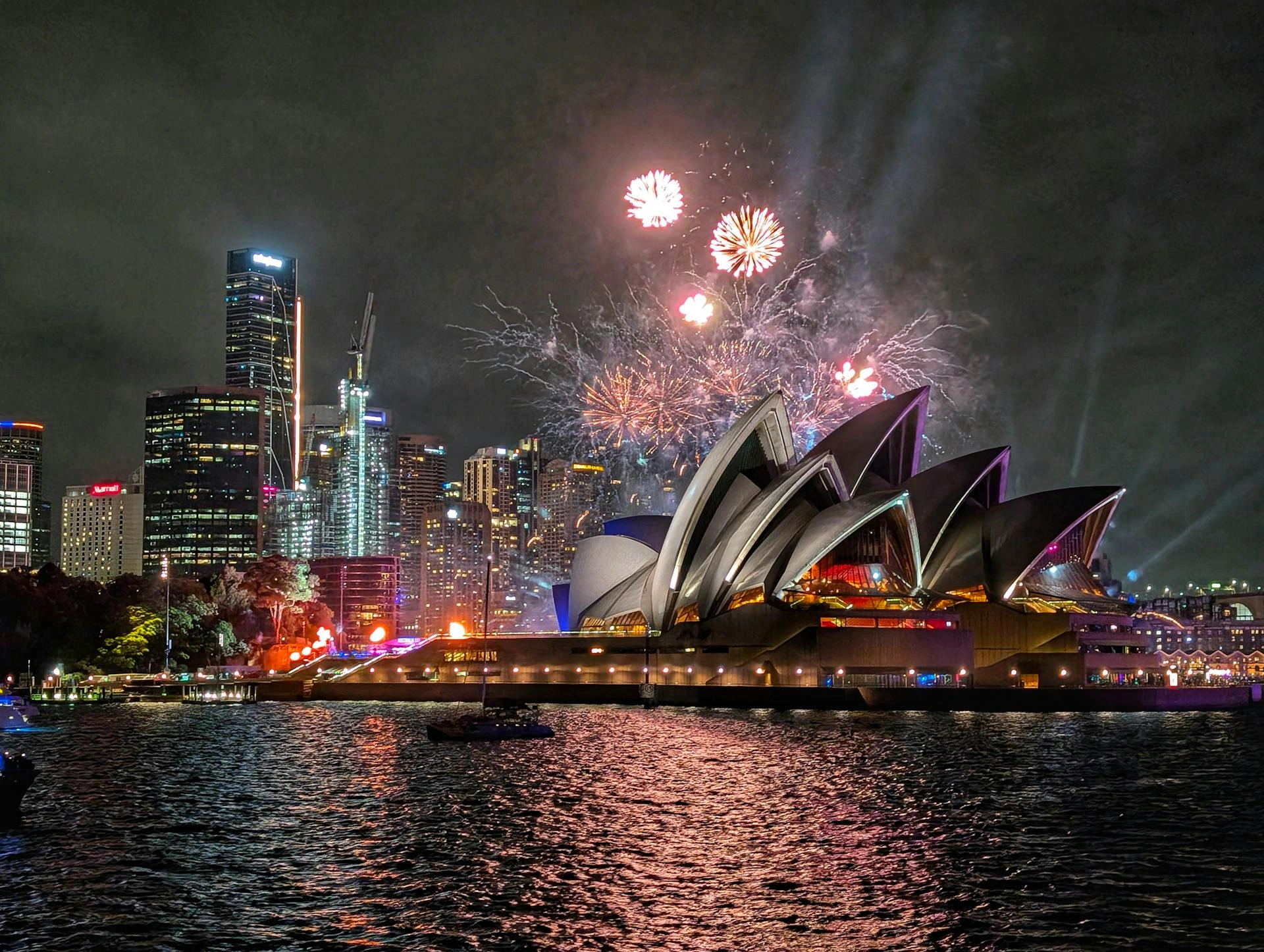
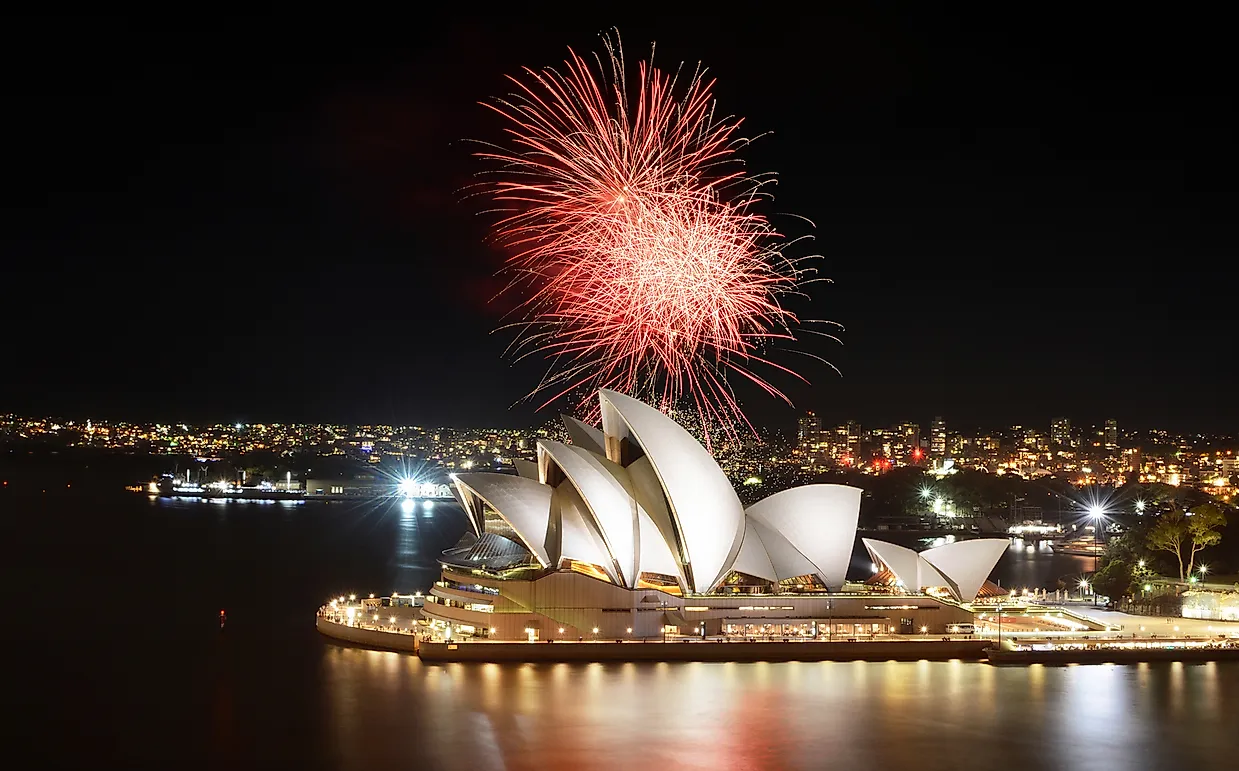
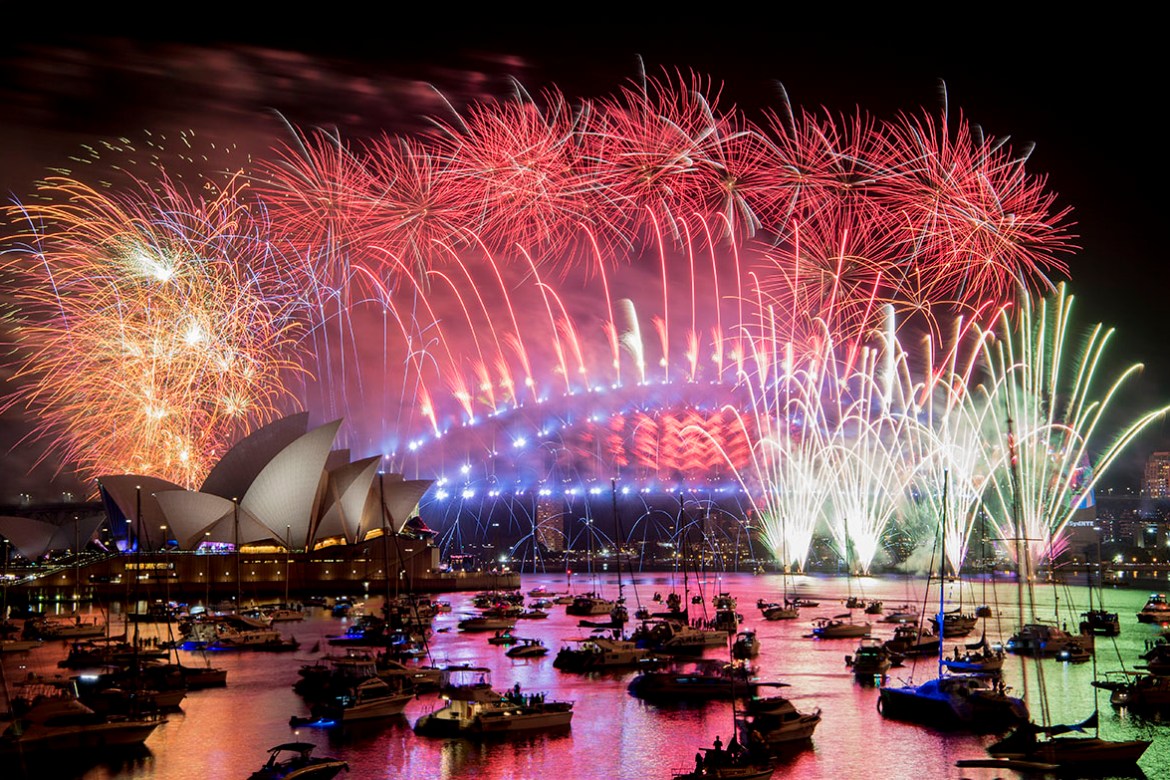
- Bridge and Harbour Integration: The display incorporates firing points across the arches and roadways of the Sydney Harbour Bridge, pyrotechnic barges positioned along the water, and launch pads atop the Sydney Opera House sails.
Harbour Logistics and Viewing Precincts
The New South Wales government manages dozens of official viewing parks surrounding the harbour. While some locations offer free public access on a first-come, first-served basis, high-demand locations utilize ticketed entry to manage pedestrian flow and prevent dangerous overcrowding. Transport for NSW operates hundreds of additional train and ferry services to clear the foreshore within hours after the midnight finale.
Burj Khalifa and Downtown Dubai: High-Tech Structural Records
Dubai has built a global reputation for setting structural records, and its New Year's Eve spectacle at the Burj Khalifa—the world's tallest building at 828 meters—reflects that design ethos. Organized by master developer Emaar, Downtown Dubai attracts hundreds of thousands of live attendees alongside tens of millions of viewers across digital stream platforms.
Architectural Integration and LED Mapping
Unlike traditional displays that rely primarily on ground-level or barge-launched mortar shells, Dubai transforms the exterior skin of the Burj Khalifa into a massive single digital screen.
- LED Facade Screen: The tower’s facade features a high-resolution LED system that runs from the base to the spire. This system displays dynamic animations, high-speed countdown timers, and custom digital artwork.
- Integrated Pyrotechnics: Thousands of customized pyrotechnic charges are mounted directly to the structural framework and balconies of the skyscraper across its entire height, firing outward in sequence to create spiraling visual patterns.
Sustainable Pyrotechnic and Laser Engineering
In recent years, Dubai has increasingly integrated mega-scale laser systems and synchronized water fountains into its presentation.
- Dubai Fountain Synchronization: The neighboring Dubai Fountain—one of the world's largest choreographed fountain systems—fires water jets up to 500 feet in the air, synchronized in real time with the tower's light and explosive cues.
- Eco-Friendly Formulations: To meet municipal environmental guidelines, event planners deploy low-smoke pyrotechnic compounds and non-toxic materials engineered to dissipate rapidly over urban airspace.
Comparative Analysis of Top Global New Year's Eve Destinations
The following table summarizes the primary technical, logistics, and attendance metrics for the world's leading New Year's Eve celebrations.
| Destination | Primary Metric / Distinction | Estimated In-Person Attendance | Key Visual & Technical Highlights | Entry Requirement |
|---|---|---|---|---|
| Rio de Janeiro (Copacabana) | Largest physical crowd on Earth | 2.0M – 3.0M | Ocean barges, white-clad tradition, multi-stage live music | Free public beach access |
| New York City (Times Square) | Highest global broadcast viewership | ~1.0M (capped) | Waterford Crystal Ball drop, rooftop confetti release | Free; restricted secure pens |
| Sydney (Sydney Harbour) | First major global city countdown | 1.5M | Harbour Bridge & Opera House fireworks, Indigenous ceremony | Mixed (Free & ticketed parks) |
| Dubai (Burj Khalifa) | Tallest structural fireworks & LED display | 500,000+ | 828m building LED mapping, fountain synchronization | Free public spots; paid venue seats |
| London (River Thames) | Europe's premier ticketed river show | 100,000+ (ticketed zone) | London Eye wheel display, Big Ben midnight chimes | Paid ticket required for riverfront |
| Berlin (Brandenburg Gate) | Europe's largest open-air street party | 500,000+ | 2 km "Party Mile" stage, light shows, historic landmark backdrop | Free public access with checkpoints |
Technological Innovations Shaping Modern Mega-Scale NYE Events
As safety regulations tighten and environmental standards evolve, major international cities are upgrading their event architecture with advanced production technologies.
Drone Swarm Integration vs. Traditional Shell Pyrotechnics
While heavy artillery fireworks shells remain a staple of celebrations, municipalities are expanding the use of coordinated drone swarms.
- 3D Volumetric Formations: Hundreds to thousands of lighted, GPS-guided drones fly in formation to create three-dimensional objects, countdown numbers, and moving logos in the sky.
- Environmental Advantages: Drones produce zero chemical emissions, eliminate particulate matter smoke, and create no concussive noise pollution—making them suitable for urban centers with dense residential zones or sensitive wildlife habitats.
- Hybrid Shows: Cities such as Dubai, London, and Tokyo frequently deploy hybrid presentations that layer drone swarms over fireworks to add depth to the visual field.
High-Density Sound Reinforcement and Live Broadcasting Systems
Delivering clear audio over distances spanning several kilometers presents significant acoustic challenges.
- Distributed Audio Arrays: Event engineers build synchronized delay towers along public corridors (such as Copacabana Beach or the Thames Embankment) to prevent acoustic echoing and phase cancellation over long distances.
- Low-Latency Streaming: Ultra-low-latency broadcast protocols allow satellite networks and digital streaming platforms to carry precise countdown clocks simultaneously across time zones without regional delays.
Key Logistics and Essential Guidance for Attending World-Scale Celebrations
Attending a tier-one global New Year's Eve event requires detailed planning regarding entry requirements, transit schedules, and personal safety.
Arrival Timelines and Perimeter Security
Most major celebrations enforce security perimeters that alter standard city traffic hours ahead of midnight.
- Early Position Lock-in: In Times Square, public pens begin filling by mid-morning on December 31. Once inside, exiting means forfeiting your position. In Sydney, popular foreshore parks like Mrs Macquarie's Point often reach maximum capacity before noon.
- Prohibited Items: Security checkpoints at all major international sites routinely confiscate glass bottles, alcohol (where street consumption is banned), drones, large bags, folding chairs, and laser pointers.
Transport System Capacity and Post-Event Evacuation
Exiting a venue containing hundreds of thousands—or millions—of people creates significant transit bottlenecks.
- Metropolitan Transit Scaling: Cities like New York, Sydney, and London run continuous subway and rail services throughout the night, often bypassing specific high-density stations to prevent platform overcrowding.
- Pedestrian Dispersal Strategy: Expect long walks post-midnight. Municipal authorities typically restrict ride-share drop-offs and taxi operations within a multi-block radius of the core event perimeter to keep emergency lanes open.
Frequently Asked Questions
What is officially the largest New Year's Eve party in the world by crowd size?
Rio de Janeiro's Réveillon on Copacabana Beach in Brazil holds the record for the largest physical assembly, consistently hosting between 2 and 3 million people along its oceanfront corridor each year.
Which city has the most-watched New Year's Eve broadcast?
New York City's Times Square Ball Drop holds the highest global broadcast viewership. Syndicated international network coverage and digital live streams reach an estimated total audience of over 1 billion people worldwide.
Why does Sydney celebrate New Year's Eve before most major global cities?
Sydney sits in the Australian Eastern Daylight Time zone (UTC+11), positioning it close to the International Date Line. As a result, it reaches midnight hours ahead of major international hubs across Asia, Europe, and the Americas.
Are tickets required to attend major global New Year's Eve celebrations?
It depends on the destination. Copacabana Beach (Rio) and Times Square (New York) offer free public access without tickets, managed on a first-come basis. In contrast, London requires paid, advance-booked tickets for its primary Thames River viewing zones, and Sydney utilizes a mix of free public parks and paid, ticketed sites.
What happens if weather conditions are poor during a major display?
High winds, heavy downpours, or low-cloud ceilings can alter production plans. Pyrotechnic firing systems can operate in moderate rain, but high wind speeds (typically exceeding 30–40 km/h) may force organizers to cancel high-altitude fireworks or drone swarms due to safety hazards involving falling debris and unstable flight paths.
Strategic Recommendations for Experiencing Global NYE Celebrations
To safely enjoy a mega-scale New Year's Eve gathering:
- Select the Destination Based on Personal Preferences: Choose Rio de Janeiro for a warm-weather, cultural beach festival experience; New York City for traditional broadcast history; Sydney for coastal pyrotechnic displays; or Dubai for cutting-edge structural lighting and architectural design.
- Book Accommodations Months in Advance: Central hotels near primary viewing sites in cities like Sydney, New York, or London often sell out 6 to 12 months ahead of time, frequently requiring multi-night minimum stays.
- Plan Transit and Evacuation Routes Early: Identify secondary transit hubs located 1 to 2 miles outside the primary crowd core. Walking out of the central zone to an exterior subway or rail station is generally faster than attempting to access transit directly adjacent to the main venue immediately after midnight.
Image Gallery