How Many Letters Are in the English Language?
The modern English language contains 26 letters in its standard alphabet. This set includes 5 primary vowels (A, E, I, O, U) and 21 consonants. However, these 26 letters represent roughly 44 distinct speech sounds, reflecting the compl...
The modern English language contains 26 letters in its standard alphabet. This set includes 5 primary vowels (A, E, I, O, U) and 21 consonants. However, these 26 letters represent roughly 44 distinct speech sounds, reflecting the complex historical evolution of written English from its Germanic roots to its modern standardized orthography.
Contents
The Modern English Alphabet: Structure and Breakdown
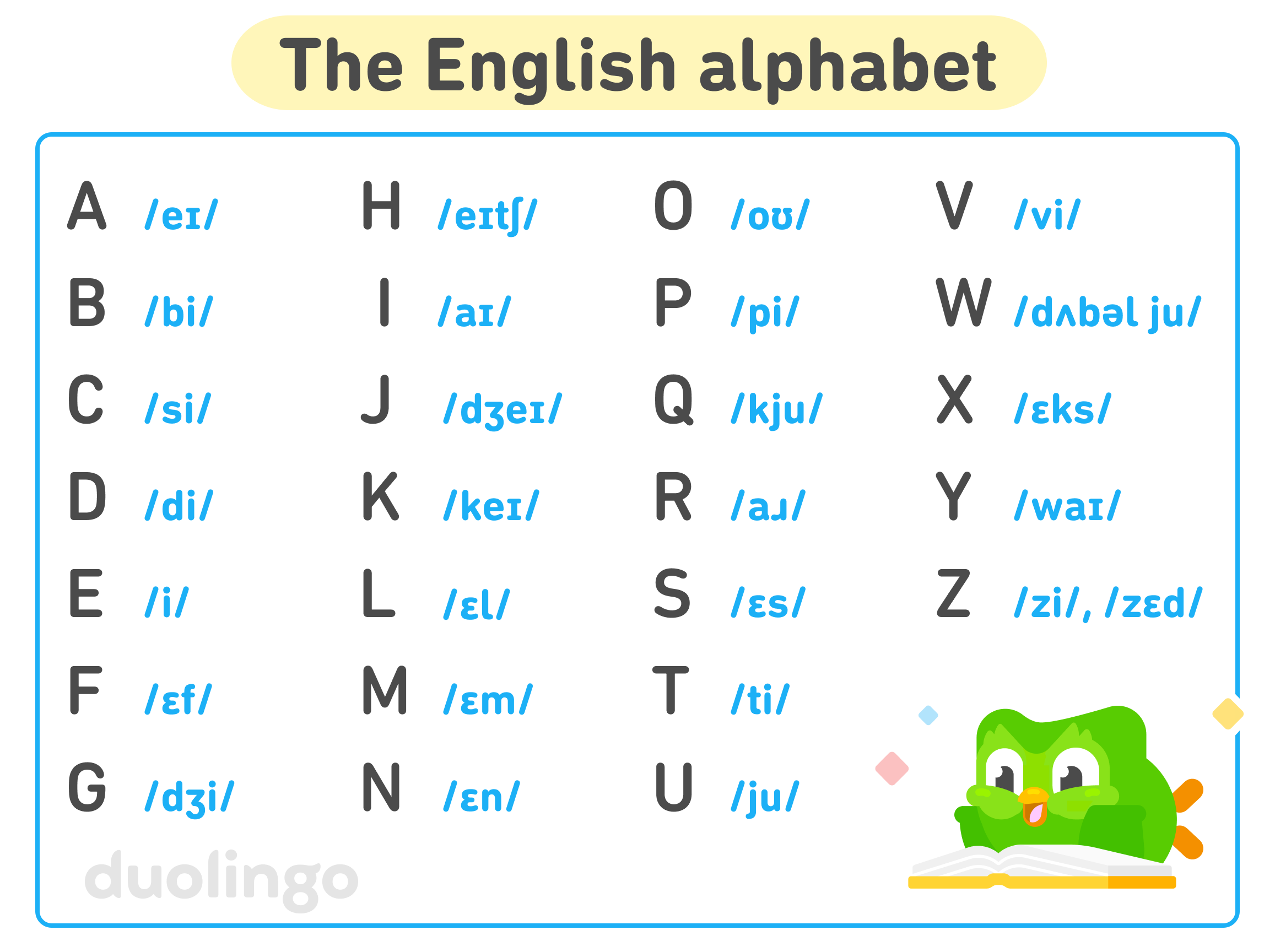
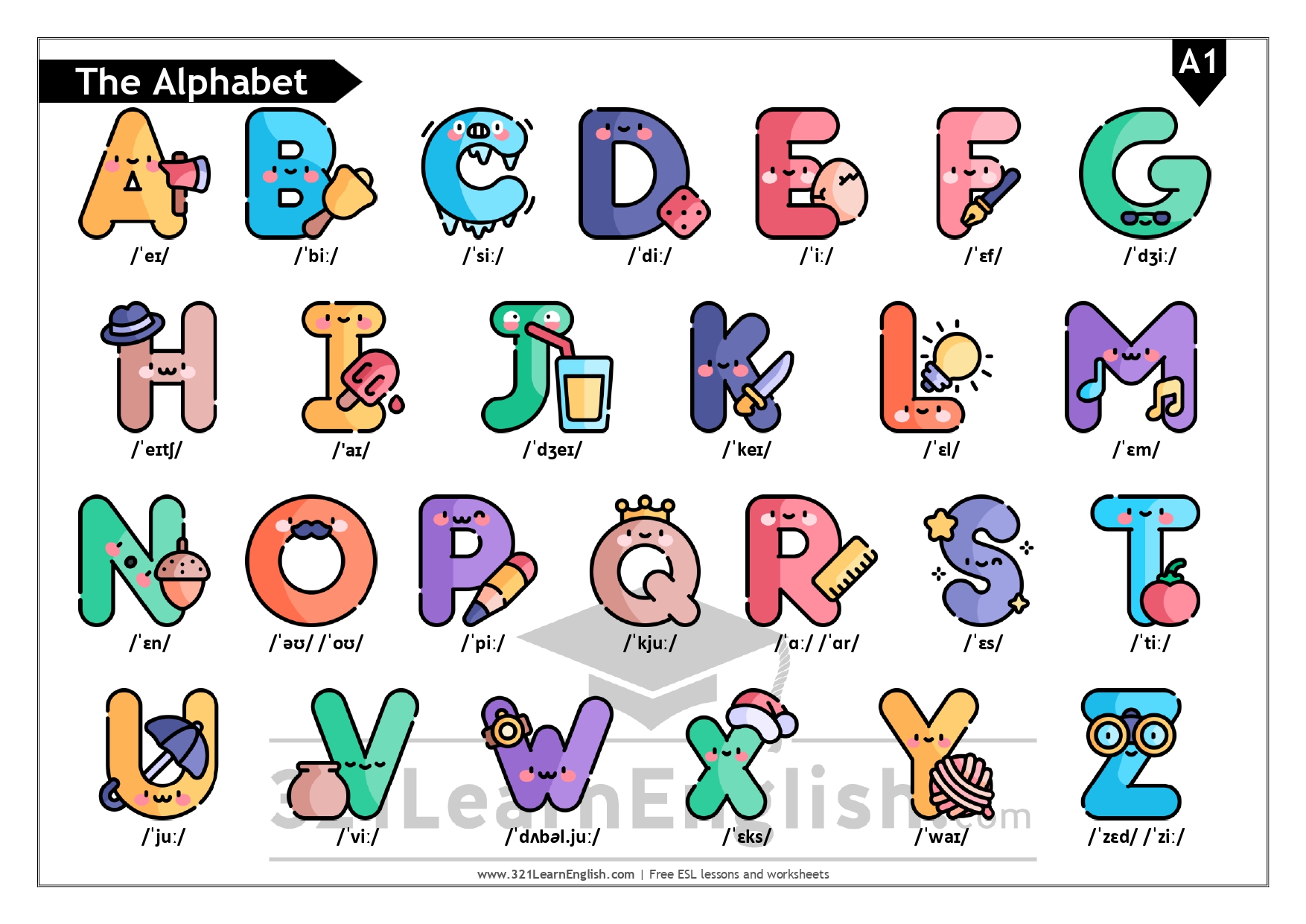
The standard modern English alphabet relies on the Latin script. It consists of 26 uppercase and lowercase letters arranged in a universally accepted sequence from A to Z:
A, B, C, D, E, F, G, H, I, J, K, L, M, N, O, P, Q, R, S, T, U, V, W, X, Y, Z
To understand how written English functions, linguists classify these 26 letters by their structural roles in word formation and pronunciation.
Vowels vs. Consonants
- Core Vowels (5): A, E, I, O, and U are classified as vowels because they represent open vocal tract sounds produced without significant constriction of air flow.
- Core Consonants (20): B, C, D, F, G, H, J, K, L, M, N, P, Q, R, S, T, V, W, X, and Z are consonants, produced by obstructing or limiting airflow using the tongue, lips, teeth, or throat.
- The Flexible Letter (Y): The letter Y functions as both a vowel and a consonant depending on its phonetic context. In words like yellow or yes, Y acts as a consonant. In words like fly, gym, or happy, it acts as a vowel. In rare etymological contexts, W can also act as part of a vowel digraph (such as in snow or few), though it remains strictly categorized as a consonant character in the alphabet.
Letters vs. Sounds: Why 26 Letters Produce 44 Phonemes
A common source of confusion in English literacy is the mismatch between the number of written letters (graphemes) and the number of distinct spoken sounds (phonemes). While written English uses 26 letters, standard English spoken dialects—such as General American or Received Pronunciation—utilize approximately 44 distinct phonemes.
- Modern English Writing System
- 26 Graphemes (Letters A–Z)
- ~44 Phonemes (Speech Sounds)
- ~20 Vowel Sounds (Monophthongs, Diphthongs)
- ~24 Consonant Sounds (Plosives, Fricatives, Nasals, etc.)
This disparity explains why English spelling often lacks a direct one-to-one relationship between letter and sound:
1. Vowel Polyphony
The five written vowel letters must represent roughly 20 distinct vowel sounds, including short vowels (cat, bed, sit), long vowels (mate, beet, site), r-controlled vowels (car, for), and diphthongs (boy, cloud). For example, the single letter A produces entirely different phonemes in cat, father, made, and any.
2. Consonant Digraphs
To represent sounds for which no single Latin letter exists, English uses digraphs—combinations of two letters that represent a single phoneme. Common consonant digraphs include:
- TH (representing both unvoiced /θ/ as in think and voiced /ð/ as in this)
- SH (representing /ʃ/ as in shoe)
- CH (representing /tʃ/ as in chair)
- PH (representing /f/ as in phone)
- NG (representing /ŋ/ as in sing)
3. Historical Sound Shifts
The mismatch between 26 letters and 44 sounds stems largely from the Great Vowel Shift (roughly 1400–1700), during which spoken vowel pronunciations changed dramatically across England while the newly introduced printing press stabilized written spellings. As a result, modern English retains medieval spelling conventions for sounds that have evolved or disappeared entirely, such as the silent k in knee or the gh in night.
The Evolution of the English Alphabet: Forgotten Letters
The 26-letter English alphabet was not created overnight. Old English (spoken from roughly the 5th to the 11th century) originally used a runic writing system known as the Futhorc. When Christian missionaries introduced the Latin alphabet to Anglo-Saxon England in the 7th century, scribes combined Latin letters with runic characters to capture unique Germanic sounds. Over centuries, several of these original letters were abandoned.
Discontinued English Letters
Old/Middle English Alphabet Additions:
- Þ (Thorn) - Replaced by "th"
- Ð (Eth) - Replaced by "th"
- Ƿ (Wynn) - Replaced by "uu" / "w"
- Æ (Ash) - Replaced by "ae" / "e"
- Π(Ethel) - Replaced by "oe" / "e"
- Ȝ (Yogh) - Replaced by "gh" or "y"
- & (Ampersand) - Excluded from character count
1. Thorn (Þ, þ)
- Sound: The "th" sound in thin or that.
- History: Taken directly from the runic Futhorc. Scribes used Thorn extensively throughout the Middle Ages.
- Why It Disappeared: Early European printing presses imported to England by pioneers like William Caxton did not cast type metal for Thorn. Early printers substituted the letter Y as a typographic match. This practice spawned historical phrases such as "Ye Olde Shoppe", where "Ye" was simply a printed approximation of "The" (written Þe). Thorn was eventually replaced entirely by the Latin digraph TH.
2. Eth (Ð, ð)
- Sound: The voiced "th" sound in this or mother.
- History: Derived from a modified Latin D. While Old English scribes used Eth and Thorn almost interchangeably, Eth eventually fell out of favor in England during the Middle English period, leaving Thorn (and later TH) to cover both voiced and unvoiced sounds.
3. Wynn (Ƿ, ƿ)
- Sound: The "w" sound in water.
- History: Another runic adaptation created because the classical Latin alphabet had no character for the /w/ sound.
- Why It Disappeared: Medieval scribes increasingly paired two Latin "u" characters together (uu), which gradually joined into the ligature W. Wynn fell completely out of use by the 14th century.
4. Ash (Æ, æ)
- Sound: The short "a" sound in cat or hat.
- History: Originally a ligature of A and E. It was widely used in Old English manuscripts.
- Why It Disappeared: Over time, the sound represented by Ash merged into standard English vowel patterns, and the character was simplified into a single A or E depending on etymology.
5. Ethel (Œ, œ)
- Sound: A combined vowel sound similar to the "e" in feather or the French œu.
- History: Derived from a Latin ligature of O and E, used commonly in Greek loanwords and Old English writing.
- Why It Disappeared: Simplified into single letters (E or O) during the transition to Early Modern English, though it survives in classical Latinized spellings in British English (e.g., foetus, manoeuvre).
6. Yogh (Ȝ, ȝ)
- Sound: A guttural throat sound similar to the Scottish ch in loch, or a soft "y" sound as in year.
- History: Derived from an insular form of the letter G.
- Why It Disappeared: French-trained Norman scribes replaced Yogh with GH (in words like night and trough) or Y (in words like yield).
7. Ampersand (&)
- Sound: The conjunction "and".
- History: The symbol & originates as a stylized ligature of the Latin word et ("and"). By the early 19th century, standard English school recitations of the alphabet included the ampersand as a 27th character. Students would recite: "A, B, C... X, Y, Z, and per se and", meaning "& by itself is 'and'".
- Why It Disappeared: The phrase "and per se and" slurred phonetically over time into the word ampersand, and the symbol was ultimately reclassified as a punctuation mark/logogram rather than a standard alphabetic letter.
Historical Comparison of English Characters
The following table summarizes how historical characters evolved into the standard 26-letter system used today:
| Character | Name | Phonetic Sound | Modern English Replacement | Era of Common Use | Primary Reason for Removal |
|---|---|---|---|---|---|
| Þ / þ | Thorn | Unvoiced/Voiced "th" (/θ/, /ð/) | TH |
5th–16th Century | Printing presses lacked character type; replaced by Y then TH |
| Ð / ð | Eth | Voiced "th" (/ð/) | TH |
5th–13th Century | Redundant with Thorn; merged into Middle English writing conventions |
| Ƿ / ƿ | Wynn | Consonant "w" (/w/) | W (originally UU) |
5th–14th Century | Scribes preferred Latin ligature VV / UU |
| Æ / æ | Ash | Short "a" (/æ/) | A or E |
5th–13th Century | Phonetic shifts simplified ligatures to single Latin vowels |
| Œ / œ | Ethel | Mid vowel (/œ/ or /eɪ/) | E or O |
5th–15th Century | Orthographic simplification during Early Modern English standardization |
| Ȝ / ȝ | Yogh | Guttural /x/ or palatal /j/ | GH, Y, or G |
11th–15th Century | Norman scribes replaced it with French spelling conventions (GH/Y) |
| & | Ampersand | Logogram for "and" | Word "and" |
18th–19th Century | Reclassified from an alphabetic letter to a punctuation logogram |
How the 26-Letter Standard Was Formed
The modern count of 26 letters was finalized when three specific letters gained distinct, independent status within the Latin alphabet: J, U, and W.
Development of Late Additions:
- I: Branching into I and J (16th–17th Century)
- V: Branching into V and U (16th–17th Century)
- V+V: Ligature becoming W (14th–16th Century)
- The Separation of I and J: Historically, the Latin character I represented both the vowel sound /i/ and the consonant sound /j/. During the 16th century, Italian printer Gian Giorgio Trissino advocated formally separating the vowel I from the consonant J. This distinction was broadly adopted in English dictionaries by the 17th century.
- The Separation of U and V: In classical Latin, V represented both the vowel sound /u/ (as in room) and the consonant sound /v/. Scribes used U and V interchangeably based on position (often using V at the beginning of words and U in the middle). By the late 1600s, English lexicographers formally codified U as a vowel and V as a consonant.
- The Codification of W: As noted previously, W began as a double V or double U (VV / UU) introduced by medieval Norman scribes to handle Germanic consonant sounds. Over time, printers fused the two letters into a single character, establishing W as a distinct letter.
By the 18th century, backed by authoritative dictionaries such as Samuel Johnson's A Dictionary of the English Language (1755), the standard 26-letter Latin sequence became permanently established across written English speaking regions.
Frequency and Usage Distribution of English Letters
Not all 26 letters are used equally. English text displays a clear hierarchy of letter frequency, influenced heavily by language origin and common morphological endings.
According to cryptographic analysis published by institutions like the [University of Notre Dame](https://www me.nd.edu/), the letter E is the most frequently occurring letter in written English, while Z is the least frequent.
Relative Frequency Hierarchy:
Most Frequent: E > T > A > O > I > N > S > H > R
Least Frequent: J < Q < X < Z
Top 5 Most Common Letters: E, T, A, O, I
Top 5 Most Common Consonants: T, N, S, H, R
Least Common Letters: Q, J, X, Z
Understanding letter frequency plays an essential role in fields such as data compression, cryptography, computational linguistics, and accessibility design for screen-reading devices.
Frequently Asked Questions
Has the English alphabet always had 26 letters?
No. Old English used an adapted 24-letter alphabet combining Latin characters and runic symbols. Over time, letters like Thorn, Eth, and Wynn were removed, while J, U, and W were added, eventually establishing the current 26-letter standard by the late 17th century.
Is Y a vowel or a consonant?
Y functions as both. It is classified phonetically as a consonant when it sits at the beginning of a syllable (yard, young), and as a vowel when it functions as the nucleus of a syllable without another written vowel (rhyme, sky, system).
Why does English have 44 sounds but only 26 letters?
English uses a 26-letter Latin alphabet to represent a Germanic sound system that expanded through heavy borrowing from Old Norse, Norman French, Latin, and Greek. Because the alphabet was not expanded to match new speech sounds, English relies on digraphs (like th, sh, ch) and polyphonic vowels to cover all 44 phonemes.
Was the ampersand (&) ever part of the English alphabet?
Yes. During the early 19th century, the ampersand was recited as the 27th letter of the alphabet in English schools. It followed the letter Z and was pronounced "and per se and", which eventually evolved into the modern word ampersand.
Which letter is used most frequently in the English language?
The letter E is the most commonly used letter in written English, accounting for roughly 11% to 13% of all letter usage in standard text corpora.
Summary and Next Steps
The modern English alphabet consists of 26 standard letters, comprising 5 core vowels, 21 consonants, and 1 dual-function character (Y). While these 26 graphemes accommodate roughly 44 distinct phonemes, the writing system remains a living historical record of sound shifts, printing press constraints, and foreign language integration.
For educators, students, and language researchers seeking to explore English orthography further, recommended topics for continued study include:
- Phonetics and Phonology: Studying the International Phonetic Alphabet (IPA) to map out all 44 English speech sounds accurately.
- Etymology: Researching how Latin, Greek, and Germanic root words dictate non-standard English spelling rules.
- Linguistics Resources: Reviewing historical manuscript archives via the British Library to examine original Old English runic texts.
Image Gallery