How to Perform a Basic Net Worth Calculation: A Step-by-Step Guide
To perform a basic net worth calculation, subtract your total liabilities (everything you owe) from your total assets (everything you own). The resulting figure represents your net worth, offering a snapshot of your financial health. P...
To perform a basic net worth calculation, subtract your total liabilities (everything you owe) from your total assets (everything you own). The resulting figure represents your net worth, offering a snapshot of your financial health. Positive net worth means assets exceed liabilities, while negative net worth indicates debt exceeds total asset value.
Contents
Disclaimer: This guide is provided for educational purposes only and does not constitute formal financial, legal, or tax advice. Personal financial situations vary; consult a qualified financial planner or accountant for personalized advisory services.
Understanding the Net Worth Formula
Net worth is the standard metric used by financial professionals to measure an individual's or household's overall economic standing. While annual income measures cash inflow over a given period, net worth measures cumulative wealth accumulated over time.
The mathematical formula for calculating net worth is straight:
$$\text{Net Worth} = \text{Total Assets} - \text{Total Liabilities}$$
Understanding this distinction is critical for long-term planning. High income does not automatically translate to high net worth if lifestyle costs and debt obligations consume or exceed earnings. Conversely, a modest income combined with diligent savings and strategic asset allocation can build significant net worth over time. Evaluating your net worth regularly provides a clear baseline to assess progress toward long-term goals such as retirement, purchasing real estate, or achieving independence from earned income.
Step 1: Inventorying and Valuing Your Assets
An asset is any tangible or intangible resource of monetary value that you own. When conducting a basic net worth calculation, group assets into logical categories based on liquidity—how quickly and easily they can be converted into cash without losing substantial value.
Cash and Liquid Assets
Liquid assets form the foundational safety cushion of any balance sheet. These items are instantly accessible or carry guaranteed cash conversion rates.
- Checking and Savings Accounts: Include the current account balances across all commercial banks and credit unions.
- High-Yield Savings Accounts (HYSAs) and Money Market Accounts: Record total balances as reported on your latest monthly statements.
- Certificates of Deposit (CDs): List the current principal plus accrued interest, acknowledging any early withdrawal penalties if liquidated prior to maturity.
- Physical Currency: Include cash on hand or held in safe storage.
Investment and Retirement Accounts
Investment assets generate returns or appreciate over time. For accurate calculation, use current fair market values rather than initial purchase amounts.
- Taxable Brokerage Accounts: Count the fair market value of individual stocks, bonds, exchange-traded funds (ETFs), and mutual funds.
- Tax-Advantaged Retirement Accounts: Include balances in traditional and Roth 401(k)s, 403(b)s, Traditional IRAs, and Roth IRAs. (Note: Some advisers suggest reducing pre-tax account values by an estimated future tax rate to reflect net liquidity, but standard basic calculations record total account balance).
- Health Savings Accounts (HSAs): Include invested and cash balances within an HSA if designated for long-term wealth or medical reserves.
- Cash Value Life Insurance: Record the current cash surrender value of permanent or whole life insurance policies, not the total death benefit face value.
Real Estate and Physical Assets
Physical assets require careful evaluation because market values fluctuate and selling expenses occur during liquidation.
- Primary Residence and Investment Properties: Estimate current fair market value using recent comparable sales, tax assessments, or verified valuation tools from organizations like the National Association of Realtors. Do not list original purchase price.
- Vehicles: Calculate the current resale value of cars, trucks, motorcycles, or boats using established valuation databases such as Kelley Blue Book or Edmunds. Vehicles depreciate rapidly; always use current market value rather than original loan amount or purchase price.
- Personal Property: Include high-value items such as fine jewelry, art, collectibles, or rare equipment. General household items (clothing, basic furniture) should generally be excluded unless they hold verified resale value, as overestimating personal goods inflates net worth unrealistically.
Step 2: Cataloging All Liabilities
Liabilities encompass all financial obligations and debts owed to external creditors, lenders, or institutions. To ensure accuracy, record the current payoff balance of each obligation rather than original principal or remaining monthly installment sums.
Short-Term and Consumer Liabilities
Short-term obligations usually carry higher interest rates and short payment terms.
- Credit Card Balances: Record the total statement balance owed across all cards, not just the minimum monthly due amount.
- Personal and Payday Loans: Include remaining principal owed on unsecured personal lines of credit.
- Medical Debt: List unpaid medical bills or current payment plans owed to healthcare providers.
- Taxes Owed: Include back taxes owed to state authorities or the Internal Revenue Service.
Long-Term Liabilities
Long-term debts are secured or unsecured loans with repayment schedules spanning multiple years.
- Mortgage Loans: Record the exact remaining principal balance owed on your primary mortgage, secondary mortgages, or home equity lines of credit (HELOCs).
- Auto Loans: List the total payoff amount required to clear outstanding vehicle financing.
- Student Loans: Include cumulative balances for federal and private educational loans.
- Other Secured Loans: Factor in debt tied to business equipment, recreational vehicles, or margin debt balances in brokerage accounts.
Step 3: Executing the Net Worth Calculation
Once all assets and liabilities are accurately compiled, compute the final balance.
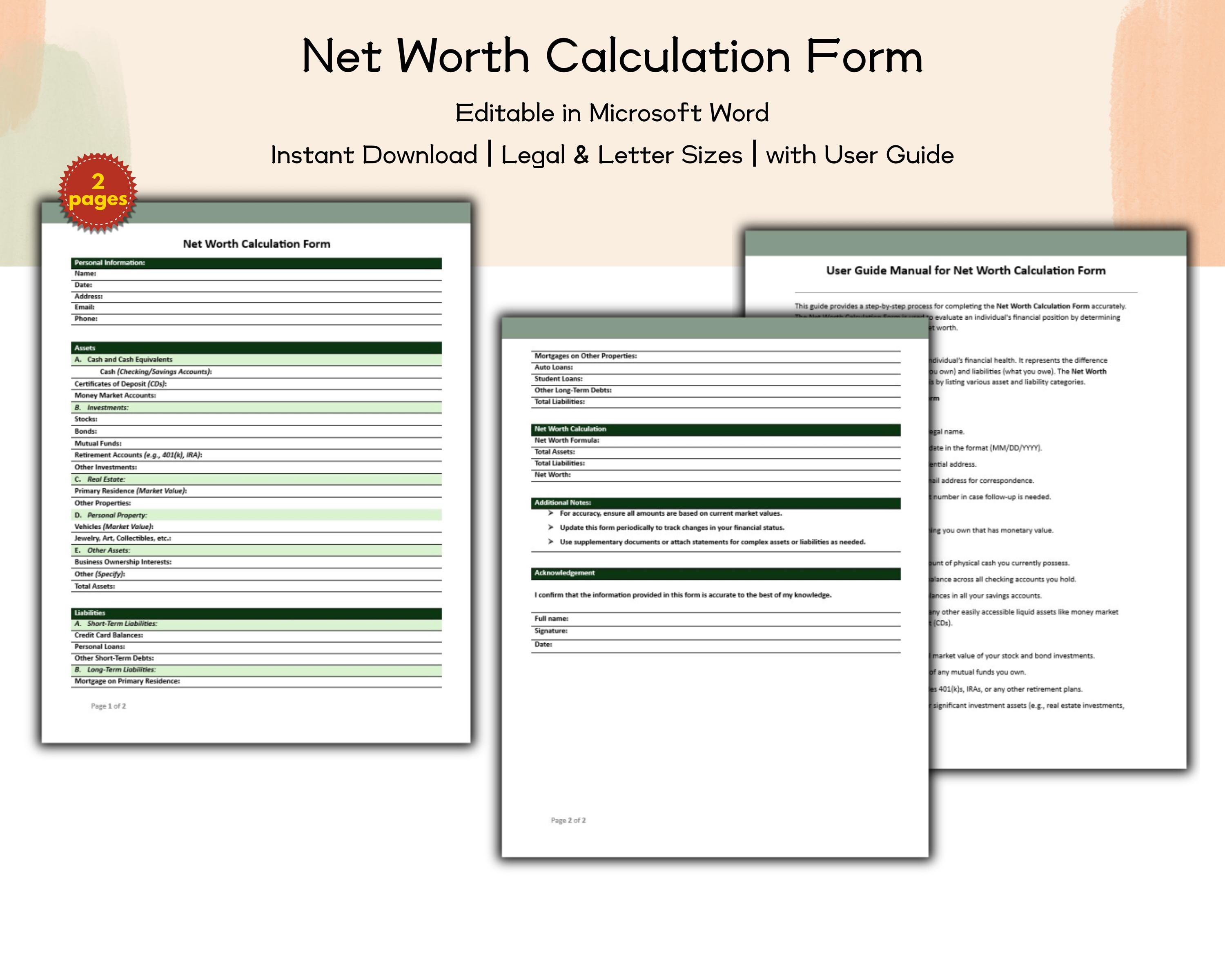
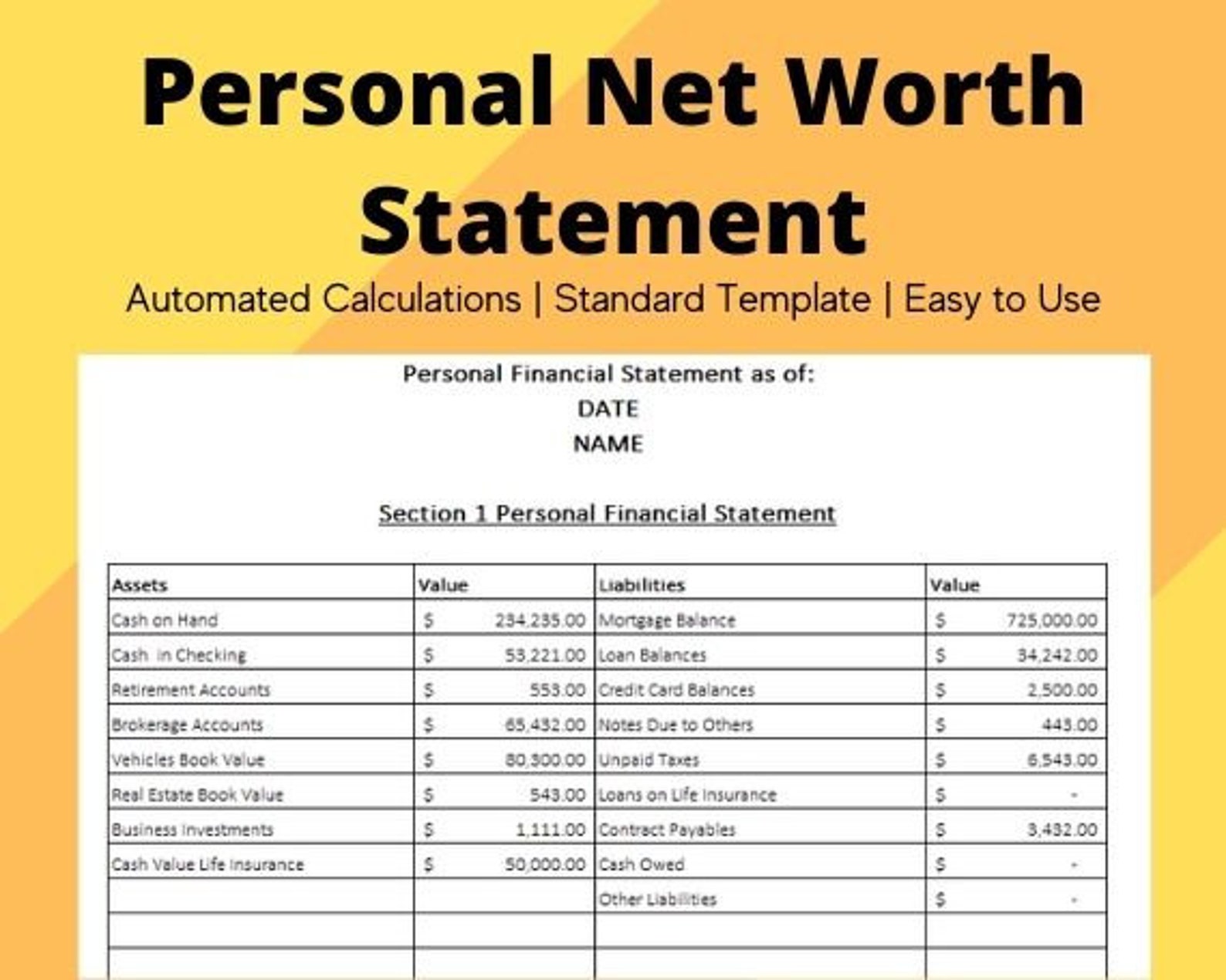
- Sum Total Assets: Add the cash values of liquid accounts, investments, real estate, vehicles, and high-value personal assets.
- Sum Total Liabilities: Add all outstanding loan principals, credit card debts, mortgages, and tax liabilities.
- Subtract Liabilities from Assets: Subtract the total liability sum from the total asset sum.
Practical Example Calculation
Consider an individual evaluating their personal balance sheet:
Assets:
- Checking & Savings: $15,000
- Brokerage & Retirement Accounts: $120,000
- Primary Residence (Market Value): $350,000
- Vehicle (Current Value): $18,000
- Total Assets: $503,000
Liabilities:
- Credit Card Balance: $3,000
- Auto Loan Principal: $8,000
- Student Loan Principal: $22,000
- Mortgage Principal: $240,000
- Total Liabilities: $273,000
Net Worth Calculation: $$$503,000 \text{ (Total Assets)} - $273,000 \text{ (Total Liabilities)} = $230,000 \text{ (Positive Net Worth)}$$
Net Worth Asset vs. Liability Matrix
The table below summarizes standard financial categories, valuation methods, and common mistakes to avoid during your assessment.
| Category | Item Classification | Valuation Method | Common Pitfalls to Avoid |
|---|---|---|---|
| Liquid Assets | Cash, Savings, CDs | Current balance on official bank statements | Forgetting accrued interest or early withdrawal penalties on CDs. |
| Investments | Stocks, ETFs, 401(k), IRA | Current fair market value | Conflating pre-tax 401(k) face value with post-tax cash liquidity. |
| Real Estate | Primary home, rental properties | Estimated market price based on recent comps | Using original purchase price or ideal listing price instead of realistic market value. |
| Personal Property | Automobiles, boats, fine art | Current private-party resale value | Overvaluing depreciating assets like electronics, furniture, or apparel. |
| Short-Term Debt | Credit cards, personal loans | Total unpaid balance due | Recording only the monthly minimum payment instead of total balance. |
| Long-Term Debt | Mortgages, student loans, auto financing | Outstanding principal balance | Including future interest payments in current balance owed. |
Key Valuation Rules and Common Mistakes
Accurately calculating net worth requires objective asset valuation. Misrepresenting values creates an inaccurate picture of financial health, leading to poorly informed decision-making.
Overestimating Depreciating Assets
Vehicles, consumer electronics, and home furnishings lose value over time. Listing an auto asset at its purchase price of $30,000 when its current market resale value is $12,000 artificially inflates your net worth by $18,000. Use conservative figures for all personal property or leave standard consumer items off the ledger entirely.
Conflating Pre-Tax and Post-Tax Values
A $100,000 balance in a Traditional 401(k) does not equal $100,000 in spendable cash because ordinary income tax applies upon distribution. While standard basic accounting lists the gross value on personal net worth sheets, keeping track of deferred tax obligations prevents overestimating post-retirement spending power.
Omitting Contingent and Co-Signed Liabilities
If you co-signed a mortgage or auto loan for a relative, you are legally responsible for that debt if the primary borrower defaults. While co-signed debts are not always listed on daily balance sheets, keep track of potential liabilities that affect overall credit standing and risk exposure.
Confusing Income with Net Worth
Earning a high salary does not automatically give you a high net worth. Income is a dynamic flow metric; net worth is a static stock metric. Prioritize accumulating tangible assets and paying down structural debt over relying strictly on income level.
Frequently Asked Questions
How often should I calculate my net worth?
Calculating net worth quarterly or semi-annually provides an accurate view of financial trajectory without introducing unhelpful noise from daily market swings. Annual updates during tax season are also effective for tracking long-term trends.
Does my primary residence count toward my net worth?
Yes, your primary residence is considered an asset, while the remaining mortgage principal is counted as a liability. The difference represents your home equity. However, for retirement planning, some analysts evaluate "liquid net worth" separately, excluding real estate equity since primary homes cannot easily fund daily expenses without downsizing or refinancing.
What should I do if my net worth is negative?
A negative net worth is common for early-career professionals, recent graduates carrying student debt, or new homeowners taking on primary mortgages. Focus on establishing a liquid emergency fund, paying down high-interest consumer debt, and steadily investing in retirement accounts to transition your balance sheet into positive territory over time.
How do I account for leased vehicles or rented items?
Leased items should not be listed as assets because you do not own them. Similarly, lease payments are operational monthly expenses rather than capital liabilities, so neither the vehicle nor the remaining lease agreement is included in a basic net worth calculation.
What is the difference between total net worth and liquid net worth?
Total net worth includes all assets minus all liabilities, covering illiquid holdings like real estate, vehicles, and private business equity. Liquid net worth counts only assets that can be converted to cash within a short timeframe (savings, taxable stocks, bonds) minus total short-term liabilities.
Next Steps to Build and Track Your Net Worth
Calculating your net worth establishes a clear baseline for personal wealth management. To build momentum after completing your initial calculation, take the following steps:
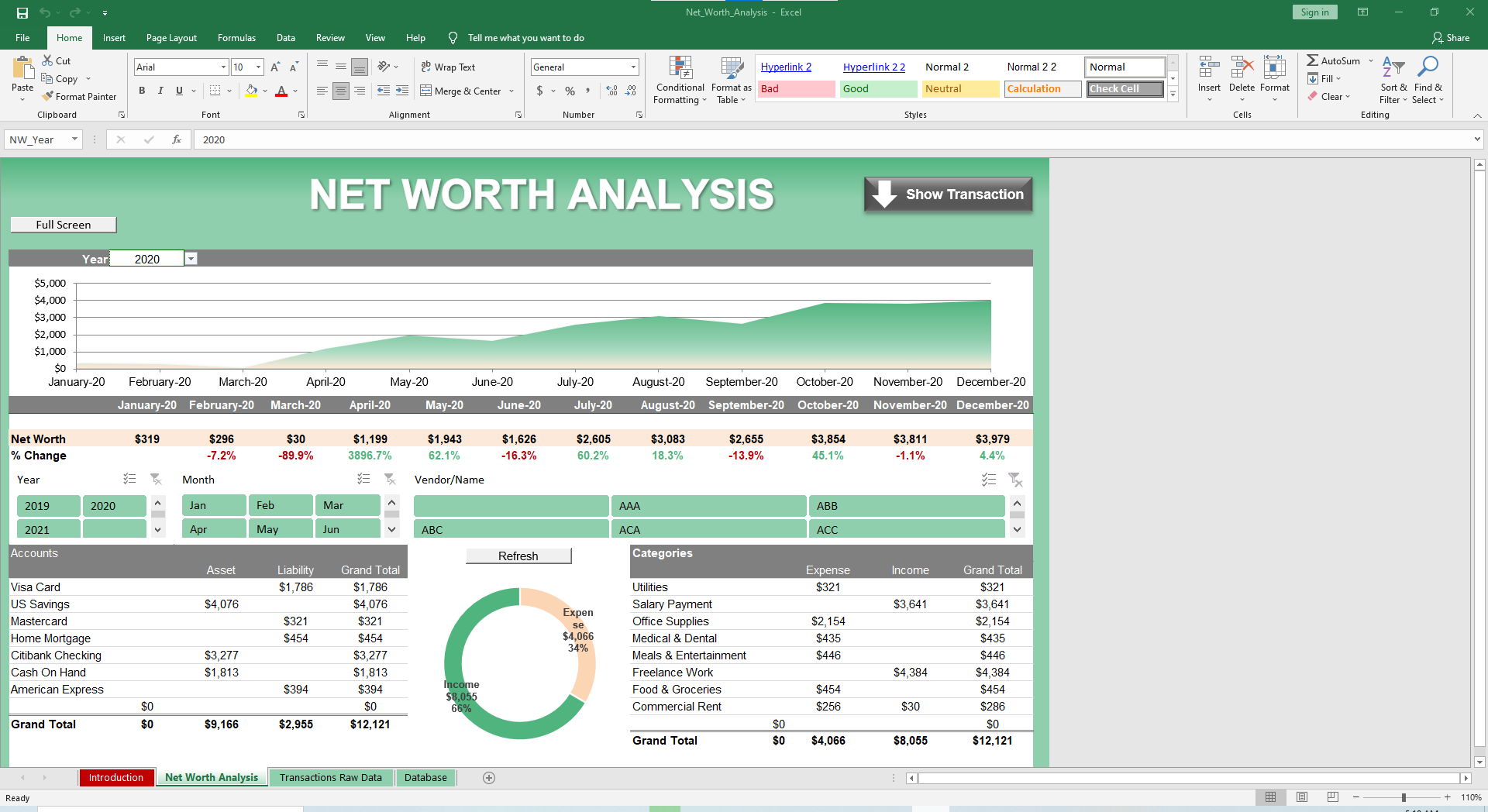
- Set Up a Tracking System: Use a spreadsheet template or secure personal financial application to log asset and liability balances on a consistent schedule.
- Prioritize Debt Reduction: Focus surplus cash flow on eliminating high-interest liabilities, such as credit card balances and personal loans, which degrade net worth faster than typical investment returns can rebuild it.
- Automate Asset Building: Establish automatic monthly transfers into high-yield savings accounts, index funds, or workplace retirement plans to consistently grow the asset column.
- Review Insurance Coverage: Protect your net worth from catastrophic risks by carrying proper liability insurance coverage, including health, auto, homeowner, and umbrella policies. For guidance on personal financial management and risk protection, consult resources provided by federal institutions like the Consumer Financial Protection Bureau.
Image Gallery