Understanding Versum Materials Net Worth and Final Corporate Valuation
When evaluating what Versum Materials' net worth is, the definitive figure is tied to its final public transaction valuation: $5.8 billion in equity value (and an enterprise value of approximately $6.5 billion). In October 2019, the sp...
When evaluating what Versum Materials' net worth is, the definitive figure is tied to its final public transaction valuation: $5.8 billion in equity value (and an enterprise value of approximately $6.5 billion). In October 2019, the specialty semiconductor materials provider was acquired by Germany’s Merck KGaA for $53.00 per share in cash, terminating its independent listing on the New York Stock Exchange.
Contents
Because Versum Materials Inc. no longer trades as a standalone publicly listed entity, it does not maintain an independent balance sheet or single public "net worth" figure today. Instead, its assets, patents, manufacturing facilities, and product lines are fully integrated into the Electronics business sector of Merck KGaA, Darmstadt, Germany.
Understanding Versum’s financial baseline requires examining how it achieved its multi-billion-dollar market cap, the bidding battle that established its final price, and how its former assets generate value within the global semiconductor supply chain today.
The Financial Breakdown of the $6.5 Billion Transaction
Before its acquisition, Versum Materials (formerly traded under NYSE: VSM) was one of the world's primary suppliers of high-purity chemicals, gases, and delivery equipment used in advanced semiconductor manufacturing. Its valuation surged due to its irreplaceable position in the microchip production lifecycle.
When Merck KGaA finalized the purchase in late 2019, the financial terms established the definitive benchmark for Versum’s standalone net worth and business value:
- Purchase Price Per Share: $53.00 in cash per common share.
- Total Equity Value (Net Market Worth): Approximately $5.8 billion.
- Total Enterprise Value (Including Net Debt): Approximately $6.5 billion.
- Pre-Acquisition Annual Revenue: Approximately $1.4 billion (FY 2018).
- Adjusted EBITDA Margin: Consistently above 30%, reflecting high gross margins on specialty chemical formulations.
The table below summarizes the key financial metrics and transaction milestones that defined Versum Materials' standalone value:
| Financial Metric / Milestone | Detail / Value | Impact on Corporate Net Worth |
|---|---|---|
| Initial Spinoff (Oct 2016) | Tax-free spinoff from Air Products and Chemicals | Established VSM as an independent NYSE stock at ~$24/share |
| Entegris Merger Agreement (Jan 2019) | All-stock "merger of equals" proposal | Valued Versum at ~$4.0 billion (approx. $35/share equivalent) |
| Merck KGaA Counter-Offer (Mar 2019) | Unsolicited all-cash takeover tender | Raised valuation to $48.00 per share ($5.3B equity value) |
| Final Agreed Buyout Price (Apr 2019) | Revised all-cash agreement | Finalized at $53.00 per share ($5.8B equity value) |
| Transaction Closing (Oct 2019) | Delisting from the NYSE | Versum assets incorporated into Merck KGaA Electronics |
Historical Development: From Corporate Spinoff to Mega-Acquisition
To understand why Versum Materials commanded a $6.5 billion enterprise valuation, it is necessary to examine its corporate origins. For decades, the operations comprising Versum existed as the Materials Technologies division of Air Products and Chemicals, Inc. (NYSE: APD).
The 2016 Tax-Free Spinoff
In October 2016, Air Products executed a tax-free spinoff of its electronic materials division to shareholders, creating Versum Materials, Inc. as an independent, publicly traded corporation on the NYSE. At the time of the spinoff, Versum was assigned a substantial portion of Air Products' specialty chemical production infrastructure, along with debt obligations structured during the separation.
As an independent company, Versum focused exclusively on the semiconductor industry, capitalizing on the rapid growth of memory chips, advanced logic processors, and flat-panel displays. By cutting corporate overhead tied to industrial gas operations, Versum achieved robust free cash flow, driving its share price from around $24 at its market debut to over $50 within three years.
The 2019 Acquisition War: Entegris vs. Merck KGaA
Versum's high profit margins and specialized intellectual property made it a prime consolidation target in the semiconductor supply chain. In January 2019, Versum announced a friendly, all-stock "merger of equals" agreement with U.S.-based semiconductor supplier Entegris, Inc. At the time of the announcement, the combined entity would have possessed a market capitalization exceeding $9 billion.
However, Merck KGaA—a global healthcare, life science, and electronics conglomerate based in Darmstadt, Germany—recognized the strategic value of Versum's market share in North America and Asia. In March 2019, Merck KGaA launched an unsolicited, hostile all-cash tender offer of $48.00 per share.
After initial rejections by Versum’s board of directors, Merck KGaA raised its cash offer to $53.00 per share in April 2019. Recognizing the significant cash premium offered to shareholders compared to the fluctuating stock consideration of the Entegris deal, Versum terminated its agreement with Entegris, paid a contractually mandated $140 million termination fee, and signed the definitive merger agreement with Merck KGaA. The deal closed successfully on October 7, 2019, following approval by regulatory bodies across the United States, Europe, China, Taiwan, and South Korea.
Core Business Divisions That Generated Versum's Equity Value
Versum Materials was not merely a chemical distribution firm; it designed, synthesized, and transported ultra-high-purity molecules required at the atomic level of microchip fabrication. Its earnings power—and high net worth—was divided between two main operating segments:
Versum Materials Operating Structure (Pre-Acquisition)
- Materials Segment (~70-75% of Revenue)
- Advanced Deposition Materials (ALD/CVD precursors)
- Chemical Mechanical Planarization (CMP) Slurries & Cleans
- Specialty Etch & Formulated Cleans
- Delivery Systems & Services (DS&S) Segment (~25-30% of Revenue)
- Ultra-High Purity Chemical & Gas Cabinets (GASGUARD®/CHEMGUARD®)
- Bulk Gas Distribution Piping & Automated Controls
- On-site Fab Maintenance & Field Services
1. The Materials Segment
The Materials segment represented the core of Versum’s recurring revenue. Semiconductor fabrication facilities (fabs) require a continuous supply of specialized chemicals that must meet extreme purity thresholds (often requiring less than one part per trillion of contaminants).
Key product families included:
- Advanced Deposition Precursors: Organometallic and silane chemicals used in Atomic Layer Deposition (ALD) and Chemical Vapor Deposition (CVD) to build microscopic dielectric and metallic layers on silicon wafers.
- CMP Slurries and Post-CMP Cleans: Formulated chemical abrasives used during Chemical Mechanical Planarization to polish wafer layers flat between manufacturing steps.
- Specialty Gases and Cleans: Highly reactive etching gases and chemical formulations used to clean processing chambers and remove residue without damaging sub-nanometer circuit structures.
Because these chemical formulas were custom-developed alongside semiconductor manufacturers (such as TSMC, Intel, Samsung, and Micron), switching costs for customers were extremely high. This sticky customer base ensured long-term, high-margin cash flows that justified a high earnings multiple during the acquisition.
2. Delivery Systems & Services (DS&S)
While chemical sales provided recurring revenue, the DS&S division engineered the physical infrastructure to safely store and transport hazardous gases and liquid chemicals within microchip fabs.
Products included automated chemical distribution cabinets (such as the CHEMGUARD® and GASGUARD® lines), valve manifold boxes, and real-time monitoring software. By selling high-purity equipment directly into new fab construction projects, Versum established a foothold with chipmakers long before manufacturing began, guaranteeing that its proprietary materials segment would supply those same facilities once operational.
Financial Analysis: How Valuations Were Calculated
During corporate takeovers, financial analysts evaluate a company's total worth using several key metrics rather than relying solely on balance-sheet book value. In the financial sector, a specialty chemical manufacturer’s worth is primarily determined by Enterprise Value (EV) to EBITDA and Price-to-Earnings (P/E) multiples.
Financial Valuation Ratios at Buyout (October 2019):
- Offer Price: $53.00 per share (Cash)
- Implied Equity Value: ~$5.8 Billion
- Enterprise Value (EV): ~$6.5 Billion (Equity Value + ~$700M Net Debt)
- EV / Trailing 12-Month EBITDA Multiple: ~13.5x to 14.2x
Equity Value vs. Enterprise Value
- Equity Value ($5.8 Billion): Represents the net financial value of all outstanding common shares calculated at the $53.00 purchase price. This is what stock market investors refer to when asking for the net market capitalization.
- Enterprise Value ($6.5 Billion): Represents the actual cost to acquire the entire business. It accounts for taking on Versum’s net funded debt (approximately $700 million at the time of closing) while acquiring its cash reserves.
A 14x EV/EBITDA acquisition multiple reflected the strong market position Versum held. Because semiconductor manufacturing requires massive capital expenditures (capex) globally, firms that supply essential, single-source materials command valuation premiums above traditional chemical manufacturers, which often trade at 8x to 10x EBITDA.
Where Are Versum Materials' Assets Located Today?
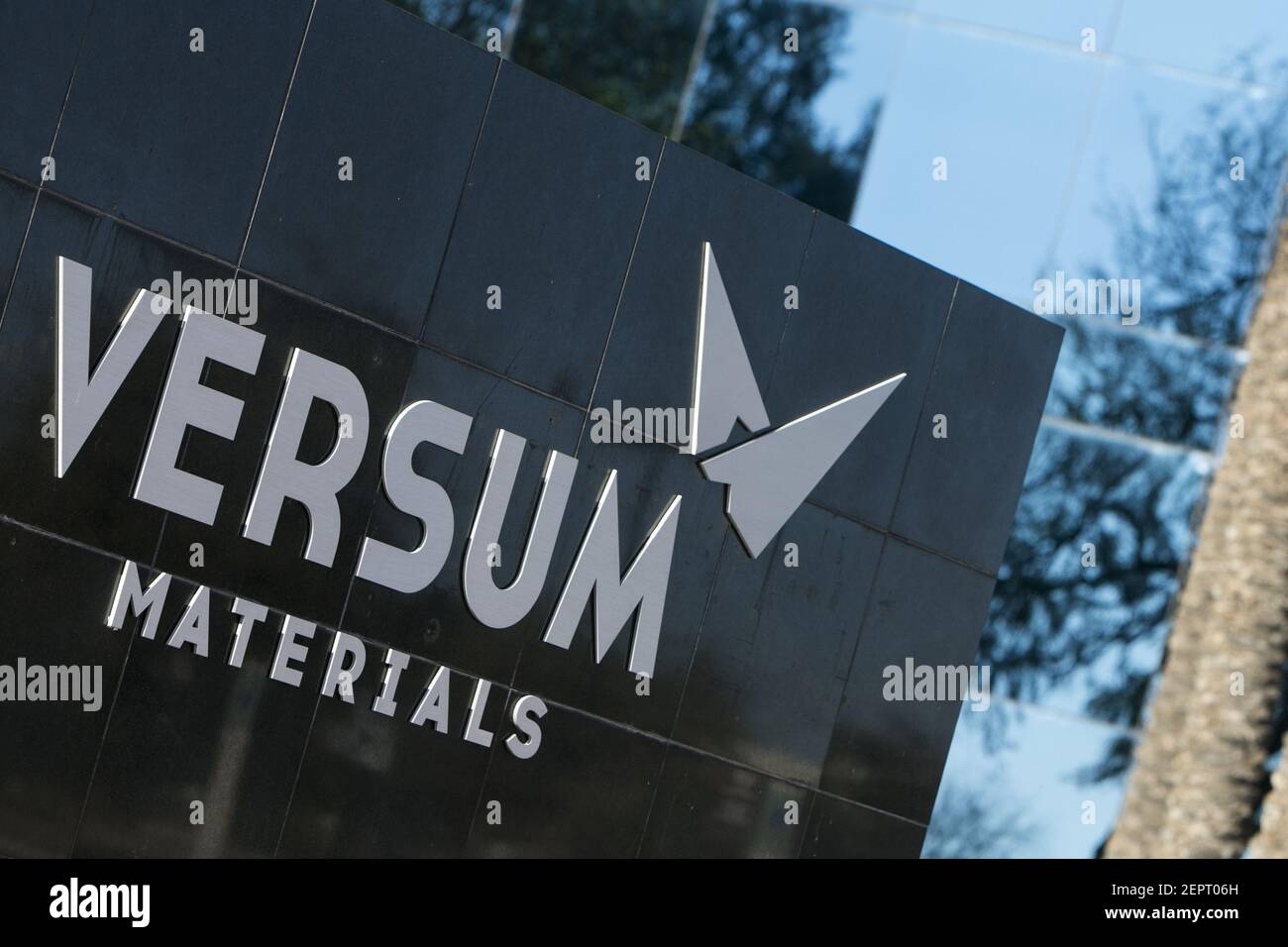
Following the 2019 transaction, Versum Materials ceased to report standalone earnings or maintain an independent corporate identity. The corporate brand was integrated into Merck KGaA's Electronics business sector (formerly known as Performance Materials).
Within Merck KGaA, Versum’s heritage assets were combined with Merck's existing liquid crystal and semiconductor display operations, as well as Intermolecular, Inc. (another semiconductor testing firm acquired by Merck KGaA around the same timeframe).
Today, Versum’s former business lines operate under two primary divisions within Merck KGaA Electronics:
- Semiconductor Materials: Consisting of the Thin Film Solutions, Specialty Gases, and Planarization product lines formerly developed by Versum.
- Delivery Systems & Services (DS&S): Retaining the original equipment design, fabrication, and chemical cabinet installation units originally built by Air Products and expanded under Versum.
Financially, former Versum assets contribute significantly to Merck KGaA’s multi-billion-euro global sales in its Electronics division. Investors interested in tracking the financial progress or underlying revenue of Versum's original business lines must examine the quarterly financial reports, SEC disclosures, and investor presentations published by Merck KGaA, Darmstadt, Germany (FWB: MRK / OTC: MKGAF).
Frequently Asked Questions
What was Versum Materials' stock symbol before it was acquired?
Versum Materials traded on the New York Stock Exchange under the ticker symbol VSM. Trading was suspended on October 7, 2019, when the cash buyout by Merck KGaA was finalized, and the stock was formally delisted.
Can you still buy shares of Versum Materials?
No. Versum Materials is no longer an independent, publicly traded stock. Investors seeking investment exposure to Versum’s legacy products, patents, and manufacturing facilities can purchase shares of its parent company, Merck KGaA, Darmstadt, Germany (which trades on the Frankfurt Stock Exchange under ticker MRK, or as an ADR in the U.S. under ticker MKGAF). Note that Merck KGaA is distinct from the U.S. pharmaceutical firm Merck & Co. (NYSE: MRK).
How much did Merck KGaA pay to buy Versum Materials?
Merck KGaA paid $53.00 per share in cash for 100% of Versum Materials' outstanding common stock. The transaction valued Versum’s equity at approximately $5.8 billion and its enterprise value (including debt) at $6.5 billion.
Why did Entegris fail to acquire Versum Materials?
Entegris proposed an all-stock "merger of equals" deal valued at approximately $4.0 billion in early 2019. While Versum’s board initially supported the merger, Merck KGaA intervened with an unsolicited, higher-value all-cash tender offer. Because Merck’s $53.00 per share cash offer provided shareholders with immediate, guaranteed cash value at a significant premium, Versum exercised its right to terminate the Entegris agreement.
What happened to Versum Materials' employees and manufacturing sites?
Following the regulatory approvals in late 2019, Versum’s manufacturing sites in Tempe, Arizona; Carlsbad, California; Hometown, Pennsylvania; and various facilities across Taiwan, South Korea, and East Asia were integrated into Merck KGaA’s global semiconductor supply network. Most manufacturing and engineering roles were retained to support rising global demand for semiconductor fabrication materials.
Strategic Takeaway for Investors and Industry Analysts
For market researchers evaluating historical corporate valuations in the semiconductor sector, Versum Materials represents a textbook example of a successful corporate spinoff and strategic M&A buyout.
If you are auditing historical portfolios or tracking semiconductor chemical market share:
- Historical Valuation Reference: Use $5.8 billion for equity value net worth or $6.5 billion for total enterprise value as of October 2019.
- Current Financial Tracking: Track Merck KGaA (Darmstadt, Germany) financial reporting under their Electronics division to evaluate ongoing sales, capital expenditures, and performance in thin-film deposition and gas delivery infrastructure.
Legal & Financial Disclaimer: This analysis is provided strictly for educational and historical research purposes. Corporate valuations, transactions, and stock ticker references reflect finalized historical market events and should not be construed as active financial, legal, or investment advice.
Image Gallery