Mastering Pan Cooked Salmon Recipes in the Kitchen
Mastering pan cooked salmon in your kitchen requires balancing high heat for a crisp skin with gentle residual cooking to keep the delicate interior moist, flaky, and rich in natural omega-3 fatty acids. By choosing the right cut, mana...
Mastering pan cooked salmon in your kitchen requires balancing high heat for a crisp skin with gentle residual cooking to keep the delicate interior moist, flaky, and rich in natural omega-3 fatty acids. By choosing the right cut, managing pan temperature, and timing the flip accurately, home cooks can achieve restaurant-quality results in under fifteen minutes using basic stovetop equipment.
Contents
Understanding Salmon Cuts and Kitchen Preparation
Achieving success with pan cooked salmon recipes starts long before the fish touches the heat. Selecting the appropriate cut and preparing your workstation properly dictates how evenly the fish cooks and whether the skin achieves that coveted crispy texture.
Choosing the Right Fillet
When shopping for salmon, you will generally encounter two primary cuts at the seafood counter: center-cut fillets and tail pieces. Center-cut fillets are uniform in thickness, making them the superior choice for pan cooking because they cook at an even rate from edge to edge. Tail pieces taper significantly, meaning the thin end will overcook and dry out by the time the thicker portion reaches your desired internal temperature.
Look for vibrant pink-to-orange flesh with clean, distinct white fat lines (marbling), which indicate moisture and flavor. Avoid fillets with brownish discoloration at the edges, a strong fishy odor, or dry surfaces. Skin-on fillets are essential for pan-cooking; the skin acts as a thermal barrier protecting the delicate flesh from direct, harsh heat while rendering fat that helps lubricate the pan naturally.
Essential Kitchen Tools
You do not need specialized professional cookware to execute pan cooked salmon recipes, but having the right basic tools ensures the fish does not stick, break apart, or cook unevenly.
- A Heavy-Bottomed Skillet: Cast iron, carbon steel, or heavy stainless steel pans retain heat exceptionally well. A high-quality non-stick skillet is also acceptable, though traditional metal pans yield a superior crust when properly preheated.
- A Flexible Fish Spatula: A thin, slotted metal spatula with a beveled edge allows you to slide smoothly underneath the salmon skin without tearing the delicate protein fibers.
- Paper Towels: Surface moisture is the enemy of a crisp crust. Thoroughly patting the fish dry before seasoning is a non-negotiable step.
- An Instant-Read Digital Thermometer: The most reliable way to prevent dry, overcooked salmon is to check the internal temperature rather than relying solely on visual cues.
Step-by-Step Technique for Perfect Pan-Seared Salmon
Executing a classic pan-seared salmon fillet relies on a precise sequence of temperature control, oil management, and timing. Rilfles or sudden adjustments can cause the skin to stick or the proteins to seize.
Step 1: Tempering and Drying
Remove the salmon fillets from the refrigerator approximately fifteen to twenty minutes before cooking. Bringing the fish closer to room temperature prevents the cold meat from dropping the pan's temperature drastically when added. Take clean paper towels and press them firmly over the entire surface of the fish—both flesh and skin sides—until completely dry. Moisture creates steam, which prevents the Maillard reaction necessary for a golden-brown crust.
Step 2: Seasoning Strategy
Season the salmon generously right before it goes into the pan. If you salt the fish too far in advance (more than ten minutes), the salt will draw out surface moisture through osmosis, defeating your drying efforts. Sprinkle kosher salt and freshly cracked black pepper evenly over both sides. If you are using spice rubs containing sugar or paprika, apply them lightly, as high-heat pan cooking can easily burn sugary coatings before the interior cooks through.
Step 3: Heating the Pan and Fat Management
Place your skillet over medium-high heat and allow it to preheat for two to three minutes until it is hot, but not smoking excessively. Add one to two tablespoons of a high-smoke-point oil, such as avocado, grapeseed, or refined canola oil. Avoid using unrefined oils like extra virgin olive oil or butter at this stage, as their low smoke points will burn and turn bitter under high stovetop heat. Swirl the oil to coat the bottom of the pan evenly.
Step 4: The Sear and Cook
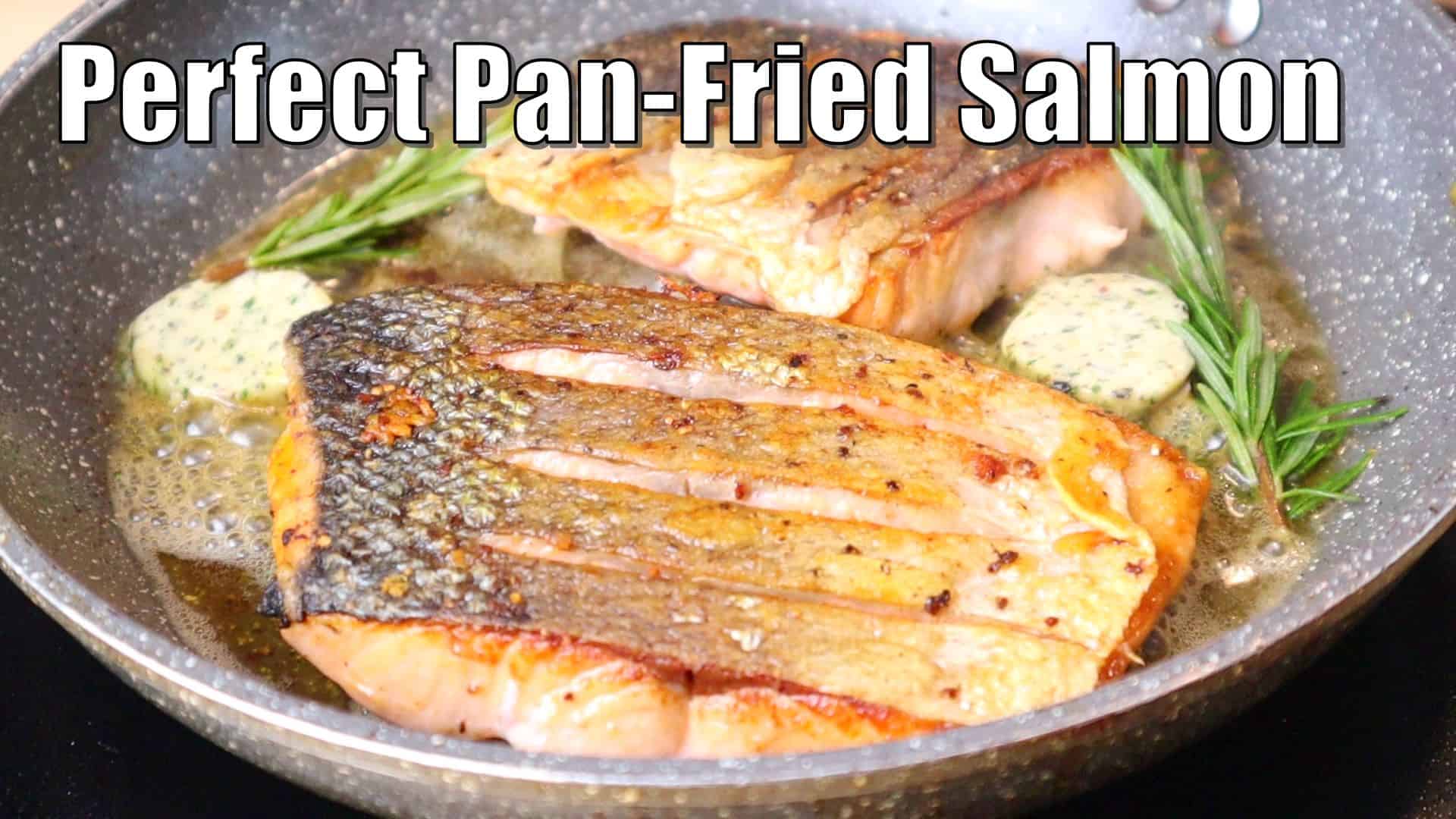
Carefully lay the salmon fillets into the pan, skin-side down, laying them away from you to prevent hot oil from splashing. Press down lightly on each fillet for the first five seconds with your spatula to ensure the entire skin surface makes contact with the hot metal.
Lower the heat slightly to medium to prevent the skin from burning before the fish cooks through. Let the salmon cook undisturbed for about 70 to 80 percent of its total cooking time—usually 4 to 6 minutes depending on thickness. You will visually notice the color of the flesh changing from translucent pink to opaque light pink as the heat creeps up the sides of the fillet.
Step 5: Flipping and Finishing
Once the skin is deeply golden, crisp, and releases easily from the pan without sticking, use your fish spatula to gently flip the fillets. Cook on the flesh side for just 1 to 2 minutes. If you prefer a richer flavor, this is the ideal moment to drop a tablespoon of unsalted butter, a crushed garlic clove, and a sprig of fresh thyme into the pan, spooning the melted foaming butter over the top of the salmon.
Flavor Profiles and Sauce Pairings
While salt, pepper, and a squeeze of fresh lemon juice are often all a pristine piece of fish requires, pan cooked salmon recipes serve as an exceptional canvas for global flavor profiles. Because salmon has a rich, oily texture, it stands up well to both bright, acidic elements and deep, savory glazes.
Herb and Citrus Pan Sauces
A pan-sauce can be built immediately after removing the cooked salmon from the skillet. Turn the heat down to low, pour in a splash of dry white wine or chicken broth to deglaze the browned bits stuck to the bottom of the pan, and let it reduce by half. Whisk in a cold pat of butter, a squeeze of fresh lemon or orange juice, and a handful of chopped fresh herbs like dill, parsley, or chives. Pour this glossy reduction directly over the resting fillets just before serving.
Asian-Inspired Glazes
For a sweet and savory profile, brush the salmon skin-side down first, then glaze the top flesh during the final minute of cooking. A quick reduction of tamari or soy sauce, grated fresh ginger, minced garlic, brown sugar or honey, and a splash of rice vinegar creates a sticky, caramelized coating. Garnish with toasted sesame seeds and thinly sliced green onions to add textural contrast.
| Flavor Profile | Primary Ingredients | Best Cooking Fat | Ideal Pairing / Garnish |
|---|---|---|---|
| Classic Lemon-Herb | Kosher salt, black pepper, dill, lemon | Grapeseed or avocado oil | Fresh lemon wedges, roasted asparagus |
| Garlic Butter Pan-Sauce | Butter, garlic, white wine, parsley | Olive oil blend | Mashed potatoes, haricots verts |
| Honey Ginger Soy | Soy sauce, honey, ginger, rice vinegar | Canola oil | Jasmine rice, steamed bok choy |
| Blackened Cajun | Paprika, cayenne, garlic powder, thyme | Clarified butter | Corn salad, lime crema |
Common Mistakes and Troubleshooting
Even experienced home cooks occasionally encounter issues when preparing pan cooked salmon recipes. Recognizing these common pitfalls helps you troubleshoot in real time and salvage your meal.
- The Fish Sticks to the Pan: This typically happens for two reasons: the pan was not hot enough when the fish was introduced, or you tried to flip the salmon too early. If the skin is sticking, leave it alone for another minute. As the skin renders its fat and crisps, it naturally releases from the metal surface.
- The Outside is Overcooked While the Inside is Raw: This is a symptom of cooking over heat that is set too high. If your skillet is screaming hot, the exterior proteins contract and scorch before thermal energy can penetrate the center. Lower the burner to medium or medium-low once the initial sear is established.
- White Residue Appears on the Flesh: That white, gelatinous substance that sometimes oozes out of the salmon during cooking is a protein called albumin. While harmless, it indicates the fish has cooked too quickly or past the optimal doneness window. Tempering the fish before cooking and lowering the heat intensity helps minimize albumin production.
- Dry, Chalky Texture: Salmon is fully cooked when the internal temperature reaches 125°F to 130°F (52°C to 54°C) for medium-rare, or up to 135°F (57°C) for medium. Letting it cook past 140°F breaks down its structural moisture, resulting in a dry mouthfeel. Always pull the fish slightly before you think it is done, as carryover heat will continue cooking it while it rests.
Frequently Asked Questions
Should I wash raw salmon before cooking it in a pan?
No, health safety agencies advise against washing raw seafood or poultry under running water. Splashing water can spread foodborne bacteria across your kitchen counters, cutting boards, and utensils. Instead, rely on paper towels to pat the surface dry and eliminate excess moisture.
How do I know when pan cooked salmon is done without a thermometer?
You can test doneness by gently pressing the thickest part of the fillet with a fork or your finger. If the flakes begin to separate along the white protein lines (the muscle fibers) and the interior has transitioned from translucent dark pink to opaque light pink, the fish is ready.
Can I cook frozen salmon directly in a frying pan?
Pan-cooking frozen salmon directly is not recommended because the exterior will burn or overcook long before the frozen center thaws and cooks through. For best results, thaw frozen fillets overnight in the refrigerator, or submerge them in a bowl of cold water in a sealed bag for 30 minutes before patting dry.
What is the best oil to use for high-heat salmon searing?
Use refined oils with high smoke points that will not break down, smoke, or impart bitter flavors at high temperatures. Avocado oil, grapeseed oil, canola oil, and refined safflower oil are excellent options. Avoid extra virgin olive oil for the initial high-heat sear, though it can be used for lower-heat applications.
How should I store leftover cooked salmon?
Allow the cooked salmon to cool completely, then place it in an airtight container in the refrigerator within two hours of cooking. Properly stored, leftover cooked salmon will remain safe to eat for up to three or four days. Reheat it gently over low heat in a covered skillet with a splash of water, or flake it cold into salads.
Next Actions for Success
To put these techniques into practice tonight, inspect your available cookware to ensure you have a heavy skillet and a flexible spatula. Purchase fresh, uniform center-cut salmon fillets, fresh lemons, and a high-smoke-point cooking oil. Take the fish out of the refrigerator just before prep, dry the skin thoroughly, preheat your pan properly, and monitor your cooking times to enjoy perfectly moist, flaky pan cooked salmon at home.
Image Gallery