Streamlined Filing Compliance Procedures: Navigating IRS Offshore and Domestic Voluntary Disclosures
Streamlined filing compliance procedures are specialized Internal Revenue Service (IRS) mechanisms designed for taxpayers who have failed to report foreign financial assets, income, or accounts, enabling them to come into full tax comp...
Streamlined filing compliance procedures are specialized Internal Revenue Service (IRS) mechanisms designed for taxpayers who have failed to report foreign financial assets, income, or accounts, enabling them to come into full tax compliance while mitigating the risk of severe civil penalties and criminal prosecution.
Contents
For taxpayers who have inadvertently omitted foreign income or overlooked complex international information reporting requirements, navigating the United States tax system can feel exceptionally daunting. The IRS maintains stringent rules regarding the disclosure of worldwide income for U.S. citizens, resident aliens, and certain non-residents. To address non-compliance that stems from non-willful conduct rather than intentional tax evasion, the IRS established the Streamlined Filing Compliance Procedures. These administrative pathways allow individuals to correct past omissions, file amended or delinquent returns, and pay back taxes with reduced penalty exposure. Understanding eligibility criteria, specific submission pathways, and documentation requirements is vital for anyone seeking to resolve historical tax discrepancies safely.
(Disclaimer: The following information is for educational purposes and does not constitute formal legal or tax advice. International tax compliance is complex; taxpayers should consult with a qualified certified public accountant or tax attorney specializing in cross-border taxation before submitting filings.)
Understanding the Purpose and Scope of Streamlined Procedures
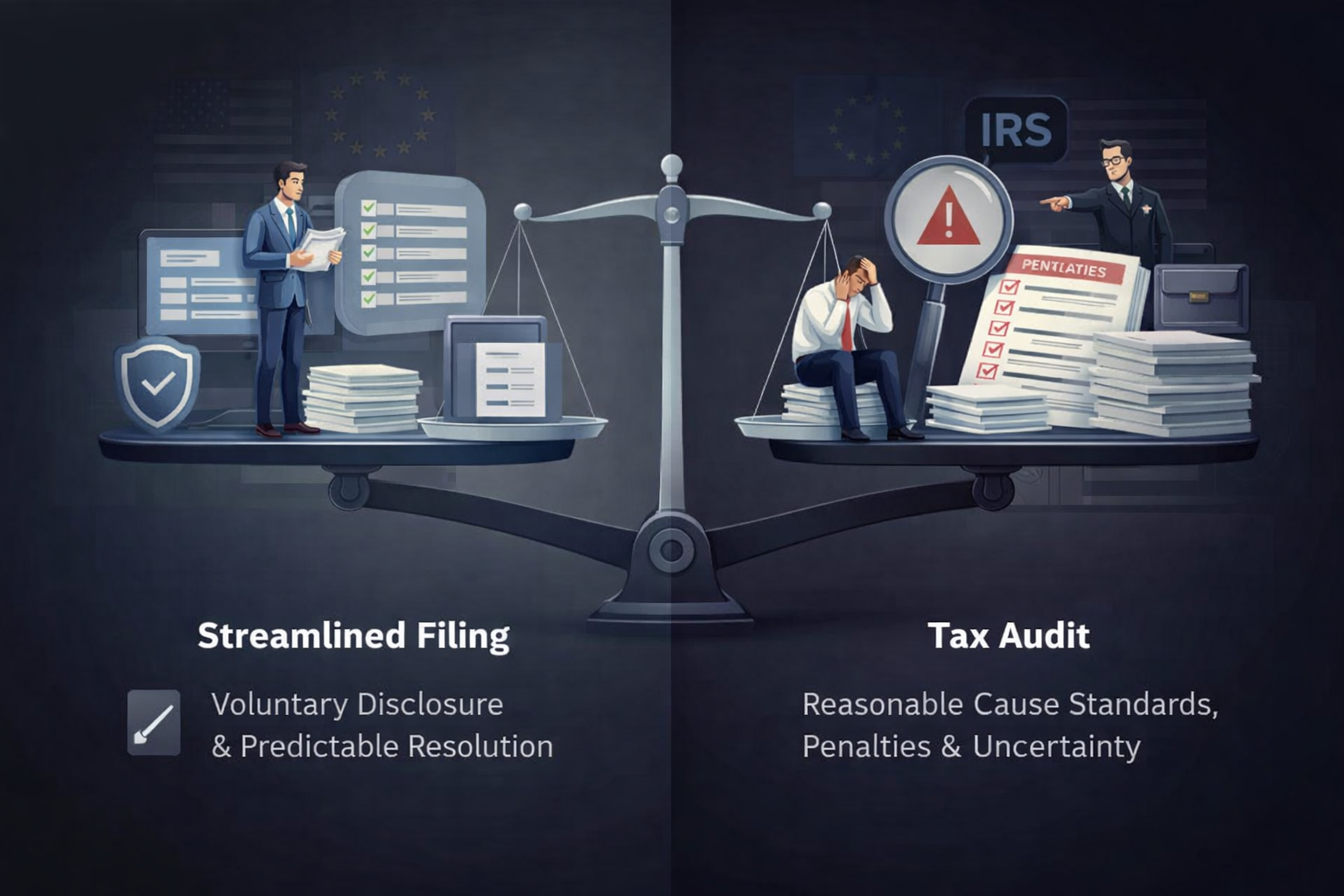
The primary purpose of streamlined filing compliance procedures is to streamline the processing of voluntary disclosures for taxpayers who pose low compliance risks while focusing agency resources on intentional evaders. Historically, taxpayers attempting to correct past failures faced severe uncertainty regarding penalties, often exposing themselves to ruinous fines that eclipsed the actual tax owed.
The introduction of these structured compliance programs changed that landscape by providing predictable, standardized penalty frameworks. However, these procedures are not a blanket amnesty. They require complete, transparent reporting of all previously undisclosed income and foreign assets, alongside a formal certification of non-willfulness.
The Origin and Evolution of Compliance Pathways
The IRS initially introduced offshore voluntary disclosure initiatives in 2009, evolving through several iterations of the Offshore Voluntary Disclosure Program (OVDP) before closing that program in September 2018. Simultaneously, the IRS introduced the Streamlined Foreign Offshore Procedures and Streamlined Domestic Offshore Procedures in 2012, updating them periodically to enhance clarity.
While the OVDP targeted taxpayers with high criminal exposure through intensive audits and heavier penalties, the streamlined routes are intended strictly for non-willful violations. Non-willful conduct is defined under U.S. law as conduct that is due to negligence, inadvertence, or mistake, or a misunderstanding of the requirements of the law, resulting in good-faith miscalculation or omission.
Eligibility Criteria for Streamlined Filing Compliance Procedures
Before preparing any documentation, taxpayers must determine whether they meet the rigid eligibility criteria established by the IRS. Failing to meet these prerequisites can result in the rejection of the submission or, worse, recharacterization of the filing as a standard audit with heightened scrutiny.
Eligibility depends heavily on the taxpayer's residency status and the underlying reason for the past non-compliance. The procedures are split into two distinct categories: foreign residents and domestic residents.
Streamlined Foreign Offshore Procedures (SFOP)
To qualify for the Streamlined Foreign Offshore Procedures, individual taxpayers—including U.S. citizens and lawful permanent residents—must satisfy a strict non-residency test. Specifically, in any one or more of the most recent three years for which the U.S. tax return due date (or properly applied-for extension) has passed:
- The individual must not have had a U.S. abode.
- The individual must have been physically present in a foreign country or countries for at least 330 full days during that period.
For estates of deceased individuals, the decedent must have met the non-residency requirement for the taxable year in which death occurred. Taxpayers who meet these criteria and whose failure to report foreign financial assets and pay all tax due was non-willful can utilize the SFOP. Under this pathway, qualifying taxpayers owe zero miscellaneous offshore penalties.
Streamlined Domestic Offshore Procedures (SDOP)
Taxpayers who do not meet the strict non-residency requirements of the SFOP may still qualify for the Streamlined Domestic Offshore Procedures. This pathway is designed for U.S. residents who failed to report foreign income and pay tax, and failed to file required Reports of Foreign Bank and Financial Accounts (FBARs), but whose actions were likewise non-willful.
Unlike the foreign counterpart, participants in the SDOP are subject to a miscellaneous offshore penalty. This penalty is equal to 5 percent of the highest aggregate balance or value of the taxpayer's foreign financial assets that are subject to the penalty during the years under review.
Common Eligibility Restrictions
Certain conditions will disqualify a taxpayer from utilizing either streamlined procedure. These restrictions include:
- Willful Conduct: If the non-compliance was intentional, voluntary, or part of a deliberate scheme to hide assets, the taxpayer is ineligible and must explore other legal disclosure avenues.
- Open IRS Civil Examinations: Taxpayers currently under civil examination by the IRS concerning any tax year are barred from using the streamlined procedures, regardless of whether the examination relates to foreign matters.
- Pending Criminal Investigations: Any taxpayer under criminal investigation by the Internal Revenue Service Criminal Investigation (IRS-CI) division cannot participate.
Overview of Compliance Procedures
| Program Feature | Streamlined Foreign Offshore Procedures (SFOP) | Streamlined Domestic Offshore Procedures (SDOP) |
|---|---|---|
| Target Audience | U.S. taxpayers living abroad meeting specific physical presence tests. | U.S. taxpayers living domestically who missed foreign disclosures. |
| Lookback Period (Tax Returns) | Most recent 3 years for which the due date has passed. | Most recent 3 years for which the due date has passed. |
| Lookback Period (FBARs) | Most recent 6 years for which the FBAR due date has passed. | Most recent 6 years for which the FBAR due date has passed. |
| Miscellaneous Penalty | 0% (No offshore penalty assessed). | 5% of the highest aggregate foreign asset value during the lookback. |
| Certification Requirement | Form 14653 (signed under penalty of perjury). | Form 14654 (signed under penalty of perjury). |
Step-by-Step Submission Requirements
Executing a successful submission under streamlined filing compliance procedures requires meticulous adherence to IRS instructions. Missing a single form or failing to include the required certification statement can trigger processing delays or rejection.
Step 1: Gather Historical Financial Records
Taxpayers must collect all relevant financial documentation for the lookback periods. For amended or delinquent tax returns, the lookback period covers the three most recent years for which the U.S. tax return due date (or extended due date) has passed. For FBARs (FinCEN Form 114), the lookback period covers the six most recent years for which the FBAR due date has passed.
Documentation typically includes:
- Foreign bank and investment account statements covering all months of the lookback years.
- Forms 1099, K-1, foreign equivalent tax certificates, and corporate balance sheets if foreign entities are involved.
- Records demonstrating currency exchange rates used for conversions to U.S. dollars.
Step 2: Prepare Delinquent or Amended Tax Returns
Taxpayers must prepare complete and accurate tax returns for the three lookback years.
- If original returns were never filed, the taxpayer must prepare and file original delinquent returns (typically marked across the top in red: "STREAMLIINED FOREIGN OFFSHORE PROCEDURES" or "STREAMLINED DOMESTIC OFFSHORE PROCEDURES").
- If original returns were filed but foreign income or assets were omitted, the taxpayer must prepare amended returns using Form 1040-X (Amended U.S. Individual Income Tax Return).
All applicable international information returns must be attached, which frequently include:
- Form 8938 (Statement of Specified Foreign Financial Assets).
- Form 5471 (Information Return of U.S. Persons With Respect to Certain Foreign Corporations).
- Form 3520 / 3520-A (Annual Return To Report Transactions With Foreign Trusts and Receipt of Certain Foreign Gifts).
- Form 8621 (Information Return by a Shareholder of a Passive Foreign Investment Company or Qualified Electing Fund).
Step 3: File Late FBARs Electronically
FinCEN Form 114 (Report of Foreign Bank and Financial Accounts) must be filed electronically through the BSA E-Filing System. Taxpayers must submit FBARs for the six prior years where the filing deadline was missed. Each missing year must be filed separately, ensuring that the reason for late filing is appropriately selected or explained within the electronic filing interface.
Step 4: Execute the Non-Willfulness Certification
The cornerstone of the streamlined process is the certification of non-willfulness. Taxpayers must complete and sign a specific certification form under penalties of perjury:
- Form 14653 (Certification by U.S. Citizen or Resident Alien for Streamlined Foreign Offshore Procedures)
- Form 14654 (Certification by U.S. Citizen or Resident Alien for Streamlined Domestic Offshore Procedures)
These forms require a detailed, narrative statement of facts explaining the taxpayer's background, how the foreign assets were acquired, why the income was omitted or accounts unreported, and explicit confirmation that the conduct was non-willful. Crafting this narrative requires extreme care, as statements made on these forms are legally binding and reviewed thoroughly by IRS personnel.
Step 5: Calculate and Remit Taxes, Interest, and Penalties
Taxpayers must calculate the total tax due for the three lookback years, along with statutory interest calculated from the original due date of each return. Domestic filers must also compute the 5% miscellaneous offshore penalty using Form 14654. All payments should be submitted to the IRS with appropriate vouchers or clearly designated for the streamlined program according to current IRS mailing guidelines.
Practical Challenges, Risks, and Common Mistakes
While streamlined filing compliance procedures provide an invaluable lifeline, navigating them is fraught with technical traps. Misunderstanding the nuances can convert a routine disclosure into a protracted compliance nightmare.
The Definition and Trap of Willfulness
The dividing line between non-willful oversight and willful blindness is heavily litigated and interpreted strictly by the IRS and the Department of Justice. Willfulness encompasses reckless disregard of the law or conscious avoidance of tax obligations.
For instance, checking the "No" box on Schedule B of Form 1040 regarding whether the taxpayer had an interest in a foreign account—when the taxpayer clearly knew the account existed—can be cited by the IRS as evidence of willful deception. Taxpayers must consult professionals to evaluate whether their facts genuinely support a non-willful certification.
Currency Conversion Errors
Foreign financial assets and income must be converted into U.S. dollars using acceptable exchange rates, typically the yearly average exchange rate published by the U.S. Treasury's Bureau of the Fiscal Service or daily rates depending on the transaction type. Using inconsistent or unverified exchange rates creates discrepancies during automated IRS matching processes, leading to unnecessary correspondence audits.
Incomplete Information Returns
Failing to attach all mandatory international information returns alongside the tax return invalidates the streamlined submission. For example, omitting Form 5471 for an owned foreign corporation or failing to report a foreign mutual fund on Form 8621 leaves the taxpayer exposed to continuing civil penalties even after submitting the main income tax returns.
Frequently Asked Questions
What happens if the IRS rejects my streamlined filing submission?
If the IRS determines that a submission does not meet eligibility requirements—such as finding evidence of willful conduct—the application may be rejected. In such cases, the submitted tax returns and payments are typically processed as normal filings or amendments, but the protection from penalties is revoked, and the taxpayer may be referred for audit or further investigation.
Can I use streamlined procedures if I have already been contacted by the IRS?
No. Taxpayers who are under civil examination or criminal investigation by the IRS for any tax year are strictly prohibited from utilizing the streamlined filing compliance procedures. Once an audit or inquiry has commenced, the opportunity for voluntary self-correction through these specific programs is lost.
Are state tax returns covered under the federal streamlined procedures?
No. The streamlined filing compliance procedures apply exclusively to federal taxes administered by the IRS. Taxpayers must separately evaluate state-level tax obligations, amendments, and voluntary disclosure programs for states that levy income taxes and require the reporting of global or out-of-state income.
Do I need to report foreign pensions and retirement accounts?
Yes, foreign pension plans, social security equivalents, and retirement accounts often must be reported on FBARs and specific IRS informational forms. However, whether the income inside those pensions is currently taxable to the United States depends on bilateral tax treaties (such as totalization agreements or income tax treaties) and the specific structure of the foreign plan.
Can amended returns be submitted electronically for streamlined compliance?
Currently, streamlined submissions containing amended returns (Form 1040-X) and certifications (Form 14653 or 14654) generally must be mailed to the designated IRS submission address rather than filed electronically, though specific procedural updates should be verified against current IRS guidelines before mailing.
Next Actions and Expert Guidance
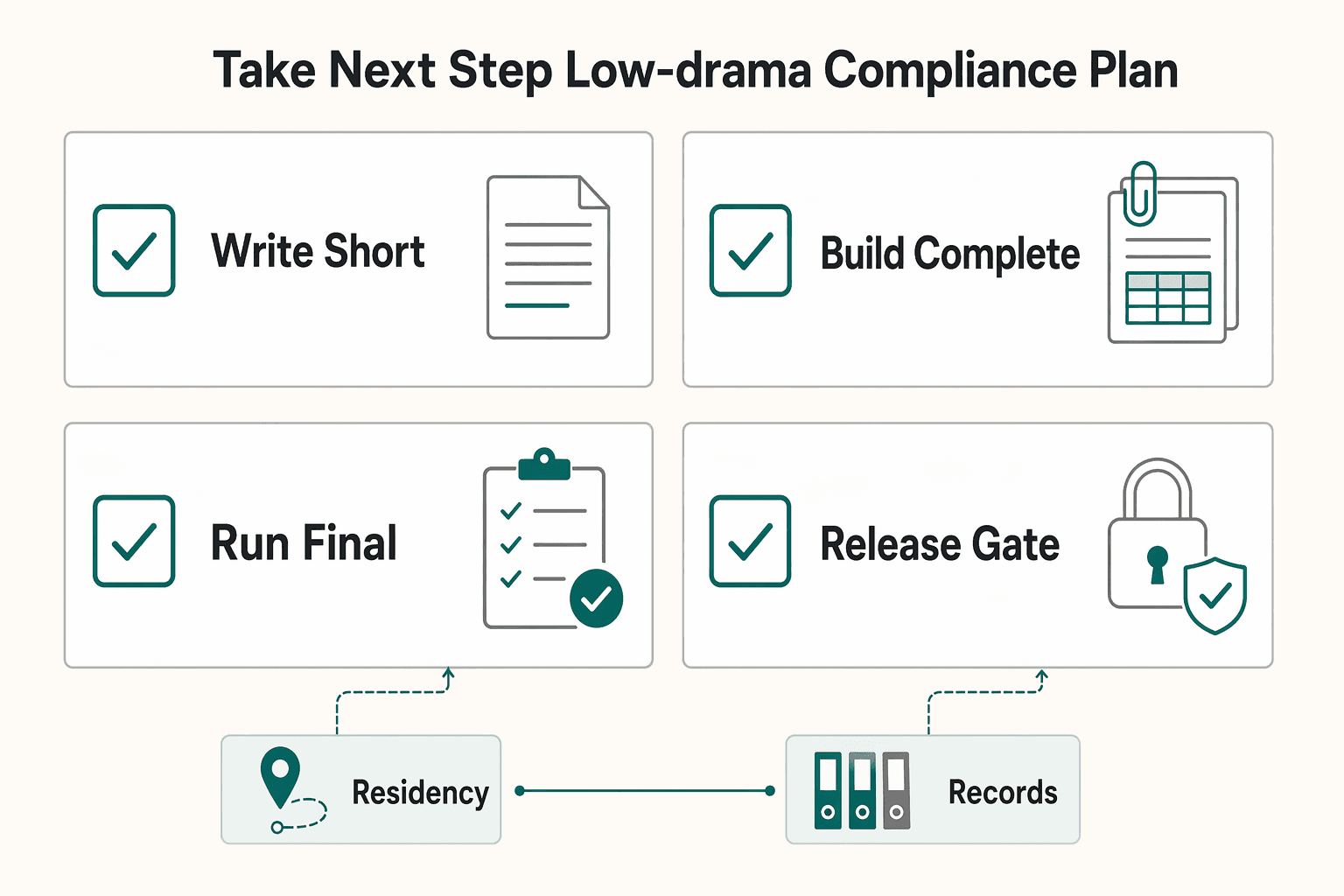
Taxpayers identifying potential non-compliance regarding foreign assets should act decisively before receiving any communication or inquiry from the IRS. The first recommended step is to inventory all foreign bank accounts, investments, inheritances, and corporate structures held during the past six years.
Because the submission requires signing a legal certification under penalty of perjury, engaging an experienced tax attorney or certified public accountant specializing in international taxation is vital. Professional counsel ensures that calculations are precise, informational forms are properly completed, and the non-willfulness narrative accurately reflects the factual history without introducing legal vulnerabilities. Prompt, accurate remediation remains the most effective defense against escalating federal penalties.
Image Gallery