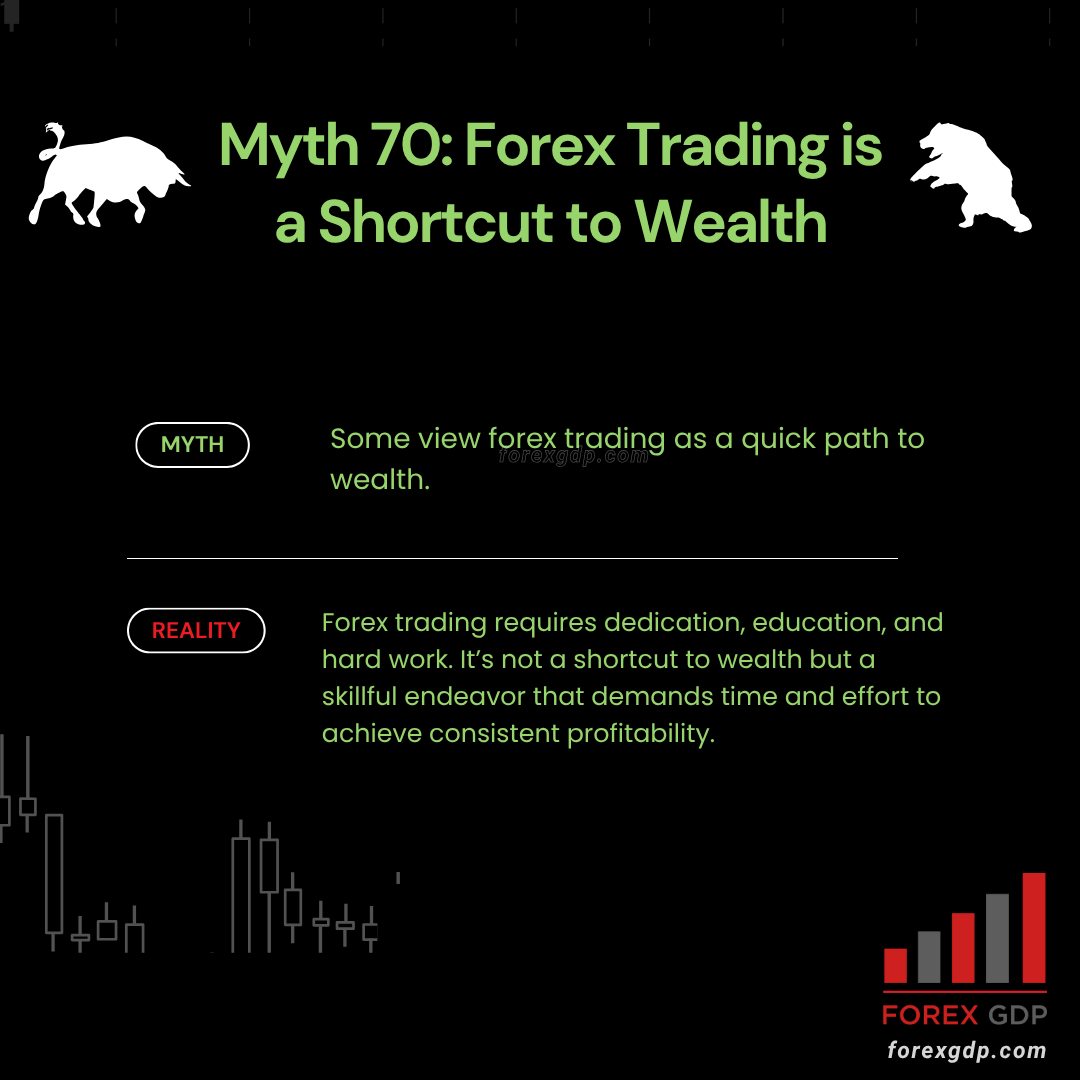
Why Investment Trading Isn't a Shortcut to Financial Wealth
Investment trading is not a shortcut to financial independence because financial markets are highly competitive, informationally efficient, and governed by strict mathematical probability. Short-term trading carries significant frictio...
Investment trading is not a shortcut to financial independence because financial markets are highly competitive, informationally efficient, and governed by strict mathematical probability. Short-term trading carries significant friction from transaction costs, tax drag, leverage risks, and severe psychological pressures, resulting in the vast majority of retail participants underperforming low-cost, long-term buy-and-hold investing strategies over extended periods.
Contents
Disclaimer: This article is for educational and informational purposes only and does not constitute personalized financial, investment, tax, or legal advice. Financial markets involve substantial risk of capital loss.
The Illusion of Easy Capital: Why Trading Is Not a Fast Track
The temptation to view active trading as a fast track to financial freedom is driven by marketing campaigns, social media showcases of extreme returns, and deep-seated cognitive biases. Advertisements often frame online trading apps, foreign exchange (FX) brokers, and cryptocurrency derivative platforms as accessible tools for rapid wealth accumulation. However, active market participation requires specialized domain expertise, institutional-grade infrastructure, and disciplined risk management.
At its core, a fundamental distinction exists between investing and trading:
- Investing is the process of acquiring real economic assets—such as fractional ownership in profitable companies, debt instruments, or real estate—that generate intrinsic cash flows, earnings growth, or yields over time. Investing leverages the positive-sum nature of global economic expansion and compound interest.
- Trading, particularly short-term day trading or swing trading, focuses on predicting near-term price fluctuations of financial instruments based on technical indicators, order flow, or immediate news events.
While long-term investing expands wealth alongside macroeconomic growth, short-term trading is fundamentally a zero-sum game before costs—and a negative-sum game once trading fees, bid-ask spreads, margin interest, software subscriptions, and taxes are factored in. Every dollar gained by a short-term trader must be lost by another market participant, minus the friction costs extracted by intermediaries and market venues.
The Mathematical Realities of Short-Term Market Participation
Understanding why active trading fails as a wealth shortcut requires examining the structural friction that erodes capital over time. Even traders with a slight statistical edge face structural obstacles that compound against them.
- Gross Trading Gains
- − Bid-Ask Spreads
- − Execution Commissions & Platform Fees
- − Slippage & Order Routing Friction
- − Short-Term Capital Gains Taxes
- = Net Portfolio Return (Often Negative)
1. Friction Costs and Execution Drag
Every financial transaction incurs costs. The bid-ask spread represents the difference between the highest price a buyer is willing to pay and the lowest price a seller is willing to accept. For frequent traders executing dozens or hundreds of trades monthly, these tiny price differences act as a constant tax on capital.
Furthermore, high-volatility environments lead to slippage—the discrepancy between the expected price of a trade and the actual price at which the trade executes. When multiplied over hundreds of executions, execution drag degrades an equity curve even if the underlying trading model shows theoretical profitability on historical charts.
2. Tax Inefficiency
Tax policy in most major jurisdictions penalizes short-term trading. In the United States, for example, assets held for less than 365 days are taxed at short-term capital gains rates, which match ordinary income brackets (reaching up to 37% at the federal level, plus state taxes). In contrast, long-term capital gains (assets held for over one year) enjoy lower tax rates ranging from 0% to 20%.
Short-term traders must generate significantly higher gross returns just to match the net after-tax returns of a passive, long-term investor due to the loss of tax-deferred compounding.
3. The Asymmetry of Drawdowns
Capital preservation is governed by non-linear math. When a trader incurs a loss, the percentage gain required to recover to breakeven increases exponentially relative to the loss size.
| Loss of Capital | Gain Required to Return to Breakeven |
|---|---|
| 10% | 11.1% |
| 20% | 25.0% |
| 30% | 42.9% |
| 50% | 100.0% |
| 75% | 300.0% |
| 90% | 900.0% |
A single disastrous trading week or uncontrolled risk event can wipe out months or years of incremental gains. Short-term traders operating without strict position sizing frequently experience catastrophic drawdowns from which recovery is mathematically improbable.
Institutional Advantages and Market Efficiency
Retail traders do not operate in a vacuum; they enter an arena dominated by global investment banks, quantitative hedge funds, and institutional liquidity providers. Expecting retail day trading to serve as an easy shortcut ignores the stark structural asymmetries between retail market participants and institutional firms.
Infrastructure and Speed
Institutional firms deploy high-frequency trading (HFT) algorithms operating via co-located servers placed physical yards away from exchange matching engines. They measure latency in nanoseconds and utilize direct market data feeds that retail platforms cannot match. By the time a retail trader sees a price quote on a standard desktop application, institutional algorithms have already analyzed the liquidity, executed orders, and re-adjusted quotes across multiple exchanges.
Information and Capital Depth
Institutional entities employ teams of quantitative researchers, data scientists, and sector specialists supported by massive capital reserves and alternative data streams (such as real-time supply chain tracking, satellite imaging, and private credit data). According to the Financial Industry Regulatory Authority (FINRA), institutional orders also benefit from sophisticated smart-order routing to capture micro-efficiencies that retail accounts cannot access.
Attempting to consistently out-think or out-speed institutional algorithms based on retail charting software is equivalent to competing in a professional motor race using a stock passenger vehicle.
Evidence-Based Retail Trader Performance Data
Empirical academic research and regulatory disclosures consistently show that active retail trading yields high failure rates over multi-year horizons.
Regulatory Mandated Disclosures
Regulators across major financial jurisdictions require retail brokerage firms to display the percentage of active retail accounts that lose money when offering leveraged derivatives such as Contracts for Difference (CFDs) or retail foreign exchange.
Data published under guidelines from the European Securities and Markets Authority (ESMA) and the Financial Conduct Authority (FCA) consistently show that 70% to 80%+ of retail accounts operate at a net financial loss.
Academic Studies on Retail Day Trading
Seminal academic research examining retail trading behavior reveals similar outcomes across international markets:
- The Brazilian Futures Study (2020): Researchers Fernando Chague, Rodrigo De-Los-Soares, and Bruno Giovannetti tracked 20,000 retail individuals who began day trading equity futures. The study found that 97% of individuals who traded for more than 300 days lost money, and less than 1% earned more than the local minimum wage.
- The Taiwan Stock Exchange Analysis: A comprehensive long-term study conducted by economists Brad Barber, Yi-Ting Lee, Yu-Jane Liu, and Terrance Odean analyzed retail day traders over a multi-year period. The researchers found that less than 1% of the day trading population consistently generated positive returns net of transaction costs, while the vast majority suffered substantial losses.
- The Impact of Overtrading: Studies published through the National Bureau of Economic Research (NBER) repeatedly confirm that portfolio turnover correlates negatively with net returns. The more frequently a retail investor trades, the lower their risk-adjusted net return typically becomes.
Psychological Traps in Active Trading
Even when presented with sound technical analysis or risk management principles, human psychology presents a major barrier to successful trading. Behavioral finance research identifies several cognitive biases that systematically sabotage trader decision-making.
- Market Volatility
- Trigger: Fear of Missing Out (FOMO) - Chasing High-Risk Tops
- Drawdown Occurs
- Trigger: Loss Aversion & Disposition Effect - Holding Losing Positions
- Escalation: Revenge Trading & Over-Leverage - Account Liquidation
Overconfidence Bias and Random Reinforcement
In financial markets, short-term success does not validate skill. Due to market noise and randomness, a novice trader can execute a poorly reasoned trade and still realize a large profit. This random reinforcement leads to overconfidence, encouraging the trader to scale up position sizes precisely when their risk exposure is highest.
Loss Aversion and the Disposition Effect
Behavioral economists Daniel Kahneman and Amos Tversky established that human beings feel the psychological pain of a loss roughly twice as intensely as the pleasure of an equivalent gain. In trading, this manifests as the disposition effect: market participants hold onto losing positions too long, hoping the asset will return to breakeven, while selling winning positions prematurely to lock in small gains.
Revenge Trading and Emotional Exhaustion
Following a severe drawdown or a series of stopped-out trades, traders often experience emotional distress that impairs rational decision-making. This leads to revenge trading—doubling down on leverage or abandoning risk control rules to recover losses quickly. Emotional fatigue erodes discipline, transforming active management into unchecked gambling.
Comparing Approaches: Short-Term Trading vs. Long-Term Investing
To build long-term wealth, individuals must evaluate how different market strategies align with their capital preservation goals, available time, and probability of success.
| Dimension | Short-Term Active Trading | Long-Term Index/Asset Investing |
|---|---|---|
| Primary Mechanism | Capitalizing on short-term price inefficiencies and momentum | Capturing broad economic growth and corporate earnings yields |
| Time Horizon | Seconds, minutes, hours, or days | Years to decades |
| Capital Risk | High probability of total drawdown due to leverage and friction | Low probability of permanent loss in diversified index funds |
| Transaction Drag | Heavy (spreads, commissions, slippage, short-term taxes) | Minimal (low expense ratios, infrequent turnover, capital gains deferral) |
| Time Commitment | Full-time monitoring required | Low maintenance (rebalancing once or twice annually) |
| Statistical Win Rate | <10% of retail participants achieve persistent alpha | Historically >90% profitable over 15+ year holding periods |
| Primary Driver | Relative skill, infrastructure, and execution precision | Compound interest and systemic economic expansion |
Building a Sustainable Financial Strategy
Abandoning the search for a trading shortcut does not mean giving up on financial independence. Instead, it shifts focus toward reliable mechanisms for compounding wealth over time.
1. Leverage the Power of Compound Growth
Wealth accumulation is primarily a function of time, savings rate, and compound returns—not high-frequency speculative trades. Historically, broad market indexes such as the S&P 500 or the MSCI World Index have delivered long-term annualized returns around 7% to 10% before inflation.
Investing consistently in broad-based index funds allows individual investors to capture global corporate growth without needing to predict daily market movements.
Wealth = Initial Capital × (1 + Rate of Return)^Time + Recurring Contributions
2. Prioritize Primary Earning Power
For most individuals, the highest return on investment comes from enhancing their human capital—developing specialized skills, advancing a professional career, or building a enterprise.
Increasing primary income raises the personal savings rate, expanding the pool of capital available for long-term investments. Attempting to use a small $2,000 trading account to build wealth requires taking extreme leverage risks; investing $2,000 monthly from a strong career into diversified assets builds genuine wealth predictably.
3. Implement Strict Asset Allocation
Sustainable financial plans use structured asset allocation based on individual risk tolerance and time horizon:
- Emergency Reserve: Cash or high-yield savings covering 3 to 6 months of essential living expenses.
- Core Portfolio: Low-cost broad-market equity index funds combined with fixed-income instruments (e.g., U.S. Treasuries or investment-grade corporate bonds) to cushion market volatility.
- Opportunistic/Satellite Allocation: A strictly capped portion of capital (less than 5% of liquid net worth) allocated to higher-risk speculative assets, isolated so that a total loss will not compromise long-term solvency.
Frequently Asked Questions
Can someone become a profitable day trader full-time?
While it is technically possible, empirical evidence demonstrates that persistent, long-term profitability in day trading is rare among retail market participants. Achieving consistency requires specialized infrastructure, institutional-level risk management, deep market microstructure knowledge, and strong emotional control. The vast majority of retail participants who attempt full-time day trading fail to achieve returns that cover their time, costs, and risk exposure.
What is the primary difference between trading and investing?
The main difference lies in time horizon, underlying mechanics, and risk profiles. Trading focuses on capturing short-term price fluctuations of financial instruments over minutes, days, or weeks, relying heavily on timing and technical analysis. Investing involves acquiring real economic assets to hold for years or decades, seeking to capture long-term fundamental earnings growth, dividend yields, and compound economic growth.
Why does leverage make active trading so dangerous for small accounts?
Leverage allows a market participant to control a large financial position using a relatively small amount of collateral (margin). While leverage amplifies gains when price moves favor the position, it equally magnifies losses. A small percentage drop in the underlying asset can trigger a margin call, forcing the broker to liquidate the trader's position and permanently wiping out the account's capital.
How do short-term capital gains taxes impact trading profits?
In many tax jurisdictions, profits from assets held for less than one year are taxed as ordinary income rather than at reduced long-term capital gains rates. This higher tax rate reduces net realized returns, forcing active traders to achieve significantly higher gross gains just to match the net, tax-deferred returns of long-term investors.
Are paper trading or demo accounts accurate predictors of real trading success?
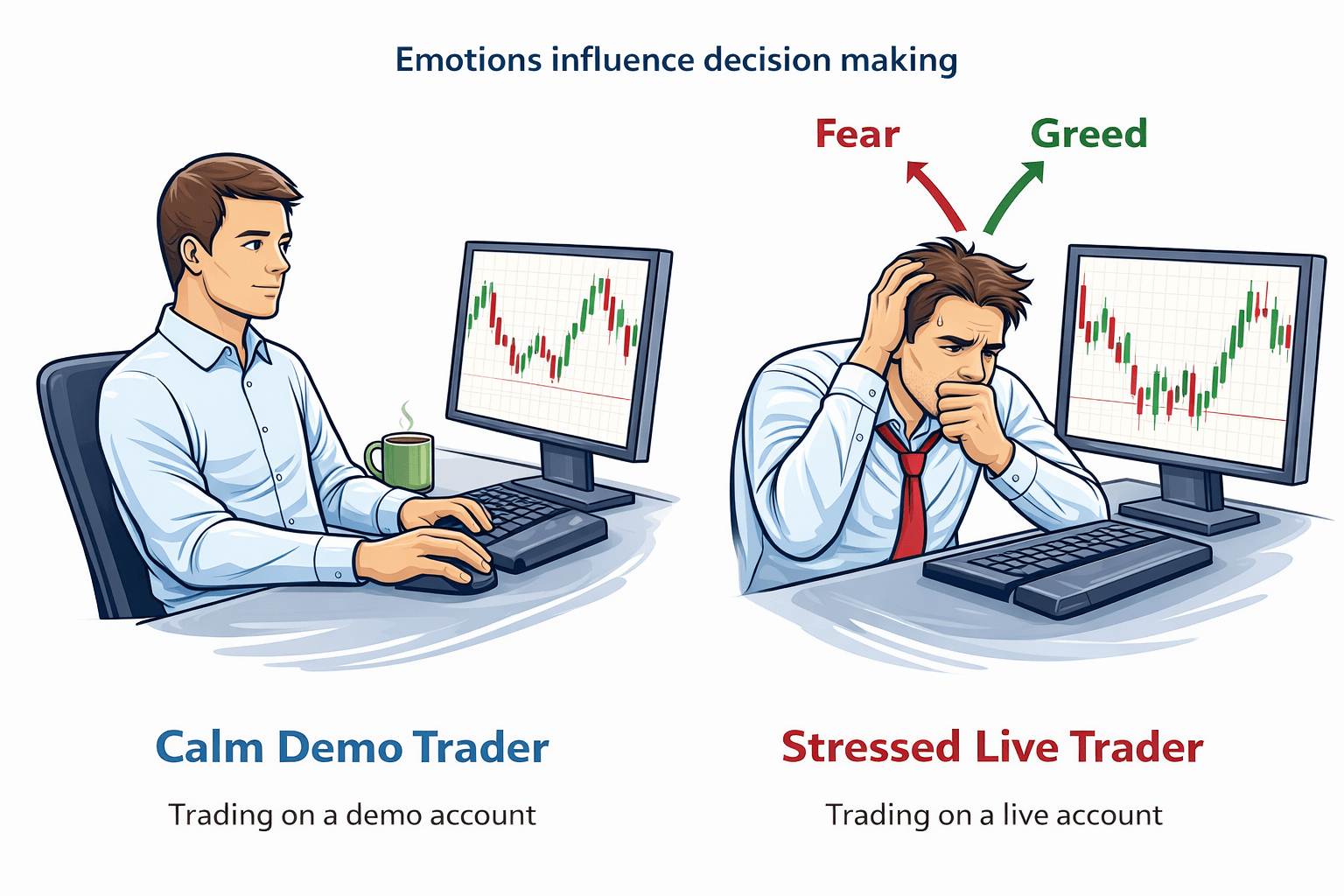
Paper trading accounts are valuable for learning software navigation and order entry mechanics, but they fail to replicate the psychological pressures of live trading. Simulated environments do not reproduce the fear, greed, slippage, and execution delay experienced when real capital is at risk, making demo performance an unreliable indicator of actual profitability.
Conclusion & Practical Action Steps
Investment trading is not a shortcut to wealth; it is a complex, capital-intensive profession operating within competitive, highly efficient markets. Expecting rapid, consistent riches from short-term trading ignores institutional advantages, statistical probabilities, transaction drag, and behavioral risks.
To build sustainable wealth, consider these immediate action steps:
- Audit Your Strategy: Shift focus from short-term market timing to systematic, low-cost asset allocation and long-term compounding.
- Minimize Frictional Costs: Utilize low-expense ratio index funds (ETFs or mutual funds) to keep investment fees to a minimum.
- Automate Contributions: Establish automated monthly transfers into tax-advantaged accounts (such as an IRA, 401(k), or regional equivalents) to ensure consistent capital deployment regardless of short-term market noise.
- Protect Capital: Limit speculative trading or individual stock picking to a small, segregated satellite pool representing no more than 5% of your total investable net worth.
Image Gallery