How to Choose the Right Cloud: A Strategic Framework for 2026
Choosing the right cloud involves aligning your organization’s technical requirements, compliance needs, and budget with the specific capabilities of cloud service providers. It is not a one-size-fits-all decision; it requires a system...
Choosing the right cloud involves aligning your organization’s technical requirements, compliance needs, and budget with the specific capabilities of cloud service providers. It is not a one-size-fits-all decision; it requires a systematic evaluation of workload performance, data sovereignty, and long-term scalability across public, private, hybrid, or multi-cloud environments to ensure sustainable digital growth.
Contents
The decision to migrate or expand into the cloud has evolved from a simple infrastructure shift to a core business strategy. In 2026, the landscape is defined by highly specialized services, particularly in generative artificial intelligence (AI), edge computing, and sovereign data requirements. Making the wrong choice can lead to prohibitive "egress" costs, technical debt, and security vulnerabilities. This guide provides a comprehensive framework for navigating these complexities.
Assessing Your Current Infrastructure and Business Goals
Before evaluating any cloud service provider (CSP), you must conduct a thorough internal audit. The primary driver for "choosing the right cloud" is understanding exactly what you are trying to move and why. Organizations often fail because they attempt a "lift-and-shift" of legacy applications into a cloud environment that is optimized for cloud-native architectures.
Workload Profiling and Technical Requirements
Not all workloads are created equal. You must categorize your applications based on their resource consumption, dependency on specific operating systems, and data sensitivity. For example, a high-frequency trading application requires low-latency networking that only specific availability zones can provide. Conversely, a massive data lake for archival purposes might prioritize low-cost "cold" storage over compute performance.
In 2026, the focus has shifted toward AI-readiness. If your workload involves training large language models (LLMs) or running complex inference tasks, you must look for providers offering specialized hardware, such as NVIDIA H200s or Google’s latest TPU (Tensor Processing Unit) iterations. The availability of these specialized chips often dictates the choice of cloud more than the price of standard virtual machines.
Defining Business Outcomes
Are you choosing a cloud to reduce capital expenditure (CapEx), increase agility, or improve global reach? If your goal is global expansion, a provider with a vast network of global regions, such as Amazon Web Services (AWS) or Microsoft Azure, is essential. If your goal is strictly regulatory compliance within a specific jurisdiction (e.g., the European Union), a Sovereign Cloud provider that guarantees data will not leave national borders may be the only viable option.
Understanding Cloud Deployment Models
The "right cloud" might not be a single platform but a combination of several. By 2026, the industry has matured beyond the binary choice of public vs. private.
Public Cloud
The public cloud remains the standard for most enterprises due to its massive scalability and "pay-as-you-go" pricing. Providers like AWS, Azure, and Google Cloud Platform (GCP) offer hundreds of services, from basic compute to advanced serverless functions. This model is ideal for startups and enterprises looking for rapid innovation without managing physical hardware.
Private and Sovereign Clouds
For organizations in highly regulated industries—such as defense, healthcare, or finance—a private cloud or a sovereign cloud is often necessary. A private cloud offers the benefits of cloud computing (virtualization, automation) but resides on dedicated hardware within a private data center or a co-location facility. Sovereign clouds have gained significant traction in 2026, driven by strict data privacy laws that require data to be managed by local entities under local legal jurisdictions.
Hybrid and Multi-Cloud Strategies
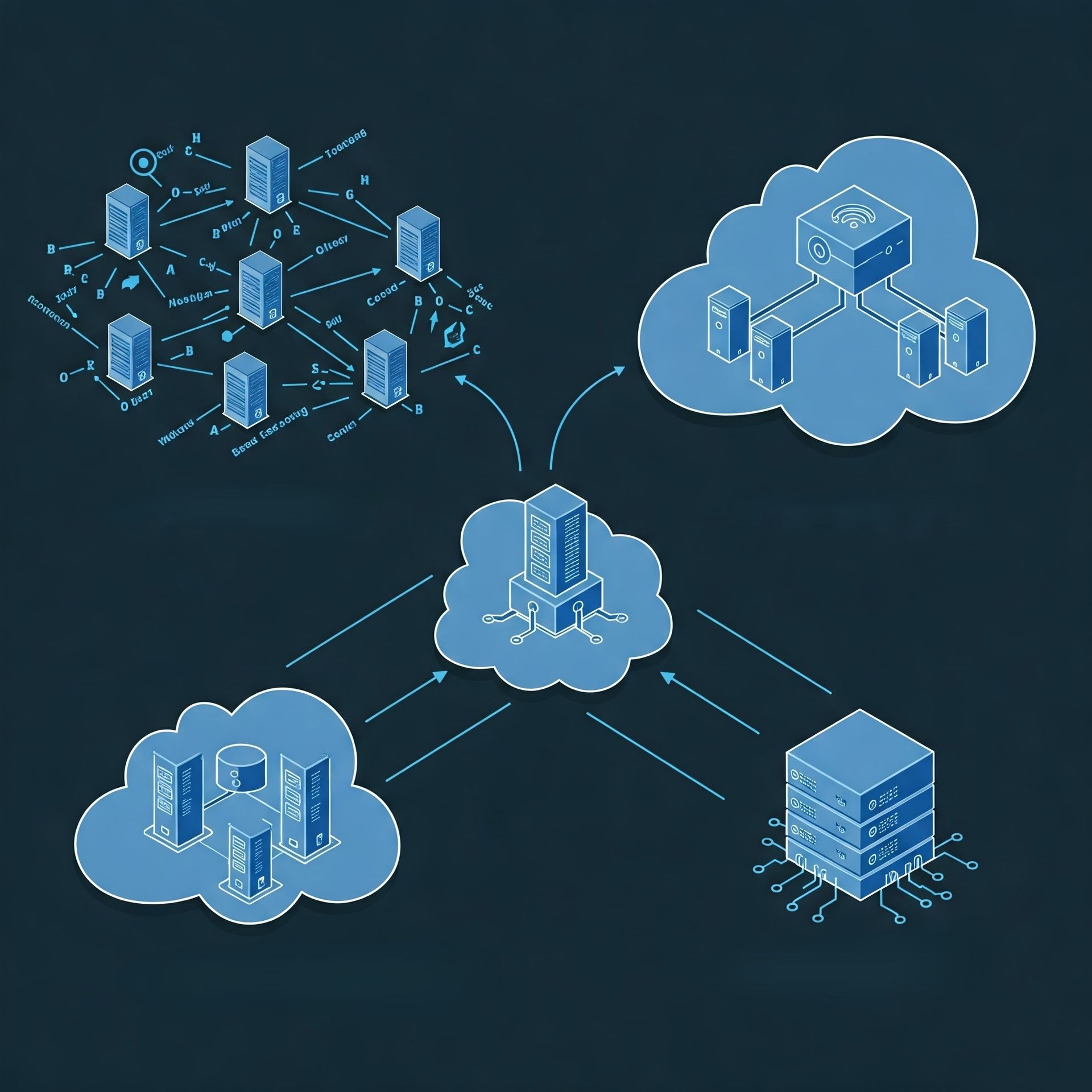
Most large organizations now employ a hybrid cloud model, where some data remains on-premises for security or legacy reasons, while other workloads scale into the public cloud. Multi-cloud, the use of two or more public cloud providers, is used to avoid "vendor lock-in" and to take advantage of specific "best-of-breed" services from different vendors (e.g., using GCP for data analytics while running core business logic on Azure).
Evaluating the Major Providers: The 2026 Landscape
While there are dozens of niche players, the "Big Three" continue to dominate the market, each with distinct strengths that cater to different organizational needs.
| Feature | Amazon Web Services (AWS) | Microsoft Azure | Google Cloud (GCP) |
|---|---|---|---|
| Market Strength | General purpose, massive ecosystem | Enterprise integration (Office 365/AD) | Data analytics, AI, and Kubernetes |
| Best For | Scalability and diverse toolsets | Large corporations already using Microsoft | High-performance computing and AI |
| Pricing Structure | Complex; highly granular | Enterprise agreements available | Competitive; sustained-use discounts |
| Global Reach | Largest number of availability zones | Highest number of global regions | Strong in major tech hubs |
| AI/ML Focus | Amazon Bedrock and SageMaker | OpenAI integration and Azure AI | Vertex AI and TPU-driven workloads |
Amazon Web Services (AWS)
AWS remains the market leader in 2026, offering the most comprehensive set of services. It is the preferred choice for developers who want a "building block" approach. Its mature ecosystem means it is easier to find certified professionals and third-party integrations. However, its pricing can be difficult to predict, often requiring dedicated FinOps teams to manage.
Microsoft Azure
Azure is the logical choice for organizations heavily invested in the Microsoft ecosystem. Its seamless integration with Active Directory, SQL Server, and Microsoft 365 provides a significant advantage for corporate IT departments. In 2026, Azure has solidified its position as a leader in enterprise AI through its deep partnership with OpenAI, making it a top contender for businesses integrating generative AI into their workflows.
Google Cloud Platform (GCP)
GCP has carved out a niche as the "data-first" cloud. If your organization prioritizes machine learning, big data, and containerization (via Kubernetes, which Google originally developed), GCP is often the most efficient choice. Their pricing model is generally considered more user-friendly than AWS, with "sustained-use" discounts applied automatically.
Critical Selection Factors
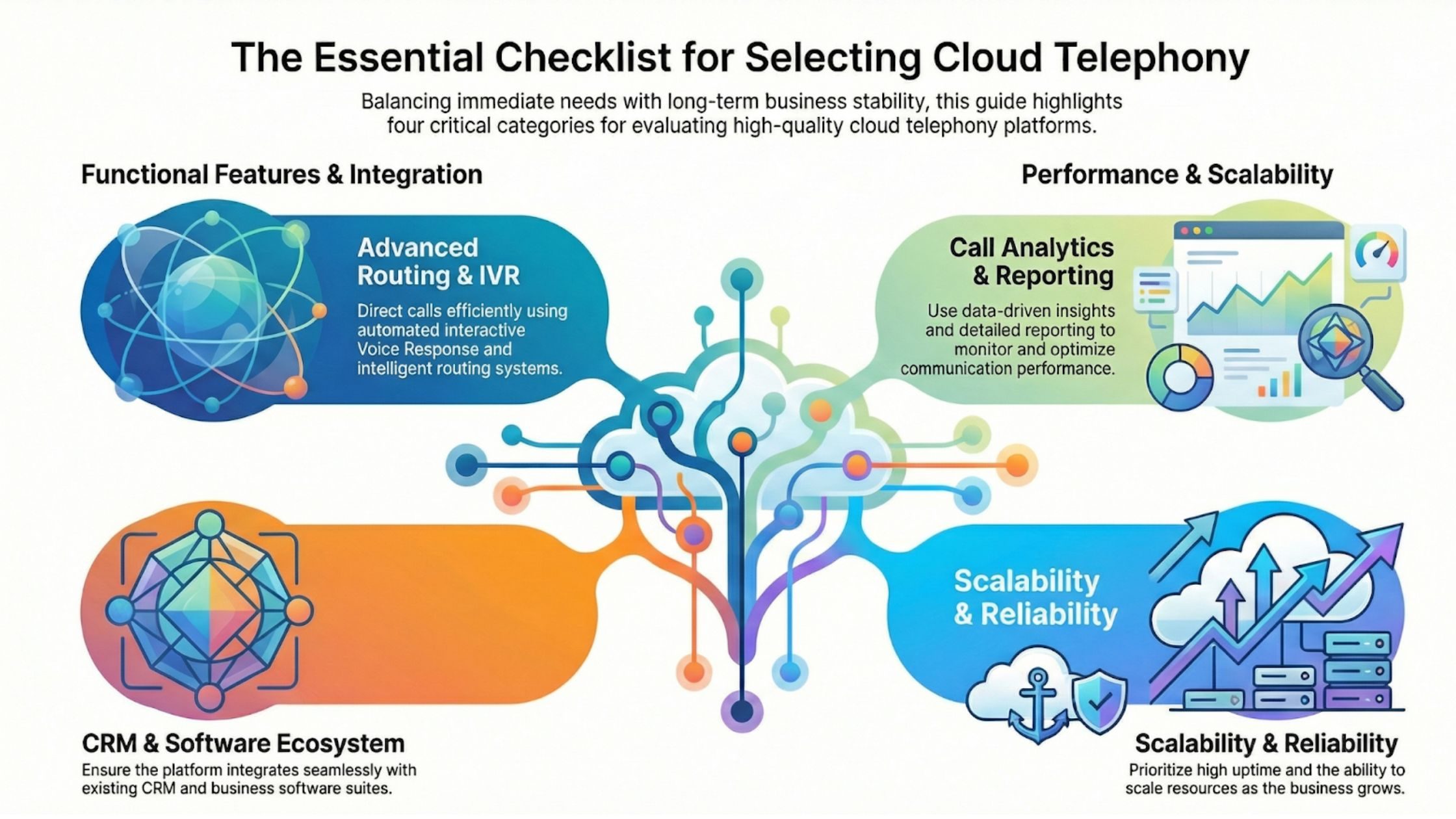
Beyond the brand name, several technical and operational factors must be verified before signing a contract.
1. Performance and Latency
Latency is the time it takes for data to travel from the user to the server and back. If your users are concentrated in Southeast Asia, but your cloud provider only has data centers in North America, performance will suffer. Use tools like CloudPing to measure real-world latency from your primary locations to various provider regions.
2. Security and Compliance
Security is a shared responsibility. The provider secures the "cloud," while you secure your "data in the cloud." Ensure the provider meets industry-specific certifications such as SOC 2 Type II, HIPAA for healthcare, or PCI DSS for payments. In 2026, verify their compliance with the EU AI Act if you are operating in Europe, as non-compliance can result in massive fines.
3. Vendor Lock-in and Interoperability
Vendor lock-in occurs when the cost or technical effort of moving away from a provider becomes prohibitive. This is often caused by using proprietary services (like AWS DynamoDB or Azure Cosmos DB). To mitigate this, many organizations in 2026 are adopting "cloud-agnostic" technologies like Docker and Kubernetes, which allow workloads to be moved between providers with minimal code changes.
4. Cost Management (FinOps)
Cloud costs can spiral out of control due to "zombie" instances (unused servers) and unmonitored data transfers. "Choosing the right cloud" includes choosing the right cost-management strategy. Look for providers that offer robust native monitoring tools and clear documentation on egress fees—the costs associated with moving your data out of their cloud.
Managing Cloud Economics and FinOps
By 2026, the practice of FinOps (Financial Operations) has become essential for any cloud-based business. It is no longer enough to simply pick a provider based on a list price. You must account for the total cost of ownership (TCO).
- Reserved Instances vs. On-Demand: If you have predictable workloads, purchasing "Reserved Instances" or "Savings Plans" can save up to 70% compared to on-demand pricing.
- Spot Instances: For non-critical, interruptible tasks (like batch processing), use "Spot" or "Preemptible" VMs, which are excess capacity sold at a steep discount.
- Data Transfer Costs: A common mistake is ignoring the cost of moving data between different regions or out to the internet. These "egress" fees can often exceed the cost of the compute resources themselves.
Organizations should utilize the official pricing calculators provided by the vendors:
Frequently Asked Questions
Which cloud provider is best for a small startup in 2026?
For most startups, the "best" cloud is often the one that provides the most free credits. AWS, Azure, and Google all have startup programs that offer up to $100,000 in credits. Beyond credits, Google Cloud is frequently cited for its ease of use and superior Kubernetes support, while DigitalOcean or Linode (Akamai) are excellent for simpler, high-performance virtual private servers without the complexity of the "Big Three."
Is it better to use a single cloud or multi-cloud?
A single-cloud strategy is simpler to manage, requires less diverse expertise, and allows for deeper volume discounts. However, it creates a single point of failure and vendor lock-in. A multi-cloud strategy increases resilience and leverage during contract negotiations but significantly increases operational complexity and data transfer costs. Most mid-sized companies are better served by a "primary cloud" with a small footprint in a secondary cloud for disaster recovery.
How does "Edge Computing" affect the choice of cloud?
Edge computing brings processing closer to the user to reduce latency. If your application involves IoT (Internet of Things), autonomous vehicles, or real-time video processing, you should choose a provider with a strong "Edge" presence, such as AWS Wavelength or Azure Edge Zones. These services place compute resources inside 5G networks and local carrier data centers.
What are "Sovereign Clouds" and do I need one?
Sovereign clouds are cloud environments designed to meet the specific legal and data privacy requirements of a particular nation or region. They ensure that data is stored and processed by local personnel and governed solely by local laws. If you handle sensitive government data or are subject to strict national security regulations in regions like the EU, China, or Saudi Arabia, a sovereign cloud is likely a legal requirement.
How do I calculate the ROI of moving to the cloud?
Calculating Return on Investment (ROI) requires looking beyond hardware costs. You must include the "opportunity cost" of your developers' time, the cost of downtime avoided by the cloud's high availability, and the increased speed of deployment. Compare your current TCO (power, cooling, hardware replacement, physical security) against the projected cloud bill, including the costs of training staff for the new environment.
Final Recommendation
To choose the right cloud in 2026, begin by prioritizing your most critical workload. If your business depends on rapid AI development, start your evaluation with Google Cloud or Azure. If you require the widest array of services and the largest talent pool, AWS is the safest bet. For smaller projects where cost predictability is paramount, consider specialized providers like DigitalOcean.
The most successful strategy is to conduct a Proof of Concept (PoC) on two different platforms. Deploy a non-critical application, measure the performance, evaluate the support quality, and review the first month's billing. This hands-on experience is more valuable than any marketing datasheet in determining which cloud will power your organization’s future.
Image Gallery