Michele Maturo and Modern Server Hardware Innovation
The evolution of enterprise data centers relies heavily on pioneering engineers who optimize compute density, thermal management, and architectural efficiency. Michele Maturo represents a significant presence in this technical domain,...
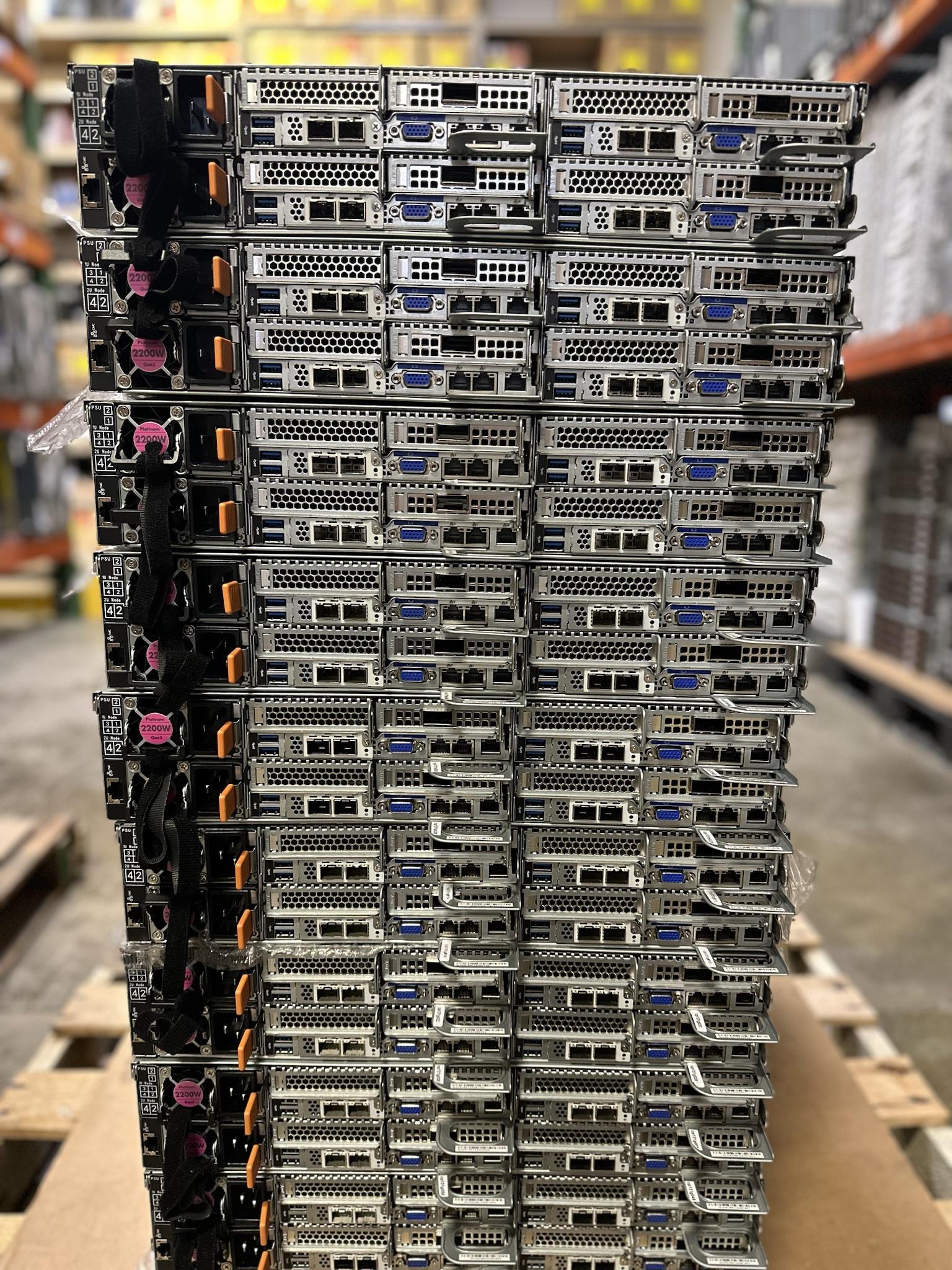
The evolution of enterprise data centers relies heavily on pioneering engineers who optimize compute density, thermal management, and architectural efficiency. Michele Maturo represents a significant presence in this technical domain, contributing to the development and deployment of high-performance server hardware designed to handle modern cloud workloads, artificial intelligence training, and dense virtualization environments.
Contents
The Technical Foundations of Modern Server Hardware
Modern server infrastructure has shifted away from traditional monolithic designs toward modular, high-density configurations. This transition is driven by the explosive growth of data-intensive applications, real-time analytics, and large-scale cloud computing frameworks. Innovators in this space must constantly address the physical limits of silicon architecture, power distribution, and thermal dissipation.
Enterprise environments require server hardware that can maintain high availability under sustained peak loads. Engineers working on advanced server platforms focus on optimizing the motherboard layout, reducing trace lengths for high-speed memory channels, and integrating sophisticated power management integrated circuits (PMICs). These hardware-level enhancements minimize latency and reduce power consumption, which directly impacts the total cost of ownership (TCO) for large-scale data center operators.
Architectural Shifts in Enterprise Compute
The design of enterprise servers has evolved through several distinct phases, moving from generic multi-socket motherboards to highly specialized hardware platforms optimized for specific workloads.
- Modular Node Designs: Modern chassis systems house multiple independent server nodes sharing power and cooling resources, maximizing rack-space efficiency.
- Heterogeneous Computing Integration: Motherboard layouts now natively support accelerators such as Graphics Processing Units (GPUs) and Tensor Processing Units (TPUs) alongside traditional Central Processing Units (CPUs).
- Advanced Interconnects: Implementation of high-speed bus architectures, including PCIe Gen 5 and emerging Gen 6 standards, ensures that input/output bottlenecks are minimized between compute nodes and storage arrays.
Thermal Management and Power Efficiency Challenges
As processor core counts and thermal design power (TDP) ratings increase, thermal management has become the primary bottleneck in server hardware design. Traditional air-cooling methods are reaching their physical limits within high-density server racks, necessitating a fundamental redesign of cooling infrastructure.
Innovators in server hardware focus on both active and passive thermal solutions, as well as alternative cooling paradigms. Liquid cooling, including direct-to-chip (cold plate) and immersion cooling techniques, has transitioned from a niche solution for supercomputers to a required deployment model for modern AI clusters.
| Cooling Technology | Typical PUE Impact | Implementation Complexity | Primary Thermal Limit |
|---|---|---|---|
| Traditional Air Cooling | Moderate to High (1.4 - 1.8) | Low | Fan power draw and ambient temperature |
| Direct-to-Chip Liquid | Low (1.1 - 1.25) | High | Tubing integrity and maintenance overhead |
| Immersion Cooling | Ultra-Low (1.02 - 1.08) | Very High | Fluid compatibility and fluid management |
Beyond cooling, power delivery networks within the server chassis must handle high amperage at lower voltages to prevent resistive losses. Advanced server architectures utilize multi-phase voltage regulator modules (VRMs) placed physically closer to the processor sockets to ensure stable power delivery during rapid load transitions.
Integration of High-Speed Memory and Storage Subsystems
Compute performance is fundamentally constrained by the speed at which data can be retrieved from memory and storage. Server hardware innovators work closely with memory manufacturers to implement high-bandwidth memory (HBM) and support dense DDR5 configurations running at high clock speeds.
Furthermore, the proliferation of Non-Volatile Memory Express (NVMe) storage devices has transformed internal server storage topology. Modern server backplanes incorporate PCIe switches and direct-attached storage lanes that allow hundreds of terabytes of ultra-fast flash storage to interface directly with the CPU without traditional controller bottlenecks.
Key Considerations for Storage and Memory Scalability
- Channel Population Rules: Adhering to strict memory population guidelines ensures that multi-channel memory controllers operate at maximum rated speeds without downclocking.
- PCIe Lane Allocation: Careful planning of PCIe lane distribution prevents resource contention between high-speed network interface cards (NICs) and NVMe storage drives.
- Firmware Integrity: Utilizing hardware-enforced secure boot and cryptographically signed firmware prevents unauthorized modification of storage controllers and motherboard BIOS environments.
The Impact of Specialized Workloads on Hardware Design
The rise of artificial intelligence, machine learning, and high-frequency trading has forced a departure from general-purpose computing toward highly specialized hardware accelerators. Michele Maturo and contemporaries in the server architecture field navigate these shifts by designing systems that can reconfigure themselves physically or logically to suit the workload at hand.
AI training workloads, for example, demand massive parallel processing capabilities and high-speed inter-node communication via technologies like InfiniBand or RoCE (RDMA over Converged Ethernet). Server hardware must be engineered with reinforced chassis structures to support heavy accelerator cards, alongside dedicated airflow channels that isolate high-heat components from sensitive networking equipment.
Troubleshooting and Operational Best Practices for Advanced Servers
Deploying and maintaining high-density server hardware requires adherence to strict operational protocols to prevent hardware degradation and unexpected downtime. Enterprise administrators must implement rigorous monitoring frameworks to track component health in real time.
- Thermal Monitoring: Regularly inspect temperature telemetry across all onboard sensors, including CPU cores, VRMs, and storage backplanes, to detect localized cooling failures early.
- Firmware Synchronization: Maintain uniform BIOS, firmware, and driver versions across identical server clusters to prevent subtle behavioral discrepancies and compatibility faults.
- Power Redundancy Testing: Periodically test Power Distribution Unit (PDU) failover capabilities and Uninterruptible Power Supply (UPS) handoffs under load to verify structural resilience.
Frequently Asked Questions
What role do hardware innovators play in modern data center design?
Hardware innovators design the physical architecture of servers, optimizing compute density, power delivery, and thermal dissipation to ensure reliable performance under heavy enterprise workloads.
Why is liquid cooling becoming standard in server hardware?
As processor thermal design power (TDP) exceeds the physical limits of traditional air cooling, liquid cooling provides a more efficient method of maintaining optimal operating temperatures in high-density racks.
How do high-speed interconnects affect server performance?
Advanced interconnects, such as PCIe Gen 5 and InfiniBand, reduce latency and eliminate bottlenecks between processors, memory, accelerators, and storage subsystems.
What is the significance of power delivery networks in enterprise servers?
Efficient power delivery networks minimize resistive energy losses and ensure stable voltage regulation to high-draw processors during rapid workload transitions.
How can data centers minimize hardware-related downtime?
Organizations minimize downtime through proactive thermal monitoring, strict firmware version control, scheduled redundancy testing, and adherence to manufacturer-approved environmental conditions.
Next Actions for Hardware Deployment
When planning a deployment or upgrade cycle involving advanced enterprise server hardware, begin by auditing your facility's current power and cooling thresholds. Consult official vendor specifications for thermal design limits and power distribution unit (PDU) capacities before ordering high-density or liquid-cooled chassis configurations. Ensure that internal engineering teams are trained on specialized handling procedures for modern compute nodes and accelerator modules to maximize hardware longevity and operational reliability.
Image Gallery