Why Java Web Development Still Matters for Modern Businesses in 2026
Java remains a cornerstone of modern business because it offers unmatched stability, high-performance concurrency through virtual threads, and a mature ecosystem for complex enterprise architectures. While newer languages emerge, Java’...
Java remains a cornerstone of modern business because it offers unmatched stability, high-performance concurrency through virtual threads, and a mature ecosystem for complex enterprise architectures. While newer languages emerge, Java’s ability to handle massive throughput while maintaining rigorous security standards makes it the primary choice for mission-critical systems and cloud-native scaling.
Contents
The resilience of Java in the 2026 development landscape is not a result of inertia, but rather a consequence of aggressive evolution. For decades, critics have predicted the decline of Java, yet it remains the most prevalent language for server-side enterprise applications. As businesses navigate the complexities of distributed systems, high-frequency trading, and AI-integrated backends, Java’s architecture provides a level of predictability and performance that few alternatives can match.
The Technical Evolution: From Legacy to Modern Performance
The primary reason Java maintains its dominance in 2026 is the significant modernization of the Java Virtual Machine (JVM). Historically, Java was criticized for high memory consumption and slow "cold start" times—issues that were particularly problematic for serverless computing and microservices. However, the maturation of GraalVM and Native Image technology has fundamentally changed this dynamic.
Modern businesses now utilize native compilation to transform Java applications into self-contained executables that start in milliseconds and consume a fraction of the memory previously required. This allows Java to compete directly with Go and Rust in cloud-native environments. Furthermore, Project Loom, which introduced virtual threads (fibers), has revolutionized how Java handles concurrency. Instead of relying on expensive operating system threads, developers can now spawn millions of virtual threads, enabling high-throughput web servers to process massive volumes of simultaneous requests with minimal overhead.
Reliability Through Static Typing and Tooling
For large-scale business operations, the "cost of failure" is extremely high. Java’s static typing and robust compile-time checking act as a first line of defense against runtime errors. Unlike interpreted or dynamically typed languages, Java forces a level of architectural discipline that pays dividends during the maintenance phase of a software lifecycle.
In 2026, the IDE support for Java (such as IntelliJ IDEA and Eclipse) remains the gold standard in the industry. These tools offer deep static analysis, automated refactoring, and sophisticated debugging capabilities that allow teams to manage codebases containing millions of lines of code. This level of tooling maturity reduces "technical debt" and ensures that as senior developers move on, new hires can navigate the system with the help of strictly defined types and comprehensive documentation.
The Spring Ecosystem and Jakarta EE
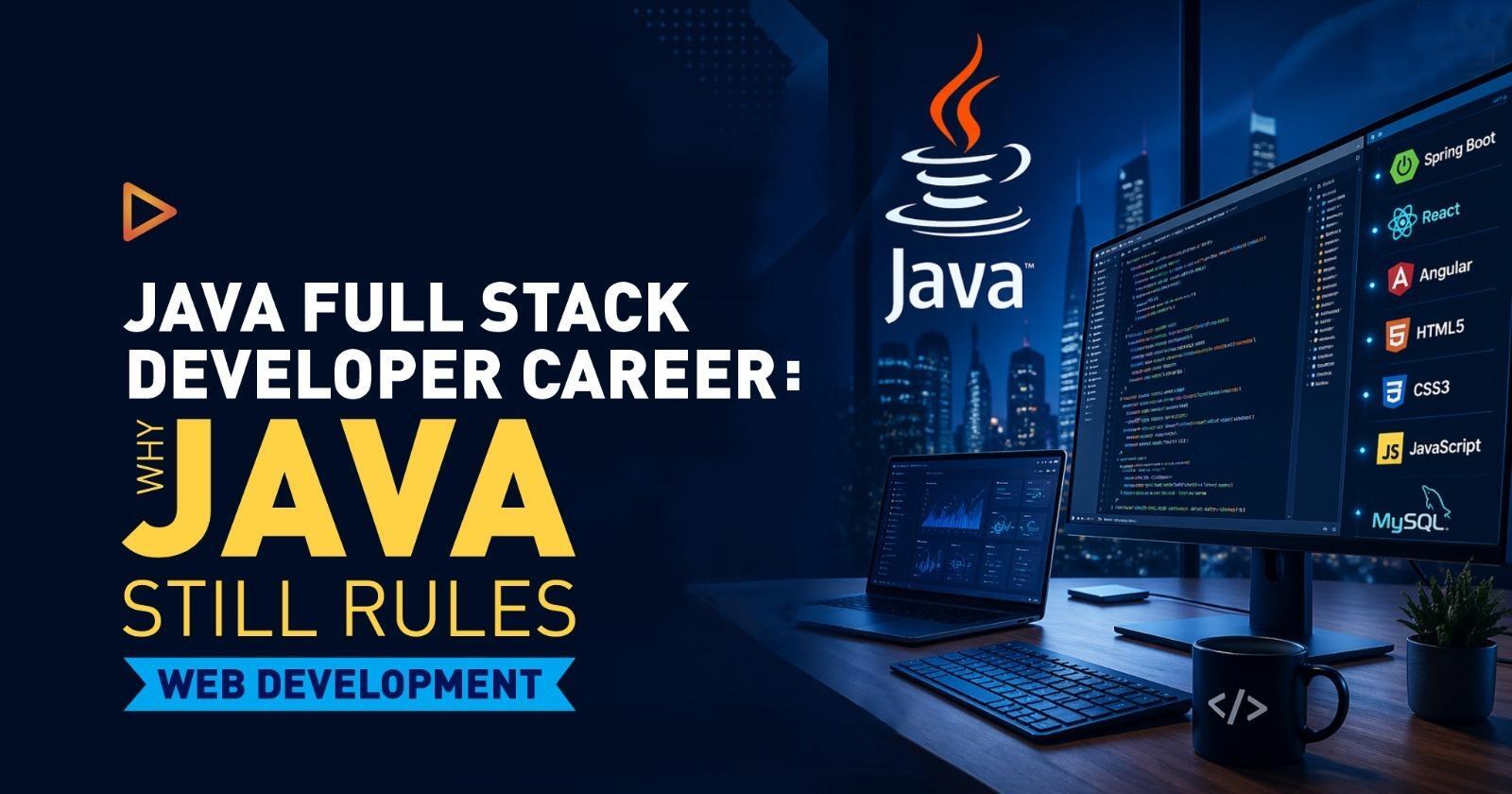
Modern Java web development is largely defined by two major frameworks: Spring Boot and Jakarta EE (the successor to Java EE). Spring Boot, currently in its advanced iterations in 2026, has simplified the "boilerplate" code that once plagued Java development. It provides a "convention over configuration" approach that allows developers to stand up production-ready microservices in minutes.
The Spring ecosystem provides integrated solutions for:
- Spring Security: A highly customizable authentication and access-control framework.
- Spring Cloud: Tools for service discovery, configuration management, and circuit breakers in distributed systems.
- Spring Data: Simplifies data access for both relational (SQL) and non-relational (NoSQL) databases.
Jakarta EE continues to serve as the standard for organizations requiring maximum portability and vendor independence. By adhering to these standards, businesses avoid "vendor lock-in," ensuring their applications can run on various application servers like WildFly, Payara, or Open Liberty.
Enterprise Security and Long-Term Support (LTS)
Security is the foremost concern for modern enterprises, particularly those in regulated industries like finance, healthcare, and government. Java's security model is built into the language and the runtime. The Java Security Manager and the rigorous process for addressing vulnerabilities via the Critical Patch Update (CPU) program provide a level of assurance that is often lacking in newer, community-driven ecosystems.
Oracle and other contributors (such as Red Hat, Amazon, and Microsoft) provide Long-Term Support (LTS) versions of Java. In 2026, organizations are primarily leveraging JDK 21 and the recently released JDK 25 as their stable foundations. These LTS releases guarantee years of security updates and performance improvements without requiring the breaking changes often seen in other language ecosystems.
Performance and Scalability Comparison
To understand why Java remains the choice for enterprise web development, it is helpful to compare it against other popular back-end technologies in the current 2026 market.
| Feature | Java (JVM) | Node.js (JavaScript/TS) | Go (Golang) |
|---|---|---|---|
| Concurrency Model | Virtual Threads (Loom) | Event Loop (Single-threaded) | Goroutines (CSP) |
| Type Safety | Strong, Static | Optional (via TypeScript) | Strong, Static |
| Ecosystem Age | 30+ Years | ~17 Years | ~16 Years |
| Standard Library | Massive, Comprehensive | Minimal (Requires NPM) | Robust, Focused |
| Memory Management | Advanced GC (ZGC/Shenandoah) | V8 Garbage Collector | Simple, Low-latency GC |
| Execution Speed | High (JIT & Native) | Moderate | High (Native) |
As the table illustrates, Java provides a balanced middle ground. It offers the performance of Go with a much more comprehensive ecosystem of libraries and frameworks, while providing better type safety and threading models than Node.js.
Cloud-Native Java and Microservices
The shift to the cloud has not marginalized Java; it has refined it. The rise of Quarkus and Micronaut has introduced "supersonic, subatomic" Java. These frameworks are designed specifically for Kubernetes and containerized environments. They prioritize fast startup times and low memory footprints, making Java an excellent candidate for AWS Lambda, Google Cloud Functions, and Azure Functions.
Modern Java development in 2026 utilizes:
- Containerization: Java applications are standardly deployed as Docker containers, orchestrated by Kubernetes.
- Observability: Built-in support for OpenTelemetry allows businesses to track requests across complex microservice meshes.
- Resilience Patterns: Native implementation of patterns like Bulkheads and Retries ensures that a failure in one service does not take down the entire business platform.
Talent Availability and Total Cost of Ownership (TCO)
A critical business factor often overlooked is the availability of skilled labor. Java has been taught in universities for decades, resulting in a global pool of millions of experienced developers. For a modern business, this means lower recruitment risks. Finding a developer who understands Go or Rust might be difficult and expensive, but finding a seasoned Java architect is significantly easier.
Furthermore, the Total Cost of Ownership (TCO) for Java applications is often lower over a 10-year period. While the initial development speed might be slightly slower than a "rapid prototyping" language like Python, the maintenance costs are significantly reduced. Java’s backward compatibility ensures that code written today will likely run on the JVM of 2036 with minimal modifications, protecting the business’s capital investment.
Common Use Cases for Java in 2026
Despite the variety of languages available, Java remains the undisputed leader in specific sectors:
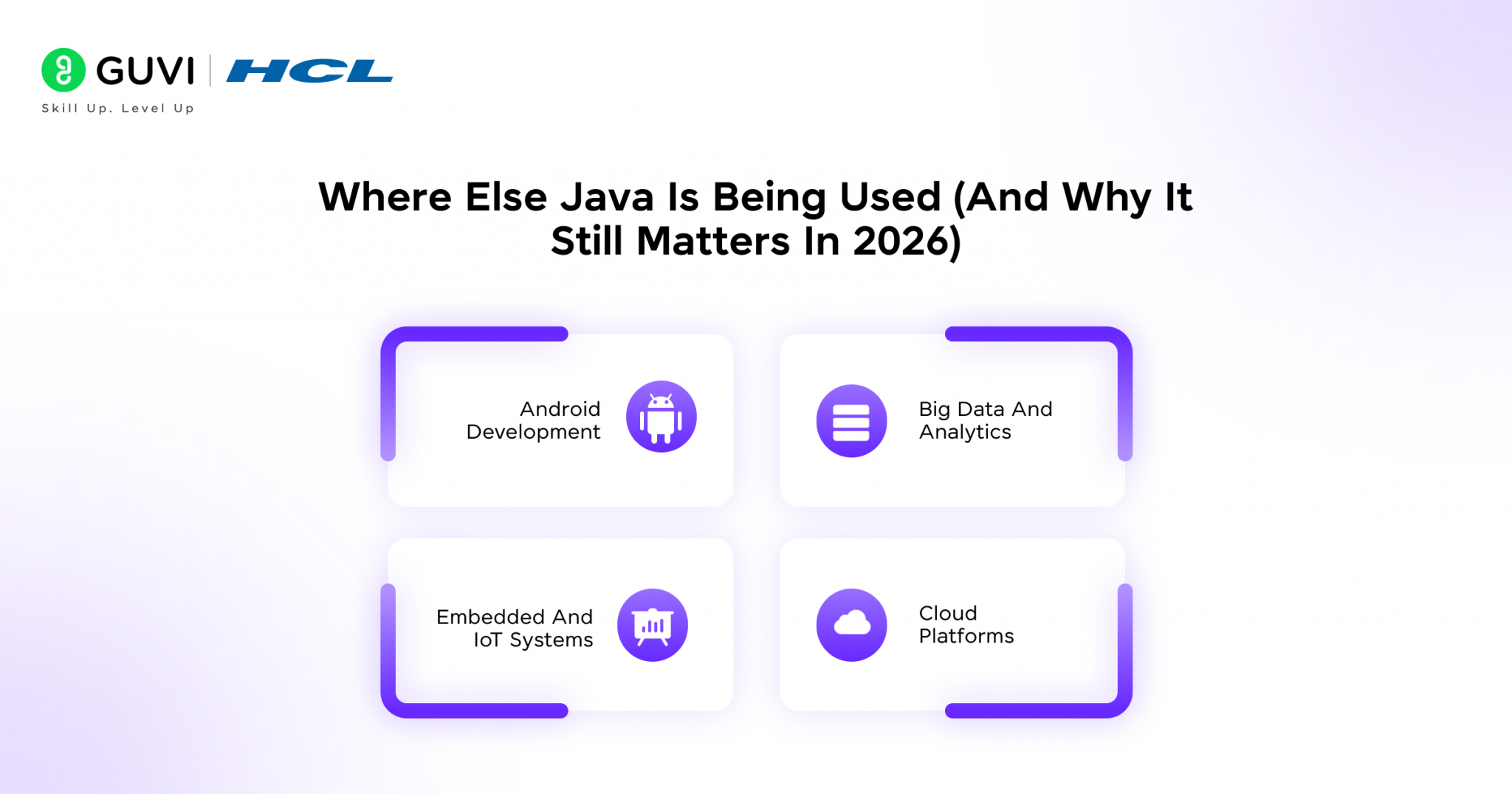
- Financial Services: Trading platforms and core banking systems rely on Java's ability to handle high-volume transactions with low latency (using the LMAX Disruptor pattern or specialized GCs like ZGC).
- Big Data and Analytics: Much of the big data ecosystem (Apache Spark, Flink, Kafka) is written in Java or Scala (which runs on the JVM). Businesses that need to process petabytes of data naturally gravitate toward Java for their web-facing analytics portals.
- Android Ecosystem: While Kotlin is the preferred language for Android, Java remains deeply integrated into the Android OS and millions of existing mobile enterprise applications.
- E-commerce Engines: The massive scalability required for global "Black Friday" events is a proven use case for Java-based platforms like SAP Commerce Cloud and custom Spring-based solutions.
Frequently Asked Questions
Is Java still relevant for startups in 2026?
Yes. While many startups begin with Python or Node.js for rapid prototyping, those anticipating rapid scale often choose Java from the start. Java's modern frameworks like Spring Boot allow for fast development, while its underlying architecture ensures the application won't need to be completely rewritten when user traffic grows from thousands to millions.
How does Java's licensing work for businesses?
Since 2019 and through 2026, Oracle JDK licensing has shifted for commercial use, but the OpenJDK remains completely free under the GPL license. Most businesses use distributions like Amazon Corretto, Eclipse Temurin, or Microsoft Build of OpenJDK, which provide free, production-ready binaries with long-term support.
Is Java slower than C++ or Rust for web development?
In most web development scenarios, the difference is negligible. Java’s Just-In-Time (JIT) compiler optimizes code at runtime based on actual usage patterns, often reaching speeds comparable to C++. For I/O-bound web applications, the bottleneck is usually the database or network, not the language execution speed.
Why would a business choose Java over Go in 2026?
A business might choose Java over Go if they require a deep ecosystem of third-party integrations (like legacy database drivers or complex PDF generation libraries) or if they need the advanced object-oriented features and "reflection" capabilities that Spring Boot uses to automate complex configurations.
Does Java work well with AI and Machine Learning?
While Python is the leader in AI research, Java is increasingly used for AI deployment. Libraries like Deeplearning4j and the Java bindings for TensorFlow and PyTorch allow businesses to integrate AI models directly into their secure, high-performance Java backends without switching languages.
Practical Recommendation for Businesses
For modern businesses evaluating their tech stack in 2026, the recommendation is clear: Use Java for the core "heavy lifting" of your enterprise. Specifically, adopt Spring Boot for your microservices and leverage JDK 21 or JDK 25 (LTS) to take advantage of Virtual Threads.
If you are developing for a serverless environment where startup time is critical, explore Quarkus with GraalVM to achieve the performance of a native binary. Avoid the "shiny object syndrome" of switching to every new language that arrives; instead, invest in Java’s robust ecosystem, which guarantees that your software will remain maintainable, secure, and performant for the next decade.
Image Gallery