The Lowest Scoring Game in NBA History: A 19-18 Defensive Disaster That Changed Basketball Forever
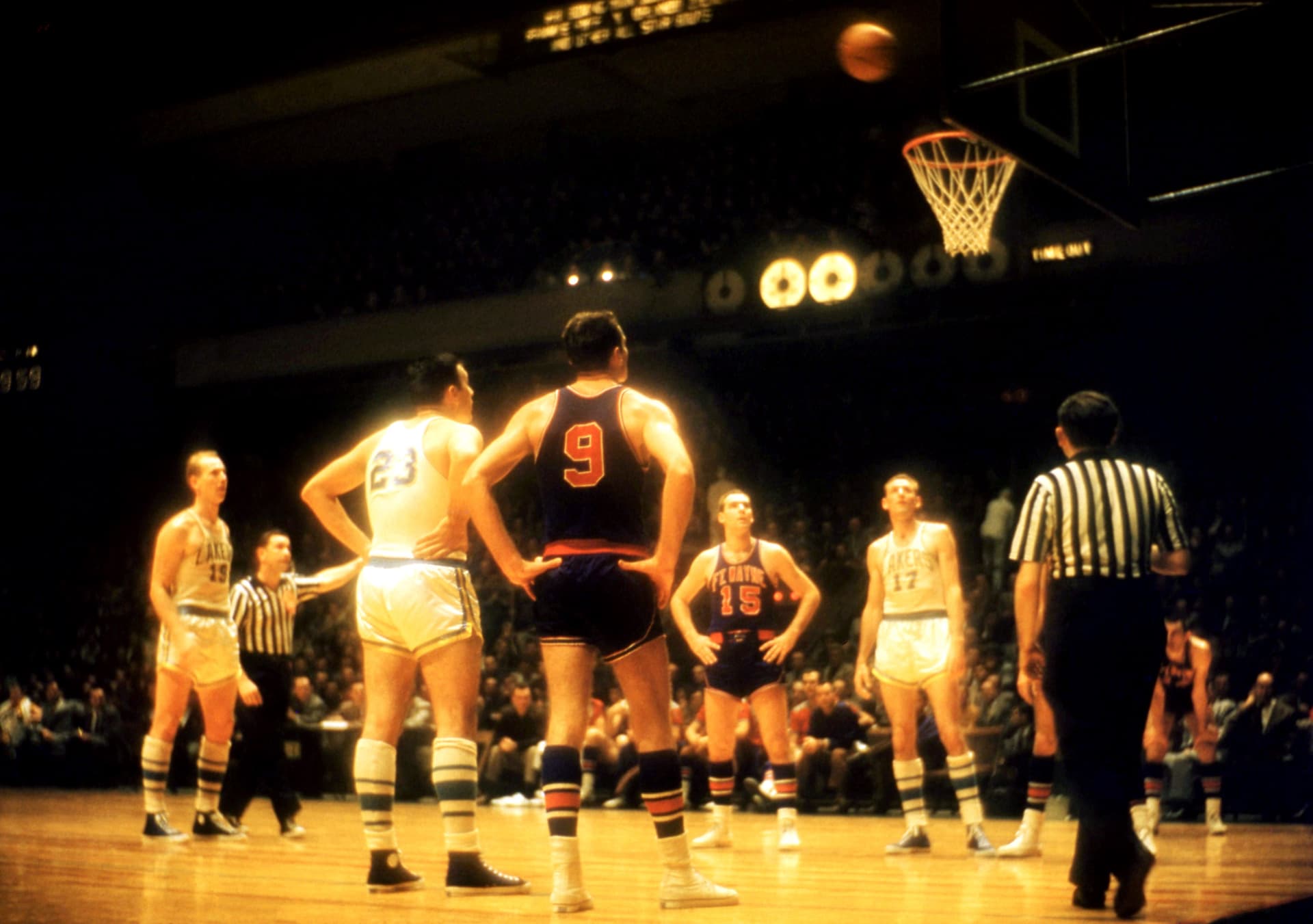
The lowest scoring game in NBA history occurred on November 22, 1950, when the Fort Wayne Pistons defeated the Minneapolis Lakers with a final score of 19-18. This remarkably low-scoring affair, totaling only 37 points, served as the p...
The lowest scoring game in NBA history occurred on November 22, 1950, when the Fort Wayne Pistons defeated the Minneapolis Lakers with a final score of 19-18. This remarkably low-scoring affair, totaling only 37 points, served as the primary catalyst for the NBA to implement the 24-second shot clock in 1954.
Contents
The Context of 1950s Basketball: Life Before the Shot Clock
To understand how a professional basketball game could end with a score more reminiscent of a low-scoring football game, one must examine the rules—or lack thereof—during the early 1950s. At the time, the National Basketball Association (NBA) was in its infancy, having been formed just a year prior through the merger of the Basketball Association of America (BAA) and the National Basketball League (NBL).
In 1950, there was no limit on how long a team could possess the ball. Once a team gained a lead, there was no rule preventing them from simply holding onto the ball, passing it around the perimeter, or standing still to run out the clock. This tactic, known as "stalling" or "freezing" the ball, was a legitimate defensive strategy used to neutralize high-powered offenses or superior individual players.
The Minneapolis Lakers of the early 1950s were the NBA’s first true dynasty, led by the league's first superstar, George Mikan. Standing 6'10", Mikan was a dominant force who most teams could not stop through traditional defensive means. Entering the 1950-51 season, the Lakers were the defending champions, and opponents were desperate for any way to mitigate Mikan's impact under the rim.
November 22, 1950: The Night the Scoring Stopped
The game took place at the Minneapolis Auditorium in front of 7,021 fans who expected to see their powerhouse Lakers easily handle the Fort Wayne Pistons. However, Pistons coach Murray Mendenhall had devised a radical plan to negate the height advantage of George Mikan. The strategy was simple: if the Lakers didn't have the ball, Mikan couldn't score.
A Play-by-Play of Monotony
From the opening tip-off, it became clear that the Pistons had no intention of playing a standard game. They moved the ball slowly, often standing still for minutes at a time. The Lakers, led by coach John Kundla, initially refused to come out and chase the Pistons, resulting in long stretches of inactivity where players literally stood and watched each other.
- First Quarter: The quarter ended with the Lakers leading 8-7. While low, it didn't yet signal the historic nature of what was unfolding.
- Second Quarter: The scoring slowed further. Both teams combined for only 9 points in the period. At halftime, the score was 13-11 in favor of Minneapolis.
- Third Quarter: The "action" remained glacial. The teams combined for a mere 7 points, leaving the score at 17-14 entering the final frame.
- Fourth Quarter: In the final twelve minutes of play, only 6 points were scored in total. The Pistons outscored the Lakers 5-1 in the fourth quarter.
The game’s climax was as bizarre as its duration. With seconds remaining and the Lakers leading 18-17, the Pistons' Larry Foust managed to drive to the basket and score a layup to put Fort Wayne ahead 19-18. The Lakers had one last chance, but a desperation heave by George Mikan missed as time expired.
The Box Score Anomalies
The statistical breakdown of the game is a testament to the stagnation of the era. George Mikan scored 15 of the Lakers' 18 points, meaning the rest of the Hall of Fame-laden Lakers roster accounted for only 3 points. For the Pistons, Larry Foust led the way with 5 points.
The teams combined for only 31 field goal attempts throughout the entire 48 minutes. By comparison, in the modern 2026 NBA landscape, a single team often attempts more than 90 shots per game. The 19-18 final remains the lowest combined score in the history of the league, a record that is virtually impossible to break under current rules.
The Fan Reaction and Media Fallout
The 7,021 fans in attendance did not take the performance lightly. Reports from the era indicate that fans began booing as early as the first quarter. Some fans reportedly threw their programs onto the court in frustration, while others were seen reading newspapers or even walking out of the arena before the game concluded.
The media was equally scathing. Local sportswriters called the game a "disgrace" and a "mockery of the sport." NBA President Maurice Podoloff was forced to confront the reality that if basketball continued in this direction, the league would fail financially. Fans were paying to see athleticism and scoring, not a game of keep-away.
The Strategic Necessity: Why the Pistons Stalled
While the 19-18 game was the most extreme example, stalling was a growing trend. Smaller teams or teams with less talent used the "freeze" to keep games close. By reducing the number of possessions, they increased the variance of the outcome. If a game only has 20 possessions instead of 100, a few lucky bounces or one made shot can lead to an upset against a much better team.
For Fort Wayne, the logic was sound:
- Neutralize George Mikan: Mikan was averaging over 28 points per game. By holding the ball, they limited his opportunities to touch it.
- Shorten the Game: The Pistons knew they couldn't win a high-scoring transition game against the Lakers' superior depth.
- Psychological Warfare: They hoped to frustrate the Lakers into committing fouls or making mistakes out of boredom.
The Turning Point: Creating the 24-Second Shot Clock
The 19-18 game was the "smoking gun" that league officials needed to mandate change. However, it took nearly four years for a solution to be codified. Danny Biasone, the owner of the Syracuse Nationals, is widely credited with the invention of the 24-second shot clock.
Biasone recognized that the game needed a guaranteed pace to remain viable as a spectator sport. He arrived at the number 24 through a simple mathematical formula based on his observations of well-paced games:
- He noted that in games fans actually enjoyed, each team took about 60 shots.
- That meant a total of 120 shots per game.
- A standard NBA game lasts 48 minutes (2,880 seconds).
- 2,880 seconds divided by 120 shots equals 24 seconds per shot.
The shot clock was tested in 1954 and officially adopted for the 1954-55 season. The impact was immediate and transformative. In the season prior to the shot clock (1953-54), teams averaged 79.5 points per game. In the first season with the clock, scoring jumped to an average of 93.1 points per game.
Historical Comparison of Low-Scoring NBA Milestones
While the 19-18 game is the absolute floor for scoring in NBA history, other games have tested the patience of fans before and after the introduction of the shot clock.
| Date | Matchup | Final Score | Total Points | Significance |
|---|---|---|---|---|
| Nov 22, 1950 | Fort Wayne Pistons vs. Minneapolis Lakers | 19-18 | 37 | All-time lowest combined score (Pre-shot clock). |
| Oct 30, 1954 | Rochester Royals vs. Milwaukee Hawks | 98-95 | 193 | First regular-season game with the 24-second clock. |
| Feb 27, 1955 | Boston Celtics vs. Milwaukee Hawks | 62-57 | 119 | One of the lowest-scoring games in the first year of the shot clock. |
| Apr 10, 1999 | Chicago Bulls vs. Miami Heat | 49-82 | 131 | Lowest score by a single team in the shot-clock era (Chicago Bulls). |
| Dec 11, 2023 | Houston Rockets vs. San Antonio Spurs | 93-82 | 175 | A modern-era example of a "low-scoring" defensive struggle. |
Frequently Asked Questions
Did the 19-18 game result in any immediate rule changes?
Not immediately. While it caused a massive PR scandal for the NBA, it took until 1954 for the league to officially adopt the 24-second shot clock. The league initially experimented with other minor rules, such as limiting the number of fouls in a quarter, before realizing that a time limit on possessions was the only way to save the game's entertainment value.
Who was the highest scorer in the lowest-scoring game?
George Mikan was the highest scorer, accounting for 15 of the 37 total points scored by both teams. He made 4 field goals and 7 free throws. No other player in the game scored more than 5 points.
Has any team ever scored fewer than 18 points in a game since the shot clock was introduced?
No. Since the introduction of the 24-second shot clock in 1954, the lowest score by a single team in a full game is 49 points, recorded by the Chicago Bulls against the Miami Heat on April 10, 1999. The shot clock ensures that teams must attempt shots, making a score as low as 18 or 19 mathematically improbable.
Was the 19-18 game televised?
No. In 1950, the NBA did not have a national television contract. The game was followed by fans via radio and local newspapers the following morning. The lack of visual footage has contributed to the game's legendary status as a "lost" disaster in sports history.
What was the shooting percentage in the 19-18 game?
The Minneapolis Lakers shot 4-for-18 (22.2%) from the field, while the Fort Wayne Pistons shot 4-for-13 (30.8%). The rest of the points were scored from the free-throw line, where the Lakers went 10-for-17 and the Pistons went 11-for-15.
The Legacy of the 19-18 Game in 2026
As of 2026, the NBA is a league defined by high-octane offenses, three-point shooting, and rapid pace. The 19-18 game remains a vital piece of basketball history because it represents the "extinction event" for the slow, unwatchable version of the sport. It serves as a reminder that the rules of a game dictate its culture; without the 24-second shot clock—born from the frustration of that November night in Minneapolis—basketball might never have become the global spectacle it is today.
For researchers and fans looking to verify these historical figures, the official NBA Encyclopedia and the archives at Basketball-Reference provide the comprehensive box scores and play-by-play accounts of the 1950-51 season. Exploring these records offers a fascinating glimpse into a time when the very survival of professional basketball was in jeopardy due to the lack of a simple timer.
Next Steps for Enthusiasts: To truly appreciate the evolution of the game, compare the 1950 Pistons-Lakers box score with a modern-day high-scoring game, such as the 186-184 triple-overtime thriller between the Pistons and Nuggets in 1983. The contrast illustrates not just a change in skill, but the fundamental victory of the shot clock in promoting the "flow" of the game.
Image Gallery