The Prime Fashion House Timeline Explained
A prime fashion house timeline traces the evolution of elite luxury brands from small-scale artisanal workshops to multi-billion-dollar global conglomerates. This progression typically spans five distinct eras: the foundation of herita...
A prime fashion house timeline traces the evolution of elite luxury brands from small-scale artisanal workshops to multi-billion-dollar global conglomerates. This progression typically spans five distinct eras: the foundation of heritage craftsmanship, the rise of Haute Couture, the democratization of ready-to-wear, the age of corporate acquisition, and the current 2026 focus on digital-physical integration and sustainable ethics.
Contents
Defining the Prime Fashion House: Heritage and Authority
In the context of the global luxury market, a "prime" fashion house—often referred to as a Maison—is defined by its historical longevity, vertical integration, and significant influence over cultural trends. Unlike contemporary fast-fashion labels, these entities are built on the "Veblen effect," where the value of their goods increases as a result of exclusivity and prestige rather than mere utility.
As of 2026, the landscape of these houses is dominated by a few major holding companies, including LVMH (Moët Hennessy Louis Vuitton), Kering, and Richemont. However, the timeline of a prime fashion house is rarely a linear path of growth. It is a cycle of creative disruption followed by commercial consolidation. Understanding this timeline requires looking at how individual craftsmanship transitioned into a systematic brand identity that can survive the departure of its original founder.
Stage I: The Artisan Foundation (1837–1910)
The origins of the world's most prestigious fashion houses are rooted in the industrial revolution and the rise of a new merchant class. During this period, "prime" status was earned through specialized technical skill rather than marketing.
The Birth of the Specialist
Many of the houses we recognize today as total-look luxury brands began as niche manufacturers. Hermès, founded in 1837, originally specialized in high-quality harnesses and bridles for the carriage trade. Similarly, Louis Vuitton established his workshop in 1854 as a "layetier-emballeur" (trunk-maker and packer). The focus was on durability, travel, and solving the logistical problems of the wealthy elite.
The Invention of Haute Couture
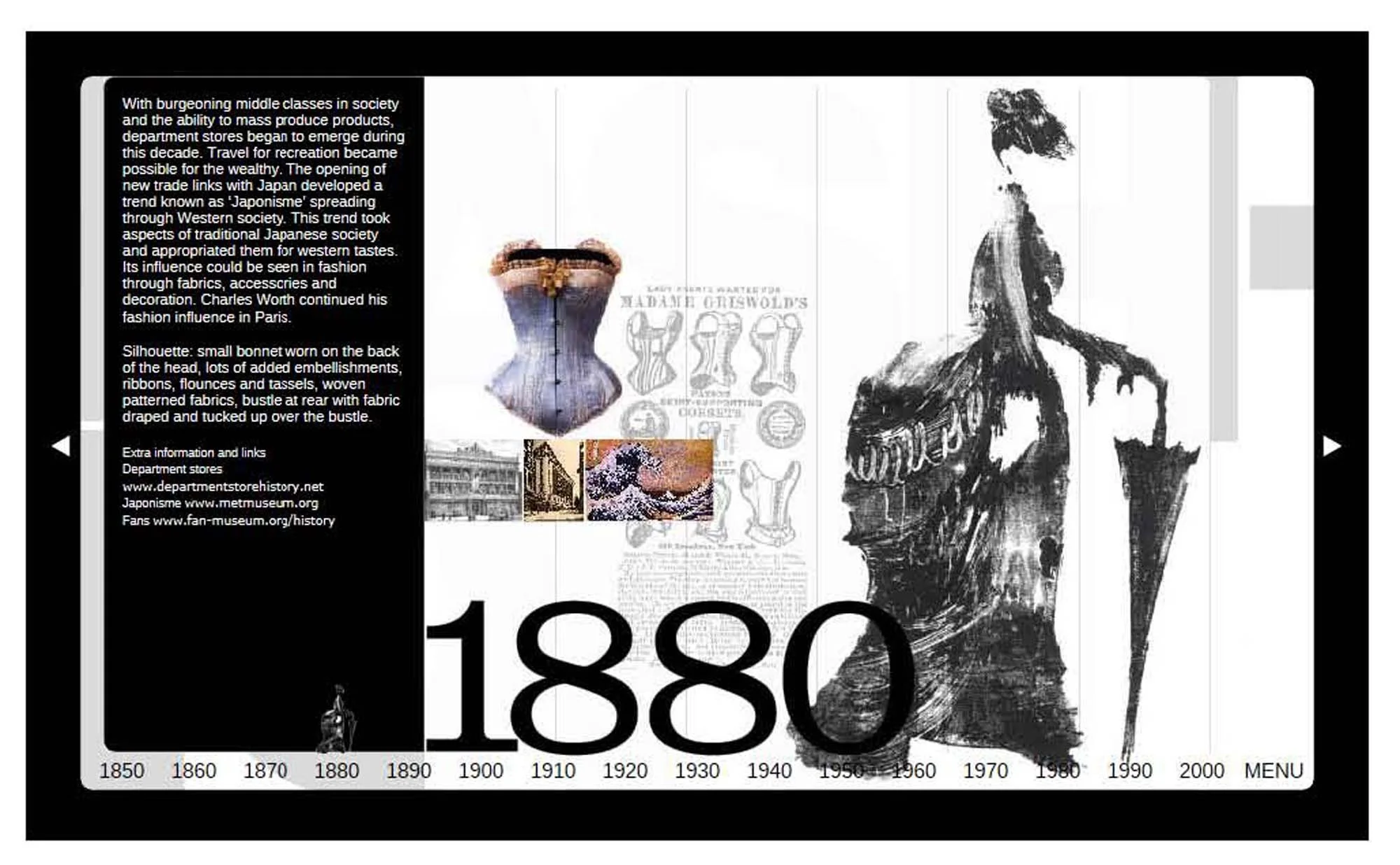
While leather goods makers were flourishing, the garment side of the prime fashion house was revolutionized by Charles Frederick Worth. Often cited as the father of Haute Couture, Worth was the first to sew labels into garments and present seasonal collections on live models. This shift transformed the dressmaker from a servant to an artist, laying the groundwork for the modern "Creative Director" role. By the turn of the century, the prime fashion house was a destination—a physical atelier where the client sought the designer's specific vision.
Stage II: The Haute Couture Expansion (1910–1945)
The early 20th century saw the prime fashion house become a symbol of national identity, particularly for France. This era was defined by the liberation of the female silhouette and the introduction of brand-extension products, most notably fragrance.
Chanel and the Jersey Revolution
In the 1920s, Coco Chanel disrupted the timeline by introducing jersey fabric—previously reserved for men's underwear—into high fashion. This move signaled a shift from decorative clothing to functional luxury. In 1921, the launch of Chanel No. 5 established a vital financial pillar for the prime fashion house: the "entry-level" luxury product. Fragrance allowed the house to maintain exclusivity in its garments while achieving mass-market profitability.
Survival and Wartime Stagnation
The timeline of many houses was nearly severed during World War II. Material shortages and the occupation of Paris forced many ateliers to close or operate at a minimum. However, this period of restriction created a pent-up demand for glamour, which would lead to the most explosive growth period in fashion history immediately following the war.
Stage III: The Golden Age and Ready-to-Wear (1947–1989)
Post-war recovery brought about the "Golden Age" of couture, but it also introduced the commercial necessity of mass production.
Dior’s New Look
In 1947, Christian Dior launched his debut collection, famously dubbed the "New Look." With its cinched waists and voluminous skirts, it was a direct rejection of wartime austerity. Dior also pioneered the licensing model, putting his name on everything from stockings to neckties. This allowed the "prime" name to travel globally, even if the products weren't made in the Paris atelier.
The Transition to Prêt-à-Porter
By the 1960s, the traditional couture model was failing to resonate with a younger, more rebellious generation. In 1966, Yves Saint Laurent launched Rive Gauche, the first standalone boutique for a couturier’s ready-to-wear (prêt-à-porter) line. This was a pivotal moment in the timeline: the prime fashion house was no longer just for the 1%; it was now accessible to the upper-middle class, provided they were willing to buy into the lifestyle.
| Era | Focus | Key Brand Milestones | Economic Model |
|---|---|---|---|
| 1850s-1900s | Craftsmanship | Vuitton (Trunks), Hermès (Saddlery) | Bespoke/Commission |
| 1910s-1940s | Silhouette | Chanel (Jersey), Schiaparelli (Surrealism) | Couture + Fragrance |
| 1950s-1970s | Democratization | Dior (Licensing), YSL (Ready-to-Wear) | Global Export/Licensing |
| 1980s-2000s | Branding | Gucci (Tom Ford era), LVMH formation | Conglomerate Acquisition |
| 2010s-2026 | Digitization | Burberry (Digital First), Metaverse adoption | Omnichannel/DTC |
Stage IV: The Era of the Global Conglomerate (1990–2015)
The late 20th century saw the death of the independent "family-owned" house for many legacy names. High-finance and aggressive branding became the primary drivers of the timeline.
The Rise of Bernard Arnault
The formation of LVMH in 1987 changed everything. Under the leadership of Bernard Arnault, the conglomerate began acquiring heritage brands like Fendi, Givenchy, and Céline. The strategy was clear: revitalize "tired" houses by hiring provocative young designers (like John Galliano or Alexander McQueen) to create headlines, then drive revenue through high-margin accessories like handbags and wallets.
The Logo Mania and the "It Bag"
During this stage, the prime fashion house timeline became synonymous with the "It Bag." The Fendi Baguette or the Dior Saddle Bag became the primary profit engines. Branding moved from the inside label to the exterior of the product. The house became a "brand equity" asset, managed with the same precision as a tech company or a bank.
Stage IV: The Digital Transformation and Modernity (2016–2026)
As we stand in 2026, the prime fashion house has undergone its most radical transformation since the 1960s. The timeline has shifted from physical runway dominance to a hybrid existence where digital scarcity is as valuable as physical leather.
From Runways to Real-Time Data
The modern house uses AI-driven logistics to predict trends and manage inventory, reducing the "deadstock" that plagued the industry in the 2010s. The traditional six-month wait between a runway show and retail availability has largely vanished for many "prime" entities, replaced by "see-now, buy-now" or limited-drop models that mimic the hype cycle of streetwear.
The Sustainability Mandate
In 2026, a prime fashion house is no longer judged solely on its aesthetic, but on its ESG (Environmental, Social, and Governance) scores. The timeline for houses like Gucci and Prada now includes significant benchmarks for carbon neutrality and circularity. Leather alternatives made from mycelium or lab-grown collagen have moved from experimental prototypes to mainstream luxury staples in 2026 collections.
Technical Milestones in House Evolution
To truly understand the timeline, one must look at the technical shifts that allowed these houses to scale:
- Vertical Integration: Successful prime houses (like Hermès) control their entire supply chain, from the tanneries to the retail boutiques. This ensures quality and justifies the high price point.
- Creative Direction Cycles: The average tenure of a Creative Director has shortened significantly. Houses now refresh their creative vision every 3 to 5 years to stay relevant in a fast-moving social media environment.
- Omnichannel Distribution: In 2026, the "store" is no longer just a building. It is a seamless experience between a high-touch flagship on Avenue Montaigne and a personalized, AI-curated digital portal.
Common Challenges for Heritage Houses
Even the most successful houses face "timeline fatigue." This occurs when a brand over-licenses its name or relies too heavily on a single aesthetic, leading to brand dilution. For example, Gucci famously faced near-bankruptcy in the early 1990s due to excessive licensing before being saved by the creative vision of Tom Ford and the business acumen of Domenico De Sole.
Another challenge is the "Founder's Trap," where a house struggles to maintain its identity after the original designer passes away. The houses that survive this (like Chanel) are those that have successfully distilled the founder’s "codes"—specific colors, materials, or motifs—into a replicable design language that transcends any single individual.
Frequently Asked Questions
What makes a fashion house "prime" versus a standard brand? A prime fashion house is characterized by historical heritage, a presence in Haute Couture (regulated by the Chambre Syndicale de la Haute Couture in Paris), and a multi-category product range including leather goods, fragrance, and jewelry. They typically command a significant premium and operate their own retail networks rather than relying solely on wholesale.
How has the timeline of fashion shows changed by 2026? While the traditional Fashion Weeks in Paris, Milan, London, and New York still exist, many prime houses have moved to "trans-seasonal" schedules. They now release smaller, more frequent "capsule" collections and "Cruise" shows in exotic locations to maintain constant engagement with a global audience through digital streaming and VR attendance.
Who owns the most prime fashion houses today? As of 2026, LVMH remains the largest luxury group, owning over 75 brands including Louis Vuitton, Christian Dior, and Tiffany & Co. Kering is the second major player, with a portfolio that includes Gucci, Saint Laurent, and Balenciaga.
Is it still possible for a new brand to become a "prime" house? It is increasingly difficult due to the high barriers to entry regarding supply chain and marketing capital. However, brands that focus on extreme sustainability or unique "digital-first" luxury experiences have been able to achieve "prime" status more quickly than in the past, often through acquisition by larger conglomerates.
What role does AI play in the 2026 fashion house timeline? AI is used for hyper-personalization, allowing houses to offer bespoke digital styling for clients. Behind the scenes, it optimizes fabric cutting to reduce waste and analyzes social sentiment to help Creative Directors understand which "codes" are resonating with the current market.
Final Recommendation
When studying or investing in a prime fashion house, look beyond the current Creative Director. The most stable houses are those that have successfully balanced their historical codes with technological adaptability. If you are a collector, focus on "transitional" pieces from eras where a new Creative Director first took the helm, as these often hold the highest historical and resale value. In 2026, the strongest houses are those that treat their archive not as a museum, but as a living blueprint for future innovation.
Image Gallery