Understanding the Roman Rank Structure: A Guide to the Imperial Legionary Hierarchy
Understanding the Roman rank structure requires distinguishing between professional career soldiers, such as centurions and legionaries, and the aristocratic officers, including tribunes and legates. This hierarchy was a sophisticated...
Understanding the Roman rank structure requires distinguishing between professional career soldiers, such as centurions and legionaries, and the aristocratic officers, including tribunes and legates. This hierarchy was a sophisticated ladder that mirrored Roman social classes, providing clear lines of command and specialized roles that allowed the Roman military to dominate the Mediterranean for centuries.
Contents
The Organizational Framework of the Imperial Legion
To grasp the rank structure, one must first understand the units these men commanded. By the mid-Imperial period, the Roman Legion was a standardized machine of approximately 5,000 to 5,500 heavy infantrymen. The smallest unit was the contubernium, a group of eight men who shared a tent, ate together, and fought side-by-side.
Ten contubernia formed a centuria (century), which, despite the name, usually consisted of 80 men. Six centuries formed a cohors (cohort), totaling 480 men. The first cohort was an exception; it was double-strength, consisting of five extra-large centuries (roughly 800 men total) and housed the legion's most experienced veterans and specialists.
As of 2026, historical scholarship continues to emphasize that this modular structure allowed the Roman military to remain flexible on the battlefield. Each level of organization required a specific type of leader, creating a hierarchy that balanced tactical expertise with administrative oversight.
The Enlisted Men: Legionaries and Immunes
At the base of the pyramid was the Miles (soldier), specifically the Legionary. These were Roman citizens who signed on for 25 years of service. Their primary duty was combat, but they were also the empire's engineers, road builders, and laborers.
Above the standard legionary were the Immunes. These were soldiers who possessed specialized skills—such as surveyors, medical orderlies, architects, and carpenters—that exempted them from the "heavy" duties of trench digging and stone hauling. While they were not officers, their status was higher than the average miles, and they often received higher pay or better living conditions.
The distinction between a standard soldier and an immune was vital for the legion's self-sufficiency. A legion was expected to build its own fortified camps and siege engines without external help. By 2026, archaeological finds at sites like Vindolanda have provided extensive records of these specialist roles, revealing a complex bureaucracy even at the lowest levels of the rank structure.
The Junior Officers: Principales
The Principales functioned much like modern Non-Commissioned Officers (NCOs). They were soldiers who had been promoted for their competence but remained below the rank of centurion.
- Tesserarius: The "commander of the watchword." He was responsible for security and ensuring that the daily passwords were communicated to the sentries.
- Signifer: The standard-bearer for the century. This was a highly dangerous and prestigious role. The signum (standard) was the visual rallying point for the men; losing it was a mark of supreme disgrace.
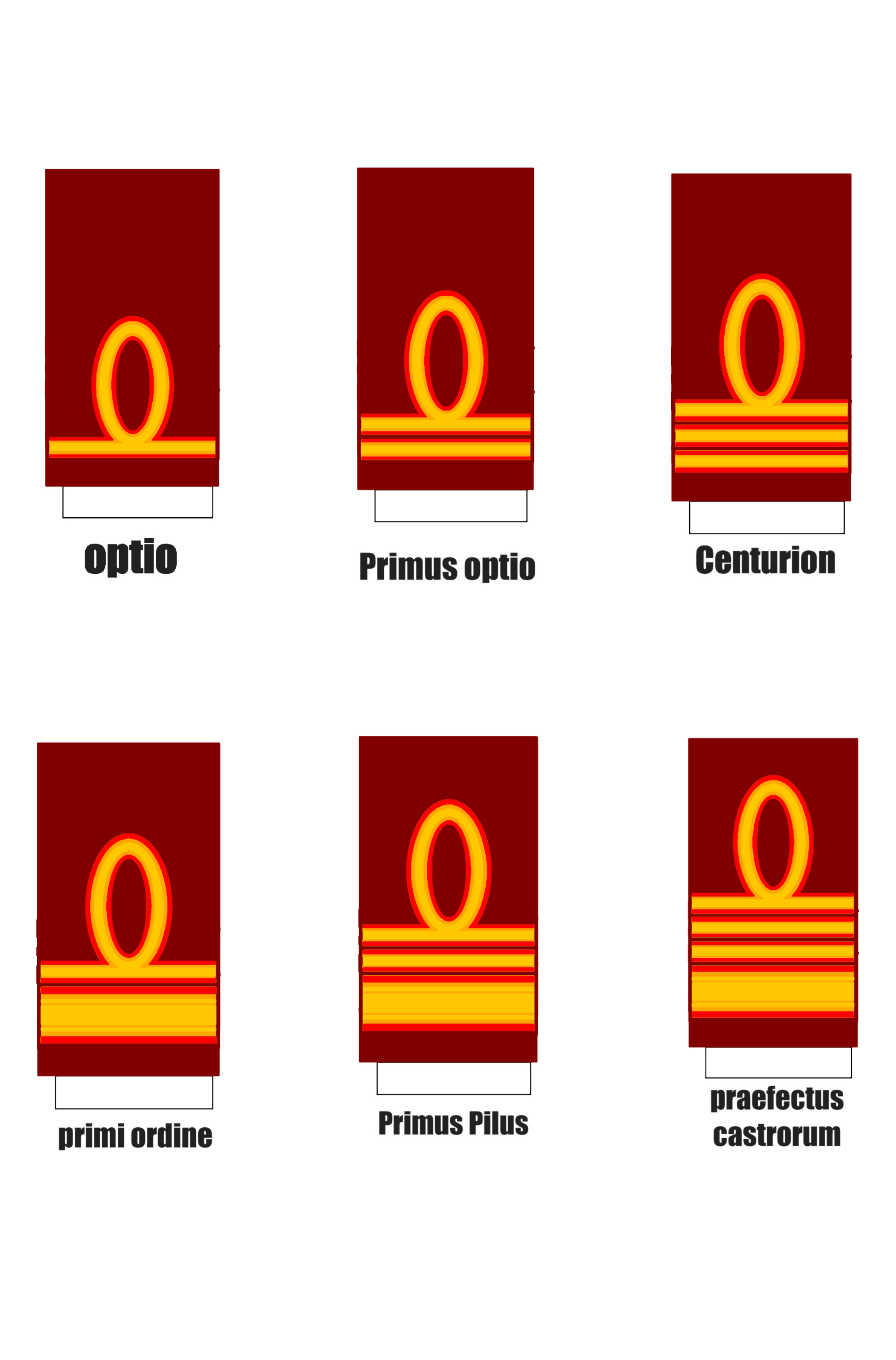
- Optio: The centurion’s second-in-command. Positioned at the rear of the formation during battle, the optio’s job was to keep the ranks closed and prevent desertion. He was also responsible for the century's administration.
- Aquilifer: A unique position within the first cohort. This soldier carried the Aquila, the Legionary Eagle. There was only one aquilifer per legion, and his rank was senior to all other principales.
These men were the operational glue of the Roman army. While the senior officers planned the strategy, the principales handled the day-to-day enforcement of discipline and logistics.
The Backbone of the Army: The Centurions
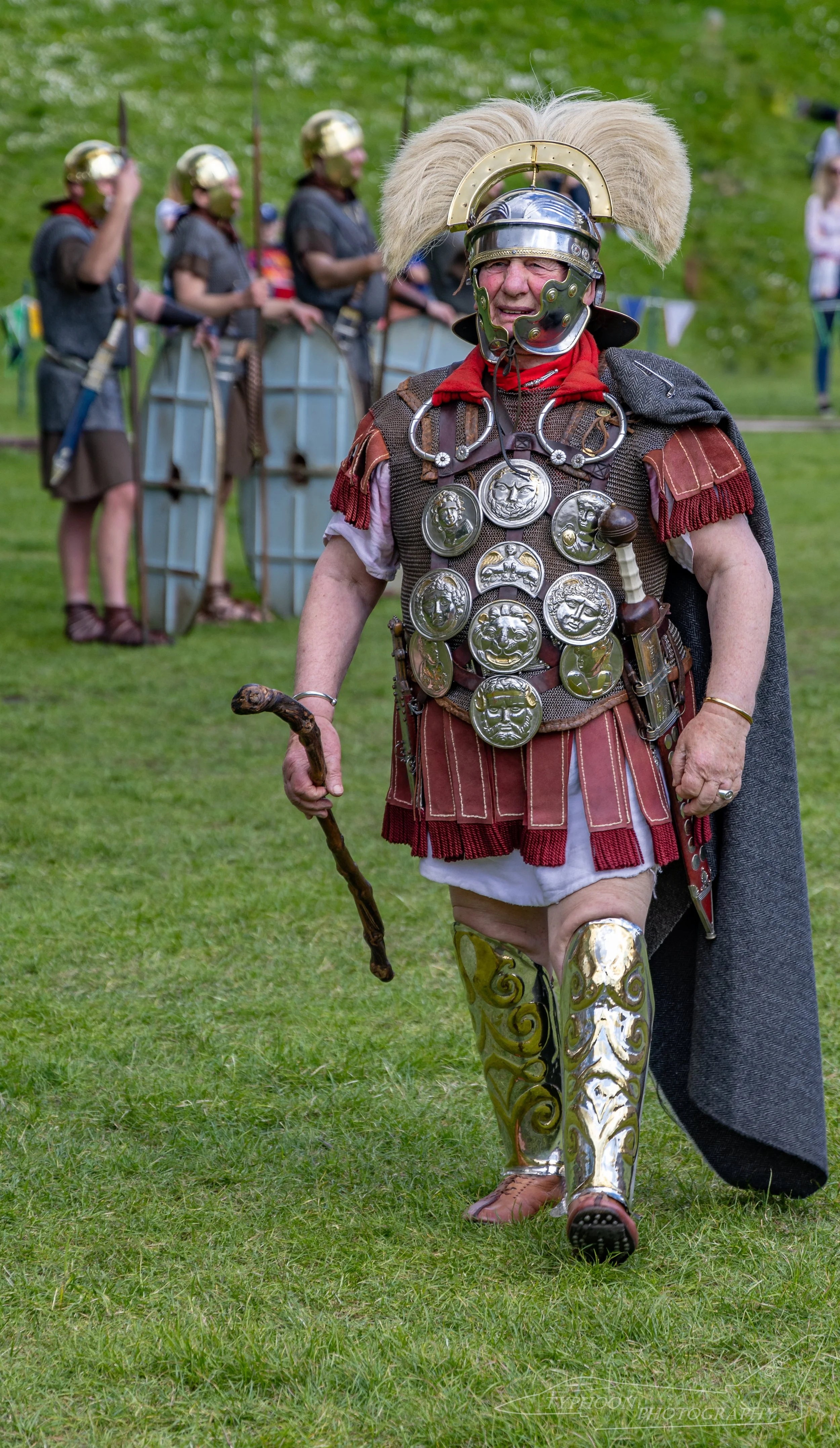
The Centurion (Centurio) is perhaps the most iconic rank in Roman history. There were 60 centurions in a standard legion, and they represented the professional core of the officer corps. Unlike the senior officers, who were often politicians serving short military stints, centurions were usually career soldiers who had risen through the ranks.
Centurions were distinguished by their transverse crests on their helmets and their vitis (vine staff), which they used to administer corporal punishment to unruly soldiers. Within the centurionate, there was a strict hierarchy based on which cohort and century they commanded.
The highest-ranking centurion was the Primus Pilus (First Spear). He commanded the first century of the first cohort. This was a position of immense prestige; upon completing his one-year term, a Primus Pilus was often elevated to the Equestrian class, the Roman "knighthood."
Another vital role often held by a former Primus Pilus was the Praefectus Castrorum (Camp Prefect). This officer was the third-in-command of the entire legion and was responsible for the legion's equipment, supplies, and hospital. He was the highest rank a non-aristocratic soldier could realistically hope to achieve.
The Aristocratic Officers: Tribunes and the Legate
The upper echelon of the Roman rank structure was reserved for the social elite—men of the Equestrian and Senatorial classes. These positions were often stepping stones in a political career, known as the cursus honorum.
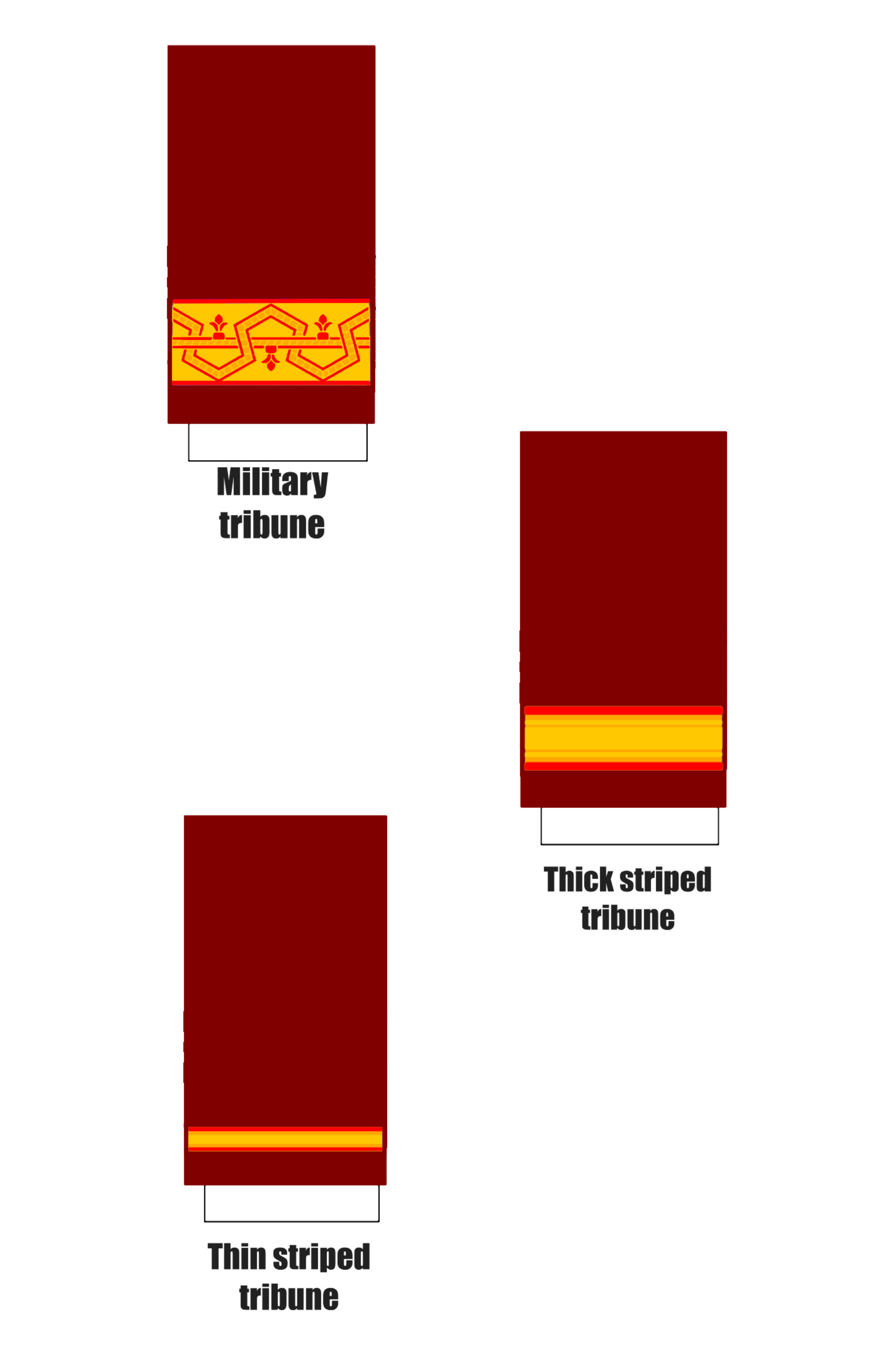
- Tribuni Angusticlavii (Five Narrow-Striped Tribunes): These were young men of the Equestrian class. They served as administrative officers, often overseeing court-martials or logistics. While they lacked the combat experience of a centurion, they outranked them socially and legally.
- Tribunus Laticlavius (The Broad-Striped Tribune): This was a young man of the Senatorial class, usually in his early twenties. He was the second-in-command of the legion. His role was largely observational and educational, preparing him for future high-ranking government posts.
- Legatus Legionis (The Legate): The commander of the entire legion. A man of Senatorial rank, often a former Praetor, he was appointed by the Emperor. The Legate held absolute authority over his 5,000 troops, though he relied heavily on the Praefectus Castrorum and the Primus Pilus for practical military advice.
| Rank Category | Specific Rank | Modern Equivalent (Approx.) | Primary Responsibility |
|---|---|---|---|
| Senior Command | Legatus Legionis | General | Overall command of the Legion |
| Senior Command | Tribunus Laticlavius | Colonel | Second-in-command / Political officer |
| Senior Command | Praefectus Castrorum | Quartermaster General | Logistics, camp maintenance, supplies |
| Officer Corps | Primus Pilus | Senior Major | Senior centurion; advisor to the Legate |
| Officer Corps | Centurio | Captain | Command of a century (80 men) |
| Junior Officer (NCO) | Optio | Lieutenant / First Sergeant | Assistant to the Centurion; administration |
| Junior Officer (NCO) | Signifer | Color Sergeant | Standard bearer; financial record keeper |
| Enlisted | Miles (Legionary) | Private | Front-line heavy infantry |
Auxiliary Ranks: The Non-Citizen Forces
While the legions were composed of citizens, the Auxilia made up roughly half of the Roman military's total strength. Auxiliaries provided the specialized skills the legions lacked, such as light cavalry, archers, and slingers.
The rank structure in the auxilia was slightly different. They were commanded by a Praefectus Auxiliorum, usually a Roman Equestrian. Within the units (the alae for cavalry and cohortes for infantry), the ranks of decurion (for cavalry) and centurion (for infantry) existed, but these men generally had lower social status and pay than their legionary counterparts.
Upon completion of 25 years of service, an auxiliary soldier was granted Roman citizenship for himself and his descendants. This was a powerful tool for Romanization across the provinces, ensuring that the best warriors of conquered lands became the most loyal defenders of the Empire.
Training and Promotion: How the Hierarchy Functioned
Promotion within the Roman rank structure was not based solely on seniority. It was a combination of merit, literacy, and social connections. To become a principale or a centurion, a soldier had to be literate, as the Roman army relied heavily on written orders, reports, and payroll accounts.
Centurions were frequently transferred between legions to prevent them from becoming too loyal to a single commander or region. This "rotation" ensured that the centurionate remained loyal to the Emperor and the abstract concept of Rome rather than a local general.
For the aristocratic officers, the path was different. They moved between civilian and military roles. A Tribunus Laticlavius might spend three years with a legion before returning to Rome to run for a magistracy. This ensured that Rome’s political leaders had direct experience with the military force that sustained their power.
Frequently Asked Questions
Could a common soldier become a Legate?
No. Under the Imperial system, the rank of Legatus Legionis was strictly reserved for the Senatorial class. The highest a common soldier could typically rise was Praefectus Castrorum (Camp Prefect). However, in the later Empire, social mobility increased slightly, and some career soldiers did eventually reach the highest levels of command.
What was the role of the Praetorian Guard in this structure?
The Praetorian Guard was an elite unit stationed in Rome to protect the Emperor. Their rank structure was similar to a standard legion, but their centurions and soldiers received much higher pay and shorter terms of service (16 years instead of 25). A Praetorian centurion was significantly more powerful and influential than a legionary centurion.
How did the rank structure change during the Republic?
Before the reforms of Gaius Marius (c. 107 BC), the Roman army was a citizen-militia. Ranks were based on age and wealth (Hastati, Principes, Triarii). The Imperial structure described above was the result of the professionalization of the army, where service became a full-time career rather than a temporary duty.
Were there different types of centurions?
Yes. Within each cohort, there was a ranking system. For example, the Pilus Prior was the senior centurion of a cohort, followed by the Princeps Prior, Hastatus Prior, and so on. The centurions of the First Cohort (Primi Ordines) were the most senior and sat in the Legate's war council.
What happened to soldiers after they retired?
Upon honorable discharge (honesta missio), a legionary received a significant cash bounty (the praemium) or a plot of land. Centurions retired with enough wealth to become prominent local magistrates in their home towns or the colonies where they were settled.
Final Recommendations for Further Study
For those looking to deepen their understanding of Roman military hierarchy, the next step is to examine the specific equipment and pay scales associated with each rank. The disparity in pay between a Miles and a Primus Pilus (who could earn up to 60 times the base salary) illustrates the high value Rome placed on experienced leadership.
A visit to major archaeological sites or a study of the Vindolanda Tablets offers the best primary-source evidence of how these ranks functioned in daily practice. These documents provide a window into the administrative duties of optios and decurnios, proving that the Roman rank structure was as much about paperwork and logistics as it was about the sword and shield.
Image Gallery