Understanding Liability and Net Worth: The Foundation of Financial Stability
Net worth is the total value of everything you own, known as assets, minus everything you owe, known as liabilities. It serves as a comprehensive snapshot of your financial health at a specific point in time. While income represents th...
Net worth is the total value of everything you own, known as assets, minus everything you owe, known as liabilities. It serves as a comprehensive snapshot of your financial health at a specific point in time. While income represents the flow of money into your life, net worth represents the actual wealth you have accumulated and retained after all debts are settled.
Contents
In 2026, financial literacy remains the cornerstone of personal and professional success. To navigate the complexities of modern wealth management, one must look beyond monthly cash flow and understand the structural components of a balance sheet. The two most critical pillars of this balance sheet are liabilities and net worth. Understanding these concepts is not merely an academic exercise; it is a practical necessity for anyone looking to secure their financial future, apply for credit, or plan for retirement.
The Nature of Liabilities: More Than Just Debt
A liability is any financial obligation or debt that an individual or business owes to another party. In the simplest terms, if an asset puts money in your pocket, a liability takes it out. However, liabilities are not inherently negative; they are tools that, when used correctly, can facilitate the acquisition of appreciating assets.
Categorizing Liabilities
To manage liabilities effectively, they are typically divided into two categories based on when the obligation must be fulfilled.
- Current Liabilities: These are short-term obligations that are expected to be paid within one year. Common examples include credit card balances, utility bills, short-term personal loans, and taxes owed. In 2026, the rise of "Buy Now, Pay Later" (BNPL) services has added a new layer to current liabilities, requiring more meticulous tracking of micro-debts.
- Long-Term Liabilities: These are debts that are not due in full for at least a year or more. The most common examples are mortgages, student loans, and auto loans. While these involve significant sums, they are often structured with lower interest rates than current liabilities, allowing for long-term wealth building through asset ownership.
The Strategic Use of Debt
It is important to distinguish between "good" and "bad" liabilities. A liability is often considered "good" if it is used to purchase an asset that will increase in value or generate income over time. For example, a mortgage allows you to build equity in a home, and a student loan can increase your earning potential. Conversely, "bad" liabilities are those used to purchase depreciating assets or consumables, such as using a high-interest credit card to fund a luxury vacation.
Deciphering Net Worth: Your Financial Scorecard
Net worth is the single most accurate metric for measuring financial progress. It bypasses the "prestige" of a high salary and reveals the actual surplus of value an individual possesses. In an era where lifestyle inflation is prevalent, net worth acts as the ultimate reality check.
The Calculation Formula
The formula for net worth is deceptively simple:
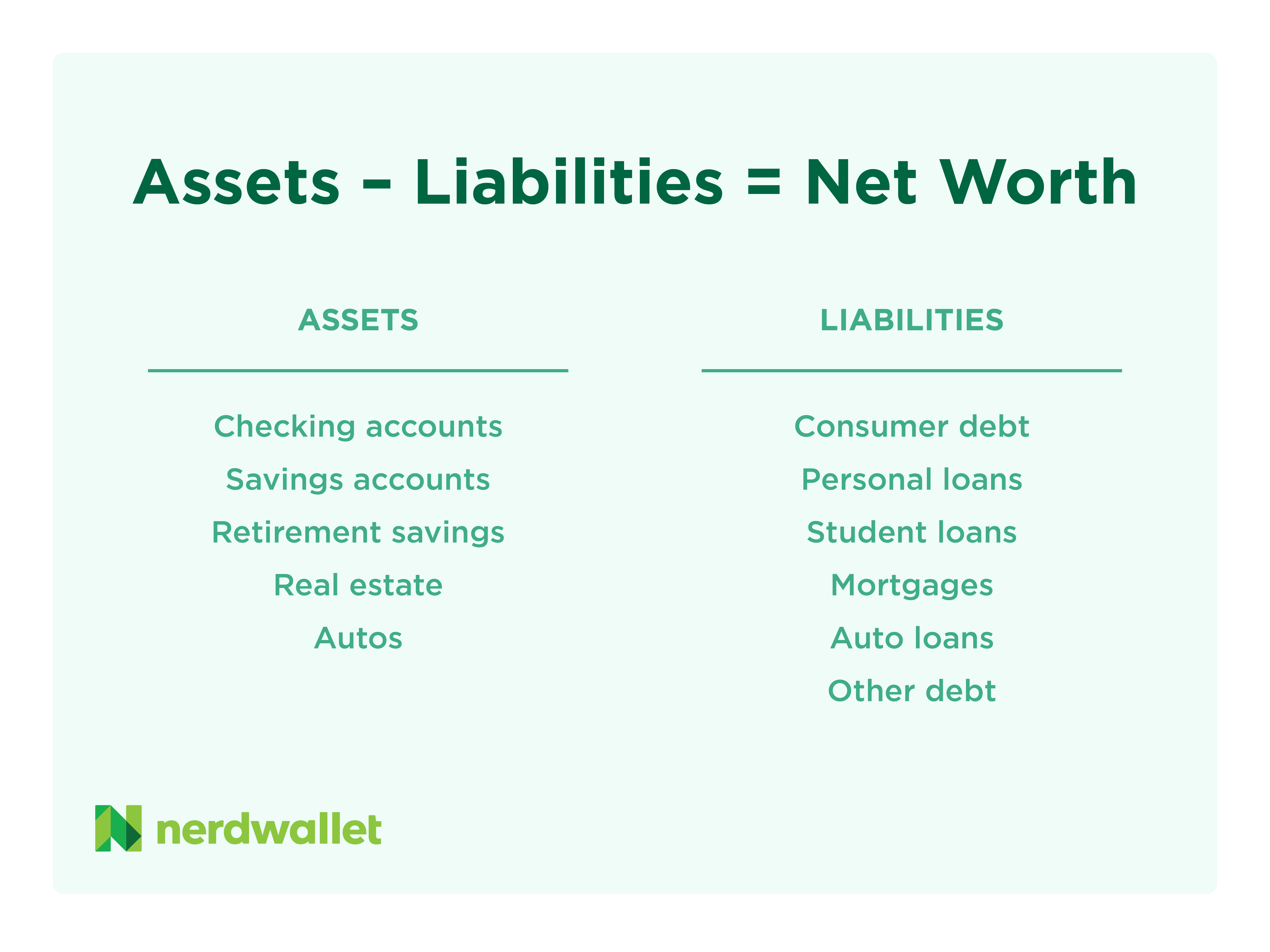
Total Assets - Total Liabilities = Net Worth
- Total Assets include cash, bank accounts, investment portfolios (stocks, bonds, ETFs), retirement accounts (401k, IRA), real estate equity, and the resale value of personal property like vehicles or jewelry.
- Total Liabilities include the remaining balance on all loans, credit card debt, and any other outstanding financial obligations.
Why Your Net Worth Matters in 2026
Tracking net worth provides several strategic advantages:
- Measuring Progress: By calculating your net worth annually or quarterly, you can see if you are actually building wealth or simply moving money around.
- Lending and Creditworthiness: Financial institutions in 2026 use sophisticated algorithms to assess risk. A positive, growing net worth is a primary indicator of financial stability, often leading to better interest rates and higher credit limits.
- Retirement Readiness: Your net worth tells you how close you are to financial independence. It represents the "nest egg" that will eventually provide the passive income required to sustain your lifestyle without a paycheck.
- Emergency Buffer: A high net worth—specifically a high "liquid" net worth—provides a safety net against economic downturns or personal emergencies.
Comparing Assets and Liabilities
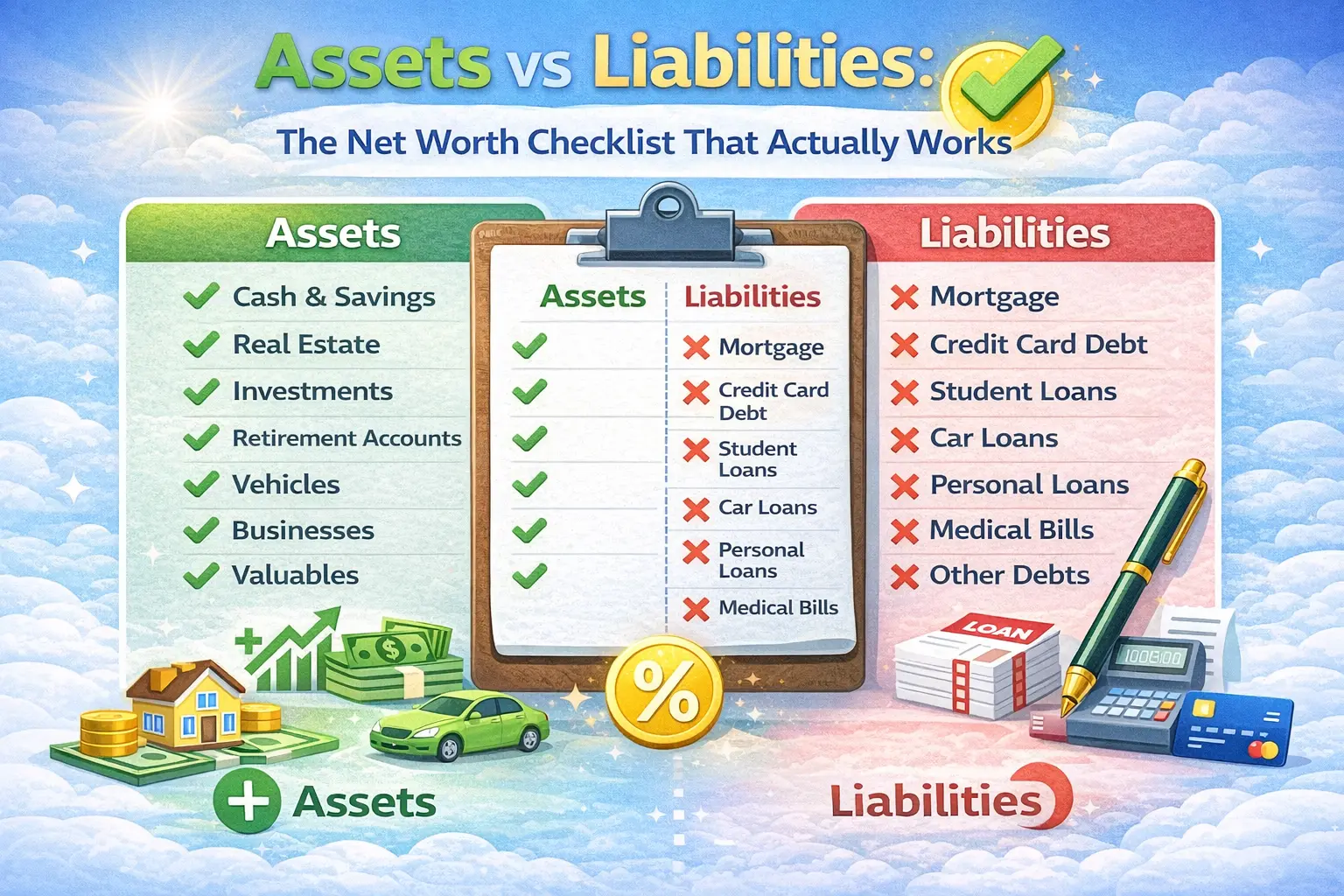
To understand net worth fully, one must see how the two components interact. The following table illustrates common financial items and their classification.
| Item | Classification | Impact on Net Worth | Description |
|---|---|---|---|
| Home (Market Value) | Asset | Positive | The current price for which the home could be sold. |
| Mortgage Balance | Liability | Negative | The remaining principal owed to the bank. |
| Savings Account | Asset | Positive | Cash available for immediate or short-term use. |
| Credit Card Debt | Liability | Negative | High-interest consumer debt that erodes wealth. |
| Stock Portfolio | Asset | Positive | Equity in companies that may appreciate or pay dividends. |
| Auto Loan | Liability | Negative | Debt owed on a vehicle, which is a depreciating asset. |
| Retirement Account | Asset | Positive | Tax-advantaged funds intended for long-term growth. |
The Nuance of Valuation
One of the biggest challenges in determining net worth is the accurate valuation of assets. While liabilities are fixed (you know exactly how much you owe the bank), asset values fluctuate.
Real Estate and Personal Property
In 2026, real estate remains a significant portion of many individuals' net worth. However, using the purchase price of your home from five years ago will result in an inaccurate net worth calculation. Current market assessments are required. Similarly, personal property like cars should be valued at their "blue book" or resale value, not what you paid for them, as they depreciate rapidly.
Liquid vs. Non-Liquid Net Worth
A common mistake is focusing solely on the total net worth number without considering liquidity. Liquid net worth refers to assets that can be converted into cash quickly without significant loss of value (e.g., cash, stocks, bonds). Non-liquid net worth includes assets like real estate or private business interests. You may have a high net worth on paper, but if 90% of it is tied up in a home you live in, you may still face cash flow difficulties during an emergency.
Strategies to Increase Net Worth
Improving your net worth is a two-front battle: you must either increase your assets or decrease your liabilities. Ideally, you should do both simultaneously.
1. Aggressive Debt Reduction
Focusing on high-interest liabilities is the fastest way to stop wealth erosion. Every dollar of debt paid off is a guaranteed return on investment equal to the interest rate of that debt. In the current 2026 economic environment, eliminating revolving credit card debt is a priority before aggressive investing.
2. Diversified Asset Growth
Building a diverse portfolio of assets ensures that your net worth isn't tied to the performance of a single sector. This includes contributing to employer-sponsored retirement plans, especially if there is a company match, which essentially provides a 100% return on that portion of your investment.
3. Monitoring Lifestyle Inflation
As income increases, there is a natural tendency to increase spending (lifestyle inflation). By maintaining a consistent standard of living while income grows, the surplus can be directed toward asset acquisition or debt reduction, causing net worth to accelerate.
Frequently Asked Questions
Is my car considered an asset or a liability?
A car is technically an asset because it has resale value. However, the loan used to purchase the car is a liability. Because cars depreciate (lose value) over time, they are often described as "depreciating assets." For a net worth calculation, you list the current market value of the car as an asset and the remaining loan balance as a liability.
What does it mean to have a "negative net worth"?
A negative net worth occurs when your total liabilities exceed your total assets. This is common among recent university graduates who have significant student loan debt but have not yet had time to accumulate savings or property. While it can be a cause for concern, it is often a temporary state that is corrected through consistent debt repayment and career progression.
Should I include my salary in my net worth calculation?
No. Your salary is income, not net worth. Net worth is a measurement of value at a specific moment (a snapshot), while salary is a flow of money over time (a movie). Income allows you to build net worth, but they are distinct financial metrics.
How often should I calculate my net worth?
Most financial advisors recommend calculating your net worth once a quarter or at least once a year. Doing it too frequently (like daily) can be counterproductive due to market fluctuations in stock and real estate values, which can cause unnecessary stress.
Does net worth include the value of my furniture and clothes?
While these items are technically assets, most people exclude them from net worth calculations unless they own high-value items like antiques or designer collections that maintain resale value. For a conservative and practical net worth statement, it is best to focus on major assets like cash, investments, and real estate.
Practical Recommendation
To gain control over your financial destiny in 2026, your next step should be to perform a "Financial Audit." Create a simple spreadsheet with two columns: Assets and Liabilities. List every bank account, investment, and property value on one side, and every loan, credit card balance, and bill on the other. Subtract the totals to find your baseline net worth.
Once you have this number, do not focus on the absolute value. Instead, focus on the trend. Set a goal to increase this number by a specific percentage each year. This shift in mindset—from focusing on what you earn to focusing on what you keep—is the most significant step toward long-term wealth and security.
Image Gallery