Comprehensive Guide to Supercharging the Jeep XJ (AMC 4.0L)
Supercharging a Jeep XJ transforms the legendary but underpowered 4.0L inline-six engine from a reliable "tractor motor" into a high-performance powerplant capable of modern highway speeds and superior off-road crawling. This modificat...
Supercharging a Jeep XJ transforms the legendary but underpowered 4.0L inline-six engine from a reliable "tractor motor" into a high-performance powerplant capable of modern highway speeds and superior off-road crawling. This modification typically utilizes a positive-displacement supercharger to provide immediate low-end torque, addressing the XJ’s primary weakness: passing power and uphill acceleration under the weight of oversized tires and armor.
Contents
The Jeep Cherokee XJ, produced between 1984 and 2001, remains one of the most beloved off-road platforms in history. However, as of 2026, many owners find that the factory-rated 190 horsepower and 225 lb-ft of torque are insufficient for modern driving conditions, especially when the vehicle is modified with heavy steel bumpers, winches, and 33-inch or larger tires. While engine swaps (like the LS or Hemi) are popular, supercharging offers a "bolt-on" alternative that retains the original AMC 4.0L character while significantly boosting output.
The Mechanics of Forced Induction for the Inline-6
To understand supercharging the XJ, one must first understand the architecture of the AMC 4.0L I6. This engine is an overhead-valve (OHV) design with a long stroke, meaning it naturally produces torque at low RPMs but struggles to breathe at higher frequencies. A supercharger solves this by mechanically forcing more air into the intake manifold, allowing the engine to burn more fuel and create more pressure during the combustion stroke.
Unlike a turbocharger, which relies on exhaust gas velocity to spin a turbine (resulting in "lag"), a supercharger is belt-driven directly from the crankshaft. This provides instantaneous boost. For a vehicle like the XJ, which is often used for technical rock crawling or low-speed trail driving, immediate torque is far more desirable than the high-RPM peak power typically offered by turbochargers.
Most XJ kits utilize Positive Displacement blowers. These units move a fixed volume of air per revolution, ensuring that boost is available from just above idle. This is critical for 4x4 applications where the driver needs predictable power to crest an obstacle without waiting for a turbo to "spool up."
Popular Supercharger Options and Kits in 2026
As we move through 2026, the aftermarket for the XJ has consolidated into a few primary paths. While some companies have come and gone, the community-supported designs remain robust.
- Boosted Technologies (Roots-Style): This is currently the most prominent commercial kit available. It typically uses an Eaton M62 or M90 rotor pack. These kits are favored for their simplicity and the fact that they often include "plug-and-play" fuel management solutions.
- Sprintex (Twin-Screw): Known for higher efficiency and lower discharge temperatures, the Sprintex kits were a gold standard for years. While harder to find new in 2026, they remain a top choice on the used market for their integrated bypass valves and high-quality manifold castings.
- DIY Eaton M62/M90 Adapters: Many enthusiasts choose the "junkyard" route by sourcing a supercharger from a 1990s-era Buick Park Avenue or Pontiac Grand Prix. Custom adapter plates allow these units to mount to the 4.0L intake. This is the most cost-effective method but requires significant fabrication skills and custom tuning.
| Feature | Roots-Style (M62/M90) | Twin-Screw (Sprintex) | Centrifugal (ProCharger) |
|---|---|---|---|
| Boost Threshold | Instant (Off-idle) | Instant (Off-idle) | Linear (RPM-dependent) |
| Heat Generation | Moderate to High | Low to Moderate | Low |
| Complexity | Low (Internal oiling) | Moderate | High (Intercooling needed) |
| Installation | Relocates Alternator/AC | Replaces Intake | Bracket-mounted |
| Best For | Daily Driving/Crawling | Performance/Towing | High-speed Sand/Dunes |
Technical Prerequisites: Is Your XJ Ready?
Before bolting on a supercharger, the health of the base engine is paramount. The 4.0L is famously durable, often lasting over 300,000 miles, but forced induction places significantly higher stress on the internal components.
Engine Compression and Leak-down: A healthy 4.0L should show consistent compression across all six cylinders (typically 120–150 PSI depending on the year). If one cylinder is significantly lower, adding boost will likely lead to a catastrophic head gasket failure or broken piston rings. A leak-down test is highly recommended to ensure the valves and rings can handle the increased cylinder pressure.
Fuel System Upgrades: Stock Jeep injectors are rated for approximately 19–21 lbs/hr, which is insufficient for a supercharged engine. Most kits require a jump to 30lb or 42lb injectors. Additionally, the stock fuel pump in older XJs (pre-1996) may need to be replaced with a high-flow unit like a Walbro 255 to maintain the 49 PSI (or higher) rail pressure required under boost.
Cooling System: The XJ is notorious for running hot due to its cramped engine bay. A supercharger adds "parasitic" heat through the belt drive and "discharge" heat through the compressed air. In 2026, it is considered standard practice to upgrade to a triple-core aluminum radiator and high-flow electric fans before installing a blower.
Tuning the ECU: The Heart of the Modification
The most difficult aspect of supercharging a Jeep XJ is managing the electronics. The XJ used three distinct computer systems over its lifespan:
- Renix (1987–1990): Non-programmable, requiring mechanical "hacks" like rising-rate fuel pressure regulators.
- OBD-I (1991–1995): Limited programmability; often requires a "piggyback" controller.
- OBD-II (1996–2001): The most flexible. These ECUs can often be flashed or used with sophisticated piggybacks like the Split Second FTC (Fuel Timing Controller).
The goal of tuning is to manage the Air-Fuel Ratio (AFR). Under boost, the engine needs to run "rich" (around 11.5:1 to 12.0:1) to prevent detonation. Without a proper tune, the engine will run lean, causing the pistons to melt. Most modern kits include a pre-programmed map, but a wideband O2 sensor is a mandatory safety tool for any supercharged Jeep.
Step-by-Step Installation Overview
While every kit differs, the general process for supercharging an XJ follows a predictable path. A professional mechanic can typically finish the job in 8–10 hours, while a DIYer should set aside a full weekend.
- Preparation: Disconnect the battery and drain the coolant. Remove the airbox and the serpentine belt.
- Manifold Removal: Many kits require removing the factory intake manifold to install an adapter or a completely new lower intake. This is a good time to replace the manifold gasket, which is a common leak point on the 4.0L.
- Fuel Injector Swap: Replace the factory injectors with the high-flow units provided in the kit. Ensure the O-rings are lubricated to avoid fuel leaks.
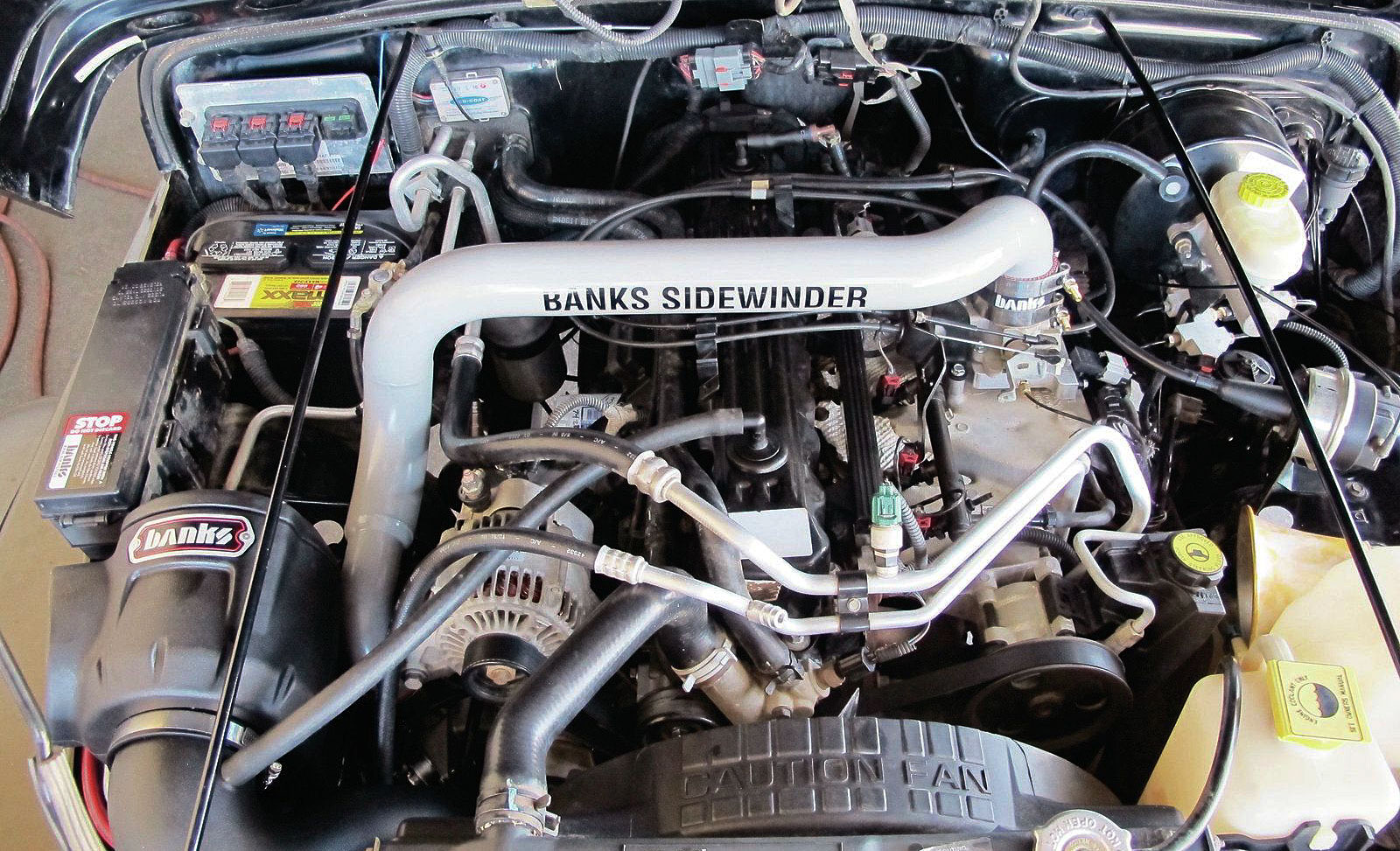
- Mounting the Blower: Bolt the supercharger to the intake or adapter plate. In many XJ configurations, the supercharger sits on the driver's side, which may require relocating the alternator or the air conditioning compressor using provided brackets.
- Belt Routing: Install the new, longer serpentine belt. Proper tension is critical; a slipping belt will result in lost boost and premature wear.
- Vacuum and Sensors: Reconnect the MAP (Manifold Absolute Pressure) sensor. Many kits use a 2-bar MAP sensor to allow the ECU to "see" positive pressure, as the factory 1-bar sensor only measures vacuum.
- First Start and Testing: Check for fuel leaks and vacuum leaks. Use a boost gauge to verify the charger is producing the intended pressure (usually 5–7 PSI for stock internals).
Performance Gains and Long-Term Reliability
What should an owner expect after spending $3,500 to $5,000 on a supercharger setup? On a stock 4.0L with 6 PSI of boost, horsepower typically jumps from 190 to approximately 260–280, while torque increases from 225 to nearly 300 lb-ft.
This change is most felt when climbing mountain passes or merging onto highways. The Jeep will no longer "hunt" for gears (in automatic models) or require constant downshifting. Off-road, the crawl ratio becomes even more effective, as the engine can lug through obstacles at extremely low RPMs with ease.
In terms of reliability, the AMC 4.0L is overbuilt. Its cast-iron block and crank can handle modest boost indefinitely, provided the tune is correct. The primary "weak points" are the heat-soaked intake and the potential for increased wear on the cooling system. With regular oil changes and high-octane fuel (91+ octane is required for supercharged engines), a supercharged XJ can easily remain a reliable daily driver.
Frequently Asked Questions
Does supercharging my Jeep XJ decrease gas mileage? Under normal cruising conditions, the impact is minimal because the bypass valve allows the engine to operate under vacuum. However, once you enter "boost," the ECU adds significantly more fuel to match the increased air, which will lower your MPG. Most owners report a 1–2 MPG drop in overall average fuel economy.
Is a supercharger better than a stroker engine for the XJ? A "stroker" (increasing displacement to 4.6L or 4.7L) provides a very linear, factory-like power increase. A supercharger provides more peak power and is generally easier to install than rebuilding the entire engine. Many enthusiasts in 2026 actually combine the two—supercharging a stroker—for the ultimate XJ performance.
Will my stock AW4 automatic transmission handle the extra power? Yes. The Aisin-Warner AW4 is an incredibly stout transmission. As long as it is in good condition and you are using a dedicated transmission cooler, it can easily handle the 300 lb-ft of torque generated by a standard supercharger kit.
Do I need an intercooler for an XJ supercharger? For low-boost applications (under 7 PSI), an intercooler is not strictly necessary but is highly beneficial. Some kits use chemical intercooling (water/methanol injection) to lower intake temperatures, which is often easier to package in the tight XJ engine bay than a traditional air-to-air intercooler.
Is it legal to supercharge an XJ in states with strict emissions? It depends on the kit. Some kits, like those previously offered by Edelbrock or Sprintex, carried CARB (California Air Resources Board) EO numbers, making them street-legal in all 50 states. Many DIY or niche kits are sold for "off-road use only." Always verify the local regulations in your jurisdiction before modifying.
Final Recommendation
If you find that your Jeep XJ is struggling to keep up with modern traffic or feels sluggish on the trail, a supercharger is the most effective "bolt-on" solution available. Prioritize a kit with a proven tuning solution and ensure your cooling system is in peak condition before proceeding. For most owners, the 5–7 PSI range provides the perfect balance of "smile-inducing" power and long-term mechanical reliability.
Image Gallery