How Many Time Zones Are in Texas? A Comprehensive Guide for 2026
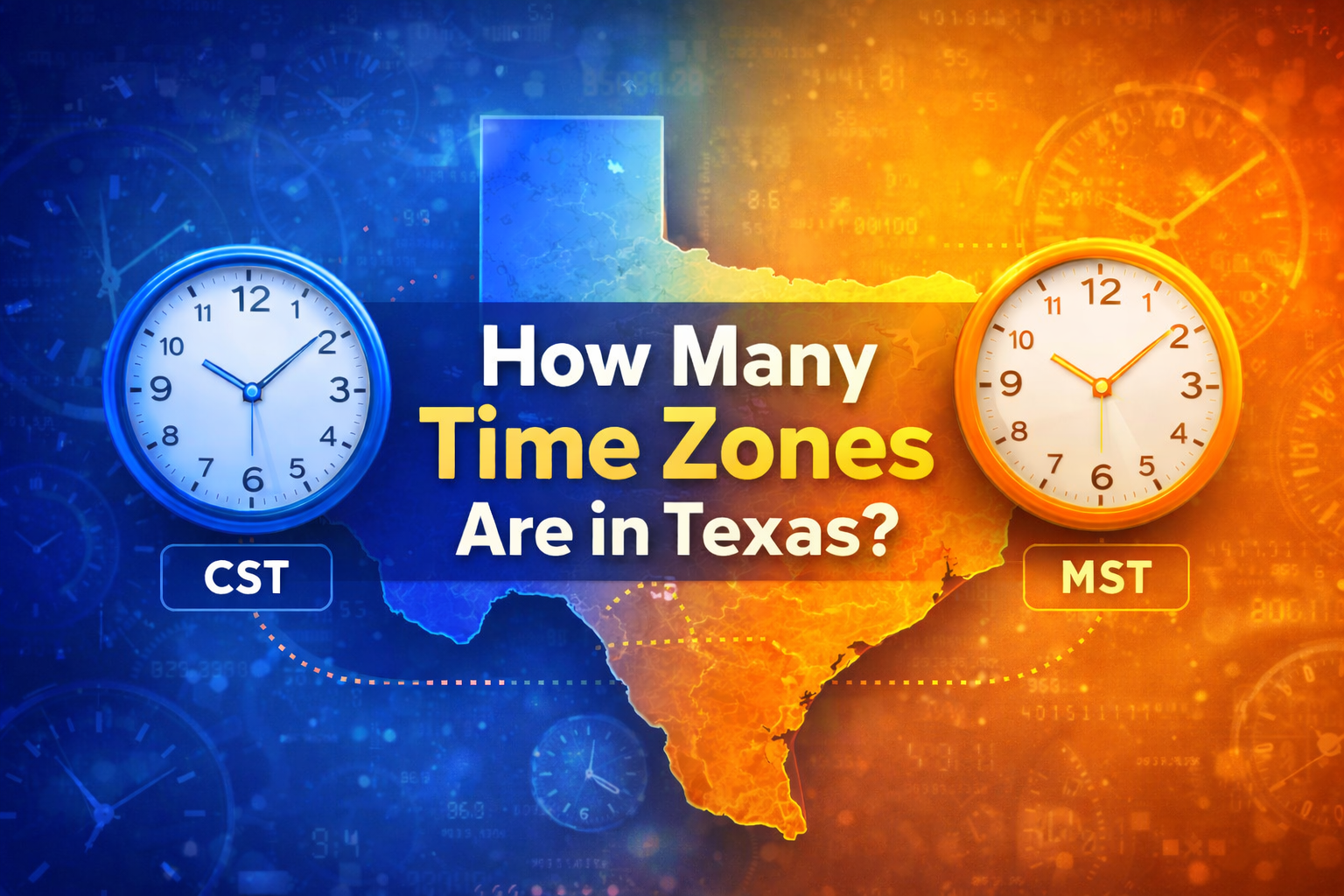
Texas officially observes two time zones: Central Time and Mountain Time. While more than 99% of the state’s 254 counties operate on Central Time, two counties in the far western tip—El Paso and Hudspeth—along with a portion of Culbers...
Texas officially observes two time zones: Central Time and Mountain Time. While more than 99% of the state’s 254 counties operate on Central Time, two counties in the far western tip—El Paso and Hudspeth—along with a portion of Culberson County, utilize Mountain Time.
Contents
The sheer geographic scale of Texas necessitates this division. Spanning approximately 800 miles from its eastern border with Louisiana to its westernmost point near El Paso, Texas is wider than the distance between New York City and Jacksonville, Florida. This massive longitudinal spread means that when the sun rises over the piney woods of East Texas, the high deserts of the west are still shrouded in darkness for another hour. Understanding this divide is essential for logistics, travel, and business operations within the Lone Star State.
Understanding the Two Time Zones of Texas
Texas is one of 15 states in the U.S. that is split between two time zones. This division is not arbitrary but is rooted in the practicalities of solar time and regional economic ties. For most residents and visitors, "Texas Time" is synonymous with Central Time, but the western panhandle and the Trans-Pecos region offer a different temporal experience.
The Central Time Zone (The Texas Standard)
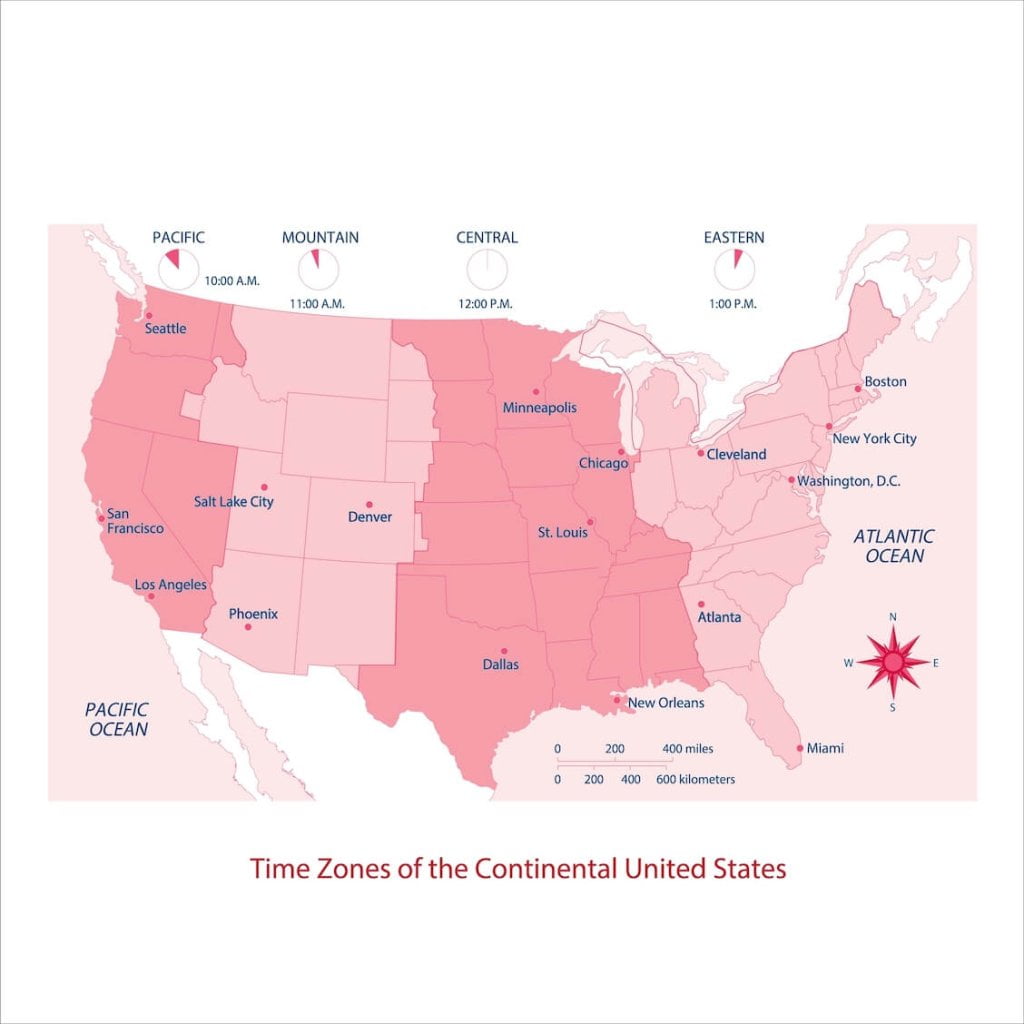
The vast majority of Texas operates within the Central Time Zone. This includes every major metropolitan area except El Paso—cities such as Houston, Dallas-Fort Worth, San Antonio, Austin, and Corpus Christi all follow this standard.
In the year 2026, Central Standard Time (CST) is defined as being six hours behind Coordinated Universal Time (UTC-6). During the summer months, the state observes Central Daylight Time (CDT), which is five hours behind UTC (UTC-5). Because nearly all state government functions, major sports broadcasts, and corporate headquarters are located in this zone, it serves as the functional "default" for the state.
The Mountain Time Zone (The Western Frontier)
The Mountain Time Zone serves the westernmost tip of Texas. This region is geographically and culturally distinct from the rest of the state, sharing more longitudinal commonality with New Mexico and the Rocky Mountain states than with the Gulf Coast.
Mountain Standard Time (MST) is seven hours behind UTC (UTC-7), and Mountain Daylight Time (MDT) is six hours behind (UTC-6). Consequently, when it is 10:00 AM in Dallas, it is only 9:00 AM in El Paso. This one-hour lag is a daily reality for the hundreds of thousands of people living in the El Paso-Las Cruces-Juárez international metroplex.
The Geographic and Legislative Reasons for the Split
The reason Texas is split between two time zones is primarily a matter of longitude. According to the National Institute of Standards and Technology (NIST), time zones are ideally spaced 15 degrees of longitude apart. The eastern border of Texas sits near 94°W, while the western tip near El Paso reaches approximately 106°W.
This 12-degree difference is significant. If El Paso were forced to stay on Central Time, the sun would not rise until nearly 9:00 AM during the winter months, creating safety concerns for school children and commuting workers.
The Role of the U.S. Department of Transportation
While we often think of time as a scientific or astronomical measurement, in the United States, the legal boundaries of time zones are managed by the U.S. Department of Transportation (DOT). Under the Uniform Time Act of 1966, the DOT has the authority to move a boundary if it serves the "convenience of commerce."
The boundary in Texas is drawn specifically to keep El Paso and Hudspeth counties in the Mountain Time Zone because their economies are inextricably linked with neighboring New Mexico and the Mexican city of Ciudad Juárez, both of which align more closely with Mountain Time.
County-Level Breakdown: The Exceptions
To navigate Texas accurately in 2026, it is helpful to know exactly where the line is drawn. The transition occurs as you move west across the Trans-Pecos region.
| County | Time Zone | Major Cities / Landmarks |
|---|---|---|
| El Paso County | Mountain Time | El Paso, Horizon City, Fort Bliss |
| Hudspeth County | Mountain Time | Sierra Blanca, Dell City, Fort Hancock |
| Culberson County | Split / Mountain* | Van Horn, Guadalupe Mountains National Park |
| All Other 251 Counties | Central Time | Houston, Dallas, Austin, San Antonio |
*Note: While Culberson County is technically divided, the primary population center of Van Horn and the popular Guadalupe Mountains National Park generally observe Mountain Time to maintain consistency with El Paso.
Daylight Saving Time in Texas for 2026
In 2026, Texas continues to follow the federal schedule for Daylight Saving Time (DST). Unless federal or state legislation changes the status quo, the transition dates are as follows:
- Spring Forward: Sunday, March 8, 2026 (Clocks move forward one hour at 2:00 AM).
- Fall Back: Sunday, November 1, 2026 (Clocks move back one hour at 2:00 AM).
Both the Central and Mountain sections of Texas observe these shifts simultaneously. This means the one-hour difference between El Paso and the rest of the state remains constant year-round. While there have been recurring legislative discussions in the Texas Capitol regarding the permanent adoption of either Standard Time or Daylight Saving Time, any such move would require an act of Congress to allow states to stay on permanent DST. As of 2026, the traditional biannual clock change remains the law of the land.
Business and Logistics Impacts of the Time Split
Operating a business across a state with two time zones introduces unique logistical challenges. For companies headquartered in Dallas or Houston with branch offices in El Paso, the one-hour difference must be accounted for in every scheduling decision.
Communications and Scheduling
For synchronized meetings, the "Texas Window" is effectively shortened. A 9:00 AM start in Austin is an 8:00 AM start in El Paso. Conversely, if an El Paso office stays open until 5:00 PM local time, it is already 6:00 PM in the rest of the state, meaning eastern colleagues have likely finished their workday.
Transportation and Shipping
The Texas Department of Transportation (TxDOT) and private logistics firms must carefully manage driver logs and delivery windows. A truck traveling from San Antonio to El Paso "gains" an hour upon crossing the zone line, which can be beneficial for making delivery deadlines. However, the return trip "loses" an hour, requiring tighter scheduling to avoid delays.
Broadcasting and Media
Television networks often have to manage "split feeds" or specialized advertising windows for the El Paso market. Major live events, such as the Super Bowl or presidential addresses, occur at different local times, which affects viewership metrics and social media engagement across the state.
Travel Planning Across the Time Zone Line
For travelers driving across Texas on Interstate 10, the time zone change is a major milestone. The transition typically occurs at the boundary between Culberson and Hudspeth counties.
Driving Tips for the Time Jump
- Watch Your Phone: Most modern smartphones automatically update via cell tower signals. However, in the remote stretches of West Texas, signal strength can be intermittent. It is wise to have a manual watch or a dashboard clock set to your destination's time.
- Fuel and Services: Between Kerrville and El Paso, services can be sparse. Remember that a gas station closing at 8:00 PM in Van Horn (Mountain Time) is technically closing at 9:00 PM Central Time.
- National Parks: If you are visiting Guadalupe Mountains National Park, ensure you are on Mountain Time. Park operating hours, guided tours, and visitor center schedules are strictly aligned with the Western Texas (Mountain) standard.
Historical Evolution of Time Keeping in Texas
Before the adoption of standard time, every town in Texas kept its own "solar time" based on when the sun was directly overhead. This became a nightmare for the burgeoning railroad industry in the late 19th century. According to the Texas State Historical Association, the railroads were the primary drivers for time standardization.
The Standard Time Act of 1918 officially established the zones we recognize today. El Paso originally lobbied to be part of the Mountain Time Zone to facilitate easier trade with mining and ranching interests in New Mexico and Arizona. Over the decades, there have been several petitions to move the line further west or east, but the current boundary has remained stable for most of the modern era, reflecting a balance between geographic reality and economic necessity.
Frequent Questions About Texas Time Zones
Does El Paso ever have the same time as Dallas?
No. Under current law, El Paso (Mountain Time) is always one hour behind Dallas (Central Time). When Dallas is on Daylight Saving Time, El Paso is also on Daylight Saving Time, maintaining the 60-minute gap.
Is Amarillo in the Mountain Time Zone?
No. Despite being quite far west, Amarillo and the entire Texas Panhandle are in the Central Time Zone. The Mountain Time Zone is restricted to the southernmost "boot" of West Texas.
Which Texas county is split between two time zones?
Culberson County is the most notable example of a split. While the official DOT line places it in Central Time, the county seat of Van Horn and the majority of the county's residents observe Mountain Time for convenience and alignment with El Paso.
How does the time zone affect the Texas legislature?
The Texas State Legislature in Austin operates on Central Time. This means that representatives from El Paso must constantly adjust their schedules when traveling to the capital for legislative sessions.
Are there any parts of Texas that do not observe Daylight Saving Time?
No. Every part of Texas, including both the Central and Mountain regions, currently observes Daylight Saving Time in accordance with the Uniform Time Act.
Summary of Findings and Next Actions
Texas’s two time zones are a testament to the state's incredible size and diversity. While the Central Time Zone governs the vast majority of the population and landmass, the Mountain Time Zone is a critical component of the Far West Texas economy.
Next Actions for Readers:
- For Travelers: If driving west on I-10 past Fort Stockton, prepare to adjust your clocks back one hour as you approach the Hudspeth County line.
- For Business Owners: Ensure your digital scheduling tools (like Outlook or Google Calendar) are set to "detect time zone" to avoid missing meetings with West Texas partners.
- For Researchers: Consult the Official U.S. Time website for real-time synchronization across both Texas zones.
Image Gallery