OSHA Fall Protection Anchor Point Requirements: Standards and Compliance
OSHA fall protection anchor point requirements mandate that anchorage used for personal fall arrest systems must support at least 5,000 pounds per employee attached, or be designed and used under the supervision of a qualified person a...
OSHA fall protection anchor point requirements mandate that anchorage used for personal fall arrest systems must support at least 5,000 pounds per employee attached, or be designed and used under the supervision of a qualified person as part of a complete personal fall arrest system which maintains a safety factor of at least two.
Contents
Understanding the Foundation of OSHA Fall Protection Standards
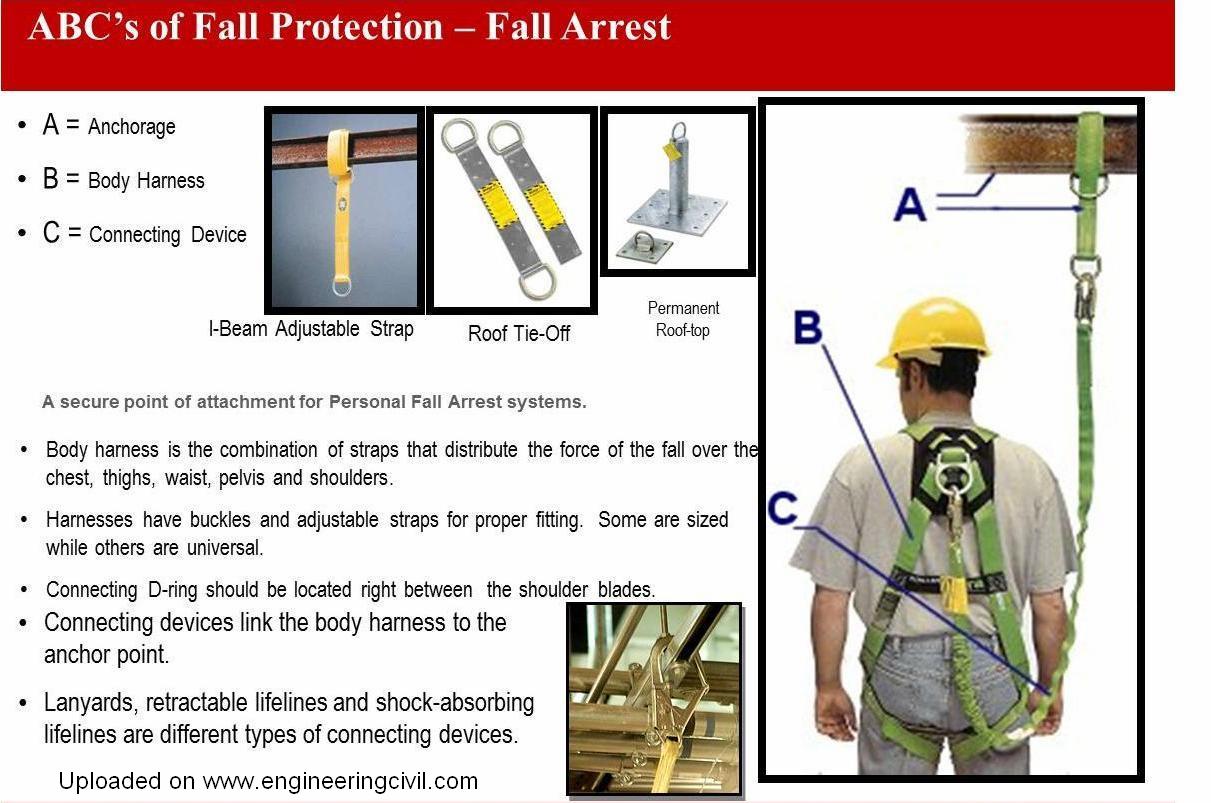
Fall protection remains the most frequently cited OSHA violation across all industries. At the heart of a Personal Fall Arrest System (PFAS) is the anchorage point—the secure point of attachment for lifelines, lanyards, or deceleration devices. As of 2026, OSHA standards for anchor points are primarily governed by two distinct regulations: 29 CFR 1926.502 for the construction industry and 29 CFR 1910.140 for general industry.
While the technical specifications for these standards have remained consistent, the rigor of enforcement and the technological sophistication of anchor point solutions have evolved. The primary goal of these requirements is to ensure that if a worker falls, the anchor point does not fail under the extreme dynamic loads generated during the arrest. A fall from even a few feet can generate forces far exceeding the static weight of the worker, necessitating the high strength requirements set by federal law.
To remain compliant, employers must distinguish between "certified" and "non-certified" anchorages. A non-certified anchorage is one that a competent person can visually or through basic documentation identify as meeting the 5,000-pound threshold. A certified anchorage is one designed or approved by a qualified person—often a professional engineer—to meet specific safety factors.
The 5,000-Pound Rule vs. The Safety Factor of Two
The most widely recognized OSHA requirement for anchor points is the 5,000-pound (22.2 kN) strength requirement. This rule is designed to provide a massive margin of safety. If an anchor is known to support 5,000 pounds, it is deemed sufficient for a single person's fall arrest system regardless of the specific fall arrest forces involved, provided the worker weighs less than 310 pounds (including tools).
However, OSHA provides an alternative for situations where a 5,000-pound anchor is not feasible or where a more engineered approach is preferred. Under the supervision of a qualified person, an anchor point can be used if it is designed to support at least twice the maximum arresting force (MAF) likely to be applied during a fall. This is known as the "factor of two" or "2:1 safety factor."
For example, if a worker is using a high-quality shock-absorbing lanyard that limits the maximum arresting force to 900 pounds, a certified anchor point must be able to support 1,800 pounds. This engineered approach allows for greater flexibility in building design and temporary setups, but it shifts the liability and the requirement for documentation significantly toward the "qualified person."
The Critical Distinction: Competent Person vs. Qualified Person
OSHA defines specific roles for the selection and approval of anchor points. Understanding these definitions is essential for legal compliance and site safety.
The Competent Person
A competent person is defined by OSHA as someone who is "capable of identifying existing and predictable hazards in the surroundings or working conditions which are unsanitary, hazardous, or dangerous to employees, and who has authorization to take prompt corrective measures to eliminate them." In the context of anchor points, the competent person is responsible for the daily inspection of equipment and the selection of non-certified anchor points that clearly meet the 5,000-pound requirement.
The Qualified Person
A qualified person is someone who, "by possession of a recognized degree, certificate, or professional standing, or who by extensive knowledge, training, and experience, has successfully demonstrated his ability to solve or resolve problems relating to the subject matter, the work, or the project." When an anchor point does not meet the 5,000-pound static requirement and must rely on the 2:1 safety factor, a qualified person must design, install, or supervise the system.
Types of Anchor Points and Their Technical Requirements
Anchor points are categorized based on their permanence and their intended application. Choosing the right type depends on the substrate (steel, concrete, wood) and the duration of the work.
- Permanent Anchors: These are typically installed during the construction of a building or during a major retrofit. Examples include D-rings bolted to steel I-beams or U-anchors cast into concrete. These must be inspected annually and are often "certified" by the building's structural engineer.
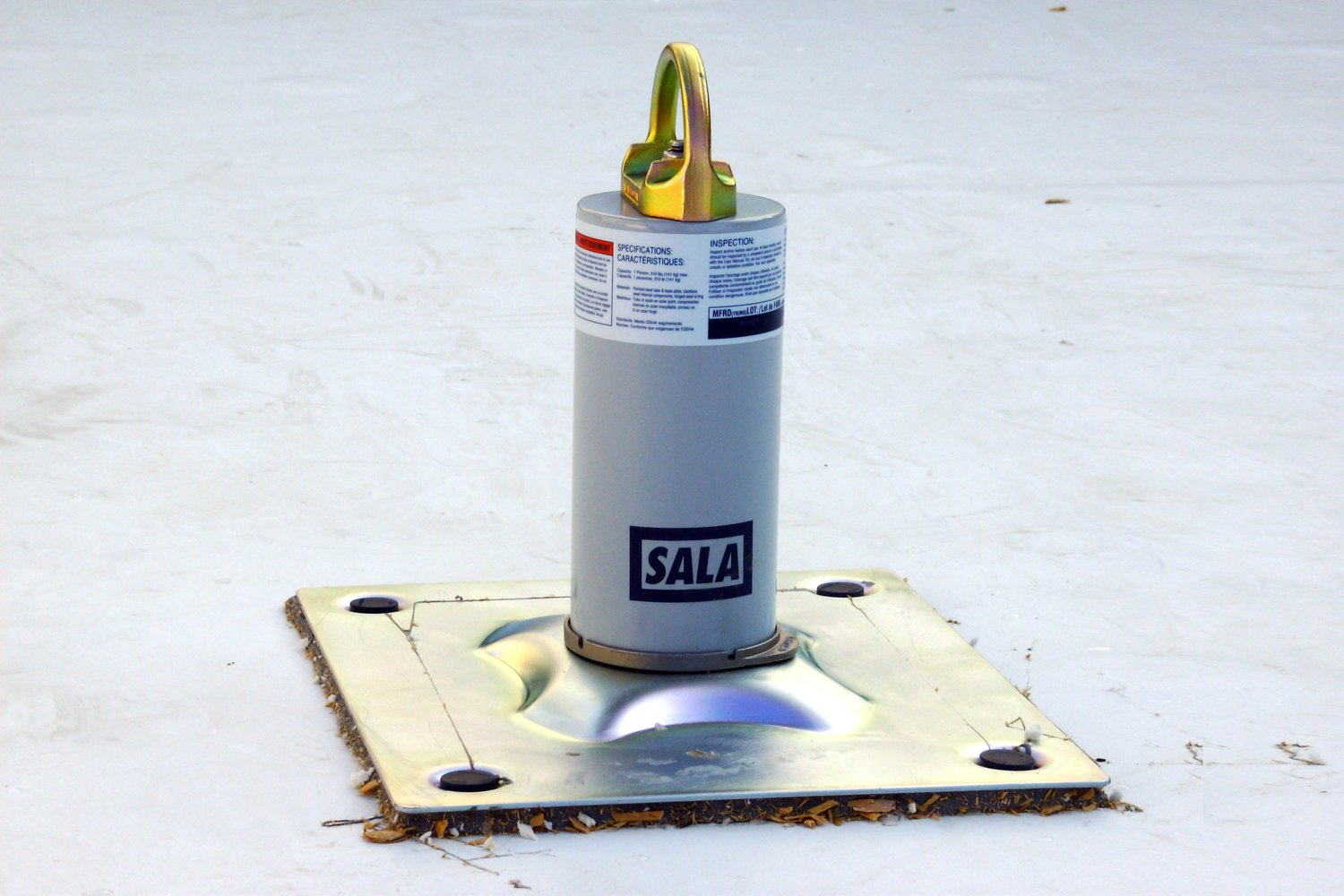
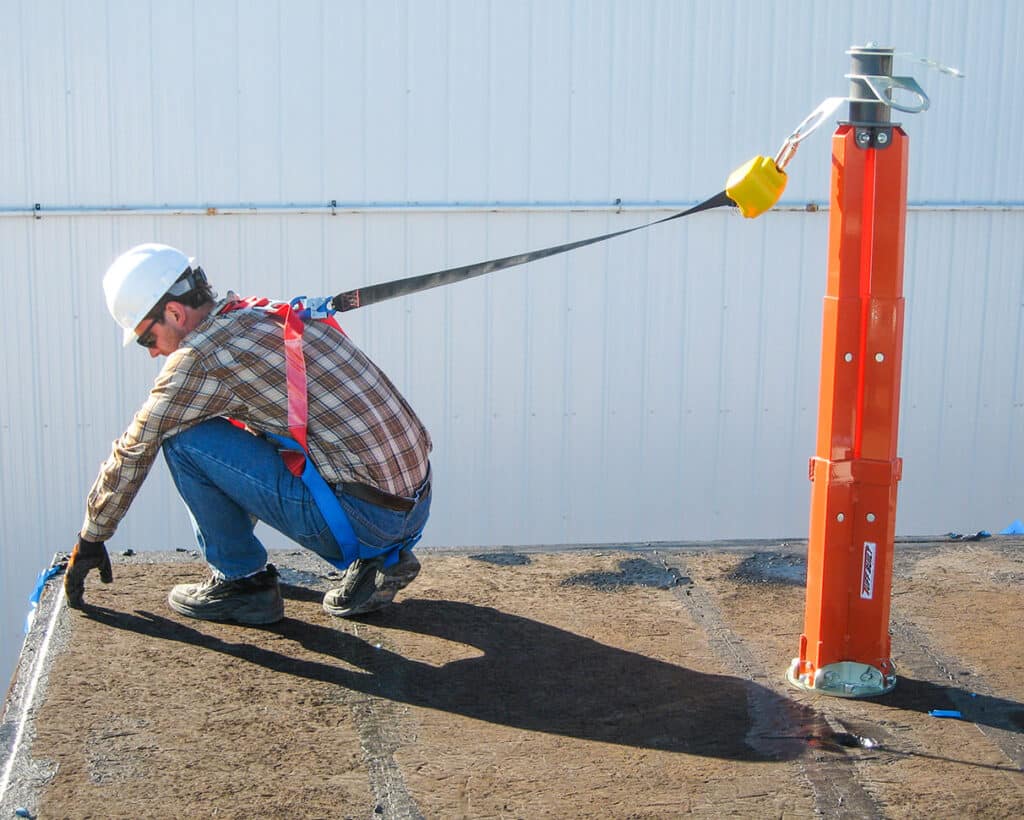
- Temporary/Portable Anchors: Common in construction, these include roof anchors, beam clamps, and door jamb anchors. These must be removed after the task is completed and inspected before every single use.
- Horizontal Lifelines: These are complex systems where the "anchor" is a cable stretched between two points. OSHA requires horizontal lifelines to be designed, installed, and used under the supervision of a qualified person, as the tension on the end anchors can far exceed 5,000 pounds during a fall.
Anchor Point Comparison Table
| Feature | Non-Certified Anchor | Certified Anchor |
|---|---|---|
| Minimum Strength | 5,000 lbs (22.2 kN) | 2x Maximum Arresting Force |
| Supervision Required | Competent Person | Qualified Person |
| Documentation | Basic inspection logs | Engineering drawings/specifications |
| Usage | Standard PFAS for one worker | Engineered systems/Multiple users |
| OSHA Standard | 1926.502(d)(15) / 1910.140(c)(13) | 1926.502(d)(15)(i-ii) |
| Common Example | Steel I-beam clamp | Custom-fabricated roof pedestal |
Proper Installation and Substrate Considerations
An anchor point is only as strong as the material to which it is attached. A high-quality, rated D-ring will fail if it is bolted to a thin piece of rotted wood or a non-structural facade. OSHA requires that anchorages be independent of any anchorage being used to support or suspend platforms.
- Steel Substrates: When attaching to steel, the thickness and grade of the steel must be verified. Welding or bolting must follow American Institute of Steel Construction (AISC) standards.
- Concrete Substrates: Expansion anchors or chemical anchors are common. These require specific edge distances and embedment depths to reach their rated capacity. In 2026, post-installed concrete anchors must generally comply with ACI 318 standards for cracked concrete if they are to be used for fall protection.
- Wood Substrates: Wood is the most variable material. OSHA-compliant wood anchors usually require multiple fasteners driven into structural trusses or rafters, never just the roof sheathing or plywood.
Inspection, Maintenance, and Post-Fall Protocols
OSHA mandates that all fall protection equipment, including anchor points, be inspected by a competent person before each use. For permanent anchors, a documented periodic inspection (usually annually) is required to check for corrosion, deformation, or structural degradation of the substrate.
The Post-Fall Rule: If an anchor point is subjected to the forces of a fall arrest, it must be removed from service immediately. It cannot be used again until a competent person examines it and determines it is undamaged and fit for reuse. In many cases, especially with temporary roof anchors, the device is designed to deform to absorb energy and must be discarded after a single fall event.
Common Mistakes in Anchor Point Selection
Despite clear regulations, several common errors frequently lead to OSHA citations and, more importantly, workplace fatalities:
- Using Improper Structures: Workers often tie off to conduits, PVC piping, small-diameter vents, or railings. These structures are not designed to withstand the 5,000-pound requirement and will fail catastrophically during a fall.
- Neglecting the "Swing Fall" Hazard: An anchor point might be strong enough, but if it is located too far to the side of the work area, a falling worker will swing like a pendulum. This can result in the worker hitting the ground or a structural object even if the fall is arrested.
- Incompatible Connectors: Using a large rebar hook on a small D-ring can result in "roll-out," where the gate of the hook is forced open during a fall. Ensure all components of the PFAS are compatible.
- Ignoring Sharp Edges: If a lifeline or lanyard must pass over a sharp edge to reach the anchor point, the friction during a fall can sever the line. OSHA requires protection for lifelines in these scenarios.
Frequently Asked Questions
Can I use a guardrail as an anchor point?
Generally, no. OSHA standards for guardrails (1926.502(b)) require them to withstand only 200 pounds of force. Since a fall arrest anchor requires 5,000 pounds (or a 2:1 safety factor), a standard guardrail is insufficient and dangerous. Only specifically engineered guardrail systems designed by a qualified person to serve dual purposes can be used as anchors.
How many people can attach to a single 5,000-pound anchor?
The 5,000-pound requirement is per employee attached. If two employees are tied off to the same anchor point, that anchor must be able to support 10,000 pounds, unless a qualified person has certified the anchorage for multiple users with a different safety factor calculation.
Does OSHA require anchor points to be painted or color-coded?
OSHA does not mandate specific colors for anchor points. However, it is an industry best practice to clearly label or color-code anchors to distinguish them from other structural elements and to indicate their last inspection date or load rating.
What is the maximum weight a worker can be for a standard anchor point?
OSHA's standard 5,000-pound requirement assumes the worker and their equipment weigh no more than 310 pounds. If a worker exceeds this weight, the system must be redesigned by a qualified person, and specialized heavy-duty fall arrest equipment (rated for the higher weight) must be used.
Do I need to test my anchor point by pulling on it?
OSHA does not require destructive testing for every anchor. In fact, pulling on an anchor with a vehicle or heavy machinery can damage the structural integrity of the point. Compliance is typically verified through manufacturer specifications, engineering calculations, or non-destructive proof-loading performed by a qualified professional.
Final Recommendations for Compliance
To ensure full compliance with OSHA fall protection anchor point requirements in 2026, employers should move away from improvised tie-off points and implement a formal Anchorage Management Plan. This plan should include a survey of all work areas to identify and label "authorized" anchor points.
If you are working on a site where 5,000-pound anchors are not obvious, consult with a professional engineer (Qualified Person) to design a certified system. Never allow a worker to "improvise" an anchor point; if the structure hasn't been verified to hold the weight of a mid-sized car (5,000 lbs), it should not be trusted with a human life. Regular training for all employees on how to identify a compliant anchor and when to stop work is the most effective way to prevent fall-related tragedies.
Image Gallery