How Much on Average Does It Cost to Get $65,000 in Life Insurance?
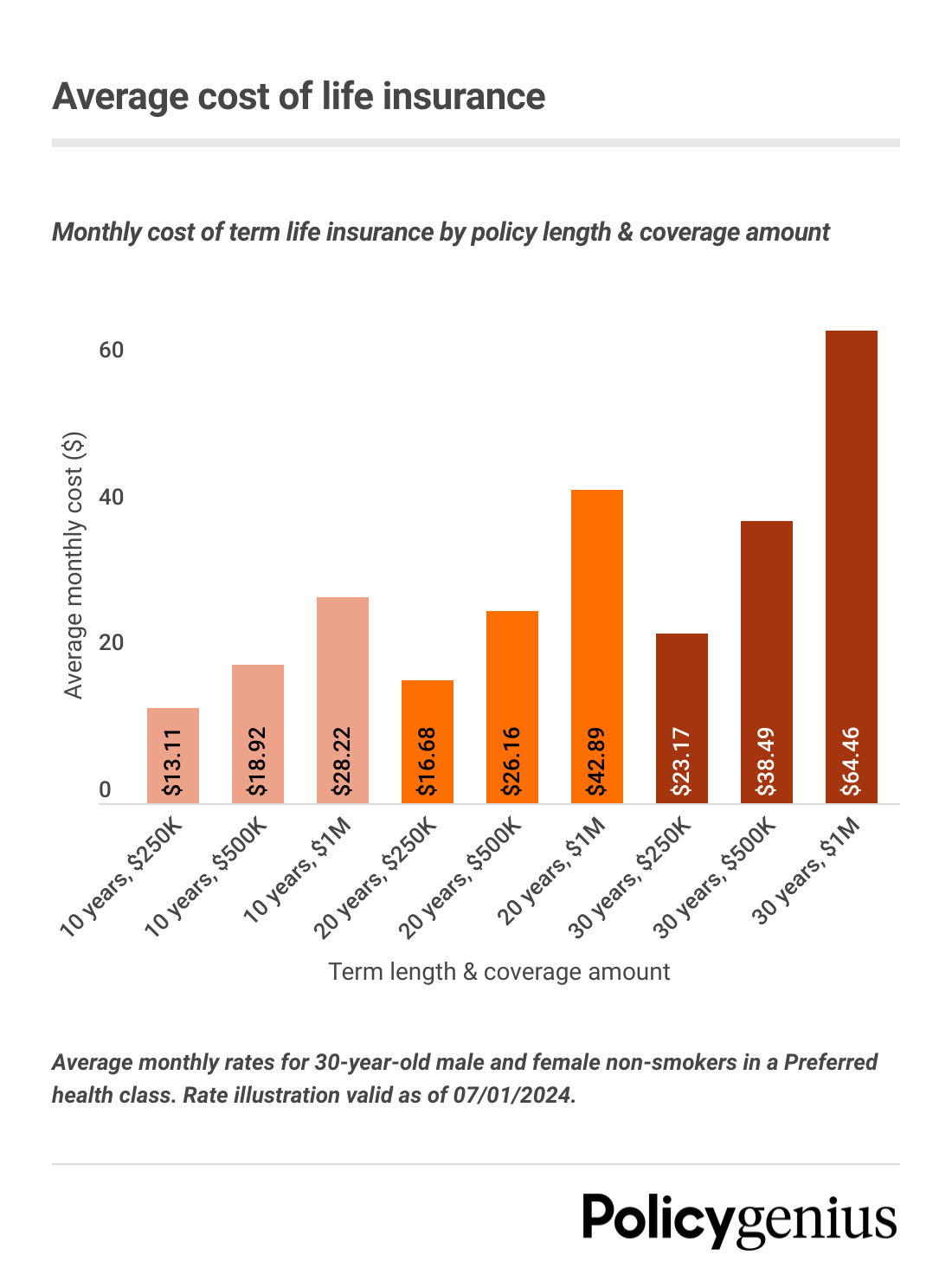
On average, a $65,000 life insurance policy costs between $10 and $30 per month for healthy adults under age 40 buying term coverage. For older applicants or permanent whole life coverage, monthly premiums typically range from $40 to o...
On average, a $65,000 life insurance policy costs between $10 and $30 per month for healthy adults under age 40 buying term coverage. For older applicants or permanent whole life coverage, monthly premiums typically range from $40 to over $250 per month, depending on age, health status, and underwriting requirements.
Contents
Understanding the Cost Structure of $65,000 Life Insurance
A $65,000 life insurance face value sits in a unique mid-tier coverage bracket. While large commercial term policies often start at baseline thresholds of $100,000 or $250,000, a $65,000 benefit amount is frequently selected by individuals seeking targeted financial protection. Common applications include covering end-of-life expenses, liquidating moderate personal debts, replacing short-term income, or establishing a modest legacy for heirs without paying for excessive coverage.
Because $65,000 straddles the boundary between small final expense (burial) insurance policies and traditional fully underwritten term or whole life policies, pricing varies widely based on the policy vehicle you choose. Insurers evaluate your risk profile using mortality tables, medical histories, and lifestyle habits to set premiums. Understanding how these policy types function and how insurers price them helps ensure you do not overpay for your required benefit level.
Disclaimer: Premium rates and underwriting guidelines vary by state, carrier, and individual health history. The financial estimates provided below serve as illustrative baseline averages based on standard rating classifications as of 2026. Consult a licensed life insurance agent or financial advisor for personalized policy illustrations.
Average Monthly Costs for a $65,000 Policy by Age and Type
The cost of life insurance is primarily driven by age at the time of issue, gender, health classification, tobacco usage, and the structure of the policy. Term life insurance provides temporary coverage for a fixed period (such as 10, 15, or 20 years) at lower rates, whereas whole life insurance guarantees lifelong protection and builds cash value at higher premium rates. Simplified issue and guaranteed issue policies bypass traditional medical exams but carry higher pricing per dollar of coverage.
The table below outlines average monthly premium ranges for non-smoking applicants across standard health classes for a $65,000 death benefit.
Estimated Monthly Premiums for a $65,000 Death Benefit
| Issue Age | Gender | 10-Year Term Life | 20-Year Term Life | Whole Life (Permanent) | Guaranteed Issue (Senior/Final Expense) |
|---|---|---|---|---|---|
| 30 Years Old | Male | $9 – $14 | $12 – $18 | $45 – $70 | N/A (Rarely needed) |
| 30 Years Old | Female | $8 – $12 | $10 – $15 | $38 – $60 | N/A (Rarely needed) |
| 40 Years Old | Male | $12 – $19 | $16 – $25 | $75 – $115 | N/A (Rarely needed) |
| 40 Years Old | Female | $10 – $16 | $13 – $20 | $62 – $95 | N/A (Rarely needed) |
| 50 Years Old | Male | $22 – $38 | $32 – $52 | $125 – $185 | $110 – $160 |
| 50 Years Old | Female | $17 – $29 | $24 – $40 | $105 – $150 | $90 – $130 |
| 60 Years Old | Male | $48 – $78 | $75 – $125 | $220 – $340 | $175 – $260 |
| 60 Years Old | Female | $35 – $58 | $52 – $88 | $175 – $270 | $135 – $200 |
| 70 Years Old | Male | $115 – $195 | N/A | $380 – $580+ | $310 – $470 |
| 70 Years Old | Female | $85 – $140 | N/A | $300 – $450+ | $230 – $360 |
Note: Rates reflect standard, non-tobacco risk categories. Tobacco users typically pay 150% to 300% more than non-smokers across all age brackets.
Key Factors That Determine Your Premium Rates
Life insurance actuarial tables evaluate your statistical life expectancy to calculate risk. Several core variables dictate where your actual quote will fall within the estimated ranges.
- Age & Gender: Base mortality risk score
- Policy Type: Term vs. Permanent vs. Final Expense
- Underwriting: Fully Underwritten vs. No-Exam
- Health Status: Medical history, BMI, blood pressure
- Tobacco Use: Cigarettes, cigars, vaping, nicotine
1. Age and Biological Gender
Age is the single greatest determinant of life insurance cost. Rates increase exponentially with age because mortality risk rises each year. Additionally, women statistically enjoy longer average life expectancies than men, resulting in lower monthly premiums for female applicants across all age brackets and product categories.
2. Underwriting Type (Medical Exam vs. No-Exam)
How the insurance company evaluates your health heavily impacts the rate:
- Fully Underwritten Policies: Require a detailed medical questionnaire, review of attending physician statements (APS), prescription database checks, and often a paramedical exam (blood and urine sampling). These yield the lowest rates per dollar of coverage.
- Simplified Issue: Skips the physical exam and blood work, relying instead on electronic health records, motor vehicle reports, and medical background checks. Rates are moderately higher to absorb the carrier's unmeasured risk.
- Guaranteed Issue: Involves no medical questions or physical exams. Approval is guaranteed for applicants within eligible age bands (typically 50 to 85). Because the insurer takes on high medical risk without screening, cost per $1,000 of coverage is significantly higher, and death benefits during the first two policy years are usually limited to a return of premiums plus interest (graded death benefit).
3. Tobacco and Nicotine Usage
Cigarette smoking, chewing tobacco, pipe smoking, and regular nicotine replacement therapy substantially increase life insurance pricing. A 50-year-old smoker purchasing a $65,000 policy will often pay double or triple the rate of a non-smoker of the same age. Quitting smoking for at least 12 to 24 consecutive months allows policyholders to apply for non-tobacco rate reclassifications with most carriers.
4. Health History and Pre-Existing Conditions
Carriers categorize applicants into rating classes: Super Preferred, Preferred, Standard Plus, Standard, and Substandard (Table Ratings). Factors such as body mass index (BMI), blood pressure control, cholesterol ratios, diabetes management, family history of cardiovascular disease, and history of major illness determine your final risk class.
Comparing Policy Types Available for $65,000 Coverage
When securing a $65,000 benefit, choosing the appropriate policy structure is just as important as choosing the right coverage amount. Each policy architecture serves distinct financial objectives.
Term Life Insurance
Term life insurance provides straightforward protection for a specified number of years (e.g., 10, 15, or 20 years). If the insured dies within the term, the policy pays the $65,000 tax-free benefit to the designated beneficiaries. If the policyholder outlives the term, coverage terminates unless renewed at much higher annual renewable term rates.
- Best For: Individuals replacing lost income, covering mid-term debts, or protecting families while children grow up.
- Cost Efficiency: Offers the highest benefit amount for the lowest initial monthly dollar spent.
Whole Life Insurance
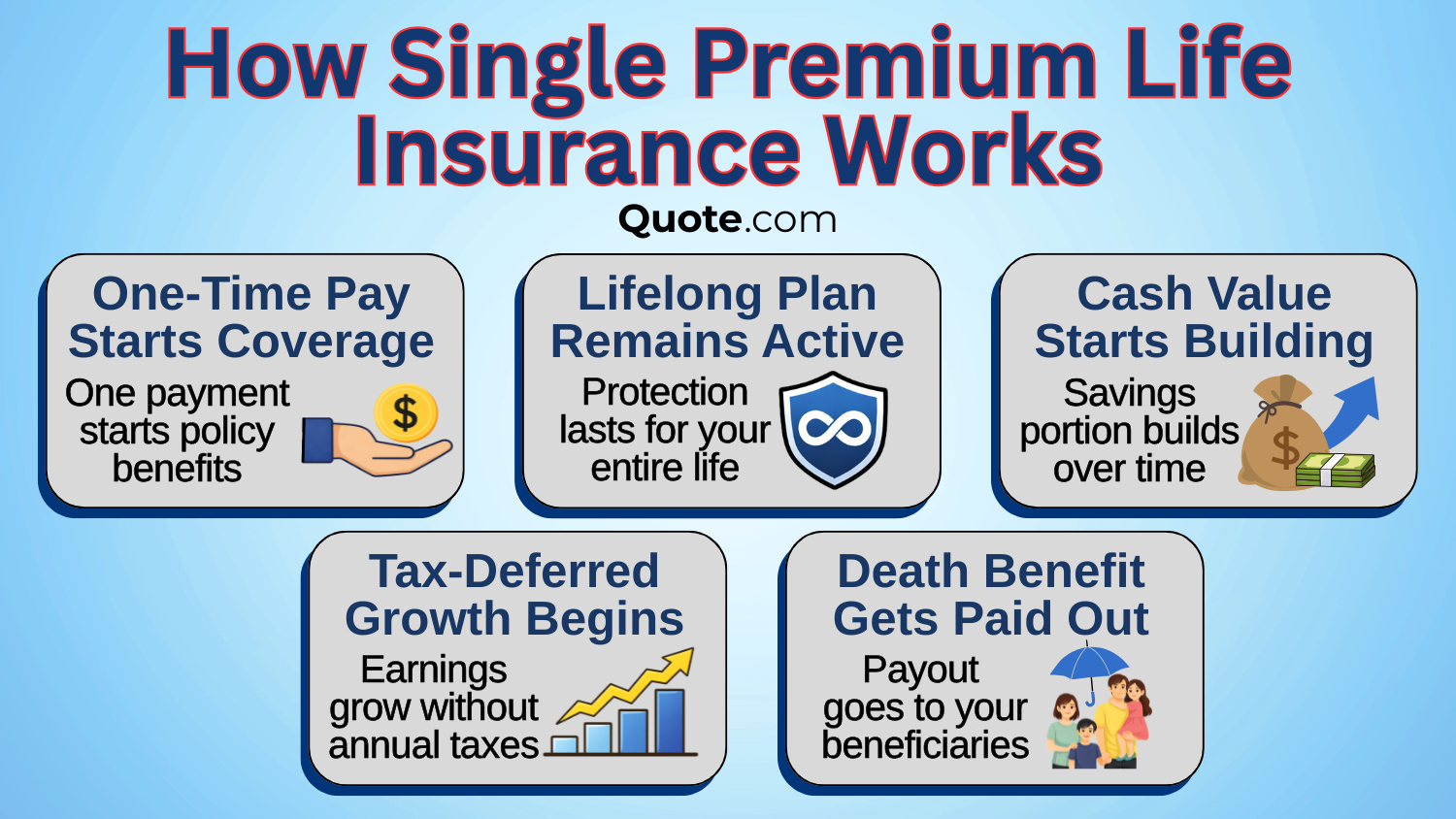
Whole life insurance is permanent coverage designed to remain active for the policyholder's entire lifetime, provided premiums are paid on schedule. It features fixed monthly premiums that never increase and includes a cash value growth component that accumulates on a tax-deferred basis.
- Best For: Individuals seeking permanent estate planning solutions, guaranteeing funeral funding regardless of when death occurs, or building conservative cash reserves.
- Cost Efficiency: Monthly premiums are substantially higher than term insurance due to the guaranteed payout and long-term cash accumulation elements.
Final Expense / Burial Insurance
Final expense insurance is a specialized form of whole life coverage tailored specifically for smaller benefit amounts, usually between $5,000 and $50,000, though select carriers issue policies up to $65,000 or $100,000. These policies feature simplified or guaranteed underwriting, making them accessible to older adults or individuals with chronic health conditions.
- Best For: Seniors seeking permanent coverage to protect loved ones from funeral expenses, final medical bills, or small administrative costs.
- Cost Efficiency: Higher cost per dollar of coverage compared to underwritten term insurance, but accessible to applicants who cannot pass traditional underwriting exams.
Is a $65,000 Life Insurance Policy Sufficient?
Determining whether $65,000 in life insurance coverage meets your financial obligations depends on your primary objective. While a $65,000 payout can provide essential liquidity during a crisis, evaluating its adequacy requires mapping the funds against expected expenses.
| Expense Category | Estimated Cost Range |
|---|---|
| Professional Funeral & Burial | $8,000 – $15,000 |
| Uninsured Final Medical Bills | $5,000 – $20,000 |
| Credit Cards & Personal Loans | $5,000 – $15,000 |
| Residual Income Bridge (1–2 Yrs) | $15,000 – $35,000 |
| TOTAL ESTIMATED NEED | $33,000 – $85,000 |
A $65,000 policy typically suffices if your goals include:
- Covering End-of-Life Costs: Average funeral, burial, and legal probate administrative expenses in the United States run between $10,000 and $15,000. A $65,000 benefit easily clears these expenses while leaving cash reserves for family members.
- Liquidating Moderate Unsecured Debts: Eliminates credit card balances, personal installment loans, or remaining auto loans so surviving family members are not burdened with estate liabilities.
- Providing a Financial Safety Net for Seniors: Offers fixed protection for adult children handling final affairs, ensuring estate settlement fees and unexpected medical copays are paid without liquidating real estate or retirement accounts.
However, if you are the primary breadwinner for a young family with a major home mortgage, income replacement obligations, or future college tuition requirements, a $65,000 policy will likely fall short. In those circumstances, evaluating $250,000 to $1,000,000 in term coverage is generally recommended.
Actionable Steps to Get the Best Premium Rates
Securing affordable pricing on a $65,000 life insurance policy requires strategic shopping and accurate application procedures.
- Work with an Independent Insurance Broker: Independent brokers represent multiple insurance carriers rather than a single company. Because each carrier uses different underwriting rules for medical conditions, an independent agent can match your medical history to the company offering the most favorable pricing.
- Opt for Fully Underwritten Coverage if Healthy: If you are in good or reasonable health, avoid impulse buying guaranteed issue or simplified issue policies advertised on television or online. Taking a standard medical exam almost always yields significantly lower monthly rates.
- Choose Annual Payment Terms: Most life insurance companies charge small administrative convenience fees when premiums are split into monthly installments. Paying your premium in a single annual lump sum can reduce your overall yearly cost by 3% to 8%.
- Lock In Rates Early: Life insurance premiums increase with every year of age. Securing a policy today locks in your age bracket and protects you against future changes in your personal health status.
- Review Policy Minimum Thresholds: Some life insurance companies enforce minimum face amounts of $100,000 for their standard term product lines. In certain instances, purchasing a $100,000 term policy can actually cost less per month than a $65,000 policy due to band-rate pricing discounts applied at higher benefit thresholds. Always ask your agent to compare quotes for both $65,000 and $100,000 levels.
Frequently Asked Questions
Can I get a $65,000 life insurance policy without a medical exam?
Yes. Many insurers offer simplified issue or non-med term and whole life policies up to $65,000. These rely on digital health records, prescription history databases, and medical questionnaires instead of physical examinations. However, if you are healthy, opting for a medical exam usually secures lower monthly rates.
Does a $65,000 whole life policy build cash value?
Yes. Permanent whole life insurance policies allocate a portion of each premium payment into an internal cash value account. This account grows tax-deferred at a guaranteed minimum interest rate set by the insurer. Policyholders can borrow against this cash value or surrender the policy for its net cash value if needed in the future.
How much extra do smokers pay for a $65,000 policy?
Tobacco users pay significantly higher rates than non-smokers. On average, nicotine use increases life insurance premiums by 150% to 300%. For example, a 50-year-old non-smoking male might pay $35 per month for a term policy, while a smoking male of the same age could pay $90 to $120 per month for identical coverage.
Can seniors over age 70 buy a $65,000 life insurance policy?
Yes, seniors over 70 can qualify for a $65,000 policy, though options become more limited and costs increase. At age 70, term options are typically restricted to 10-year lengths, while whole life and guaranteed issue final expense policies remain widely available. Applicants must meet carrier health guidelines or select guaranteed acceptance options.
Is the $65,000 payout taxable to my beneficiaries?
Under Section 101(a) of the U.S. Internal Revenue Code, life insurance death benefits paid directly to a named beneficiary are generally exempt from Federal income tax. Beneficiaries receive the full face value lump sum free of federal income tax liability, though estate tax considerations may apply if the policyholder holds incidents of ownership in extremely large estates.
Final Recommendation
If you need a $65,000 life insurance policy, start by requesting quotes for both $65,000 and $100,000 term coverage from an independent insurance broker. Comparing these thresholds ensures you take advantage of pricing volume discounts. If you are under age 60 and in fair-to-good health, choose an underwritten term or standard whole life policy rather than a guaranteed acceptance product to secure the lowest possible monthly rate.
Image Gallery